Suiga Peptide
Suiga N-terminal
What is N-terminal modification?
N-terminal acetylation removes the charge from the amino terminus of a peptide. Faalaua'itele, acetylation modification is recommended if the peptide is to mimic its natural structure in the protein. I le male, the acetylation modification stabilises the peptide chain and makes it less susceptible to enzymatic degradation at the end of the peptide chain.
In addition to acylation, other N-terminal modifications (e.g., urea, carbamate, sulfonamide, alkylamine) can be performed.
Radioligands are often attached to the N-terminus of a peptide if the pharmacodynamics of the peptide allow it. Faataitaiga, DOTA, FA'aoga, NODAGA, ma isi. can be attached.
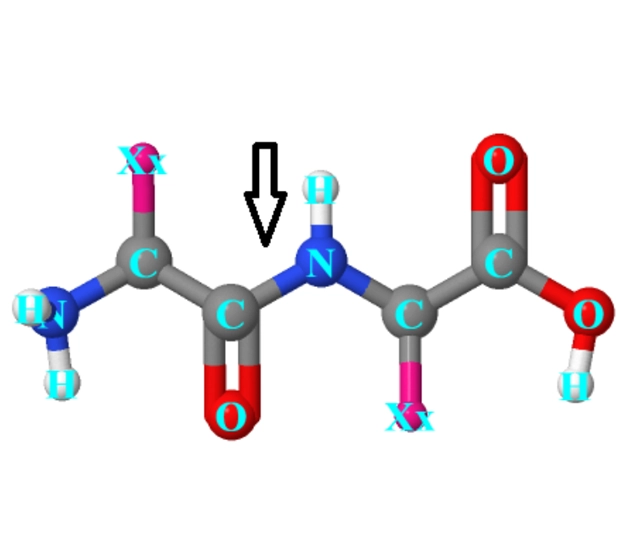
N-terminal modification technical
Suiga ituaiga
N-terminal modification improves the stability of peptides because this modification generates a structure similar to the natural protein structure. O lea, this modification method can improve the biological activity of the polypeptide and prevent enzymatic degradation.
|
5-FAM
|
BSA (-NH2 of N terminal)
|
Hexanoic acid
|
|---|---|---|
|
5-FAM-Ahx |
CBZ |
HYNIC |
|
Abz |
Dansyl |
KLH (-NH2 of N terminal) |
|
Acetylation |
Dansyl-Ahx |
Lauric acid |
|
Acryl |
Decanoic acid |
Lipoic acid |
|
Alloc |
DTPA |
Maleimide |
|
Benzoyl |
Fatty Acid |
MCA |
|
Biotin |
FITC |
Myristoyl |
|
Biotin-Ahx |
FITC-Ahx |
Octanoic acid |
|
BOC |
Fmoc |
OVA (-NH2 of N terminal) |
|
Br-Ac- |
Formylation |
Palmitoyl |
Fa'amatalaga Fa'apitoa
Proteome-derived peptide libraries for deep specificity profiling of N-terminal modification reagents
Protein and peptide N termini are important targets for selective modification with chemoproteomics reagents and bioconjugation tools. The N-terminal α-amine occurs only once in each polypeptide chain, making it an attractive target for protein bioconjugation. In cells, new N termini can be generated by proteolytic cleavage and captured by N-terminal modification reagents that enable proteome-wide identification of protease substrates with tandem mass spectrometry (LC-MS/MS). An understanding of the N-terminal sequence specificity of the modification reagents is critical for each of these applications. Proteome-derived peptide libraries in combination with LC-MS/MS are powerful tools for profiling the sequence specificity of N-terminal modification reagents. These libraries are highly diverse, and LC-MS/MS enables analysis of the modification efficiencies of tens of thousands of sequences in a single experiment. Proteome-derived peptide libraries are a powerful tool for profiling the sequence specificities of enzymatic and chemical peptide labeling reagents. Subtiligase and 2-pyridinecarboxaldehyde (2PCA) are two reagents that have been developed for selective N-terminal peptide modification and can be studied using proteome derived peptide libraries. This protocol outlines the steps for generating N-terminally diverse proteome-derived peptide libraries and for applying these libraries to profile the specificity of N-terminal modification reagents. We detail the steps for profiling the specificity of 2-pyridinecarboxaldehyde, a chemical modification reagent, and subtiligase, an enzymatic modification reagent. These protocols can easily be adapted to alternative proteome sources and other N-terminal peptide labeling reagents.
Au'aunaga Feso'ota'i Peptide Suiga
peptide glycosylation
peptide glycosylation
Peptide glycosylation o se suiga faʻapipiʻi e mafai ona faʻaleleia atili ai mea faʻapitoa o peptides.
Faitau atilipeptide Phosphorylation
peptide Phosphorylation
E mafai ona tupu le Phosphoralation ile Serine (S, Pe 'a), Threonine (T, Thr) ma Tyrosine (Y, Tyr) filifili itu e ala i le fausia o fusi phosphoester
Faitau atiliPeptides Stapled
Peptides Stapled
Folasaga o ni amino acids e lua e iai le α-methyl, vaega α-alkenyl i le taimi o le fa'amaopoopoina o filifili peptide.
Faitau atiliCyclic Peptide
Cyclic Peptide
O le ta'amilosaga peptide e fa'aleleia ai le mautu o peptide (fa'atatau i a latou analogues linear) ma o se taʻiala masani i le atinaʻeina o peptide.
Faitau atilisuiga ole peptide
Le poto masani i le peptide suiga, saunia le tele o auala talafeagai mo suʻesuʻega peptide.
