How to use this peptide supply chain resilience checklist
This peptide supply chain resilience checklist works as a set of binary judgments, not a reading exercise. Every item asks a Yes/No question about your own program, and you answer it against what you can document today, not what you intend to build.
The items are grouped into five phases: precursor and reagent dependencies, alternate supplier qualification, inventory buffer sizing, shipping and cold chain requalification, and client communication. Work them in order. Each phase feeds the next, and a gap in an early phase usually shows up as an unanswerable question later.

A “No” is a work item, not a failure. It marks a place where your program has a single point of failure, and the fix is a task with an owner and a date.
One limit applies throughout. The link between Hormuz route disruption and peptide supply is treated qualitatively here, because no primary, peptide-specific dataset on that mechanism was found. The checklist is built on named standards and supplier-side proof requirements instead.
⚠️ Warning: A “No” recorded without a named owner and a target date is not a work item. It is a note, and notes do not close gaps.
Phase 1: Map precursor and reagent dependencies
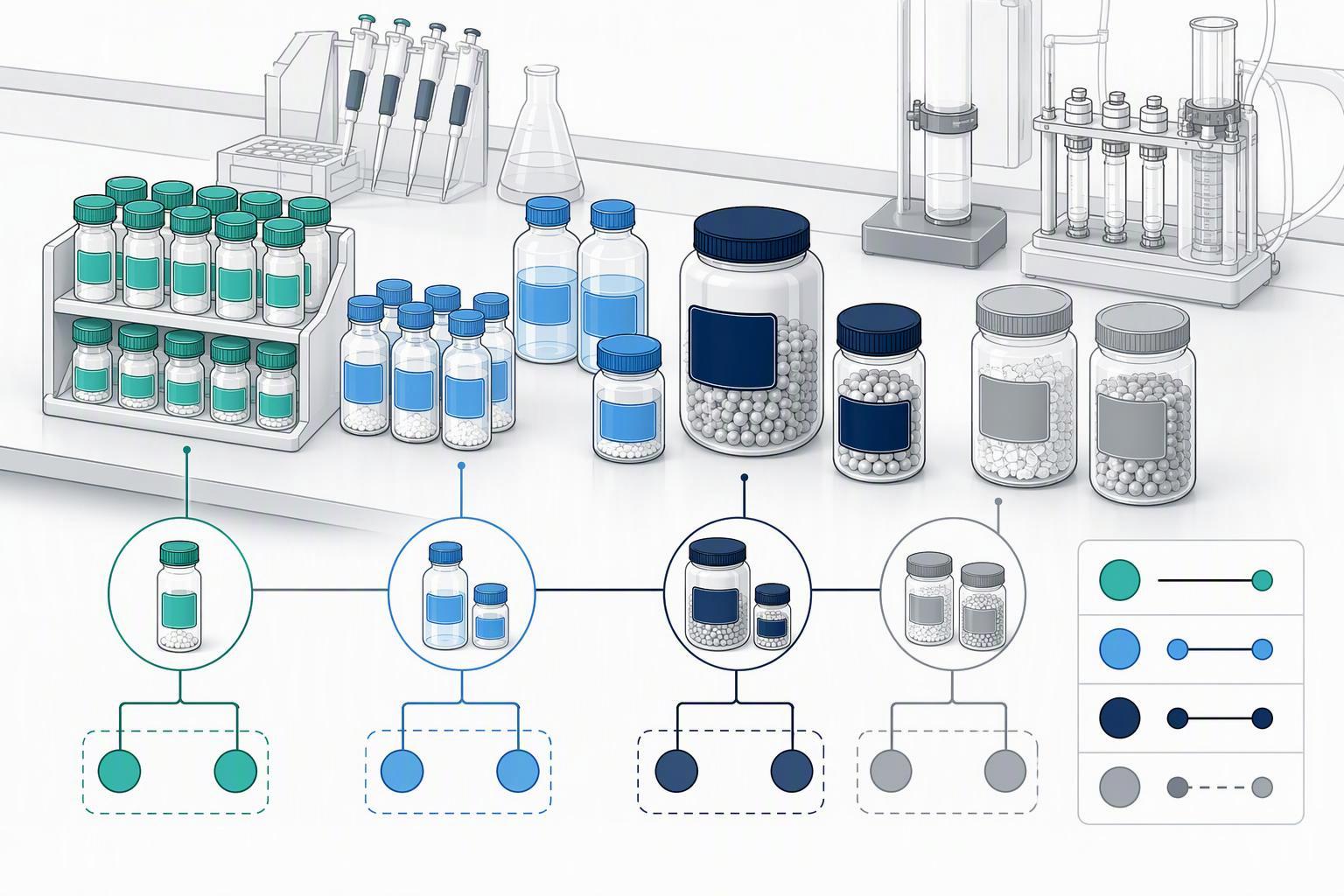
Start with the inputs, not the mitigation. Before you qualify a second supplier or size a buffer, you need to know which peptide precursor and reagent dependencies are single points of failure.
Work through each input and answer two questions.
|
Input |
Is a second qualified source named? |
Critical or substitutable? |
|---|---|---|
|
Peptiedsintese Fmoc-protected amino acids |
Yes / Nee |
|
|
Coupling reagents (HATU, HOBt, DIC and equivalents) |
Yes / Nee |
|
|
Resins |
Yes / Nee |
|
|
Chromatography media |
Dienste Yes / Nee |
|
|
Packaging and primary containers |
Yes / Nee |
Two catalogue listings can still be one manufacturing site. Confirm the physical plant, not the distributor.
Criticality ranking must precede buffer sizing. A substitutable input needs no buffer; a critical single-source input does.
This is the entry point because route-shift cost arrives as a group of smaller changes rather than one war surcharge. shimico’s chemical-market analysis notes a supplier may hold factory price while freight, insurance, port handling, financing or lead time move sharply, so quotations must be compared on delivered cost including port charges, freight, insurance, discharge cost and usable yield.
Phase 2: Qualify alternate suppliers
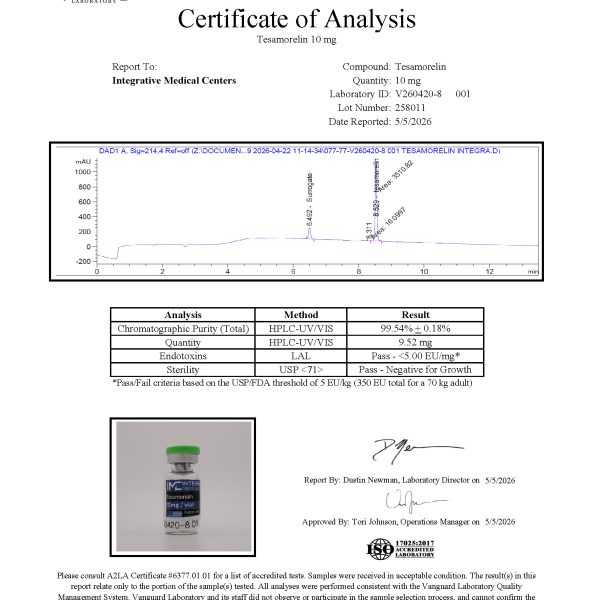
A second source only counts as an alternate once it has passed a documented qualification. The GCC pharmaceutical industry is worth $23.7 billion, and around 80% of it relies on imports through GCC airspace and the Strait of Hormuz, Sintetiese Peptiede according to Think Global Health’s analysis of the corridor’s pharmaceutical exposure (updated 20 March 2026). That import dependence makes alternate peptide suppliers qualification a standing requirement, not a crisis response.
Score each candidate against five rows: scale match (mg to kg), reproduction of your modifications, salt form and purification route, sterile capability, and the analytical package. Demand the chromatogram with its integration table, the MS spectrum, and sterility and endotoxin data, not the phrase “high purity.”
MOL Changes, which has synthesized peptides since 1998, illustrates what a complete package looks like: mg-to-kg range, 300+ functional modifications, Klas 100 cleanroom capability, and in-house HPLC, MS and sterility QC.
Pro Tip: Score two candidates side by side before either is needed, so the comparison is a record rather than a scramble.
Phase 3: Size inventory buffers
By the end of this phase you will know, per input, how much to hold and what triggers a release from reserve. A flat months-of-cover rule fails because it ignores shelf life, storage condition and the requalification lead time for a new lane.
Work through these as yes or no answers:
-
On-hand versus consumption rate. For each precursor and reagent, is current stock stated against actual consumption per month? Yes / Nee
-
Shelf life and storage condition. Is the expiry date and required storage condition recorded for every buffer item? Yes / Nee
-
Reserve trigger. Is there a defined event that converts routine safety stock into a disruption reserve? Yes / Nee
-
Release authority. Is one named role Shop authorised to release from reserve? Yes / Nee
Buffer size should track your requalification lead time, not a fixed figure. No source in this research packet publishes a validated buffer magnitude, so treat any single number with caution and size against your own requalification timeline.
Phase 4: Requalify shipping and cold chain for the new lane
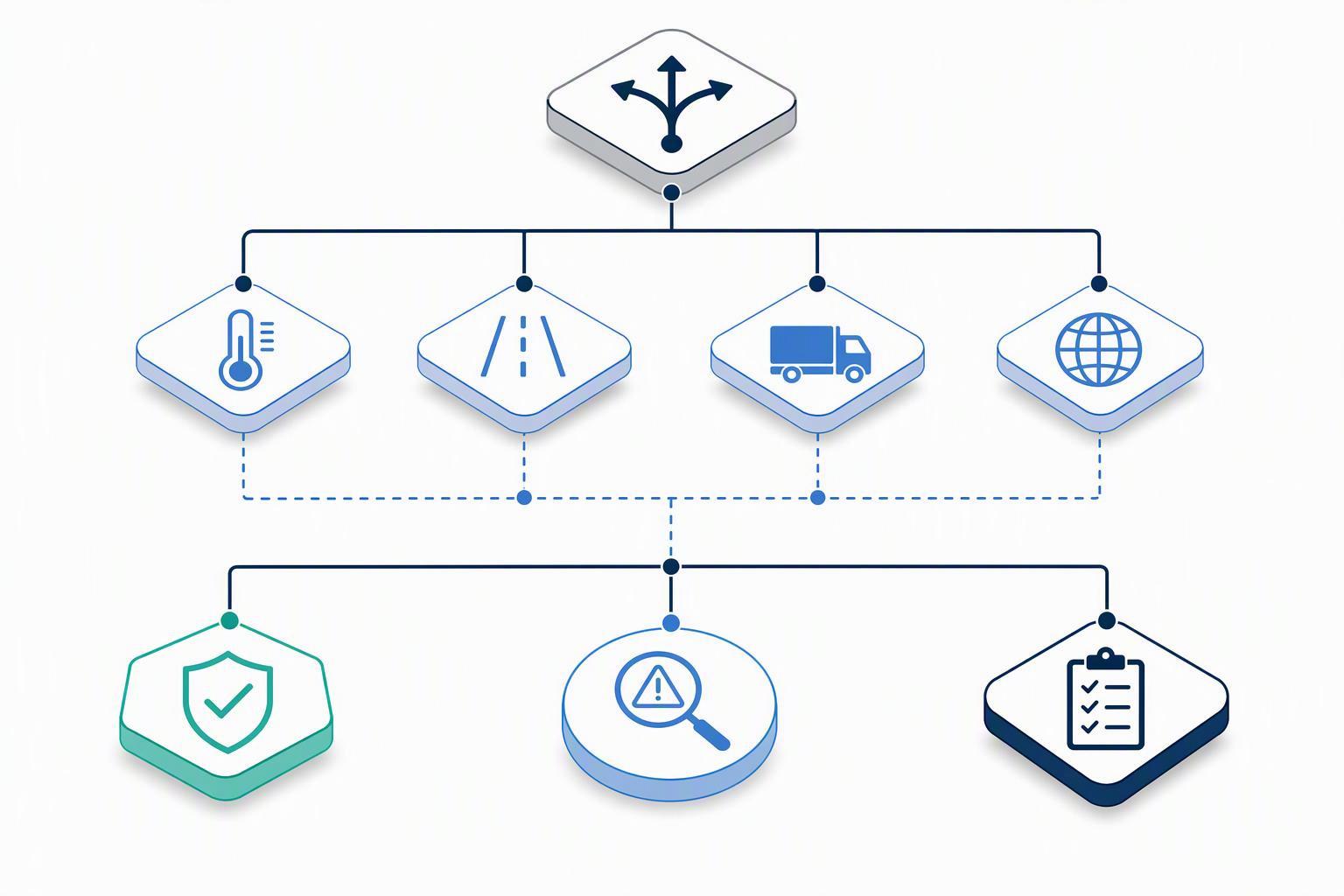
A reroute does not inherit the shipping qualification that covered the old lane. Under the qualification model published in Pharmaceutical Outsourcing’s shipping-system framework (2020), a new lane is itself a trigger to re-qualify, alongside a new product, new shipping vehicle or equipment, new transport mode, and new logistics service provider. The framework’s date does not weaken the trigger list; the conditions it names are the ones a lane change still creates.
Carry-over is narrower than most teams assume. The same source allows it only when the transport temperature range, monitoring locations, lane, LSP and carrier all stay the same in the same transport mode. Change the carrier and the carry-over argument collapses, which matters because carriers of active air and ocean reefer containers can change overnight or on short notice after strikes or natural disasters. Design qualification and operational qualification also run against an anticipated winter or summer temperature and duration profile, so a qualification built for one season is not automatically current for the next.
ICH Q7’s transport requirement, carried in the WHO GMP for active pharmaceutical ingredients (TRS 957 Annex 2), states the underlying obligation plainly: APIs and intermediates should be transported in a manner that does not adversely affect quality, with special transport or storage conditions stated.
Checklist items for this phase:
-
Has the lane change been logged as a change with a risk assessment? Deviations from the lane used for performance qualification should go through change control, not a note in a shipment file.
-
Do temperature range, monitoring locations, lane, LSP and carrier still match the qualified configuration? All five must match. Any one of them moving means the carry-over no longer applies.
-
Is a seasonal DQ/OQ profile current for the new lane? Confirm the profile reflects the season the shipment will actually travel in. Oor
Key Takeaway: A carrier or mode change invalidates carry-over even when the temperature range is unchanged.
[VISUAL: diagram, requalification decision flow branching to carry-over permitted / risk assessment required / full requalification required]
Phase 5: Communicate lead-time changes to clients
The rule that prevents late surprises is to notify on trigger, not on confirmation. When a supplier confirms a slipped ETA, the client has already lost the weeks you spent verifying it.
Send the impact statement with the trigger notification. It covers four things: what changed, the impact on the client’s timeline, the recovery window, and the mitigation already in motion.
Checklist items:
-
Is a named owner assigned to client notification? Yes / Nee. A role, not a team inbox.
-
Is the impact statement pre-agreed before the trigger fires? Yes / Nee.
-
Is there a documented mitigation step for each affected lot? Yes / Nee.
Compare quotations on delivered cost, including port charges, freight, insurance, discharge cost and usable yield, and say so to the client in those terms. A freight line can look stable while landed cost moves: Think Global Health reported that insurance premiums for vessels transiting the Strait of Hormuz rose more than 1,000% since late February (updated 20 March 2026).
Pro Tip: Send the impact statement with the trigger notification, not after the recovery window is confirmed.
Common mistakes that break a resilience checklist
The five phases above fail in predictable ways. Each mistake below looks like compliance on paper and leaves the program exposed in practice.
Treating a second catalogue listing as a second source. A distributor entry for the same manufacturer is one source with two order paths. The fix: confirm the synthesis site, the analytical package and the modification capability behind the listing before you count it as an alternate.
Sizing buffers from a uniform safety-stock rule. A flat weeks-of-cover figure ignores how long requalification actually takes. Size the buffer from the requalification lead time for that specific input, not from a company-wide default.
Assuming a qualified lane carries over after a carrier or mode change. Qualification attaches to the route, the packaging and the handling, not to the origin-destination pair. Requalify when any of those change.
Notifying clients only once a delay is confirmed. By then the client has no room to adjust. Notify when the lead-time assumption changes, and state the new range with its basis. Peptiedproduksie
What a completed checklist looks like
A finished peptide supply chain resilience checklist is auditable, not aspirational. You can tell the run is done when four conditions hold across the whole program.
Every critical input has either a named second qualified source or a documented accepted risk. “We’ll find someone” is not a status; a supplier name with a completed qualification file is.
Every buffer item carries a stated reserve trigger and an owner. The trigger is a condition, such as a defined stock level or a supplier notice, and the owner is a person, not a team.
Every active lane has a current qualification status, including any lane you switched to mid-disruption. A lane that moved without requalification is an open item, not a closed one.
Every affected client has a notification owner. The reader should be able to name who tells which account, and when.
Pro Tip: Run the checklist as a review meeting, not a solo exercise. The gaps surface fastest when the buffer owner and the client-notification owner read their rows aloud.
If those four conditions hold, the checklist is complete for this cycle. Route conditions change, so schedule the next review rather than treating completion as permanent.
Next step: Download the peptide supply chain resilience checklist template and work through it with your sourcing and QA leads, or request a documentation review of your current supplier qualification files.
Disclosure: MOL Changes publishes as a peptide vendor, so we have a commercial interest in how supplier qualification is practiced.
Frequently asked questions
How long does requalification take?
The 2020 qualification framework behind Phase 2 treats requalification as an event-driven process rather than a calendar one: it starts when a defined trigger fires, such as a supplier change, a route change, or a failed release, and it ends when the new source clears the same analytical and documentation gates as the incumbent. Because the trigger list is the clock, the honest answer is that duration depends on how much of the package already exists. A supplier with a current CoA, chromatogram, MS spectrum and sterility data on file moves faster than one starting from scratch. Build the requalification window into your buffer sizing rather than assuming a fixed number of weeks.
Is a supplier’s own CoA enough evidence?
Nee. A certificate of analysis is the supplier’s own statement about its own material, so it is a starting document, not independent verification. Pair it with the analytical package Phase 2 names: chromatogram and integration table, mass spectrometry spectrum, and sterility or endotoxin data where the grade requires it. The CoA tells you what the supplier claims; the underlying data tells you whether the claim holds.
What if a lane closes mid-shipment?
Treat it as a change-control event, not a logistics exception. Trigger the Phase 5 notification to affected clients as soon as the disruption is confirmed, then run the shipment through the same qualification logic as a new lane: confirm the alternate routing holds the cold chain, and document the deviation. The record of what happened, when it was detected, and what was decided is what protects the batch and the client relationship.
Does buffer sizing change at milligram versus kilogram scale?
Yes, and the direction is not intuitive. At milligram scale the constraint is usually the minimum order quantity and the cost of holding it, so buffers are sized in single batches. At kilogram scale the constraint shifts to lead time and the number of qualified sources, because a single disrupted lane can stall a program for the length of a requalification cycle. Scale the buffer to the requalification window, not to the order size.
Conclusion
The five phases run as one sequence, not five separate projects: map precursor and reagent dependencies, qualify alternate suppliers, size inventory buffers, requalify shipping and cold chain for the new lane, then communicate lead-time changes to clients. Each phase produces a Yes/No answer you can record, which is what makes this peptide supply chain resilience checklist decidable rather than aspirational. You finish it knowing exactly which inputs have a second qualified source and which do not.
If the whole sequence looks like too much to run at once, start with Phase 1. Every later phase depends on it: you cannot qualify an alternate supplier for an input you have not identified, size a buffer around a dependency you have not mapped, or requalify a lane for a material you have not traced. Run the dependency map first, then work outward one phase at a time.