Why a peptide CRO for constrained research budgets changes what you synthesize

That pressure shows up in how the money moves, not only in how much of it there is. The constraint is not only that NIH’s FY2025 extramural investment came to $35.30 billion across 55,394 awards, a 6.2% drop in award count. It is that the money moves differently. NPR’s reporting on how slowly FY2025–FY2026 awards moved found NIH ran 42 to 44 days behind its FY2021–FY2024 obligation pace, and that grants were renewed 90 or more days late 3.9% of the time in FY2025 and 2.7% in FY2026, against 0.7% in FY2021–FY2024. The 15% indirect cost cap (NOT-OD-25-068), effective February 2025, compresses what each award covers.
Later, lumpier money shifts the binding constraint from total spend to the cost of a wasted batch or an uninterpretable assay. A sequence that aggregates during chain elongation can fail outright, and aggregated resin-bound peptide can become unavailable for reaction (Merck Millipore). Three flex points carry the rest of this guide: batch size, purity target, and assay depth. This is a scoping method, not a regulatory strategy.

Key Takeaway: Under delayed, consolidated funding, the decision that protects your budget is not how much you spend but how much of it can be lost to a failed batch or an assay you cannot interpret.
Step 1: Triage which syntheses are decision-critical
By the end of this step you have a ranked list in which every sequence is tied to the specific decision it unblocks, and the sequences that only satisfy curiosity are off the list. Triage has to happen before you request quotes, because sequence difficulty is not visible in a price sheet: the ease of assembling a given sequence “is generally hard to predict,” and in severe aggregation standard ninhydrin or TNBS coupling tests can return false negatives (Merck Millipore, Overcoming Aggregation in SPPS, retrieved 2026-02-27). A broad exploratory panel therefore carries sequence-difficulty risk that no vendor can price honestly up front.
Run each candidate sequence through three questions:
-
What decision does this batch support, and who makes it?
-
If the answer comes back negative, what happens to the program?
-
Is there a cheaper way to get the same answer?
Then apply the reduction pattern: replace the broad panel with a lead sequence, one backup, and one mechanistic control. Flag known risk features before you send anything out, since contiguous hydrophobic stretches (Ala, Val, Ile), residues capable of intrachain hydrogen bonding (Gln, Ser, Thr), Gly-Gly motifs, and Ala-Gly dipeptide motifs are the documented drivers of difficult assembly (Merck Millipore, retrieved 2026-02-27).
|
Szolgáltatások Triage dimension |
Broad exploratory panel |
Triaged set |
|---|---|---|
|
Batch count |
8-12 sequences |
3 (lead, backup, control) |
|
Sequence-difficulty exposure |
Unpriced, spread across many unknown sequences |
Concentrated in the lead, flagged before quoting |
|
Decision Shop coverage |
Peptid szintézis Overlaps; several batches answer the same question |
One decision per sequence, no duplicates |
Verification: you can name the decision behind every sequence on the list, and no sequence appears twice.
Step 2: Right-size the characterization package to each decision
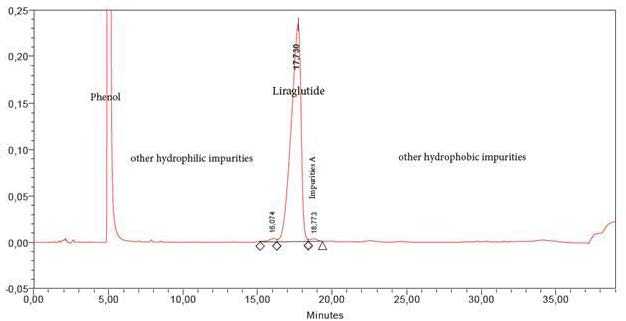
With the list ranked, the next question is how much characterization each remaining batch actually needs. Identity, tisztaság, and structural confirmation answer different questions, so buying all three by default is how a constrained budget loses evidence rather than money. A 2021 quality-control study in Nature Communications states that peptides are among the most widely used research reagents and that inadequate quality “can result in poor data reproducibility.” That is the reproducibility case for characterizing your reagent before the assay, not after it fails.
The same paper’s recommended first-line QC set pairs purity by RP-LC with identity by mass spectrometry and homogeneity by DLS or SEC. Treat that as a floor, not a ladder. ICH Q2(R2)’s intended-purpose framing applies its validation expectations to release and stability testing of commercial material and allows risk-based application elsewhere, so fit-for-purpose peptide characterization means matching the assay to the decision the batch has to support.
|
Decision the batch supports |
Minimum assay set |
Acceptance criterion to agree in writing |
|---|---|---|
|
Screening or assay development |
Purity by RP-LC, identity by MS |
Main-peak purity at your stated threshold; mass within expected value |
|
Quantitative dose-response work |
Above, plus peptide content determination |
Content within a stated percentage of label |
|
Structural or conformational claims |
Above, plus orthogonal confirmation (MS/MS sequencing, SEC or DLS) |
Sequence confirmed; aggregation below an agreed limit |
The failure mode is specific. A sub-spec crude batch can produce a false positive in a cell-based assay, which makes the result uninterpretable rather than merely imprecise. Orthogonal confirmation means a second method that measures a different property, so a single technique cannot validate itself.
Sterility and endotoxin testing under USP <71> and USP <85> apply phase-appropriately to preclinical material and are not automatically required for research-use material. Confirm the requirement with your own QA function before adding it to a scope.
Step 3: Match the engagement model to your decision points
Once the assay tier is set, the engagement model has to fit the number of gates still ahead. Choose the engagement model by how many decision gates your program still has, not by which vendor quotes the lowest price per milligram. A program validating a target needs one thing from a supplier: a fast, well-characterized batch. A program in lead optimization needs an iteration partner, because the DMTA cycle (design, make, test, analyze) only shortens when synthesis, purification and analytics sit under one quality system instead of three handoffs.
|
Engagement model |
Commitment size |
Flexibility when a gate fails |
Documentation per batch |
|---|---|---|---|
|
Single-batch transactional |
One sequence, one scale |
High: you simply do not reorder |
CoA with the analytical data the batch was released against |
|
Staged or milestone-linked |
Several batches released against agreed gates |
Moderate: scope is fixed, timing flexes |
CoA per batch, plus the release data for each gate |
|
Integrated discovery program |
Multi-cycle commitment across design and testing |
Low: the commitment survives Szintetikus peptidek a failed gate |
CoA per batch plus consolidated program documentation |
The tradeoff is commitment against iteration speed. An integrated model pays off only when the program is genuinely cycling through DMTA and the chemistry is the bottleneck. Coupling tests can mislead here: a sequence that couples cleanly on a small resin can still aggregate or fail purification at scale, so difficulty is hard to predict from a single test batch. Committing to a multi-cycle program before you have that evidence locks in a scope you may not need.
A flexible peptide CRO support model sits between the extremes. MOL Changes is one example: custom synthesis for sequences up to 200 amino acids, scales from milligram to kilogram, purity from crude to 99%, a Certificate of Analysis carrying HPLC and MS data, and Class 100 cleanroom production with HPLC, MS and sterility testing under its quality system. Compare that capability list against your gate count, and pick the model your next decision actually requires.
Step 4: Stage the work plan against funding volatility
Whichever model you pick, the plan itself has to survive a late award. Build the plan around gates, not a calendar. Reporting on how slowly FY2025–FY2026 awards moved shows an obligation lag of 42–44 days between award and funds reaching the account, and renewal lateness running 4–6× the historical norm (Federal grant obligation and renewal reporting, retrieved 2026-06-11). A calendar plan assumes the money arrives when the science is ready; a gate plan assumes it may not.
A gate is a decision point with four defined parts: Körülbelül
-
The gate. Name it by the decision it protects, not by a date.
-
The pass condition. What must be true before the next spend commits, for example a confirmed purity result or a signed scope.
-
The order. Exactly what gets purchased when the gate passes, and nothing before it.
-
The stop condition. What you do if the award slips past that gate.
Sequence the work so a late award delays the next batch rather than invalidating the batch in progress. Order only what the current gate has cleared, keep the next batch scoped but unordered, and let the stop condition absorb the delay. Note also that the 15% indirect cost cap (NOT-OD-25-068, effective February 2025) changes what a given direct-cost quote actually consumes from an award, so quote against the indirect-adjusted figure, not the sticker price.
Verification: you should be able to name the gate at which a delayed award forces a stop rather than a scramble.
Step 5: Verify quality and documentation before you commit the budget
A gate plan only holds if the paperwork behind each batch holds too. The documentation package is part of what you are buying, and it is the only part that survives after the material is consumed. A Certificate of Analysis (CoA) that reports HPLC and MS data is evidence of identity and purity; it is not a release specification. That distinction follows ICH Q2(R2)’s intended-purpose framing: an analytical procedure is validated against the purpose it serves, and a research-grade CoA serves characterization, not batch release.
Before you commit budget, confirm four things in writing:
-
What the CoA contains. At minimum, HPLC and MS data tied to the specific lot you receive, not a representative chromatogram. Peptidgyártás
-
How the methods are named. Ask for the column, gradient, and detection method behind each result, so you can judge whether the assay fits your application.
-
What lot-to-lot consistency means for a multi-batch program. For a sequence you will reorder, ask what is held constant between lots.
-
What happens when a result is borderline. Ask now, not after delivery, how a marginal purity or mass result is handled and re-tested.
⚠️ Warning: Release specifications for clinical material must be set with your own QA and regulatory function. Research-grade material is not clinical-grade material, and a research-grade CoA does not substitute for a release specification.
The reproducibility case for characterizing your reagent rests on this record: without it, a result you cannot repeat is a result you cannot defend.
Common mistakes that waste a constrained peptide budget
The most expensive mistake is ordering a full exploratory panel before triaging which syntheses are decision-critical. One difficult sequence then repeats its cost across every batch in the panel, and the budget is already committed.
Skipping triage and synthesizing the whole wish list. A panel feels like better value than a single peptide, and the decision each sequence supports was never written down. Rank sequences by the decision they unblock and fund only the top tier first.
Buying full release testing for a research-use batch. Release-grade panels exist for material entering a regulated pathway. Applying them to an early screening batch spends characterization budget on questions the experiment is not asking.
Treating a Certificate of Analysis as a release specification. A CoA documents what was measured on a batch; it does not define what your program requires. Read the methods and acceptance limits, not just the headline purity figure.
Committing to an integrated program before its decision gates exist. Multi-stage programs save money only when each stage has a defined go/no-go. Without gates, a program that should have stopped at stage two runs to completion.
Letting a funding delay arrive with no pre-defined stop condition. Decide in advance which work pauses first and what evidence justifies resuming.
Two of these failures are structural rather than vendor error. Aggregation during chain elongation is a property of the sequence and the coupling chemistry, not evidence of a careless supplier, so difficulty surprises should be planned for rather than litigated. And why coupling tests can mislead is worth understanding before you treat a passing test as proof of completion: a negative result does not always mean the coupling failed, and a false negative can send a program down the wrong corrective path.
What success looks like and how to keep the method running
If the method worked, you can answer three questions about any batch you ordered: which decision it supported, which assay tier that decision required, and which gate had to clear before the next commitment. Those three answers are the success test. A batch with no named decision behind it, an assay with no named question in front of it, or a gate with no written stop condition is drift, and drift is what consumes a constrained budget quietly.
The stretch goal is a standing review cadence. Re-triage the list whenever funding timing changes, because the constraint is not static: NIH Research Project Grant success rates fell to 13.0% in FY2025, down from 18.5% in FY2024 (NIH Extramural Nexus, FY2025 By the Numbers, published March 2026). A quarterly re-triage keeps the method aligned with that reality instead of with last year’s plan.
When you want a second opinion on scope, talk to an expert or compare project scopes before committing the next tranche.
Disclosure: MOL Changes publishes as a peptide vendor and has a commercial interest in peptide quality standards.
Frequently Asked Questions
What happens if a sequence fails mid-program?
Treat the failure as a decision point, not a sunk cost. Ask the CRO for the analytical record behind the failure (crude HPLC trace, MS of the failed fraction, the step where the route stalled), then decide whether to re-route, truncate the sequence, or drop it. A supplier that cannot show you where the synthesis failed gives you nothing to re-scope against, and re-ordering the same sequence on the same route usually reproduces the same result.
Does research-use material need sterility or endotoxin testing?
Not by default. Sterility and endotoxin testing belong to material intended for cell-based or in vivo work, where a contaminated batch can produce a false readout that costs more than the assay. For purely analytical or biophysical use, the recommended first-line QC set is identity and purity: MS, HPLC, and peptide content determination. Add bioburden, sterility, or endotoxin only when your downstream application actually requires them, and confirm the requirement with your own QA function before you pay for it.
How do I compare quotes that bundle different assay sets?
Normalize to a common assay list before comparing price. Build one column per quote and one row per assay (MS, HPLC, peptide content, sequence confirmation, counterion, endotoxin, sterility), then mark which supplier includes it, which charges extra, and which omits it. A lower headline price with a thinner QC set is not a cheaper project; it is a different, less verifiable one.
What if the award arrives later than the gate assumed?
Rebuild the schedule around the actual award date rather than the assumed one. Reporting on how slowly FY2025–FY2026 awards moved suggests late notice is a planning condition, not an exception, so hold the decision-critical syntheses until funds are committed and keep only desk work (route review, quote normalization, sequence triage) in the gap. A CRO that can hold a scoped plan without a purchase order is what makes that gap survivable.
Conclusion
The method in this guide is a scoping discipline: triage each synthesis by the decision it supports, right-size the characterization package to that decision, match the engagement model to your decision points, stage the work plan against funding volatility, and verify quality and documentation before the budget is committed. Used together, those five steps preserve the thing a constrained program cannot easily replace, which is the evidentiary value of each batch. A cheaper route that produces an uninterpretable result costs more than the synthesis it replaced, because the experiment still has to be run.
The next logical step is not a new project. It is a re-triage of the synthesis list you already hold, scored against the funding timeline currently in front of you. Priorities shift when a grant cycle moves, and a peptide CRO for constrained research budgets is only as useful as the list it is pointed at. Re-run the triage, re-rank the sequences, and let the decision-critical ones set the scope.