Overview
Thymosin beta 4 (TV4) est dapibus minutulus-moleculus ex residuo amino acido multiplex composito et in variis fibris et cellulis corporis humani late distributus..[1][2] Sicut unus principalis moleculae in corpore humano actin-regulandi, Multas functiones biologicas habet et magnum munus gerit in TEXTUS regenerationis, molestie lacus, vulnus sanitatem, sustentationem actin statera, tumor evolutionis et metastasis, cellula apoptosis, inflammatione, angiogenesis, capillus folliculus evolutionis, et alii processuum physiologicum et pathologicum.
Biologicae functiones et Mechanismi Actionis
Tβ4 est una e praecipuis moleculis actin-ordinatis in corpore humano et functiones biologicas multiplices habet, ludens munus significantes in TEXTUS regenerationem, molestie lacus, vulnus sanitatem, sustentationem actin statera, tumor evolutionis et metastasis, cellula apoptosis, inflammatione, angiogenesis, capillus folliculus evolutionis, et alii processuum physiologicum et pathologicum.
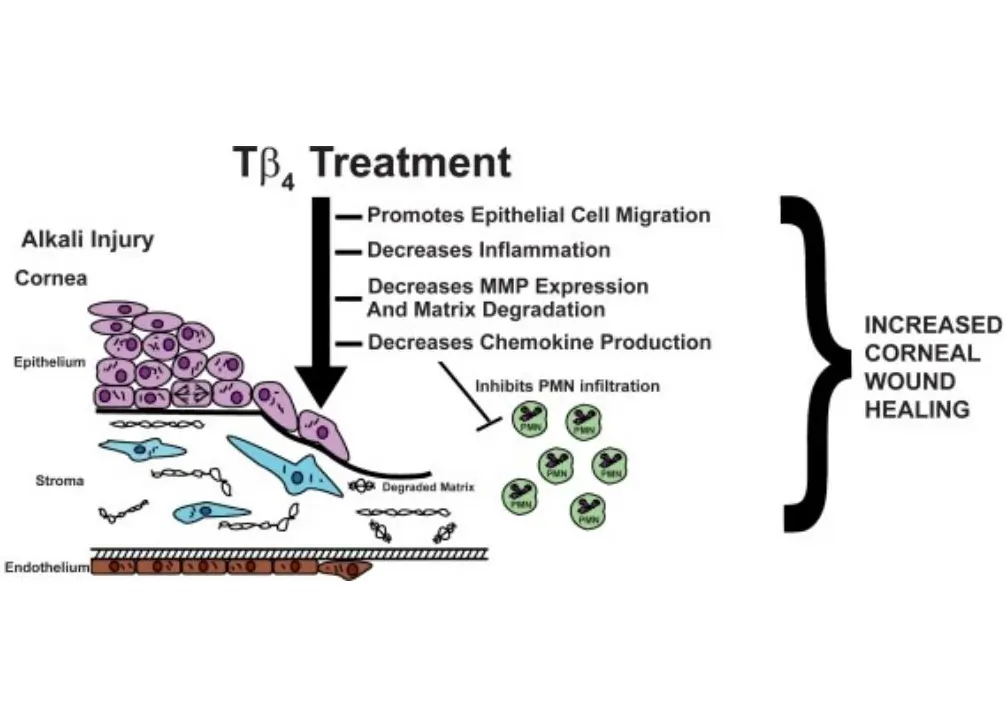
Source: Dentalis phone linea
- Actin regulandi factor: Actin rationem de 10% dapibus totius in cellulis non-musculi et elementum essentiale requiritur ad structuram cellularum, cellula motus, et vulnere sanitatem. Praesentia Tβ4 in cellis satis est ad omnes actinas monomeros sequestrare et participare ad polymerizationem et depolymerizationem actinam moderandam. Tβ4 obligare potest ad monomers actin in a 1:1 ratio, quo minus formatione F-actin polymerorum. Ligatio Tβ4 ad actin comitatur dissociationem aquae ligatae. C-terminatio Tβ4 obligat ad actin eius 40, causing conformationis mutationem in actin monomers. Moleculum Tβ4 dominium continet actin-ligare (LOCKED), quae est principalis contactum electrostatic. Eius N-terminalis fragmentum actin polymerizationem inhibere potest per impedimentum stericum. Cum solus agens, Tβ4 inhibere potest actinam polymerizationem et nucleotidem commutationem in actin. Hoc est contra partes alterius dapibus ligandi, Profile, quae commutatio ADP et ATP . promovet, accelerans actin ecclesiam. [1][2]Tβ4 et Profilin synergistice moderari conventus actin. Tβ4 moderari potest conversionem inter G-actin et F-actin. Renuntiatum est intentionem Tβ4 attingere 300 pmol valde mobile sanguinem cellulis, dum intentio requiritur ad Tβ4 ligare ad G-actin minor est 20 pmol. Cum aucto concentration, Tβ4 reducit depolymerizationem facultatem F-actin. Haec ratio potest esse quare Tβ4 moderatur functionem systematis microfilamenti cellulosi.
Promotio cellae migrationis endothelialis et angiogenesis: Studia membrana chorioallantoico pullo utens (CAM) exemplar angiogenesis ostensum est cum cellulis endothelialibus in structuras tubulares differre, cDNA contentum Tβ4 augetur per quintuplex, et transfectio cum Tβ4 accelerat formationem fistulae similium structurarum in cellulis endothelialibus. Accedit, Investigatio invenit Tβ4 cum fibrino et collagen mediante transglutaminase posse (factor XIIIa) et magni momenti munus in processu sanguinis concretionis. Ceterum, in plena crassitudine cutis experimentum injuriam senescentis diabetic mures, Tβ4 sanitatem accelerare potest vulnera cutis magnae areae et ardentes profunde, promovere cutis et corneae reparatione, et demonstrabo facultatem ad vulnus sanitatem accelerant.
Inhibitio cellae apoptosis: Tβ4 effectum tutelae notabilem habet in cellulis cornealibus epithelialibus substantiis corrosivis vexatis ut benzalkonium chloridum vel ethanolum.. Upregulation of Tβ4 expression is gene adiuvant ad augendam hypoxiae resistentiam cellularum.[2][3]
Downregulation key moleculae inflammatione: Sanatio vulneris est processus implicatus biologicus qui in tres gradus distinctos dividi potest: inflammatione, cellula multiplicatio, ac TEXTUS molestie lacus, cum gene expressio talis servo quod upregulated et downregulated in singulis gradibus. Ad vulnera chronica, Haec processus regulatory potest perturbari ut aetas, morbis underlying, et immunosuppressive medicinae, ducens ad productionem nimiam moleculis inflammatione, nimia inflammatio, et impedita cellula multiplicatio et textus molestie lacus. Investigatio invenit Tβ4 gradus liberae radicalis reducere posse, morabor lipidorum peroxidation, inhibere productionem inflammationis cytokines ut IL-1, macrophage dapibus 1α (MIP1α), MIP1β, monocyte chemotactic protein-1 (MCP-1), decrescentes gradus thromboxane et prostaglandin 2α, ita inflammatio allevians. ergo, adhiberi potest ad curationem perturbationum inflammationis sicut enteritis et atrophia musculi segmentalis.
Stimulatio caulis adulti epicardialis differentiationis cellularum: Tβ4 munus in variis vasis coronarii evolutionis aspectibus cruciale agit ac signanter stimulare potest incrementum musci quiescentis adulti mus insitionis epicardialae., restituens multipotentiam fibroblasts, musculus cellulis lenis, et endothelial cellulis, et inducens differentiam.[1][2] Knockout of the Tβ4 gene in the heart leads to a significant decrease in the levels of the angiogenic cleavage product of Tβ4 (AcSDKP). Although injection of AcSDKP cannot restore the heart, it can significantly enhance the differentiation of adult mouse epicardial progenitor cells into endothelial cells. This suggests that Tβ4 and AcSDKP are potent stimulators of coronary and neovascularization, and Tβ4-induced adult mouse epicardial cells can serve as a source of vascular regeneration, leading to sustained regeneration of the compromised vasculature at a low level after cardiac injury.
Stimulation of hair follicle development: Tβ4 promotes the migration, differentia, and extracellular matrix reconstruction of hair follicle stem cells, thereby regulating hair growth. Studies in rats and mice have found that during the hair growth cycle, a specific subset of hair follicle keratinocytes originating from the bulge region highly co-express Tβ4, while skin stem cells are also present in the bulge of the hair follicle. When Tβ4 concentration is at the nanomolar level, the migration and differentiation of stem cells are enhanced, and the presence of Tβ4 also increases the expression and secretion of matrix metalloproteinase-2 (MMP-2), an extracellular matrix-degrading enzyme.
Relationship with tumor formation: Upregulation of the Tβ4 gene has been observed in various tumor cells, including medullary thyroid carcinoma, colorectal cancer, highly malignant melanoma, pectus cancer, and oral squamous cell carcinoma. Tβ4 can effectively induce the expression of vascular endothelial growth factor, promoting angiogenesis and activating cell migratory properties, leading to tumor malignancy. Upregulation of Tβ4 expression results in downregulation of E-cadherin expression, weakening cell adhesion, and increased expression of matrix metalloproteinases, providing growth advantage and invasive characteristics to cancer cells, thus contributing to malignancy. Tβ4 possesses anti-apoptotic capabilities, and increased expression of Tβ4 can reduce the extent of cell apoptosis, possibly due to Tβ4 inhibiting the release of cytochrome c and disrupting the initiation of the apoptosis process, which is another important characteristic of malignant tumors.
Promotion of corneal repair: Thymosin β4 has demonstrated its ability to promote wound healing in various corneal injury models and regulate the production of certain key cytokines. Research has found that thymosin β4 can reduce the expression of matrix metalloproteinases, promote extracellular matrix remodeling, and activate cytokines. Speciatim, it inhibits the activity of matrix metalloproteinases, contrary to the conclusion drawn from thymosin β4-treated skin injury models. [1][2][3]This suggests that the regulatory pathways of specific enzymes in the tissue repair process can be either upregulated or downregulated.
Praeparatio Methodi
In statu, there are two main sources of thymosin beta 4 (TV4) used in clinical and research settings: extraction from bovine thymus and chemical synthesis. Extracting Tβ4 from bovine thymus is not only costly but also limited by material availability and extraction techniques, resulting in low purity and low content. The presence of impurities also brings many issues, especially considering the increasing number of viruses in cattle, which complicates the extraction process. With the development of genetic engineering, utilizing genetic engineering methods to produce Tβ4 will become a new direction. In our laboratory, we plan to perform tandem expression of artificially synthesized Tβ4 in plants to obtain transgenic plants with efficient expression of Tβ4. Compared to naturally extracted Tβ4, Tβ4 produced using transgenic plants has the advantages of higher bioactivity, higher purity, and fewer side effects. Accedit, it represents the optimal approach for reducing production costs, minimizing contamination, and enabling large-scale production.[3]
Background
Thymosin beta 4 is a peptide composed of 43 amino acid residues with an isoelectric point of 5.1 and is highly conserved in mammals. It is a cytoplasmic protein rather than a nuclear protein, unlike thymosin alpha or similar thymosins. [2][3]Thymosin beta 4 is involved in various physiological functions, including immune function, nervous system development, vulnus sanitatem, and actin protein functions.
Unlike thymosin alpha or similar thymosins, thymosin beta 4 is a cytoplasmic protein rather than a nuclear protein. It contains fewer hydrophobic amino acids and does not contain the Lys-Lys-Xaa-Lys structural region. Chemical conformation studies have shown that thymosin beta 4 exists and functions as a single chain. It has an internal repeat region between residues 31-43 et 18-30, with six identical amino acids. Although there are two highly helical regions between residues 4-12 et 32-40, thymosin beta 4 does not form a proline turn. In terms of biological distribution and expression, thymosin beta 4 was initially purified from the thymus. ergo, it was initially believed to be a thymic hormone acting on early-stage T-cell maturation. tamen, thymosin beta 4 is widely present in other tissues, organs, and cells, with the highest levels found in the spleen, thymus, lungs, and peritoneal macrophages, followed by the brain, iecur, renes, testes, and heart. Even non-reticuloendothelial system cells such as fibroblasts can synthesize thymosin beta 4. Thymocytes have seven times higher levels of thymosin beta 4 mRNA than thymic stromal cells, and thymosin beta 4 expression is observed in various blood cell types. Studies on thymosin beta 4 cDNA have shown that it lacks a signal peptide.[1] Although there are also secreted proteins in the body that lack signal peptides, such as interleukin-1 (IL-1) and endothelial growth factors, experts still believe that thymosin beta 4 is unlikely to be a secreted protein and is more likely to be essential for certain basic cellular functions.
Applicationem
Basic and Applied Research on Optimizing Endothelial Progenitor Cell Function with Thymosin Beta 4 (TV4)
The incidence and mortality rates of ischemic cardiovascular diseases have been increasing year by year, posing a serious threat to human health. The pathogenesis of these diseases is highly complex, and endothelial cell dysfunction plays a crucial role in the development of ischemic cardiovascular diseases. Although mature endothelial cells can repair endothelial damage, their regenerative capacity is limited. Endothelial progenitor cells (EPCs) are a type of precursor cell for vascular endothelial cells and have the potential to differentiate into endothelial cells. Numerous studies have shown that EPCs play various roles in vascular repair and neovascularization. tamen, the clinical application of EPC transplantation still faces many challenges. Several cardiovascular diseases or risk factors such as aging, hypertension, hypercholesterolemia, and diabetes can decrease the number of circulating EPCs and impair their function, greatly limiting their application in ischemic cardiovascular diseases. ergo, improving the function of EPCs will be an important strategy for future EPC transplantation therapy.[1][2]
Thymosin beta 4 (TV4), a low-molecular-weight protein composed of 43 amino acid residua, is involved in mediating various biological responses such as angiogenesis, vulnus sanitatem, and inflammation control. Our previous research has found that Tβ4 can enhance the proliferation and migration of human peripheral blood EPCs while inhibiting their apoptosis and senescence. Tβ4 significantly increases the angiogenic ability of EPCs, showing a dose-dependent relationship with a maximum effect at 1000 ng/mL (compared to the control group, 33.33±1.86 vs 18.34±2.02, P<0.05). Western blot analysis shows that Tβ4 promotes the phosphorylation of Akt Ser473 and eNOS Ser1177, also exhibiting a dose-dependent relationship. Akt siRNA and eNOS siRNA both significantly inhibit the pro-angiogenic effects of Tβ4 on EPCs.
- Treatment of skin wounds
- Treatment of cardiovascular and cerebrovascular injuries
- Treatment of ophthalmic injuries
- Other applications
Due to its biological functions, including promoting endothelial cell migration, preventing cell apoptosis, anti-inflammatory effects, and promoting hair follicle development, Tβ4 also demonstrates significant potential in skincare, combating skin aging, and promoting hair regrowth, among other aspects of healthcare.

Jinling Liu
Profile: Jinling Liu specialitas in processu translationis medicamentorum peptidis ex scala laboratoria (milligrammatis gradu) ad commercial-scala productio (chiliogramma gradu). Commendatur signanter ad reductionem peptidi productionis gratuita et obscuratis pollutionis environmental per condiciones optimizing fissuram, melius rationes condensationis reagentia, et introductio continua-fluxus synthesis technologiae. Optimizationem plurium peptilium inceptorum duxit, feliciter assequendum humilis sumptus, summus puritas massa productio in C-kilogramis scalae.
- Peptide Analytical PROTHYMIA Framework: Nitrite dimittere 2026年10月4日
- Zinc Biologia in Hepatitis-targeting Peptide Development 2026年10月3日
- Peptide Mucosal Delivery: Mollis Colloid Design Guide 2026年10月3日
- Minimum Connected Data Package pro Peptide Project 2026年10月3日
- Peptide Methodo Transfer: Outsourcing Playbook pro Sponsors 2026年10月3日
Nostrum quidem CATASTALTICUS Processus
Nos accurationem et integritatem in contentis nostris prioritize. Ecce quam alta signa ponimus:
- Peritus Review: Articuli omnes periti a materia retractantur.
- Source Validation: Information is backed by credible, up-ad-date fontes.
- Perspicuus: Nos evidenter citant references et potential confligit detegere.
Our Review Board
Nostrum contentum diligenter a peritis doctoribus ad curandum accurate et congruentia recognitum est.
- Quid Periti: Quisque articulus taxatur a peritis cum scientia speciali agro.
- Sursum-ad-date Insights: Incorporamus tardus investigationis, trends, et signa.
- Commitment ad Quality: Recognitores ut clarius, rectitudo, et complementum.
Exspectare peritum label recensitum contentus legere potes credere.