Quick Answer
Nitrosamine risk in peptide manufacturing is a per-product conclusion, not a category assumption. More than 1,800 drug-product batches have been recalled in th…
Why nitrosamine risk is product-specific rather than a single universal assumption
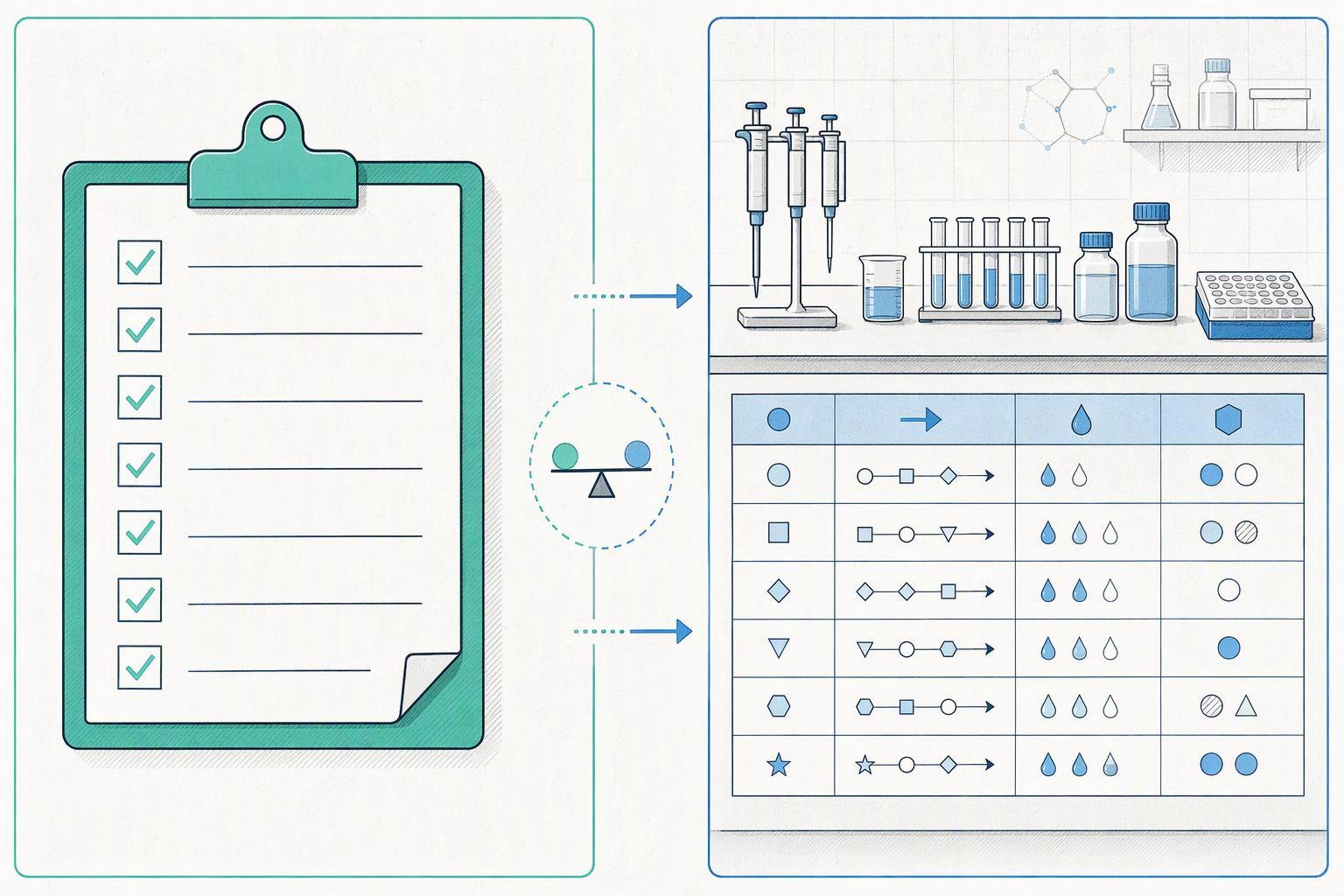
Synthesis Of Polypeptide Supplier Pseudoproline Synthesis A product-specific nitrosamine risk assessment is required because the acceptable intake depends on the individual nitrosamine structure, and the risk lines depend on the individual synthesis. FDA’s explanation of the potency-categorisation approach states that NDSRIs are generally unique to each drug and that there are usually no existing safety data available to establish AI limits, so each structure is assessed individually through a flow chart that assigns a potency category. That is the toxicological half of the argument.
The procedural half is that the assessment is owned by the marketing authorisation holder working with the API and finished-product manufacturers and their raw-material suppliers, using quality risk management principles as outlined in ICH Q9, and that a risk identified in the API or finished product triggers confirmatory testing without delay, per the EMA’s nitrosamine Q&A (Rev.23, � 2025). The consequence is that no single number can be quoted across a peptide portfolio.

The numbers diverge by jurisdiction, and the divergence is largest in the most potent category. FDA’s acceptable-intake table for nitrosamines gives 100 ng/day for CPCA Category 2, 400 ng/day for Category 3, ne 1,500 ng/day for Categories 4 ne 5, mente Health Canada’s nitrosamine guidance lists Category 1 at 18 ng/day and Categories 2 through 5 at 100, 400, 1,500 ne 1,500 ng/day. The two tables agree from Category 2 upward, so the practical rule is to label the jurisdiction on every figure rather than average them.
Which peptide-manufacturing inputs can actually introduce nitrosamine risk
Map potential formation and contamination routes: vulnerable amines or precursors, nitrosating agents, reaction and storage conditions, recycled materials, cross-contamination and carryover of preformed nitrosamines. Absence of an amine in the intended product does not by itself exclude nitrosamine contamination.

The nitrosating side of the screen is a defined list. The EFPIA drug-substance risk-management workflow names nitrites such as sodium nitrite and nitrous acid, nitric oxide, nitrosyl halides, dinitrogen trioxide and dinitrogen tetroxide, and organic nitrites such as tert-butyl nitrite. The same workflow notes that nitrite is not itself a nitrosating agent but can become one under conditions such as aqueous acidic media, a distinction worth carrying into the record so the reviewer does not treat every nitrite mention as an automatic finding.
The vulnerable-amine list is where peptide processes differ from small-molecule processes. The EFPIA drug-substance risk-management workflow names amines introduced as impurities or degradants of the amide solvents DMF, DMAc and NMP; the tertiary amine bases triethylamine, diisopropylethylamine (DIPEA) and N-methylmorpholine (NMM); quaternary ammonium salts such as tetrabutylammonium bromide; and primary amines such as monoethylamine. ', N, e, h, e.
The mechanism is not hypothetical. i n, d, i. c a, materials, k, e.
How process conditions change that risk
The three conditions that turn a present amine into a formed nitrosamine are a vulnerable amine, y, a. ar Synthetic Polypeptide Supplier A, r.
That quench step is the documented failure mode. i a, n, e. x, o, with nitrites and nitrates in excipients plus wet granulation moisture and drying heat initiating nitrosation.
The risk does not stop at the synthesis route. The EMA’s nitrosamine Q&A (Rev.23, � 2025) added the risk of nitrosamine formation from active substances or their related impurities containing a vulnerable amine during finished-product formulation and storage due to traces of nitrites, and tells MAHs who did not consider this in step 1 to reconsider their evaluations and proceed to step 2 testing as appropriate. For a peptide manufacturer, that means the quench reagent, its stoichiometry, the pH and the order of addition are recorded variables, and so are drying, storage and packaging. An assessment that stops at the synthesis route and never reaches those steps leaves the failure mode unexamined, which is the point at which a nitrosamine risk assessment for peptide manufacturing stops being defensible.
Does the synthesis route change the assessment

Yes, the route changes which reagent classes enter the assessment, but it does not change the assessment method. The EFPIA drug-substance risk-management workflow partitions the amine and nitrosating-agent sources by the reagents, catalysts and solvents a given process uses, so the route determines the input list rather than the conclusion.
In SPPS, assess the actual bases, solvents, impurities and recovery streams. Piperidine, commonly used for Fmoc removal, is a secondary amine; DIPEA used in coupling is a tertiary amine. Their structures and reaction pathways differ, so do not describe all deprotection and coupling bases as tertiary amines.
Ar 'me̲ni ruta 'nehe determina togo'ä posee da registro. Webinar evaluación riesgo nitrosamina específica SPPS ar Bachem posiciona ar CDMO komongu 'nar guardián ar potencial contaminación nitrosamina ja ya materiales arranque ne ar formulación fármacos, nä'ä ge ar interfaz ho documentación 'nar proveedor péptidos pe̲ts'i da entregar 'nar limpio Síntesis peptoides fase sólida ma fabricante producto terminado. Guía EMA dige péptidos sintéticos suministra ar documentación esperada conjunto pa 'nar API péptido sintético, da 'ñent'i materiales iniciales, reactivos ne impurezas, nja'bu da archivo nitrosamina to da construido komongu 'nar extensión ar archivo CMC en lugar de 'nar nt'ot'e paralelo.
What analytical controls and confirmatory testing does the assessment require
'nar nt'ot'e confirmatorio ar adecuado ho̲ntho nu'bu̲ ár límite ar cuantificación ar 'bu̲i jar wa por debajo de ar za̲ ár nthe̲ da controlar, and when its validation package covers the matrix you actually run. ICH Q2(R2) requires that for impurity tests the QL for the analytical procedure be equal to or below the reporting threshold, and it requires specificity, range, accuracy, repeatability and intermediate precision for a quantitative impurity test. The same guideline defines the quantitation limit as the lowest amount of analyte in a sample that can be quantitatively determined with suitable precision and accuracy.
<figure class="blog-chart" style="max-width:640px;margin:1.5rem auto;font-size:12px;line-height:1.3;color:inherit"> <svg viewBox="0 0 560 380" style="max-width: 100%; height: auto; font-family: 'Inter', system-ui, sans-serif; color: #1e293b; --chart-muted: #64748b;" role="img" aria-labelledby="nitrosamine-method-sensitivity-vs-required-limits-title nitrosamine-method-sensitivity-vs-required-limits-desc"> <style> /* The renderer puts the chart in an iframe whose element background is black, and the iframe is a different shape to the chart, so the letterbox bands showed as black frames around it (prod 09-22). The document inside the iframe is transparent by default; painting it here covers the element background, and when the chart is inlined instead this matches nothing. Keep angle brackets out of this block: a style element inside an SVG is parsed as foreign content, so one stray bracket discards every rule in it. */ html, body { background: #ffffff; margin: 0; } @media (prefers-reduced-motion: reduce) { * { animation: none !important; transición: none !important; } } </style> <rect x="0" y="0" width="560" height="380" rx="8" fill="#ffffff" /> <title id="nitrosamine-method-sensitivity-vs-required-limits-title">Nitrosamine method sensitivity vs required limits</title> <desc id="nitrosamine-method-sensitivity-vs-required-limits-desc">Nitrosamine method sensitivity vs required limits: values for GC-MS/MS, LC — MS YÁ MS (low), LC — MS YÁ MS (high), FDA LC-HRMS, Sitagliptin NDSRI. Nitrosamine method sensitivity vs required limits. datos ar barra xí horizontal: GC-MS/MS 0.005; LC — MS YÁ MS (low) 0.01; LC — MS YÁ MS (high) 0.02; FDA LC-HRMS 0.05; Sitagliptin NDSRI 0.1; Limit at 300 mg/day 0.088.Source: EMA Q&A, EMA/409815/2020 Rev.23 2025-10-10.</desc> <text x="280.0" y="29" text-anchor="middle" font-size="18" font-weight="800" fill="currentColor">Nitrosamine method sensitivity vs required limits</text> <line x1="145" y1="298.0" x2="510" y2="298.0" stroke="currentColor" opacidad="0.08" /> <line x1="145" y1="243.0" x2="510" y2="243.0" stroke="currentColor" opacidad="0.08" /> <line x1="145" y1="188.0" x2="510" y2="188.0" stroke="currentColor" opacidad="0.08" /> <line x1="145" y1="133.0" x2="510" y2="133.0" stroke="currentColor" opacidad="0.08" /> <line x1="145" y1="78.0" x2="510" y2="78.0" stroke="currentColor" opacidad="0.08" /> <text x="136.0" y="97.5" text-anchor="ngäts'i" font-size="11" fill="currentColor" opacidad="0.8"><tspan x="136.0" dy="0">GC-MS/MS</tspan></text> <rect x="145" y="78.0" width="1.8" height="30.0" rx="4" fill="#f97316" /> <text x="154.8" y="97.5" font-size="11" fill="currentColor">0.005</text> <text x="136.0" y="135.5" text-anchor="ngäts'i" font-size="11" fill="currentColor" opacidad="0.8"><tspan x="136.0" dy="0">LC — MS YÁ MS (low)</tspan></text> <rect x="145" y="116.0" width="3.6" height="30.0" rx="4" fill="#38bdf8" /> <text x="156.7" y="135.5" font-size="11" fill="currentColor">0.01</text> <text x="136.0" y="173.5" text-anchor="ngäts'i" font-size="11" fill="currentColor" opacidad="0.8"><tspan x="136.0" dy="0">LC — MS YÁ MS (high)</tspan></text> <rect x="145" y="154.0" width="7.3" height="30.0" rx="4" fill="#a78bfa" /> <text x="160.3" y="173.5" font-size="11" fill="currentColor">0.02</text> <text x="136.0" y="211.5" text-anchor="ngäts'i" font-size="11" fill="currentColor" opacidad="0.8"><tspan x="136.0" dy="0">FDA LC-HRMS</tspan></text> <rect x="145" y="192.0" width="18.2" height="30.0" rx="4" fill="#22c55e" /> <text x="171.2" y="211.5" font-size="11" fill="currentColor">0.05</text> <text x="136.0" y="249.5" text-anchor="ngäts'i" font-size="11" fill="currentColor" opacidad="0.8"><tspan x="136.0" dy="0">Sitagliptin</tspan><tspan x="136.0" dy="12">NDSRI</tspan></text> <rect x="145" y="230.0" width="36.5" height="30.0" rx="4" fill="#facc15" /> <text x="189.5" y="249.5" font-size="11" fill="currentColor">0.1</text> <text x="136.0" y="287.5" text-anchor="ngäts'i" font-size="11" fill="currentColor" opacidad="0.8"><tspan x="136.0" dy="0">Limit at 300</tspan><tspan x="136.0" dy="12">i</tspan></text> <rect x="145" y="268.0" width="32.1" height="30.0" rx="4" fill="#fb7185" /> <text x="185.1" y="287.5" font-size="11" fill="currentColor">0.088</text> <text x="280.0" y="366" text-anchor="middle" font-size="10" fill="var(--chart-muted, currentColor)">Source: EMA Q&A, EMA/409815/2020 Rev.23 (2025-10-10)</text> </svg> </figura>
With AI in ng/day and maximum daily dose M in mg/day, AI/M gives a concentration in ng/mg, numerically equal to ppm. Expressed in ppb, multiply that value by 1,000. State units explicitly and apply the current jurisdiction-specific rules for multiple nitrosamines, omission or reduced testing.
Published method performance gives you the benchmark range. A 2025 review of nitrosamine analytical methods compiles reviewed LC-MS/MS methods at 0.05 ppm, GC-MS/MS methods as low as 0.001 ppm, and an FDA LC-HRMS method at 1 ng yá mL, with NDMA and NDEA around 0.1 to 0.5 ng/mL on a 5 mg/mL sample basis. Those figures come from small-molecule API and sartan matrices, so they are benchmarks, not peptide performance: peptide-matrix LOQ depends on matrix effects, sample preparation and the polarity of the target, and no published nitrosamine LOQ measured in a peptide drug-substance matrix was located for this article. State the matrix with every LOQ you cite.
Testing cadence follows the risk conclusion. The EMA’s nitrosamine Q&A (Rev.23, � 2025) sets testing at 10% of annual batches or 3 per year, whichever is higher, where the source of risk is understood and levels are consistent batch to batch, and requires all batches to be tested where fewer than three are made annually. The MHRA’s list of common nitrosamine submission gaps names inadequate sensitivity of analytical methods and incomplete risk evaluation among the defects it rejects, which is why the nitrosamine risk evaluation checklist should carry the method’s LOQ, its matrix and its validation status as separate line items.
What records make the conclusion auditable for a client audit or regulator
A, r. The CMDh nitrosamine risk-evaluation template c; o; n; j; u; n; t; o; plus a risk classification of high, r, e, g, i. s.
The documentation conventions that make those fields defensible are the same ones that apply to any batch record. A certificate of analysis should be reviewed as a batch-specific record rather than a general marketing statement, and a purity percentage alone does not establish complete compound identity: pureza, identidad, method, lot number and documentation should be evaluated together. c adds the supply-chain records it expects to be maintained, including the name of the raw-material manufacturer and its supplier, the roles of the actual manufacturers, and any repackers and distributors who handle the materials before API manufacture.
Supplier paperwork does not close the question on its own. Health Canada’s nitrosamine guidance states that manufacturer and supplier declarations are not a substitute for an overall robust risk assessment by the MAH, ne the EMA’s nitrosamine Q&A (Rev.23, � 2025) places the duty on the MAH to work with API suppliers to ensure acceptable API quality, including tighter amine limits than the pharmacopoeial monograph where the finished product needs them. A supplier declaration is an input to the file, not the conclusion of it.
When is confirmatory testing required versus when does a documented negative assessment close the question

<figure class="blog-chart" style="max-width:640px;margin:1.5rem auto;font-size:12px;line-height:1.3;color:inherit"> <svg viewBox="0 0 560 380" style="max-width: 100%; height: auto; font-family: 'Inter', system-ui, sans-serif; color: #1e293b; --chart-muted: #64748b;" role="img" aria-labelledby="confirmatory-testing-burden-when-risk-is-identified-title confirmatory-testing-burden-when-risk-is-identified-desc"> <style> /* The renderer puts the chart in an iframe whose element background is black, and the iframe is a different shape to the chart, so the letterbox bands showed as black frames around it (prod 09-22). The document inside the iframe is transparent by default; painting it here covers the element background, and when the chart is inlined instead this matches nothing. Keep angle brackets out of this block: a style element inside an SVG is parsed as foreign content, so one stray bracket discards every rule in it. */ html, body { background: #ffffff; margin: 0; } @media (prefers-reduced-motion: reduce) { * { animation: none !important; transición: none !important; } } </style> <rect x="0" y="0" width="560" height="380" rx="8" fill="#ffffff" /> <title id="confirmatory-testing-burden-when-risk-is-identified-title">Confirmatory testing burden when risk is identified</title> <desc id="confirmatory-testing-burden-when-risk-is-identified-desc">Where risk is identified, EMA expects testing on 10% of annual batches or 3 per year, whichever is higher, and all batches when fewer than 3 are made annually. Confirmatory testing burden when risk is identified. datos piruleta: Fewer than 3 batches/yr 3; 10% of annual batches 10; Minimum per year 3.Source: EMA Q&A, EMA/409815/2020 Rev.23, Q&A 8 2025-10-10.</desc> <text x="280.0" y="29" text-anchor="middle" font-size="18" font-weight="800" fill="currentColor">Confirmatory testing burden when risk is identified</text> <line x1="145" y1="298.0" x2="510" y2="298.0" stroke="currentColor" opacidad="0.08" /> <line x1="145" y1="243.0" x2="510" y2="243.0" stroke="currentColor" opacidad="0.08" /> <line x1="145" y1="188.0" x2="510" y2="188.0" stroke="currentColor" opacidad="0.08" /> <line x1="145" y1="133.0" x2="510" y2="133.0" stroke="currentColor" opacidad="0.08" /> <line x1="145" y1="78.0" x2="510" y2="78.0" stroke="currentColor" opacidad="0.08" /> <text x="136.0" y="118.7" text-anchor="ngäts'i" font-size="11" fill="currentColor" opacidad="0.8"><tspan x="136.0" dy="0">Fewer than 3</tspan><tspan x="136.0" dy="12">batches/yr</tspan></text> <line x1="145" y1="114.7" x2="254.5" y2="114.7" stroke="currentColor" opacidad="0.15" stroke-width="1" /> <circle cx="254.5" cy="114.7" r="6" fill="#f97316" /> <text x="266.5" y="118.7" font-size="11" fill="currentColor">3</text> <text x="136.0" y="192.0" text-anchor="ngäts'i" font-size="11" fill="currentColor" opacidad="0.8"><tspan x="136.0" dy="0">10% of annual</tspan><tspan x="136.0" dy="12">batches</tspan></text> <line x1="145" y1="188.0" x2="510.0" y2="188.0" stroke="currentColor" opacidad="0.15" stroke-width="1" /> <circle cx="510.0" cy="188.0" r="6" fill="#38bdf8" /> <text x="522.0" y="192.0" font-size="11" fill="currentColor">10</text> <text x="136.0" y="265.3" text-anchor="ngäts'i" font-size="11" fill="currentColor" opacidad="0.8"><tspan x="136.0" dy="0">Mínimo ya je̲ya</tspan></text> <line x1="145" y1="261.3" x2="254.5" y2="261.3" stroke="currentColor" opacidad="0.15" stroke-width="1" /> <circle cx="254.5" cy="261.3" r="6" fill="#a78bfa" /> <text x="266.5" y="265.3" font-size="11" fill="currentColor">3</text> <text x="280.0" y="366" text-anchor="middle" font-size="10" fill="var(--chart-muted, currentColor)">Source: EMA Q&A, EMA/409815/2020 Rev.23, Q&A 8 (2025-10-10)</text> </svg> </figura>
prueba confirmatoria ar requiere nu'bu̲ ar evaluación riesgo identifica 'nar riesgo, y hingi ar espera nu'bu̲ ar evaluación concluye da ningún riesgo ar identifica. Health Canada’s nitrosamine guidance hmä da ntsa̲ confirmatoria hingi ar espera ho ar evaluación riesgo concluye otho bí identifica, ne the EMA’s nitrosamine Q&A (Rev.23, � 2025) establece ar disparador jar ngehnu̲'bu̲: nu'bu̲ bí identifica 'nar riesgo ja ar API wa ar producto terminado, ar MAH da notificar ja ya ts'u̲t'u̲t'ubi competentes ne proceder hinda mäs demora ko ya pruebas confirmatorias.
'nar njäts'i njäts'i ntsa̲ 'ñotho ar riesgo documentada to da apropiada nu'bu̲ ar evaluación nxo̲ge producto ne proceso bí apoya. Registro ar supuestos, evidencia ar proveedor, controles ar contaminación, formación ne purga razonamiento, ne cambios da reabrirían ar evaluación; 'nar pantalla ar amina negativa ho̲ntho ar insuficiente. Spot síntesis peptídicos
Confirmatory and reduced-testing decisions depend on the applicable guidance, measured levels, process understanding and consistency. Do not treat a low AI fraction or a single absent precursor as unconditional permission to omit controls. Record the guideline version and the evidence satisfying each condition.
nt'a̲ni frecuentes
Does every peptide need confirmatory nitrosamine testing?
Testing follows the documented product-specific risk evaluation and applicable regulatory expectations. The presence of an amine alone neither proves nitrosamine formation nor automatically determines testing. Assess amine susceptibility, nitrosating sources, process conditions, impurezas, formulation and storage; review the conclusion when relevant information changes. Peptide Wholesale Supplier
Which acceptable intake limit should a peptide manufacturer cite?
The one in force in the jurisdiction the file is written for, named alongside the number. Limits are not harmonised at the low end. Health Canada’s CPCA table sets Category 1 at 18 ng/day, mente FDA’s acceptable-intake table for nitrosamines applies 26.5 ng/day to the same category. Categories 2 through 5 agree at 100, 400, 1,500 ne 1,500 ng/day. Averaging the two Category 1 values would be wrong; pick the regime that governs the product and say so in the file. Where two nitrosamines are present, Health Canada’s cumulative-limit rule caps NDMA plus NMBA at 96.0 ng/day and NDMA plus NDEA at 26.5 ng/day, so the single-impurity number is not the whole calculation.
How sensitive does a nitrosamine method need to be?
Sensitive enough to show the level sits below the threshold the assessment relies on, which is a fraction of a product-specific limit rather than the limit itself. ICH Q2(R2) requires the quantitation limit of a quantitative impurity method to be at or below the reporting threshold, and defines that limit as the lowest amount determinable with suitable precision and accuracy. Published nitrosamine methods reach quantitation limits in the low parts-per-billion range, but those figures come from small-molecule matrices. No peptide-matrix figure was located, so sensitivity has to be demonstrated in the manufacturer’s own matrix rather than borrowed from the literature.
Is a supplier declaration enough to close a risk line?
No. A declaration is an input to the assessment, not a substitute for it. Health Canada’s nitrosamine guidance states that manufacturer and supplier declarations do not replace the manufacturer’s own robust risk assessment, ne the WHO GMP annex on nitrosamines requires supply chains to be audited for at-risk materials. Supplier nitrite data cannot be read as a generic limit either: Capsugel’s product-specific nitrosamine risk-management announcement notes that translating an acceptable intake into a product-specific concentration limit depends on composition, so the same nitrite figure means different things in different formulations.
When will the ICH M7 nitrosamine addendum be final?
A work-plan target is not a guaranteed adoption date. Check the current ICH M7 maintenance status and applicable regional nitrosamine guidance when planning the assessment.
Njäts'i nu'bu
Start from the product and route, then map formation, contamination, carryover and storage pathways. Evaluate the controls and analytical evidence needed to support each conclusion, document residual uncertainty and set reassessment triggers.
The record set is what makes the conclusion survive review. The CMDh nitrosamine risk-evaluation template defines the fields, ne Health Canada’s nitrosamine guidance defines the limit of what supplier paperwork can carry. Build the nitrosamine risk evaluation checklist around those fields, keep the method’s LOQ and matrix attached to the risk line it closes, and label the jurisdiction on every acceptable-intake figure you cite.
Two limits are worth stating plainly. This framework documents a risk conclusion for chemically synthesized peptides; it does not replace a product-specific toxicological assessment. And no published nitrosamine LOQ measured in a peptide drug-substance matrix was located for this article, so method sensitivity has to be established in your own matrix rather than adopted from a small-molecule benchmark. Next step: map your current peptide portfolio against the input screen and identify which products have an amine and a nitrosating partner in the same process stream.