What Happened and Why It Matters Now

Novo Nordisk picked up three early-stage obesity assets from Kallyope: one therapeutic peptide and two small-molecule candidates, disclosed in an 18 September 2026 LinkedIn post by Jacob Petersen, Novo’s head of global research, with no financial terms revealed (BioSpace’s report on the asset purchase, 21 September 2026). The lead asset, K-554, is a once-weekly non-incretin peptide that is IND-ready, with Kallyope working to start phase 1 and expecting data in the second half of 2026 (Fierce Biotech’s deal write-up, 18 September 2026).
The interpretation matters more than the announcement. Novo is buying differentiated peptide mechanisms because its commercial base is narrow: combined Ozempic and Wegovy sales reached about $32 billion last year, roughly 67% of total sales, while the company holds about 40% of the weight-loss market against Eli Lilly’s 60%, according to most estimates (CNBC’s February 2026 analysis of Novo’s position, 25 February 2026). Novo has guided 2026 sales and profits to drop 5% ku 13%, which would be its first annual sales decline since 2017. Shareholders and analysts have pushed for exactly this kind of pipeline action, and the Kallyope pickup came one week after Novo committed up to $1.4 billion to Orbis Medicines for macrocycles.
Key Takeaway: BioSpace and Fierce Biotech both trace back to the same Novo disclosure, Petersen’s LinkedIn post. They are one source read twice, not two independent confirmations.
What Differentiated Peptide Mechanisms Demand of Discovery Chemistry
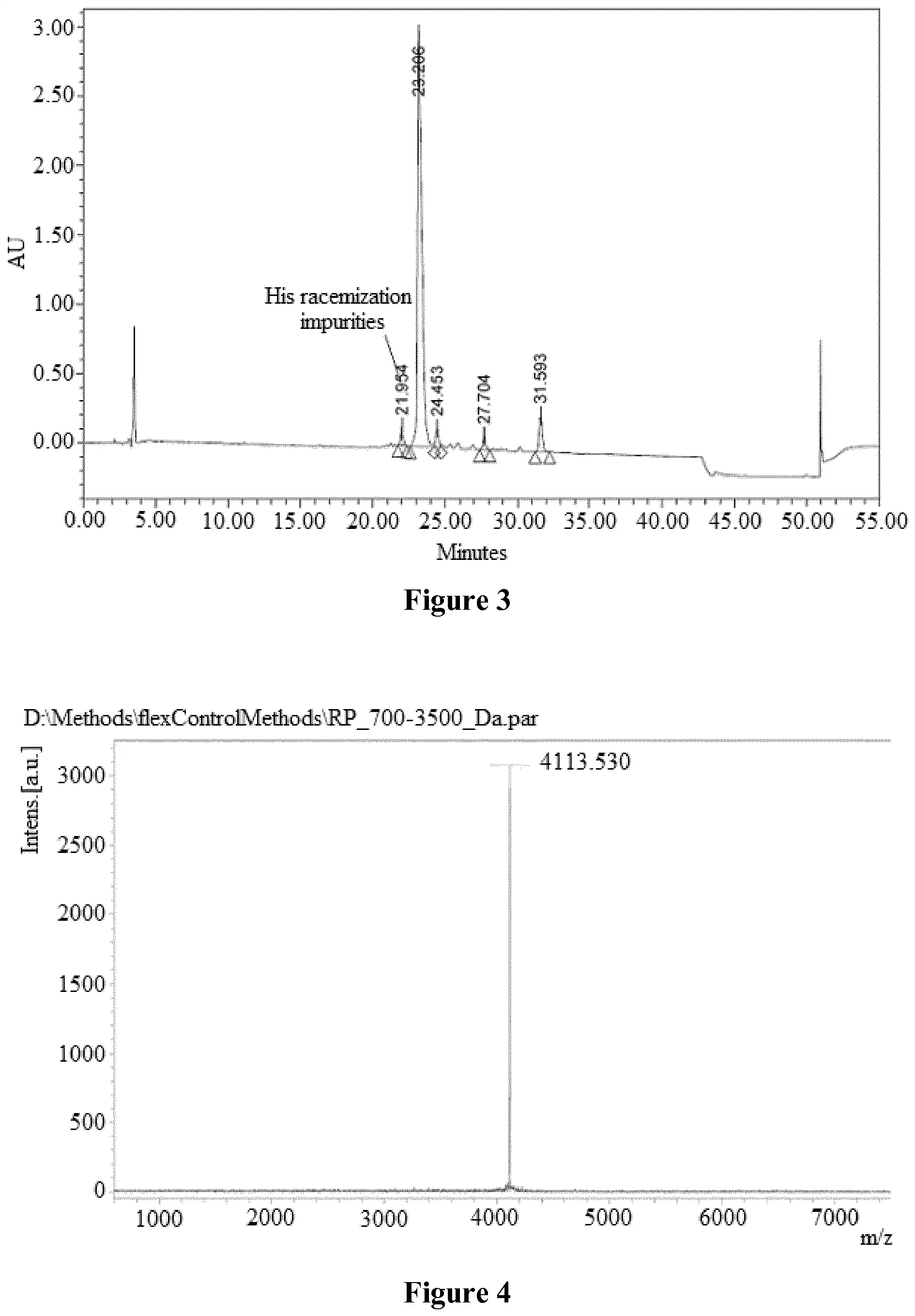
That execution layer starts with characterization, because differentiated peptide mechanisms are cheap to name and expensive to characterize. A 2026 Frontiers review of underexplored peptide-receptor systems lists apelin, spexin, METRNL, oxyntomodulin and PYY among the receptors still thinly explored, and it is a review of biology, not a count of programs. Turning any one of those into a lead means peptide analog generation built as focused panels: alanine scans, positional scans, truncations and scramble controls (Evolving a Peptide: Library Platforms and Diversification Strategies, 2019).
The failure mode is rarely length. Sequence-driven hydrophobicity and aggregation broaden peaks and destroy recovery (PMC, 2008), and in particularly difficult cases HPLC purification of long hydrophobic peptides has returned under 1% yield, with individual Aβ peptides recovered at 0.7%. Multi-disulfide and cyclization-heavy sequences add cysteine-pairing heterogeneity, so a correct linear chain can still give an unfavourable product distribution (PMC, 2020).
|
What it rules out |
|
|---|---|
|
Depsipeptides RP-HPLC purity (area %, 214-220 nm) |
Co-eluting impurities and aggregate shoulders |
|
LC-MS identity (observed vs theoretical mass) |
Wrong sequence or Custom Peptide Synthesis Price missed coupling |
|
Amino acid analysis Tripeptide Synthesis |
Peptide content inflated by water and salts |
|
Counterion determination (TFA, acetate, chloride) |
Mass balance errors in dosing math |
|
LAL endotoxin (cell, animal or sterile work only) |
Endotoxin carryover |
For Tip: A vendor certificate reports what shipped. Choosing the next analog needs the peak shape, the mass error and the counterion, because those decide whether the series is tractable or already aggregating.
What Early Programs Should Do Now
Treat the analog work as a parallel track, not a sequential one. Run the focused array (alanine, positional, truncation and scramble controls) alongside your primary potency work, because IND-ready means the package has to satisfy both nonclinical safety and CMC/quality expectations at the same time, including stability, analytical methods and batch history (Peptide Custom Synthesized Peptides Trace, 2026-04-04). Characterization is the step teams most often defer and then regret: RP-HPLC or UPLC area percent at 214–220 nm, LC-MS observed-versus-theoretical mass, amino acid analysis for net content, counterion determination, and LAL only where material contacts cells, animals or sterile workflows. Lock lot-level documentation early rather than reconstructing it before the milestone.
For teams that need peptide analog generation at that stage, MOL Changes supports custom peptide synthesis for early discovery with sequences up to 250 amino acids, crude to ≥98% purity, mg to kg scale, five analog library formats, more than 200 modifications, and a per-order Certificate of Analysis with HPLC chromatogram and mass spectral data. Tsika Peptide Synthesis Service
Note: This article is for informational purposes and is not medical advice. Consult a qualified healthcare professional before making medical decisions. MOL Changes publishes as a peptide vendor, and the capability details above describe its own services.
Mibvunzo Inowanzo bvunzwa
What does “non-incretin” mean in obesity drug development?
A non-incretin obesity peptide works through a biological pathway other than the GLP-1, GIP, or glucagon receptors that drugs like semaglutide and tirzepatide target. That distinction matters for two reasons. First, tolerability: gastrointestinal side effects are closely tied to incretin receptor activation, so a different mechanism may avoid the nausea and vomiting that drive discontinuation. Second, combination potential: a non-incretin agent can be layered onto an existing incretin therapy rather than competing with it, which opens add-on use in patients already on a GLP-1.
What does IND-ready require of a peptide CMC package?
Reaching an Investigational New Drug filing means the chemistry, manufacturing, and controls section has to establish a reproducible synthesis route, a defined purity profile, and a stability-indicating analytical method set. Peptide analytical characterization typically covers identity by mass spectrometry, purity by HPLC, counterion and residual solvent data, and forced-degradation studies. The CMC and nonclinical elements FDA expects are described in the agency’s own guidance for investigational submissions.
Are the Novo–Kallyope deal terms known?
Aihwa. Novo Nordisk has not disclosed the financial terms of the asset purchase, and BioSpace’s report on the asset purchase covers the structure of the transaction without a price. Fierce Biotech’s deal write-up likewise leaves the upfront and milestone figures undisclosed. Treat any specific valuation circulating on social media as unconfirmed.
What should readers watch next?
Two dates. Phase 1 data for the acquired assets is expected in the second half of 2026, which will be the first real test of whether the non-incretin mechanism translates from preclinical models into human tolerability. Longer term, semaglutide brands retain market protection in most territories through the early 2030s but already face off-patent competition in select countries such as Canada, so the competitive window for a differentiated entrant narrows as generic supply expands.
Conclusion
The Novo–Kallyope deal is best read as a signal about scarcity: differentiated peptide mechanisms, not incremental GLP-1 analogs, are what large partners are paying to acquire. The second-order effect for early programs is that the bottleneck moves from biology to chemistry execution. A validated non-incretin obesity peptide target does not help a program that cannot iterate analogs fast enough to answer its own SAR questions.
That reframes characterization as the de-risking step rather than a downstream formality. Programs that document purity, identity, and lot-to-lot consistency early are the ones whose internal data survives scrutiny when a partner or regulator asks how a result was generated.
So the watch-list is short: track which differentiated mechanisms attract follow-on deals, and audit whether your own chemistry loop can keep pace. If the honest answer is “not yet,” the next step is low-commitment. You can request the documentation package to see what lot-level QC looks like in practice, or scope a feasibility assessment for a specific sequence before committing to a synthesis route.