The Redesign Everyone Is Reading as a Design Story

That interiors reading is the one to set aside first. The project description published by the design agency Days with Us covers a New Work concept for a Bubendorf building with offices, a staff restaurant and a daycare, developed from needs analysis through interior design, spanning 300 employees and 4,200 m² (Days with Us case page). The functional areas it lists are the ones you would expect: an open work area, a concentrated-work desk with high padded panels, a modular wooden tribune for workshops and presentations, a learning and workshop area, meeting spots with high tables and bar stools, and compact meeting rooms. The same page describes collaboration zones, retreat areas, workshop spaces and coffee points built for spontaneous exchange and know-how sharing.
One qualification matters before anything is built on top of that description. No Bachem-published, dated source describes the redesign. What exists is a vendor-published case page, taariikh la'aan, from the agency that delivered the project, with the designer’s own LinkedIn post placing completion at the end of 2023. That is a legitimate source for what was built. It is not a company strategy statement.

Read as an operating-model signal rather than a design story, the same details point somewhere more useful. A layout that separates concentrated work from spontaneous exchange is a claim about where cross-functional collaboration in peptide manufacturing is expected to happen. Whether that claim holds is the question this piece takes up.
What Peptide Knowledge Transfer Actually Means in Practice
Peptide Synthesis Peptide knowledge transfer is the controlled movement of process understanding, analytical rationale and decision history from the team that built a method to the team that will run it. It is not a feeling of collaboration, and it is not the computational sense of the term that dominates search results.
In a regulated setting, the transfer is a document-and-decision set. What the industry calls a regulated tech-transfer package is a controlled collection: process description and development history, QTPP/CQA/CPP rationale, master batch record, SOPs, transfer protocol, equipment and utilities requirements, analytical procedures, method validation and qualification reports, reference standards, system suitability criteria, quality agreement, deviation log, change history, comparability report, and final sign-off.
That package is where peptide process handoffs either hold or fail, and it crosses five interfaces: synthesis to purification, purification to analytical, analytical to QC release, QC to client-facing teams, and the reverse flow of client commitments back into process decisions.
The Interfaces Where Peptide Process Handoffs Break
Peptide process handoffs break at four interfaces on a single batch, and each one needs a different artifact to survive turnover.
Synthesis to purification is the first. The purification team needs the method rationale and the impurity profile that explains why a gradient was chosen, not just the gradient itself. A recorded method without its reasoning is a recipe nobody can adjust when a new impurity appears.
Purification to analytical is the second. Acceptance criteria and system suitability criteria tell the analytical team what a passing chromatogram looks like for this program, which matters because peptide chromatograms are rarely self-explanatory.
Analytical to QC release is the third, and it depends on tiered impurity logic. Under ICH Q3B(R2) impurity thresholds, an impurity must be reported above the reporting threshold, structurally identified above the identification threshold, and qualified for safety above the qualification threshold. Peptides often adapt rather than adopt these thresholds, which means the reasoning behind a program’s chosen tiers has to travel with the CoA. Without it, a QC reviewer sees a number and not a decision.
QC to client-facing is the fourth: the deviation log and the client communication template, so that what reaches the sponsor matches what the batch record actually shows.
⚠️ Warning: A single HPLC purification lead owning three late-stage programs is a single point of failure across all four interfaces at once. If that person is unavailable for two weeks, the method rationale, the impurity interpretation, and the client-facing explanation of a deviation all become unavailable with them. Tacit knowledge retention biotech programs rarely fail because nobody wrote anything down; they fail because what was written down does not answer the question the next person has.
Why the Conventional Collaboration Advice Fails
The mainstream answer to knowledge loss is proximity: open offices, cross-functional standups, “break down silos.” Bachem’s redesign follows that logic, and it is a reasonable response to a real problem. It is also incomplete, because proximity does not produce transfer.
Tacit knowledge in peptide work lives in judgment calls. Whether an impurity peak is a method artifact or a real degradant. Whether a TFA counterion exchange needs repeating. Whether an endotoxin LAL result warrants a hold. None of that moves because two teams now sit closer together.
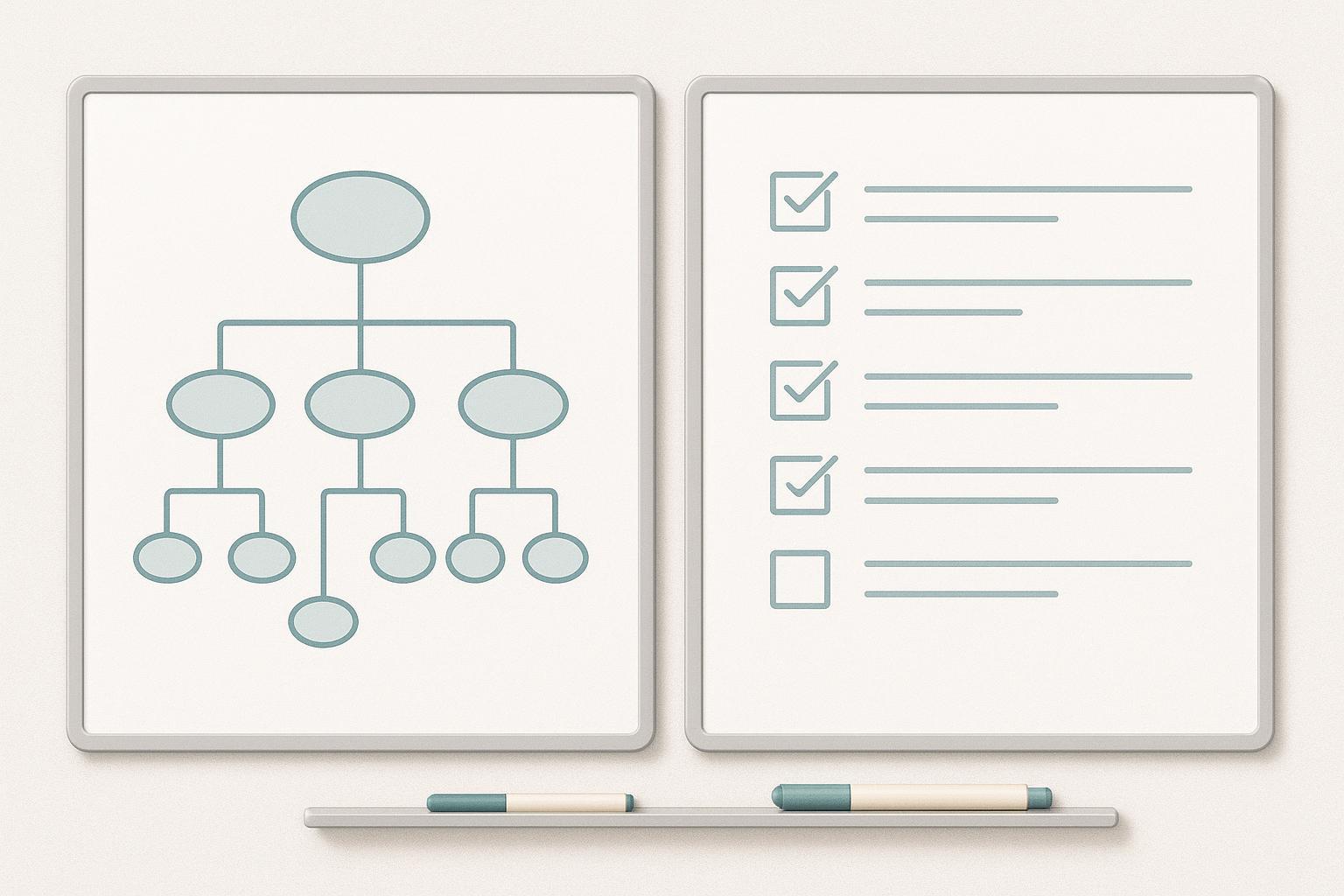
The deeper gap is what gets mapped. Conventional cross-functional collaboration in peptide manufacturing maps teams. Critical-expertise mapping works at the capability level instead, defining the process, breaking the role into specific capabilities, and recording whether backup is documented, trained or absent (Fabrico, 2026). An org chart never surfaces that only one person can make a specific release decision. That is the tacit knowledge retention biotech organizations keep rediscovering the hard way.
What the Data Actually Shows About Expertise Loss
Operator error was the leading cause of batch failures in 2022, at 3.8% of commercial batches and 3.8% of clinical batches, sida uu sheegay BioPlan’s annual manufacturing survey, which covers more than 140 biopharmaceutical companies and 130 suppliers. A separate 2025 analysis found that over 80% of process deviations and 25% of quality Peptides synthetic faults are attributed to human error, and that 80% of investigations close on probable rather than definitive root causes (PwC’s 2025 analysis of pharma quality deviations). The two measures are not comparable: one counts batch failures, the other counts deviations, and PwC sells quality advisory services, so its framing deserves that caveat.
The structural driver is demographic. The same workforce projections cited above put 1.9 million of those roles at risk of going unfilled, with a quarter of the workforce already over 55.
Segmenting the Signal: Incumbents, Specialist Shops and Buyers

For large CDMOs, capacity expansion and margin pressure arrive together, and that combination is what makes undocumented expertise expensive. Bachem’s H1 2026 results show group sales of CHF 326.4 million, up 4.3% in CHF and 7.3% in local currencies, against EBITDA of CHF 82.8 million, down 9.0%, and EBIT of CHF 54.1 million, down 19.1%. Building K’s 2026 ramp-up explains part of that gap: the facility is running and manufacturing commercial GMP products, with ramp-up costs hitting the operating result as expected.
Specialist shops face the same expertise risk with none of the headcount to absorb it. When a single method owner retires, they cannot hire their way out, so capability mapping is their only real lever.
Buyers inherit the risk through tech transfer. The questions worth asking in a quality agreement change accordingly, from “who owns this method” to “who else can run it, and how would we know.”
Building the Handoff Artifacts That Survive Turnover
The artifacts that carry peptide knowledge transfer are unglamorous, and that is the point. They sit inside a regulated tech-transfer package, and each one protects a specific interface where peptide process handoffs otherwise fail.
|
Artifact |
Interface protected |
What it must record |
Adeegyada Owner |
|---|---|---|---|
|
Batch summary |
Development to manufacturing |
What actually happened, against what the master batch record says should happen |
Process development lead |
|
Exception log |
Manufacturing to QA and client |
Each deviation, its disposition, and the reasoning behind that disposition |
QA lead with the batch owner |
|
Method rationale |
Analytical method owner to successor |
Parameter ranges and why those ranges were chosen |
Method development scientist |
|
Escalation decision tree |
Bench to shift lead to client |
Acceptance limits distinguished from alert limits, with the trigger for each |
Technical operations manager |
|
Client communication template Soosaarka Peptide |
Technical team to client-facing team |
How to explain a delay or deviation without improvising |
Program manager |
Wixii Talo ah: Capture the method rationale at development time. Reconstructing it a year later, from a retiring scientist’s memory, is the expensive version of the same document.
One honest limitation applies to all five. No documentation system fully replaces a retiring method owner, and any claim that it does should be treated with suspicion.
How to Map Critical Expertise Before You Lose It
Start with the process, not the org chart. Pick one critical process, then break the role that owns it into specific capabilities: habka horumarinta, troubleshooting, release decisions, deviation interpretation. For each capability, record who owns it and whether backup exists in documented, trained, or absent form. Rate vacancy risk by operational, quality, and delay impact. Close the gaps with cross-training, dukumeenti, shadowing, and succession planning. This is capability-level skills mapping, and it is the cheapest entry point into biotech operations knowledge management because it needs no new system, only a structured conversation.
A cross-disciplinary technical team structure, where an analytical lead, a process engineer, and a quality reviewer jointly own a method’s lifecycle, is one illustration of how that mapping surfaces shared dependencies early.
Where This Argument Is Weakest
The redesign itself has no Bachem-published dated source, so the reading here comes from the design agency’s case description rather than from the company. A reader who rejects that interpretation loses the lead-in, not the operational argument, which stands on workforce structure and handoff artifacts. Proximity and informal exchange do help early-stage Shop discovery teams and small co-located groups; the critique targets the assumption that proximity is sufficient, not that it is worthless. The weakest link is the human-error evidence: those figures draw on different denominators, and at least one carries vendor bias, so the case rests more on the structural workforce data than on any single percentage.
But Doesn’t Documentation Slow Teams Down?
Capturing a method rationale while the method is being developed costs hours. Reconstructing that same rationale after the method owner has left costs weeks of rework plus a re-validation, because the reasoning behind each parameter has to be rediscovered before it can be defended. The work is not extra; it is the same work moved earlier, to a point where the person who holds the answer is still in the room. A regulated tech-transfer package already forces much of this capture, so the marginal effort is the rationale layer, not the raw data. Ku saabsan
What If We Have Already Invested in the Old Model?
You do not have to replace anything. The artifacts layer onto the LIMS, ELN and documentation stack you already run, and the first move costs no new tooling at all: a capability-level skills mapping exercise that names who holds which judgment and where it currently lives.
That distinction matters because the systems carry only part of the load. A LIMS or ELN records what was entered, not why an analyst chose a shallower gradient or accepted a wider impurity window. Capture the reasoning separately, then let the existing systems store the record.
Start with the mapping sequence, not the software.
The Shift Peptide Organizations Actually Need
The redesign is a symptom of an industry that has scaled capacity faster than it has scaled the transfer of judgment. Turnover is a structural condition now, not an episodic one, as Manufacturing Institute and Deloitte workforce projections have documented. The shift that follows is to treat handoff artifacts and capability maps as operational infrastructure, with the same status as equipment qualification rather than documentation overhead. If that happens, turnover stops being an existential event for a program, and tech transfer timelines become predictable instead of hopeful.
If peptide knowledge transfer is the constraint your programs keep running into, talk to our technical team about your peptide program. We are a peptide CDMO, so this article reflects our commercial interest in that conversation.