Як подати пептиди, розроблені ШІ, до CDMO: Handoff Playbook
Generative artificial intelligence has fundamentally transformed de novo peptide discovery. Deep learning architectures—ranging from RFdiffusion and ProteinMPNN to AlphaFold3 and ESM3—now generate tens of thousands of candidate binder sequences in minutes. However, a persistent bottleneck threatens computational drug discovery pipelines: в AI-to-bench handoff.

A computational model evaluates a peptide by backbone geometry, predicted binding energy, and structural confidence. A Contract Development and Manufacturing Organization (CDMO), by contrast, evaluates that same sequence by solid-phase chemistry, solvent solubility, protecting group kinetics, and purification yields. When computational hits are transferred to a CDMO as plain FASTA text strings without physical context, synthesis failure rates spike dramatically.
The recent GenScript and Tamarind Bio partnership highlights a major industry shift: connecting cloud-based AI design platforms directly to outsourced wet-lab validation services. Integrating Tamarind Bio’s suite of molecular design models into the Tamarind Assay Portal with GenScript’s automated lab capabilities establishes a precedent for digital-to-physical workflows.
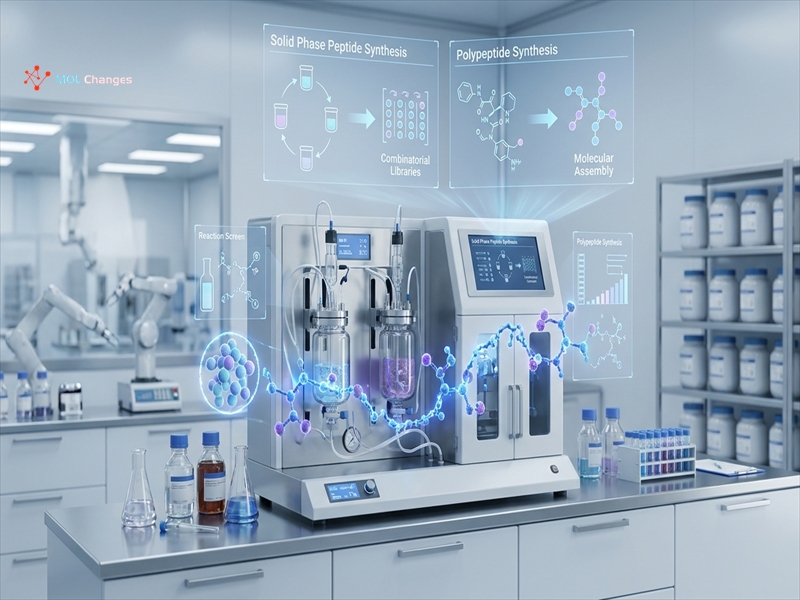
To capitalize on this automated connectivity, biotech R&D teams, principal investigators, and process chemists require a standardized submission protocol. This playbook outlines the technical requirements, pre-synthesis in silico filters, failure-mode mitigations, and validation assays necessary to de-risk AI-designed peptide sequence handoffs to CDMO partners.
1. Beyond the FASTA File: Essential CDMO Submission Metadata
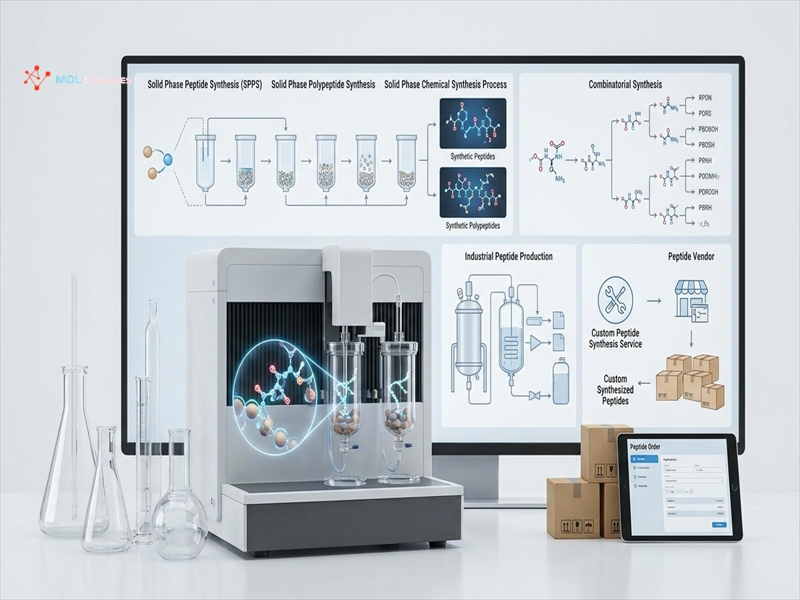
Submitting a simple linear amino acid string (напр., ACDEFGHIKLMNPQRSTVWY) to a CDMO is the leading cause of synthesis delays and unexpected analytical failures. Generative models frequently introduce unusual backbone topologies, dense hydrophobic patches, or non-native disulfide connectivity that standard solid-phase peptide synthesis (SPSS) protocols cannot handle automatically.
To ensure accurate chemical translation, a complete submission package must contain four distinct metadata pillars.
AI Design Output (PDB / JSON)
- Design Provenance & Model Context (Model architecture, seeds, pLDDT, pAE)
- Computational Scoring Metrics (Binding ΔG, SASA, Solvation energy)
- Chemical & Structural Constraints (N/C capping, Cyclization, Non-canonical AA)
- Target Specifications & Use Case (Purity ≥98%, Кількість, Sterile requirements) Standardized CDMO Work Order Package
Таблетки 1: Design Provenance and Generative Context
CDMO synthesis engineers need to understand how the sequence was generated. Model provenance reveals intrinsic structural assumptions:
- Model Architecture and Version: Specify whether the sequence originated from RFdiffusion, AlphaFold-Multimer, ProteinMPNN, ESMFold, or an ensemble model.
- Generation Parameters: Record random seed numbers, temperature settings, and design biases (напр., forced hydrophobic interface packing).
- Per-Residue Confidence Scores: Include local pLDDT (predicted Local Distance Difference Test) scores across the sequence. A sequence with low pLDDT regions (< 70) often corresponds to flexible loops or unfolded segments that behave unpredictably during purification.
Таблетки 2: Computational Scoring Metrics
- Predicted Aligned Error (pAE): Provide interface pAE values for target-binding peptides to highlight critical contact residues.
- Binding Free Energy (ΔG): Include calculated electrostatic and van der Waals interface scores.
- Solvent Accessible Surface Area (SASA): Detail hydrophobic vs. polar surface exposure.
Таблетки 3: Chemical and Structural Constraints
- Terminal Modifications: Explicitly define N-terminal capping (напр., free amine, Acetylation, Pyroglutamate) and C-terminal capping (напр., free acid, Amidation).
- Cyclization Architecture: Specify exact atom linkages for cyclic peptides—head-to-tail amide bonds, side-chain to side-chain lactam bridges, or specific cysteine disulfide pairs.
- Non-Canonical Residues: Detail all D-amino acids, β-amino acids, N-methylated residues, or post-translational modifications (напр., ліпідізація, фосфорилювання, Пегілювання).
Таблетки 4: Target Specifications and Application Scope
- Required Purity Level: Crude, ≥85% (screening), ≥95% (in vitro bioassays), or ≥98% (in vivo / IND-enabling studies).
- Quantity Scale: Milligram scale (1–10 mg for initial binding screening) up to gram/kilogram scale (pilot manufacturing).
- Sterility Requirements: Specify whether the material requires manufacture in Class 100 cleanroom environments to prevent endotoxin and bioburden contamination during cell-based assays.
Standardized Submission File Schemas
To streamline digital intake, prepare data in three standardized formats:
| File Format | Primary Information Content | CDMO Operational Purpose |
|---|---|---|
| FASTA / Plain Text | Single-letter AA code, sequence ID, terminal modifications | Initial automated sequence parser and length validation |
| PDB / mmCIF | 3D atomic coordinates, backbone dihedrals, disulfide linkages | Structural orientation, 3D spatial constraint verification |
| JSON Payload | Model provenance, pLDDT/pAE arrays, calculated GRAVY, pI, target specifications | Programmatic intake into CDMO enterprise resource systems |
| CSV / TSV Batch | Multi-candidate table (ID, послідовність, чистота, масштаб, N-term, C-term, modifications) | High-throughput synthesis work order batch processing |
Для підказки: Always include a 3D coordinate file (
.pdbабо.cif) alongside linear sequences for cyclic or multi-disulfide peptides. Automated CDMO parsers use 3D files to confirm cysteine pairing maps before solid support resin selection.
2. Pre-Synthesis In Silico Triage Filters
Generative models optimize primarily for target binding affinity. In doing so, they frequently generate unphysical sequences that are chemically impossible or extremely difficult to synthesize. Before issuing a purchase order, run candidates through a multi-parameter in silico screening cascade.
Raw AI Hit Pool (10,000 Candidates)
Filter 1: GRAVY Hydropathicity (-0.5 до +0.2) Pass Filter 2: Net Charge & pI (|Net Charge| ≥ 2 at pH 7.4) Pass Filter 3: CamSol Intrinsic Solubility Score (> -1.0) Pass Filter 4: TANGO β-Sheet Aggregation Propensity (< 5%) Pass Synthesis-Ready Candidate Pool (100 High-Yield Hits)
1. GRAVY (Grand Average of Hydropathicity)
The GRAVY score calculates the sum of hydropathicity values of all amino acids divided by sequence length.
- Optimal Range: -0.5 до +0.2.
- High-Risk Threshold: Scores exceeding +0.4 indicate severe hydrophobicity. These peptides tend to aggregate on resin during SPPS and exhibit negligible aqueous solubility.
2. Isoelectric Point (pI) and Net Charge
Peptides carry minimal net charge near their pI, leading to self-association and precipitation.
- Rule: Calculate the net charge at physiological pH (pH 7.4). Ensure a net charge of at least +2 або -2. If the net charge is between -1 і +1 and the sequence contains hydrophobic patches, insert solubilizing lysines or glutamates at non-binding termini (напр., adding a KDK or EEE tag).
3. CamSol Intrinsic Solubility Score
CamSol evaluates local amino acid hydrophobicity, charge, and secondary structure propensity.
- Threshold: Positive scores indicate high intrinsic solubility. Sequences scoring below -1.0 should be flagged for sequence optimization or specialized solubilizing handles.
4. TANGO Aggregation Propensity
TANGO calculates the propensity of unfolded peptide segments to form intermolecular β-sheet aggregates.
- Threshold: Any sequence segment showing a TANGO aggregation score > 5% represents a high risk for on-resin aggregation during chain elongation.
5. Sequence Motif Scan
Flag and modify problematic sequence patterns prior to submission:
- Consecutive Hydrophobic Runs: $> 3$ consecutive hydrophobic residues (напр., VVV, LLL, FIW, IYF) trigger rapid β-sheet stacking.
- Aspartimide-Prone Dipeptides: DG, DS, DA, and DN motifs under basic Fmoc deprotection conditions undergo side-chain cyclization to form aspartimide byproducts.
- Multiple Cysteine Clusters: Unprotected cysteines separated by fewer than 2 amino acids complicate selective protecting group removal.
Quantitative Pre-Synthesis Screening Framework
| Triage Metric | Pass Range | Caution / Warn Range | Невдача / Redesign Range | Primary Failure Risk |
|---|---|---|---|---|
| GRAVY Index | -0.5 до +0.2 | +0.2 до +0.4 | $> +0.4$ | On-resin aggregation, aqueous insolubility |
| Net Charge (pH 7.4) | Charge | ≥ 2 | ||
| CamSol Score | $> 0.0$ | $0.0$ до -1.0 | $< -1.0$ | Low kinetic solubility, precipitation |
| TANGO Score | < 1% | 1% до 5% | > 5% | β-sheet stacking, incomplete coupling |
| Hydrophobic Runs | ≤ 2 consecutive | $3$ consecutive | $> 3$ consecutive | Severe truncation and deletion impurities |
3. Critical Risk Areas: Where AI Peptide Hits Fail on the Bench
Synthetic execution translates digital models into physical matter. Understanding the underlying physical chemistry of SPPS allows R&D teams to anticipate CDMO bottlenecks and co-develop risk mitigation strategies.
Ключ на винос: закінчено 70% of AI-designed peptide synthesis failures stem from on-resin inter-chain aggregation. Generative models over-index on hydrophobic packing to maximize predicted binding energy, inadvertently creating sequences that self-assemble into insoluble β-sheets during solid-phase synthesis.
Risk 1: On-Resin Aggregation and Incomplete Coupling
During SPPS, growing peptide chains attached to the solid support resin can form inter- and intramolecular hydrogen-bonded β-sheets. According to recent on-resin β-sheet aggregation studies, hydrophobic amino acid composition directly drives secondary structure collapse within resin pores.
This aggregation restricts solvent swelling and blocks piperidine reagent access to the N-terminal Fmoc group. As a consequence:
- Fmoc Deprotection Kinetics Slow Down: Deprotection cycles that normally take 3 minutes extend to 30+ minutes or fail partially.
- Deletion Sequences Accumulate: Unreacted amino groups remain during subsequent coupling steps, yielding complex mixtures of N-1 and N-2 deletion impurities that are nearly impossible to separate by reverse-phase HPLC.
Bench Observation: In high-throughput synthesis runs of AI-generated binders with hydrophobic stretches (>3 consecutive hydrophobic residues), real-time Fmoc deprotection UV monitoring often reveals a sharp efficiency drop after residue 8–12. Incorporating pseudoproline dipeptides at these positions restores baseline reaction kinetics and eliminates truncated deletion impurities.
Aggregated Resin State:
[Resin Bead] (Hydrophobic β-Sheet Stacking) Fmoc-Amine (Blocked) x (Piperidine Inaccessible)
Solvated / Disrupted State:
[Resin Bead] [Pseudoproline / Isoacyl Handle] Fmoc-Amine (Exposed) ► (Complete Deprotection)
Risk 2: Racemization During Coupling
Generative AI models do not account for stereochemical stability during activation. High-temperature microwave-assisted SPPS accelerates coupling reactions but significantly increases racemization risks for specific amino acids:
- Cysteine: Highly susceptible to base-catalyzed α-carbon racemization via enolization during carbodiimide activation.
- Histidine: The imidazole side chain undergoes intramolecular base catalysis, leading to L-to-D stereoisomerization.
- Aspartate: Base-mediated activation promotes D-aspartate formation alongside aspartimide rearrangement.
Risk 3: TFA Cleavage and Deprotection Side Reactions
Global deprotection using Trifluoroacetic Acid (TFA) liberates reactive carbocations from side-chain protecting groups (напр., tBu, Trt, Pbf). In sequences rich in Tryptophan, Tyrosine, or Methionine:
- Free carbocations re-attach to the indole ring of Trp or the thioether of Met.
- Insufficient scavenger cocktails (EDT, TIS, water, phenol) lead to irreversible alkylated side-products that contaminate the final product.
Risk 4: Disulfide Pairing and Oxidation Ambiguity
De novo peptides engineered with 2, 4, або 6 cysteine residues present major folding challenges. Uncontrolled air oxidation of a 4-cysteine peptide can produce three distinct disulfide regioisomers:
Parallel (Cys_1-Cys_2, Cys_3-Cys_4) vs. Anti-Parallel (Cys_1-Cys_4, Cys_2-Cys_3) vs. Intertwined (Cys_1-Cys_3, Cys_2-Cys_4)
If an AI model assumes a specific native fold, simple air oxidation in DMSO/water frequently yields non-native topological isomers or soluble oligomers.
Risk 5: Analytical Ambiguity in Reverse-Phase HPLC
Hydrophobic AI hits often yield broad, split, or tailing peaks on standard C18 analytical HPLC columns. This peak broadening occurs because the peptide exists as multiple slowly interconverting conformers in the mobile phase, or because the hydrophobic sequence partially aggregates on the column stationary phase. Without orthogonal mass spectrometry, these split peaks are frequently misinterpreted as synthesis failure rather than reversible conformational equilibria.
4. Recommended Validation Protocols: De-Risking AI-to-Bench Handoffs
To bridge computational predictions with physical deliverables, CDMOs must employ specialized synthetic tactics and analytical characterization suites.
Raw AI Sequence Input
CDMO Feasibility Pre-Screening High Aggregation Risk? ► Incorporate Pseudoprolines / Isoacyl Peptides Multi-Disulfide Map? ► Orthogonal Protecting Groups (Trt/Acm/Mmt) High Hydrophobicity? ► PEGylated Solubilizing Handles Synthesis & In-Line Process Analytical Technology (PAT) Real-Time Fmoc Deprotection UV Monitoring Micro-Cleavage LC-MS Inter-Step Checks Orthogonal Analytical Characterization Suite
- ОФ-ВЕРХ & ESI-MS / MALDI-TOF (Mass & Purity)
- Circular Dichroism (CD) Spectroscopy (Secondary Structure)
- Dynamic Light Scattering (DLS) (Monomeric Verification)
- Ellman’s Assay & Ellman-LC-MS (Disulfide Pairing)
Advanced Synthesis Strategies for “Difficult” AI Sequences
When an AI-designed sequence triggers caution thresholds during pre-synthesis triage, experienced CDMOs deploy tailored chemical strategies:
- Pseudoproline Dipeptides: Insert X aa-Ser, X aa-Thr, or X aa-Cys oxazolidine dipeptides every 5–6 residues to disrupt β-sheet secondary structure during resin elongation.
- Isoacyl Peptide Technology: Temporarily convert peptide bonds into ester linkages (O-N acyl shift). The ester linkage breaks β-sheet stacking during synthesis; subsequent exposure to neutral pH 7.4 buffer triggers rapid, quantitative O-to-N acyl migration to restore the native amide backbone.
- Orthogonal Disulfide Protecting Groups: Use orthogonal protecting groups—such as Trityl (Trt), Acetamidomethyl (Acm), and Monomethoxytrityl (Mmt)—to force stepwise, directed disulfide bond formation rather than relying on thermodynamic air oxidation.
- Pre-Synthesis Aggregation Predictive Modeling: Advanced CDMOs utilize pre-synthesis aggregation predictive models to optimize resin loading density, choose low-loading PEG-based resins (напр., ChemMatrix), and adjust flow-synthesis temperatures dynamically.
Orthogonal Analytical Validation Suite
| Validation Assay | Analytical Technique | Quality Target / Acceptance Criteria | Operational Value |
|---|---|---|---|
| Purity & Mass Identity | ОФ-ВЕРХ (C18/C4) + ESI-MS / MALDI-TOF | Single major peak; target purity ≥ 95% or ≥ 98%; monoisotopic mass within ± 0.5 І | Confirms full-length sequence identity and absence of deletion sequences |
| Secondary Structure | Circular Dichroism (CD) Spectroscopy | Far-UV spectra (190–260 nm) matching predicted α-helix (208/222 nm minima) or β-sheet (218 nm minimum) | Verifies physical peptide folding matches the 3D model |
| Aggregational State | Dynamic Light Scattering (DLS) / SEC-MALS | Hydrodynamic radius (Rₕ) corresponding to monomeric state; polydispersity index (PDI) $< 0.15$ | Ensures peptide is non-aggregated prior to cell-based or biophysical binding assays |
| Disulfide Connectivity | Ellman’s Assay (DTNB) + LC-MS/MS mapping | Free thiol content < 0.05 mol SH/mol peptide; unambiguous fragment ions for Cys-Cys pairs | Confirms complete oxidation and correct disulfide pairing topology |
5. The Operational Playbook: Executing Successful CDMO Handoffs
To operationalize AI peptide submission, Р&D organizations should institute a standardized 5-step handoff workflow.
Крок 1: Export Computational Design Package (PDB, FASTA, JSON, Scores)
Крок 2: Apply In Silico Triage Filter (GRAVY, pI, CamSol, TANGO) Крок 3: CDMO Technical Pre-Screening & Feasibility Review Step 4: Pilot Synthesis & In-Line Process Analytical Control Step 5: Full Analytical Release & QC Certificate Validation
Крок 1: Export the Complete Digital Design Package
Compile all computational outputs—including PDB coordinate files, FASTA sequences, model provenance JSONs, and per-residue pLDDT arrays—into a single submission archive.
Крок 2: Execute In Silico Triage Screening
Filter candidates using GRAVY, pI, CamSol, and TANGO rules. Eliminate non-synthesizable outliers and annotate borderline candidates with requested chemical modifications (напр., solubilizing tags, N-terminal acetylation).
Крок 3: CDMO Feasibility Review and Chemistry Plan
Submit the filtered package to your CDMO partner. The CDMO synthesis engineering team reviews:
- Resin choice (Polystyrene vs. PEG-ChemMatrix).
- Coupling chemistry (HATU, DIC/Oxyma, or PyBOP).
- Protection strategy for difficult motifs.
Крок 4: Pilot Scale Synthesis with Process Controls
For novel de novo scaffolds, execute a small-scale pilot synthesis (1–5 mg) featuring real-time UV monitoring of Fmoc deprotection kinetics and micro-cleavage LC-MS analysis prior to large-scale production.
Крок 5: Analytical QC Release and Cleanroom Packaging
Verify final material against the orthogonal validation suite. Ensure that purified peptides intended for cell culture or preclinical models are processed in Class 100 ultra-sterile environments to guarantee zero endotoxin contamination.
Partnering with Specialized CDMOs for AI-Designed Peptides
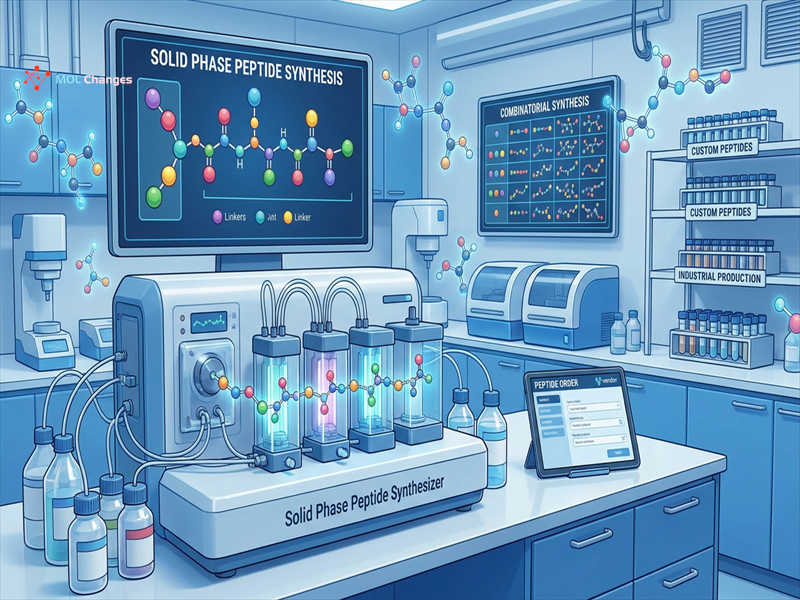
As generative AI models continue to expand the structural landscape of therapeutic peptides, success ultimately hinges on the physical execution of synthetic chemistry. While generalist suppliers treat custom peptides as commodity catalog items, complex AI hits demand a specialized CDMO partner equipped with advanced synthesis technologies, pre-synthesis feasibility filtering, and rigorous quality controls.
When selecting a manufacturing partner for AI-designed sequences, evaluating platform capabilities—such as access to extensive modification suites, ультрастерильні чисті приміщення, and flexible scale-up options—ensures that computational designs transition seamlessly into physical validation. Р&D teams seeking to bridge digital design with laboratory execution can consult specialized platforms like MOL Changes for custom peptide synthesis services and technical feasibility evaluations tailored to de-risking the AI-to-bench handoff.
Technical Feasibility Check: To evaluate your computational candidate portfolio against synthesis feasibility parameters, consult with the MOL Changes technical team for a comprehensive pre-synthesis review.