Peptide Modifications
Modifikacija N-terminala
What is N-terminal modification?
N-terminal acetylation removes the charge from the amino terminus of a peptide. In general, acetylation modification is recommended if the peptide is to mimic its natural structure in the protein. Osim toga, the acetylation modification stabilises the peptide chain and makes it less susceptible to enzymatic degradation at the end of the peptide chain.
In addition to acylation, other N-terminal modifications (npr., urea, carbamate, sulfonamide, alkylamine) can be performed.
Radioligands are often attached to the N-terminus of a peptide if the pharmacodynamics of the peptide allow it. Na primjer, DOTA, NOTA, NODAGA, itd. can be attached.
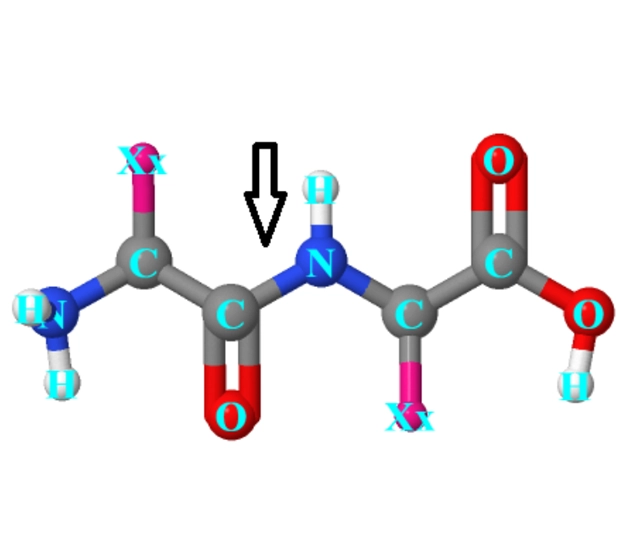
N-terminal modification technical
Modification type
N-terminal modification improves the stability of peptides because this modification generates a structure similar to the natural protein structure. Dakle, this modification method can improve the biological activity of the polypeptide and prevent enzymatic degradation.
|
5-FAM
|
BSA (-NH2 of N terminal)
|
Hexanoic acid
|
|---|---|---|
|
5-FAM-Ahx |
CBZ |
HYNIC |
|
Abz |
Dansyl |
KLH (-NH2 of N terminal) |
|
Acetylation |
Dansyl-Ahx |
Lauric acid |
|
Acryl |
Decanoic acid |
Lipoic acid |
|
Alloc |
DTPA |
Maleimide |
|
Benzoyl |
Fatty Acid |
MCA |
|
Biotin |
FITC |
Myristoyl |
|
Biotin-Ahx |
FITC-Ahx |
Octanoic acid |
|
BOC |
Fmoc |
OVA (-NH2 of N terminal) |
|
Br-Ac- |
Formylation |
Palmitoyl |
Featured Citations
Proteome-derived peptide libraries for deep specificity profiling of N-terminal modification reagents
Protein and peptide N termini are important targets for selective modification with chemoproteomics reagents and bioconjugation tools. The N-terminal α-amine occurs only once in each polypeptide chain, making it an attractive target for protein bioconjugation. In cells, new N termini can be generated by proteolytic cleavage and captured by N-terminal modification reagents that enable proteome-wide identification of protease substrates with tandem mass spectrometry (LC-MS/MS). An understanding of the N-terminal sequence specificity of the modification reagents is critical for each of these applications. Proteome-derived peptide libraries in combination with LC-MS/MS are powerful tools for profiling the sequence specificity of N-terminal modification reagents. These libraries are highly diverse, and LC-MS/MS enables analysis of the modification efficiencies of tens of thousands of sequences in a single experiment. Proteome-derived peptide libraries are a powerful tool for profiling the sequence specificities of enzymatic and chemical peptide labeling reagents. Subtiligase and 2-pyridinecarboxaldehyde (2PCA) are two reagents that have been developed for selective N-terminal peptide modification and can be studied using proteome derived peptide libraries. This protocol outlines the steps for generating N-terminally diverse proteome-derived peptide libraries and for applying these libraries to profile the specificity of N-terminal modification reagents. We detail the steps for profiling the specificity of 2-pyridinecarboxaldehyde, a chemical modification reagent, and subtiligase, an enzymatic modification reagent. These protocols can easily be adapted to alternative proteome sources and other N-terminal peptide labeling reagents.
Povezane usluge modifikacije peptida
peptidna glikozilacija
peptidna glikozilacija
Glikozilacija peptida je kovalentna modifikacija koja potencijalno može poboljšati fizičko-hemijska svojstva peptida
Pročitajte višefosforilacija peptida
fosforilacija peptida
Na serinu može doći do fosforalacije (S, Biti), Treonin (T, Thr) i tirozin (Y, Tyr) bočnih lanaca formiranjem fosfoesterske veze
Pročitajte višeStapled Peptides
Stapled Peptides
Uvođenje dvije neprirodne aminokiseline koje sadrže α-metil, α-alkenil grupe tokom čvrste faze sinteze peptidnih lanaca.
Pročitajte višeCyclic Peptide
Cyclic Peptide
Peptidna ciklizacija poboljšava konformacionu stabilnost peptida (u odnosu na njihove linearne analoge) i uobičajena je strategija u razvoju peptida.
Pročitajte višemodifikacija peptida
Veliko iskustvo u modifikaciji peptida, pružanje višestrukih održivih puteva za istraživanje peptida.
