CPHI Milan bi rastî di derbarê zexta bihayê zincîra peydakirina peptîdê de çi nîşan da?
Peptide Info Supplier Base Peptides The show floor signaled sentiment, not a price index. Ew Nutrition Insight review of CPHI Milan 2026, published 14 Cotmeh 2026, records Nagre’s “pricing point pressure” and his read that “affordability is important,” alongside Indena’s Stefano Togni describing “a widespread demand to raise the quality bar and scientific validation.” The same review prints its key takeaway plainly: “Pharma-grade validation, substantiation, and documentation have moved from differentiator to entry requirement.”

The macro backdrop explains why cost pressure reached the floor at all. CPHI’s own 2026 supply-chain briefing traces the crisis to early 2025, when the United States “implemented sweeping tariffs on pharmaceutical imports, creating immediate financial pressures,” and notes “increasing pressure being placed on the industry to diversify its manufacturing away from tariff-exposed regions.”
Qualification and capacity investment can affect switching time and costs, but do not establish a universal price floor or prove that diversification cannot affect near-term quotations. Compare actual scope, supply options and timelines.

Why is the peptide supply chain splitting into commodity and high-value segments?
That sentiment has a counterpart in disclosed financials. PolyPeptide Group’s 2025 results report revenue of EUR 389.3 million, up 15.6% versus 2024, but the growth is uneven: development revenue rose 29.9% while commercial revenue rose 7.9%. Services revenue is growing roughly four times faster than product revenue at a listed peptide CDMO.
Demand pressure on the same capacity is documented by manufacturers themselves. Bachem’s note on GLP-1 volumes states that demand “is no longer measured in kilograms but increasingly in multi-kilograms and metric tons,” and that “without efficient processes, reactors, purification columns, and lyophilizers can quickly become bottlenecks.” A manufacturer’s note carries its own bias, but the direction matches PolyPeptide’s capex. Batch-to-batch consistency peptides at scale is expensive because the assets behind it are expensive.

What makes a peptide sequence difficult, and why does that break simple price comparison?
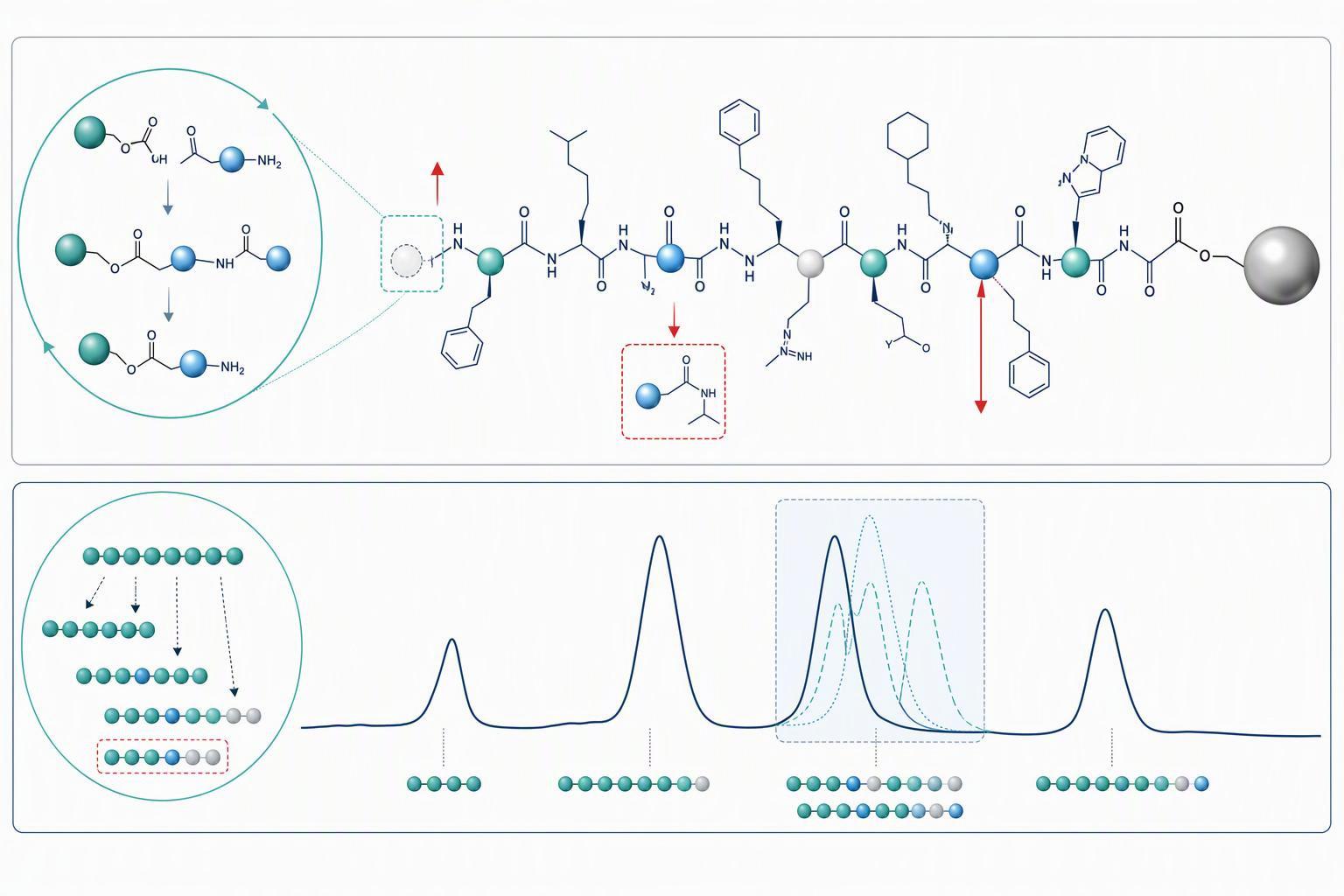
Sequence difficulty depends on residue pattern, guherandinên, route, scale and required quality. A published example of difficulties beyond a particular length is not a universal 12-residue trigger for paid development work.
The impurity profile is where price comparison breaks. AmbioPharm lists “racemized species, deletions, insertions, and incompletely removed protecting groups” among the impurities formed, and notes that “many of these impurities can elute either very close to the main product peak or even coelute with it.” Deletion impurities that co-elute with the main peak can sit inside a purity figure without being resolved by it.
Purification then absorbs the cost. Industry process descriptions of scale-up identify coupling completeness as a compounding risk, since small inefficiencies “can amplify into significant deletion sequences and yield loss at larger batch sizes,” and note that difficult crude profiles “can make preparative purification slow, low-yielding, or uneconomical.” Purification often becomes the real bottleneck once material quantity increases. A quote that assumes a clean crude profile is pricing a different molecule.
What does a synthesis quote include and exclude?
A quote is only comparable if it is read as a specification. ICH Q6A defines a specification as “a list of tests, references to analytical procedures, and appropriate acceptance criteria,” the criteria to which a substance “should conform to be considered acceptable for its intended use.” Two quotes for the same sequence are comparable only when both state tests, methods and limits.
The method behind a purity number is part of the price. Purity figures are defensible only when the analytical procedure is validated under ICH Q2(R2), the current revision that reached Step 4 in November 2023 and replaced Q2(R1). Method development, a purification route chosen for a difficult crude, counter-ion exchange, deviation handling, stability testing and technology transfer all carry cost, and a low quote typically carries them outside its scope.
|
Line item |
Illustrative narrower scope |
Illustrative expanded scope |
|---|---|---|
|
Sequence and modifications |
As listed |
As listed, with route assessment |
|
Crude profile assumption |
Cl Reconstituting Peptides ean |
Characterized; difficult Polypeptid Factory regions flagged |
|
Purification route |
Standard |
Developed for the sequence |
|
Counter-ion form |
Default |
Specified, with exchange if needed |
|
Analytical methods |
HPLC, MS Polypeptide Structure |
Validated methods, full data package Synthetic Peptide Wholesale |
|
Stability testing |
Typically excluded |
Scoped |
|
Deviation handling |
Typically excluded |
Defined |
|
Scale-up and tech transfer |
Typically excluded |
Scoped |
Custom peptide synthesis cost is therefore a function of what the specification requires, not of the sequence string alone.
How we apply this at MOL Changes, the publisher of this guide. Our quality control covers HPLC, MS and sterility testing, so a quote from us can state which identity and purity data come with the batch. It does not tell you whether a specification is adequate for your use, and it cannot guarantee a supplier’s raw data; you still read the CoA and batch record yourself, with any supplier, ours included.
What does quality mean beyond an HPLC purity number?
Purity, identity and content are three separate questions, and a single area-percent figure answers only the first. The EMA guideline on synthetic peptides, in force since June 2026, treats synthetic peptides as a class at the interface of small molecules and proteins with specific quality considerations, and sets a non-exhaustive specification list covering total and individual impurities, high-molecular-weight impurities, assay/content, nasname û naverok counter-ion, residual TFA, water, residual solvents, elemental impurities, bacterial endotoxins and microbiological purity.
The guideline also rejects catch-all parameters. It states that a specification parameter “only denoted ‘high molecular weight impurities’ is not acceptable,” and that impurities “should be specified (e.g. dimers, trimers, oligomers, aggregates),” with counter-ion content controlled “with a justified upper limit.” Named dimers, trimers, oligomers and aggregates rather than a catch-all parameter is the standard to ask for.
Peer-reviewed work on peptide reference standards identifies the four attributes that matter most in peptide quality: primary sequence, secondary structure, oligomer/aggregation state, and impurities and degradation products. It also explains why a purity number and a content number differ, through mass-balance purity assignment: “all detectable impurities (e.g., peptide related impurities, counter ion, water, residual solvents, non-combustible residues) are measured and subtracted from 100%.”
A worked example makes the gap concrete. The same paper reports a lot with 0.92% HPLC impurities and 5.58% acetic acid content, yielding 0.93 mg of peptide per mg of material. A “99% pure” label and a 93% peptide-by-mass content can both be true of that lot. Peptide quality documentation CoA should show both numbers, not one.
What must a defensible CoA and batch record contain?
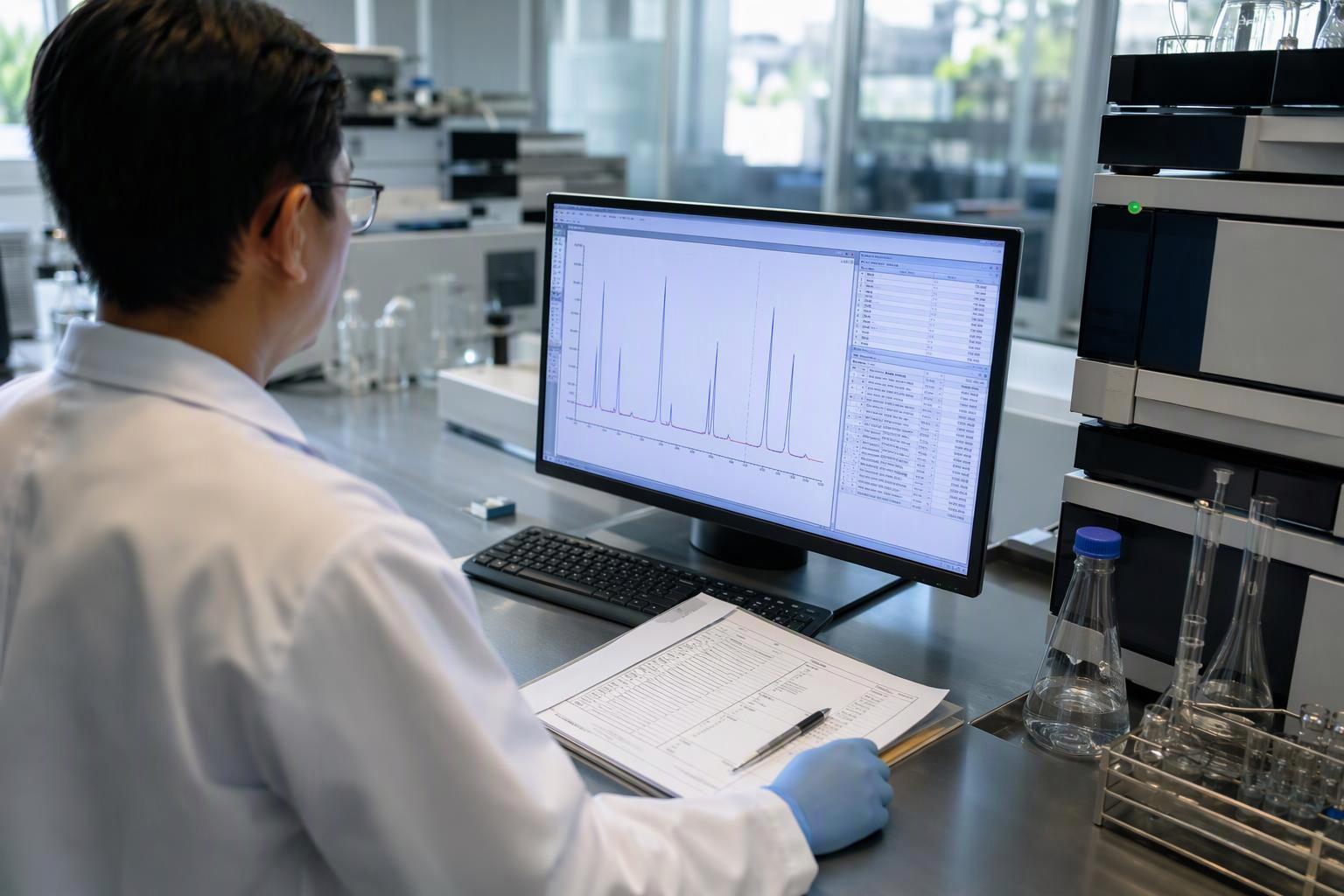
A certificate is only as good as the raw data behind it. The ALCOA+ principles MHRA set out define data as Attributable, Legible, Contemporaneous, Original and Accurate, with the “+” covering Complete, Consistent, Enduring and Available, and state there is “no difference in expectations regardless of which acronym is used.” A CoA that cannot be reconstructed from attributable, contemporaneous raw data is a document, not evidence.
Electronic records carry their own controls. Par 11 controls on electronic batch records set the criteria under which the FDA considers electronic records and signatures “trustworthy, reliable, and generally equivalent to paper records,” and require that computer systems and attendant documentation “be readily available for, and subject to, FDA inspection.” Audit trails, user attribution and record retention are part of the quality question, not an IT afterthought.
Supplier qualification should precede the first order. APIC’s best-practices guide for managing API suppliers states that quality agreements “are mandatory for highly critical materials and services” and should “ideally be signed before ordering the material or using the service,” with compliance verified during audits. Sign a quality agreement before the first purchase order.
These are general GxP texts; applying them to a specific peptide batch is the buyer’s inference, not a rule the documents state. The practical checklist: batch-specific HPLC and MS data, a specification with named impurity classes, content by mass balance, raw data meeting ALCOA+, and a signed quality agreement.
When should a buyer pay for development-risk reduction and batch reliability instead of the lowest quote?
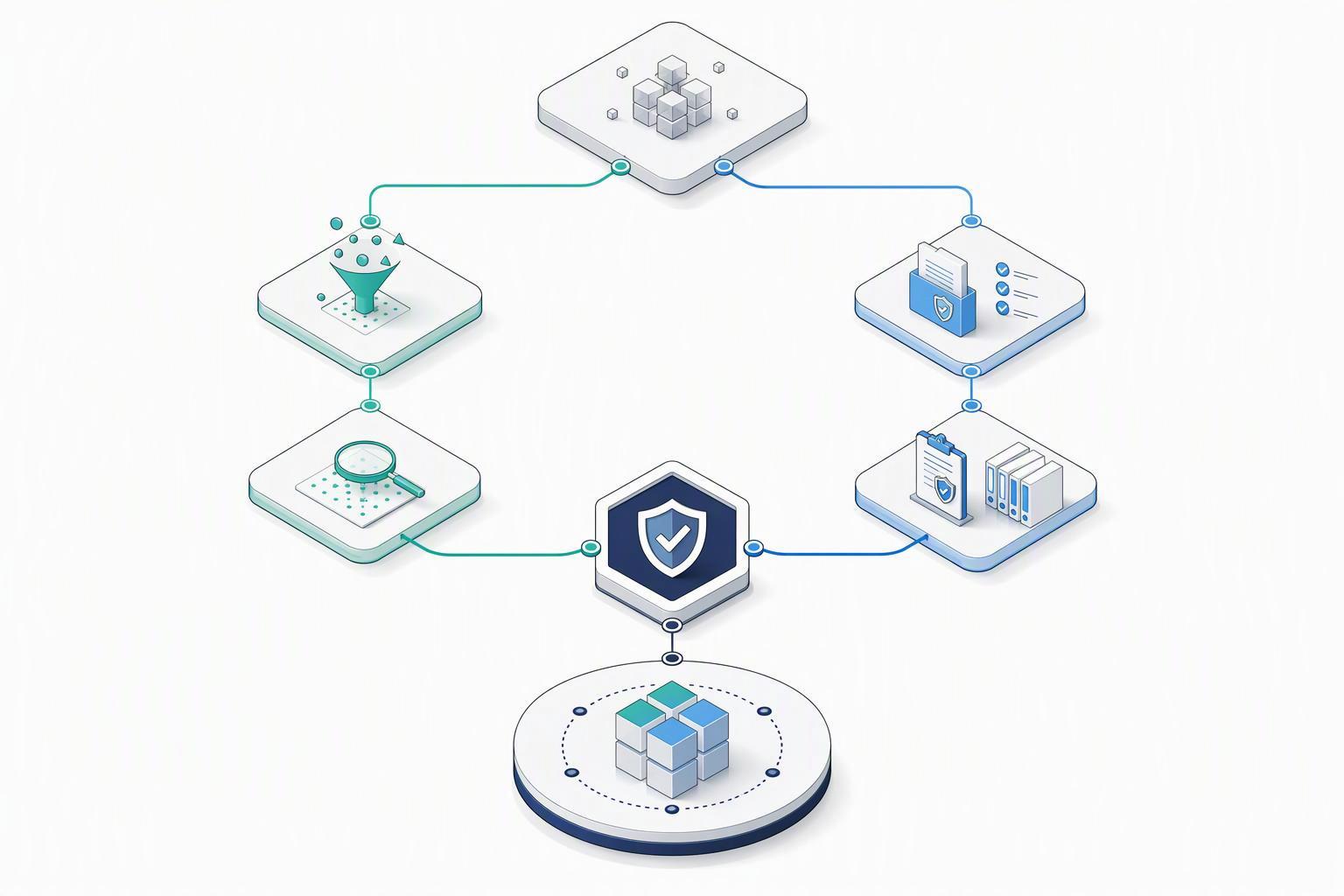
The commodity quote remains legitimate for screening work. Early discovery, non-clinical screening and small pilot quantities often need sequence in hand quickly, and a standard-grade synthesis with HPLC and MS data serves that purpose. The error is carrying a screening-grade quote and its documentation depth into a program where batch reliability now matters.
Switching later is possible but not free. Moving a sequence to a new supplier means re-establishing the process, re-qualifying methods and repeating the analytical work a defensible specification requires, which is why supplier selection is a decision to make before the first purchase order rather than after the first deviation.
|
Trigger |
What to emphasize |
What to ask for |
|---|---|---|
|
Sequence with demonstrated synthesis or purification risks |
Route assessment and purification development |
Crude profile data and difficult-region strategy |
|
Specification names impurity classes and content |
Multi-attribute specification |
Named dimers, trimers, oligomers; counter-ion limits; content by mass balance |
|
Program will scale to repeated batches |
Batch-to-batch consistency and data integrity |
Batch history, ALCOA+ raw data, Par 11 audit trails |
|
Screening or early discovery only |
Speed and cost |
Standard HPLC and MS data, clear scope limits |
Peptide CDMO selection is therefore a question of matching documentation depth to program stage, not of finding the cheapest supplier for every order.
Xelasî
Compare quotes against the same intended use, specification and evidence requirements. Routine screening may justify a narrower package, but should still resolve the identity, impurity and assay risks that could change the result. Price alone does not identify quality or technical depth.
The next step is a specification review before the next purchase order: take the two quotes, map each against the specification list, and ask both suppliers for the batch-specific data behind their purity figure. Where the answers differ, the price gap usually explains itself.
Publisher disclosure: MOL Changes supplies peptide services and has a commercial interest in this topic. Service ranges and capability statements are supplier claims; availability and performance for a specific construct require project-specific evidence.