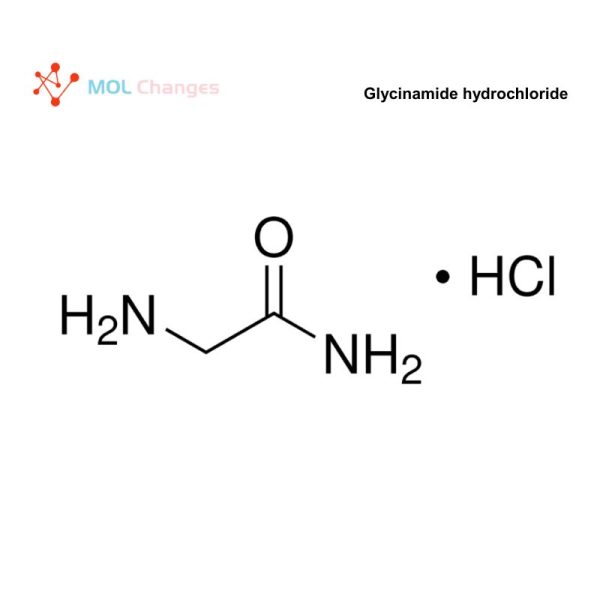
Glycinamide Hydrochloride: Representative scientific literature on glycinamide hydrochloride (Glycinamide hydrochloride, H‑Gly‑NH₂・HCl), covering bone regeneration, skin biology, peptide synthesis, proteomics, optoelectronics, and medicinal chemistry.
Sequence
/
CAS Number
1668-10-6
Molecular Formula
NH2CH2CONH2 · HCl
Molecular Weight
110.54
I. Peptides and Chemical Biology Research
1. C-Terminal Amidation Building Blocks for Peptides
Solid-phase/liquid-phase peptide synthesis, incorporating C-terminal glycine amide (–Gly–NH₂). Many bioactive peptides require C-terminal amide modification to enhance resistance to proteolysis and improve biostability; free glycine amide is highly prone to degradation, whereas its hydrochloride salt is a stable, quantifiable raw material used for peptide conjugation and peptide library construction.
2. Bioconjugation and Protein Modification Research
Contains a free primary amine group capable of conjugating with activating groups such as NHS esters, serving as model substrates for protein and fluorescent group labeling.
3. Precursors for Heterocyclic and Metal Complex Synthesis
– Synthesis of imidazolidine-4-one and diazaspiro compounds;
– Preparation of Ir and Rh organometallic luminescent complexes for use in photochemistry and photocatalysis research.
II. Biochemical Experiments: Physiological pH Buffer Reagents
pKa ≈ 8.20, effective buffering range 7.2–9.2; classified as a “Good” buffer system:
– Enzyme activity assays: Suitable for enzyme kinetics experiments under slightly alkaline conditions;
– Buffer for in vitro cell culture; prepare a stock solution by sterilizing via 0.22 μm filtration;
– Protein solution systems: Highly water-soluble, compatible with most proteins, and resistant to protein precipitation.
III. Bone Tissue / Stem Cell Biology (Recent Hot Topics)
1. Formation of Protein-Glycinamide Nanocomposites
These positively charged nanocomposites assemble into submicron nanoparticles through electrostatic interactions with negatively charged proteins (BSA, BMP-2), enhancing the efficiency of protein uptake by cells and improving the intracellular delivery of recombinant proteins.
2. Synergistic Promotion of Osteogenic Differentiation with BMP-2
Upregulates osteogenic marker genes such as Runx2, ALP, and Col1a1; enhances alkaline phosphatase activity and collagen synthesis; a mouse cranial defect model confirms synergistic promotion of in vivo bone regeneration, applicable to bone repair materials and the investigation of bone regeneration mechanisms (PMC).
IV. Skin Pigmentation and Melanocyte Research Model System (PMC)
Signaling pathways in research models:
Inhibits α-MSH-induced signaling, downregulates MITF and tyrosinase (TYR) expression, and reduces melanin production;
Used for research on skin whitening and pigmentation mechanisms; there are a limited number of in vitro and preliminary human studies, but it is still a long way from becoming a finished pharmaceutical or cosmetic product and is limited to research experiments.
V. Enzyme and Metabolic Pathway Tool Substrates / Analogs
1. Glycine structural analogs, used to study amino acid transport and yeast amino acid uptake systems;
2. Structural analog probes for the purine synthesis pathway (to distinguish GAR [glycinyl-adenosyl-ribonucleotide]), aiding in the elucidation of substrate recognition and active sites of purine biosynthetic enzymes.
VI. Basic Research in Medicinal Chemistry
As synthetic building blocks:
– Key laboratory-synthesized precursors for neuroprotective drugs such as oracitane;
– Construction of heterocyclic molecular libraries of pyrazines and imidazoles for screening small-molecule lead compounds.
Key Considerations for Research Use
1. Highly hygroscopic; weigh and prepare solutions quickly; prepare aqueous solutions fresh whenever possible;
2. Buffers require precise pH adjustment with NaOH/HCl, followed by filtration and sterilization;
3. For biological experiments, include a glycine control group to distinguish specific effects caused by the amide group.
COA
HPLC
MS
- Glycinamide Facilitates Nanocomplex Formation and Functions Synergistically with Bone Morphogenetic Protein 2 to Promote Osteoblast Differentiation In Vitro and Bone Regeneration in a Mouse Calvarial Defect Model
- The First Human Clinical Trial on the Skin Depigmentation Efficacy of Glycinamide Hydrochloride