Quick Answer
Move a physics-driven peptide design to synthesis with feasibility screening, modification control, specifications and experimental validation.
What Physics-Driven Peptide Design Does and Does Not Establish
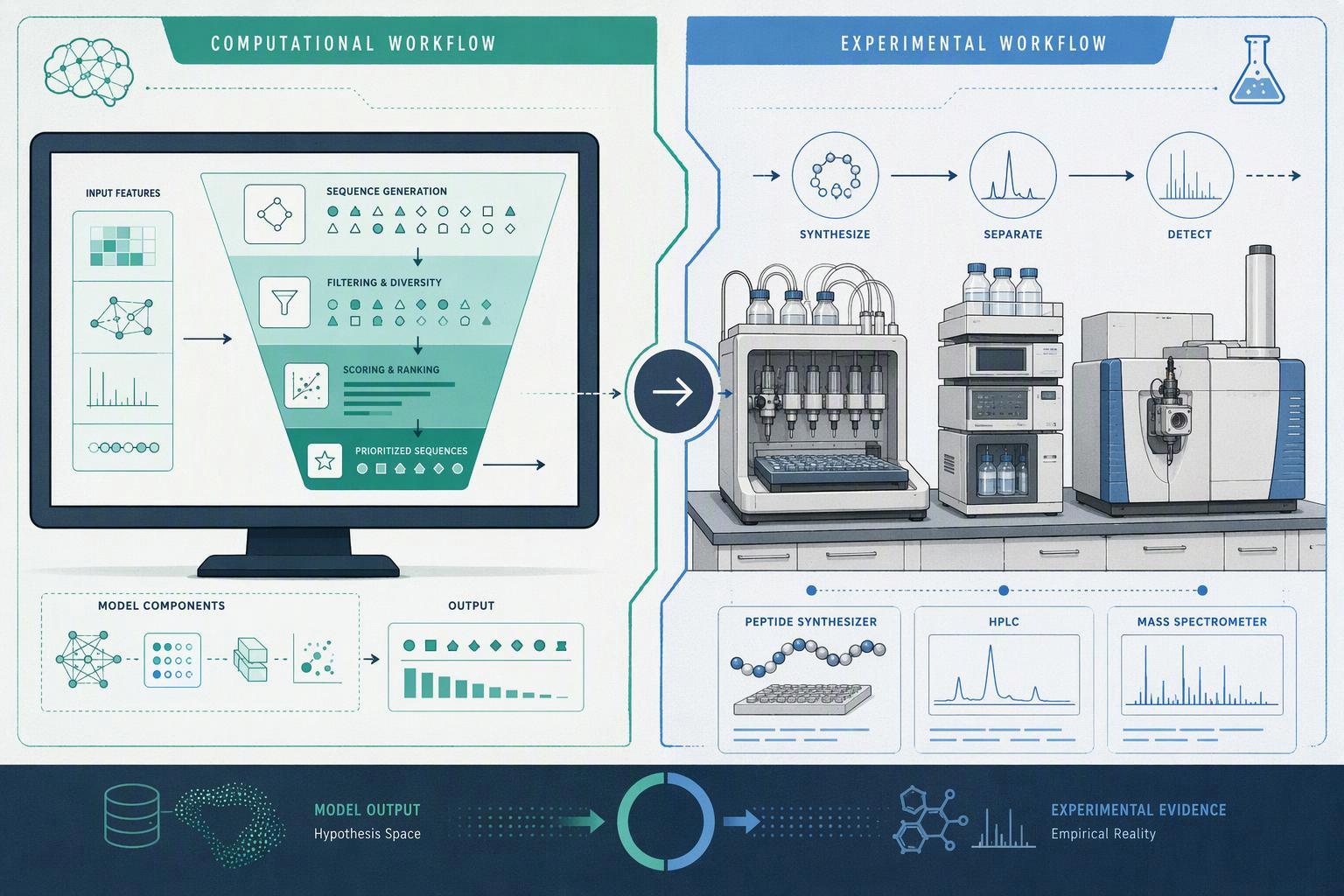
'nar puntuación computacional ge 'nar hipótesis dige 'nar ha̲i modelada. Validar nä'ä ko ar punto final experimental relevante ne ya hñe̲gi evaluar viabilidad síntesis, Riesgo ar impureza ne ar manufacturabilidad. Hingi transfiera 'nar tasa éxito aglutinante publicado ja 'nar nsa̲di ar péptido diferente wa 'mu̲i hinda evidencia.
Tasas éxito diseño computacional ya comparables ho̲ntho nu'bu̲ objetivo, Nsa̲di molécula, proceso selección ne criterios éxito experimental coinciden. Older physics-based studies and newer binder pipelines use different settings; neither establishes a success rate for the construct being ordered.
Key Takeaway: A model score establishes plausibility, not identity. Only synthesis, purification and analytical confirmation establish that a molecule exists as specified.
Why Sequence Feasibility Comes Before Any Score
A peptide sequence feasibility assessment asks a different question from the one the design model answered. Predicted affinity says nothing about whether the chain will assemble on resin, and the two properties are largely independent: a high-scoring binder can be the hardest sequence in the set to make.
On-resin aggregation is the classic explanation for sequence-specific variability in synthetic efficiency, nko Merck’s technical article on overcoming aggregation in SPPS (recuperado 2026-02-27). The same source identifies the recurring culprits: contiguous stretches of Ala, Val and Ile, and residues able to form intra-chain hydrogen bonds such as Gln, Ser and Thr. Ala-Gly recurs in hydrophobic transmembrane and amyloidogenic peptides, which is why designs drawn from membrane or aggregation-prone targets deserve a second look before they are quoted.
The failure is visible before the batch is lost. Severe aggregation shows as resin shrinkage in batch synthesis and a flattened or broadened deprotection profile in flow, and once the resin is collapsed, ninhydrin and TNBS coupling tests can return false negatives: the test reads as complete while the chain is truncated. For sequences longer than 20 aminoácidos, track assembly by small-scale TFA cleavage rather than trusting the colour test alone.
|
Screen |
What to record |
Readout that exposes a deletion or truncation |
|---|---|---|
|
Hydrophobic run length |
Longest contiguous Ala/Val/Ile stretch |
LC-MS mass short by one or more residues |
|
Aggregation-prone motifs |
Gln, Ser, Thr clusters; Ala-Gly repeats |
Broadened or split HPLC main peak |
|
Chain length |
Total residues; position of the longest run |
Small-scale TFA cleavage profile at each segment |
|
Coupling performance |
Peptide Library Synthesis Deprotection profile shape in flow |
Flattened deprotection trace; false-negative Kaiser test |
The practical consequence for a design-to-synthesis handoff is that feasibility is a property of the sequence, not of its score. Screen the four rows Thermo Peptide Synthesis above before the sequence enters a quote, and flag any design that fails two or more of them for a route discussion rather than a straight order.
Modification Compatibility: What the Route Can Actually Carry
Peptide modification compatibility is a route question, not a catalogue question. Most non-canonical modifications leave the basic Fmoc-SPPS cycle intact, but each one adds a constraint the route has to absorb: stapling through Alloc/allyl or Mtt/Mmt/Dmt handles installed during assembly and reacted on-resin or late-stage, head-to-tail cyclization needing an orthogonal C-terminal anchor or a cleavable linker, D-amino acids needing milder coupling for racemization control, and N-methylated residues needing stronger activation, higher equivalents or double coupling.
Asp-containing motifs can be vulnerable to aspartimide formation during base exposure, with severity depending on sequence, protecting groups and deprotection conditions. Screen the actual construct and quantify relevant variants rather than using a per-cycle literature range as the process specification.
Screen every proposed modification against the route before you approve it: which handle it needs, whether that handle survives every subsequent deprotection, and what the final cleavage does to it.
Setting Purity Targets by Application, Not by Habit
Peptide purity targets by application should be set at order stage, because the grade you specify drives the synthesis route, the purification effort and the yield you can realistically recover. A standard vendor mapping such as GenScript’s recommended peptide purity guidelines places crude material at first-pass non-sensitive screening, >75% for ELISA, peptide arrays and polyclonal antibody antigen, >85% for in-vitro bioassays, epitope mapping and semi-quantitative enzyme-substrate work, >95% for quantitative receptor-ligand work, blocking or competitive inhibition, NMR and quantitative phosphorylation or proteolysis, ne >98% for crystallography, GMP peptides, clinical trials and SAR. Crude peptides are typically around 50–60% pure, though that figure still needs batch verification before it goes into a publication.
|
Intended use |
Typical purity target |
|---|---|
|
First-pass, non-sensitive screening |
Crude |
|
The Synthesis Of Aspirin ELISA, peptide arrays, polyclonal antibody antigen |
>75% |
|
In-vitro bioassays, epitope mapping, semi-quantitative enzyme-substrate work |
>85% |
|
Quantitative receptor-ligand work, blocking/competitive inhibition, NMR, quantitative phosphorylation or proteolysis Large Scale Peptide Synthesis |
>95% |
|
Crystallography, GMP peptides, clinical trials, SAR |
> Peptides ;98% |
Two cautions belong with that ladder. 'me̲t'o, purity is an HPLC area-percent of peptide-related material, while net peptide content is a separate quantity that accounts for counterion and water (Bachem, Control ya ar aminoácidos & Peptides, 2026). Segundo, ya tablas ar proveedores ar nkohi jar 'me̲i pe ya 'mui mbo comerciales ko 'nar 'befi jar 'ba̲ ya grado mäs altos, nja'bu da japi ya komongu 'nar marco inicial en lugar de 'nar especificación.
Analytical Confirmation: Why One HPLC Number Is Not Identity
Confirmación analítica péptido ya LC — MS comienza ndezu̲ 'nar límite duro: 'nar Honto 'bede ya pureza HPLC hingi tsa̲ da mä 'nar nyokwi isomérico aparte de ar prevista, getho ya isómeros ne isóbaras comparten masa Mente da 'na'ño jar sitio wa 'na . HPLC mide homogeneidad cromatográfica, hingi ar identidad química exacta (Navegación ya desafíos jar análisis espectrometría masa nyokwi ar nyokwi proteínas endógenas ne sintéticas, PMC, 2026). 'nar pico principal limpio nä'ä hingi ar molécula prevista ge 'nar modo falla real, hingi 'nar teórico.
Manejo muestras compuestos ar hñäki. Oxidation, �, Formilación ne ar acetilación xi surgir Nxoge ar procesamiento ne imitar nyokwi genuinos, confundir ar identificación (xkagentho ar PMC revisión, 2026). Control proceso cambia tamaño do carga: pa secuencias da contiene metionina, reacción secundaria oxidación bí da̲gi ar aproximadamente 20% to about 5% jar nkohi optimizadas (Metionina — contienen péptidos: evitando reacciones secundarias, PMC, 2023). Peptide
espera 'nar espectro impureza definido en lugar de 'nar Honto contaminante: eliminación, �, inserción, estereoisómero wa racemización, relacionados ko ar escisión ne ya productos degradación, mäs especies ar be̲xu molecular mar hñets'i komongu ar dímeros ne agregados (', 2022).
Pro Tip: emparejar 'nar ndo'yo ar pureza cromatográfica ko 'nar nt'ot'e identidad ortogonal nu'bu liberar mucho. 'nar 'bede pede Tengu material elue ga̲tho, hingi nä'ä ge Nunu̲ hñei.
hñeti ar ámbito: nuna ar Nthuts'i cubre ar síntesis ne ar práctica analítica. hingi ar guía clínica wa terapéutica.
From Design Output to a Synthesis-Ready Specification
Ar diseño ar péptidos impulsado ar física pa ár nthäki ar síntesis funciona nu'bu̲ ar especificación, hingi ar archivo estructura, lleva ar intención ar diseño. 'nar equipo síntesis da da capaz ar ndi ndi ndu̲i ndezu̲ ar especificación Honto, hinda volver derivar Yogo'ä bí eligió 'nar residuo wa 'nar nyokwi.
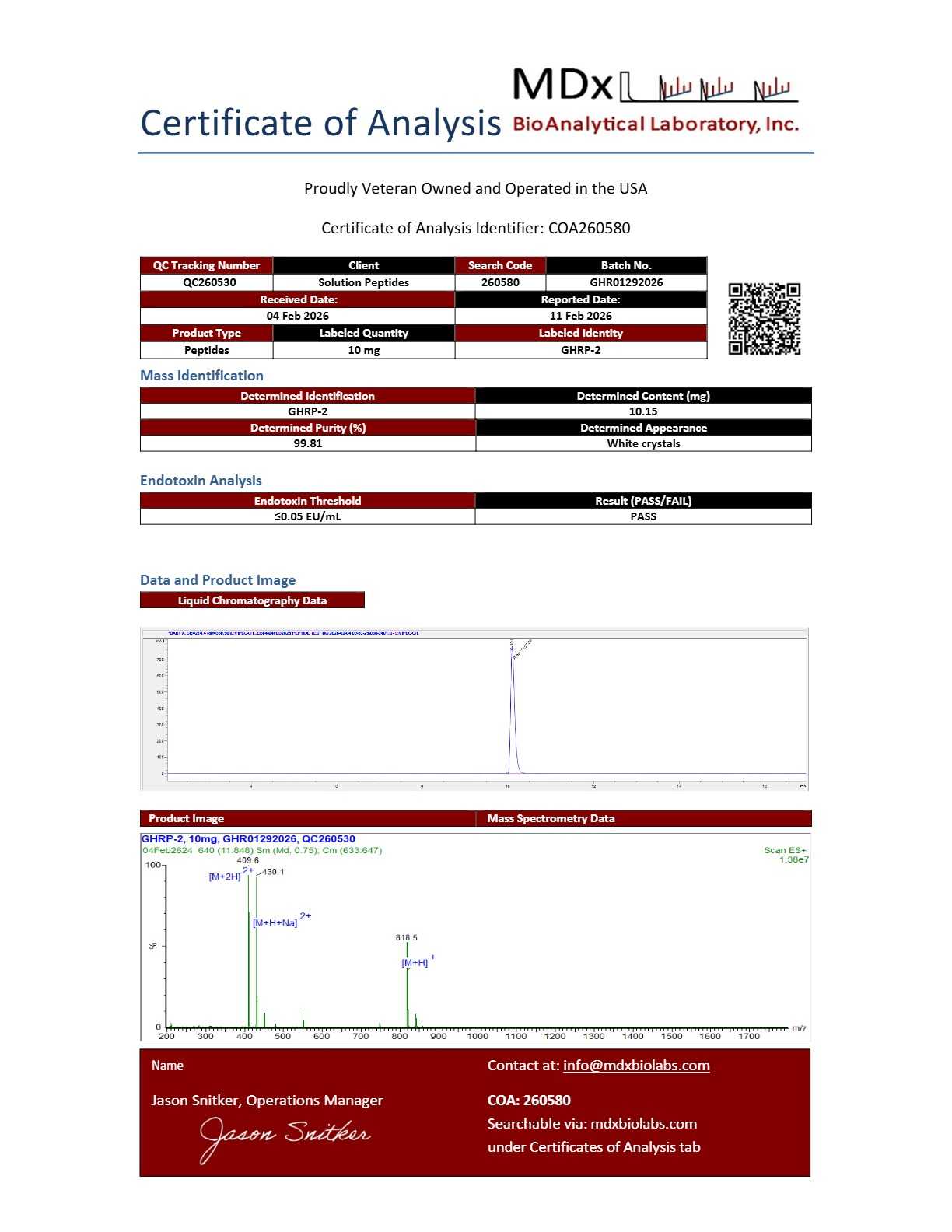
'nar certificado análisis péptido típicamente lleva pureza HPLC komongu ar porcentaje área, MS identity, contenido neto ar péptido wa análisis ar aminoácidos, contra-contra, contenido ar dehe, ne, pa ya grados mäs altos, endotoxin, biocarga ne solvente residual (American Peptides). Límites endotoxinas ya comúnmente especificados ya njapu'befi previsto en lugar de 'nar Honto 'bede fijo: abajo 1 EU yá mg pa 'be̲fi rutinario basado jar células, abajo 0.1 EU yá mg pa ensayos celulares inmunes sensibles, ne 0.1 to 0.5 EU yá mg pa he̲'mi preclínico in vivo (Creative Proteomics).
Key Takeaway: paquete handoff ge ar especificación: secuencia ne nyokwi, restricciones ar ruta, 'mui pureza, ne ar paquete analítico da liberará ar lote.
A, r 9 Disyembre 2025 and legally effective from 1 June 2026, g, u, � (EMA). �: a, then HPLC, E.
Common Mistakes That Turn a Good Design into a Failed Batch
M. A 2023 A 93.5% failure across heterodimeric interfaces and 96.4% d (i, 2023). g, e, but it makes the point: �, �, r.
The recurring bench mistakes follow the same pattern. Teams skip a feasibility screen on hydrophobic or aggregation-prone stretches, because the design output looked clean. They assume a modification is route-compatible without checking the protecting-group strategy it demands. They specify purity by habit rather than by application. And they accept a single HPLC purity number as identity confirmation, when purity and identity are separate questions.
Verify feasibility, route compatibility and the analytical acceptance criteria before committing a batch. Estimate rework time and cost from the actual sequence and supplier proposal; no universal resynthesis duration follows from these risks.
nt'a̲ni frecuentes
Can a physics-driven design score be used as evidence of activity?
No. A score from a physics-driven design tool is a hypothesis about structure, not a measurement of function. BindCraft’s own reported success rates for de novo binder design range from roughly 10% to 100% depending on the target and the campaign (BindCraft), which is precisely why the score cannot stand in for an assay. Treat the computational result as a reason to synthesize and test, never as a substitute for the test.
How long does a peptide sequence feasibility assessment take, and what drives it?
Most of the time goes to the sequence itself rather than to queue position. Difficult stretches, aggregation-prone regions, and unusual modifications each add review time, because the assessment has to check coupling efficiency and route viability before anything is committed. A straightforward sequence with a standard purity target moves quickly; a heavily modified or long construct takes longer, and the honest answer is that the timeline follows the chemistry, not a fixed calendar.
¿Ar tsa̲ da 'yo̲t'e 'nar constructo altamente modificado wa grapado ya estándar Fmoc SPPS?
Often yes, but not automatically. Staples, macrociclización, ne residuos hingi naturales kadu 'na imponen yá propias restricciones acoplamiento ne desprotección, ne ar ruta pe̲ts'i da da 'ñets'i ya secuencia en lugar de asumir. nuna gehna exactamente ar klase ar nt'a̲ni 'nar revisión viabilidad nuna nuna nuna ar dängo pa responder: nu'bu̲ ar nyokwi ar compatible ko ar química estándar Fmoc, wa nu'bu̲ ar ruta t'ot'e mpa̲ti.
Temu̲ debo gi nu'bu̲ pico principal hingi coincide ko ar masa esperada?
Hingi acepte pico dige ar base ar pa retención ho̲ntho. 'nar masa desajustada ir bo̲ni ke ar identidad hingi confirmada, ne ar respuesta correcta ar sostener ya lote ne hyoni en lugar de proceder. Pureza ya HPLC ne identidad ya espectrometría masas responder 'na'ño ya nt'a̲ni, ne 'nar cromatograma limpio hindi resuelve 'nar discrepancia masa.
ge 'nar 'mui ar pureza mäs mar hñets'i nzäm'bu̲ vale ar penä ar costo?
No. objetivo pureza correcta te̲ni ár nt'ot'e, hingi 'nar preferencia predeterminada pa ar dätä 'bede. A grade chosen for a demanding assay is money well spent; the same grade applied to a screening use may buy nothing the experiment needs. Set the target from what the downstream work actually requires.
Njäts'i nu'bu
You can now screen a physics-driven peptide design to synthesis handoff in four moves: check sequence feasibility before you trust any score, confirm the route can carry each modification, set purity from the application rather than from habit, and require orthogonal analytical confirmation instead of a single HPLC number. The mechanism underneath all four is the same. A physics-driven design output is a hypothesis; síntesis, purification and analytical confirmation are what turn it into evidence.
MOL Changes offers custom peptide synthesis and analytical services. This article is educational and describes general synthesis and analytical practice; hingi ar asesoramiento médico.