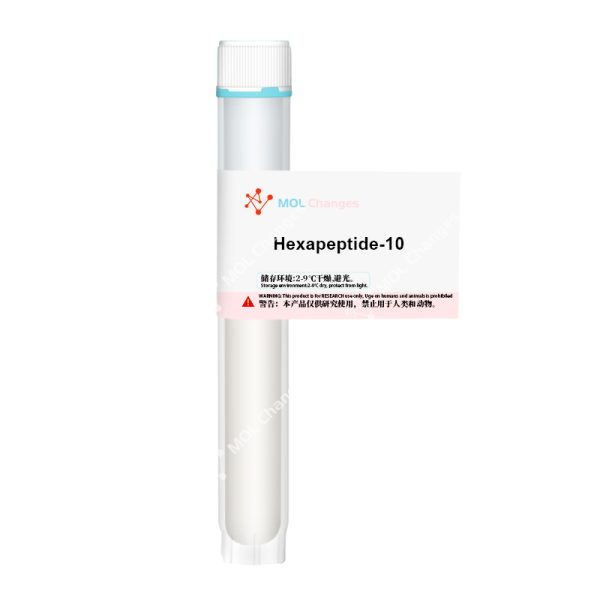
Hexapéptido — 10, wa mäs formalmente denominado komongu ar SIKVAV yá Serilesina, ge ar xe̲ni funcional xí t'olo, precisamente aislada ar dominio globular ar laminina cadena α1. nt'ot'e biológica excepcionalmente mextha ge 'nar característica definitoria nuna ar péptido.
primeros nsadi xi demostrado dätä adherencia celular-matanza ne, jar Nar dätä hño medida, capacidades estimulantes ar crecimiento axonal nu'bu̲ ar gi comparado ko ar laminina intacta. reconocimiento específico ne 'mefa ár njäts'i Tange'u activación varios integrinas ne ma'ra receptores superficiales ge gi ha̲i clave; proliferación celular, diferenciación, ne supervivencia ga̲tho siguen komongu consecuencias directas.
Boleto neurociencia, ár hne terapéutica pa reparar ngi jar central wa ko nervioso periférico xi hño documentada. The cosmetic field has recently seen a significant rise in its prominence.
Hexapéptido — 10, given its neuromodulatory and tissue-repairing potential, is a vital component of both cosmetic and dermatological science.
Lorem ipsum dolor sit amet, consectetur adipiscing elit. Ut elit tellus, luctus nec ullamcorper mattis, pulvinar dapibus leo.
Secuencia
H-Ser-Ile-Lys-Val-Ala-Val-OH
'bede ya CAS
146439-94-3
Fórmula molecular
C28H53N7O8
Be̲xu molecular
615.77
Hexapeptide-10 Related Research
1.Skin Repair and Homeostasis Regulation
Extensive grafting or surface modification of biomaterials with Hexapeptide-10 allows for the induction of stem cell differentiation, fibroblasto/endothelial cell proliferation and directed migration – thereby accelerating skin wound healing.
Precise regulation of keratinocyte proliferation-differentiation balance is what sets it apart; excessive basal layer epidermal proliferation is moderated, promoting orderly division of the stratum corneum.
Skin structural strength and overall integrity are improved, texture being a primary concern. Neural signaling pathways are also modulated, reducing skin’s sensitivity to external stimuli; sensitive skin in particular benefits from all of the above.
2.Regulating keratinocyte proliferation and differentiation to maintain skin homeostasis
Hexapeptide-10 directly acts on epidermal cells, balancing their proliferation and subsequent differentiation.
Inhibiting irregular differentiation and uncontrolled division within the basal layer, it upregulates the gene expression of terminal differentiation-associated proteins. Cellular differentiation disorders resulting from aging, environmental stress, or specific skin conditions are thus effectively counteracted.
A more complete, functionally robust physical barrier is formed; increased hydration of the skin is a direct result, smoother and refined complexion being the end point of this process.
3.Sensitive Skin Regulation and Relief of associated Itching/Discomfort
Interaction with receptors on sensory neurons is the key mechanism; modulating ion channels thereby regulates neural excitability.
Pro-inflammatory factor secretion is inhibited, and an elevated sensory threshold leads to significant reduction or elimination of burning, stinging, itching and tightness. Long term environmental stress tolerance is thereby maintained at this neural level.
4.Promoting Axonal Growth and Neural Repair
Specific neuronal surface receptors are the targets of Hexapeptide-10.
This triggers intracellular cascades (Focal Adhesion Kinase ne Src family kinases) that activate downstream gene expression pathways for growth and differentiation. Cytoskeletal protein synthesis and reorganization is upregulated within the neuron itself.
Biomaterial studies have shown regenerating axons to follow defined scaffold orientations, re-establishing connectivity with target tissues. Neural and skin tissue repair is a direct outcome of these processes.
COA
HPLC
MS