Quick Answer
Two quotes land on the same desk for the same nominal peptide. One is far cheaper per milligram. The sequence reads identically on both, so the instinct is to …
What did CPHI Milan actually signal about peptide supply chain pricing pressure?
Peptide Info Supplier Base Peptides The show floor signaled sentiment, not a price index. ar Nutrition Insight review of CPHI Milan 2026, published 14 � 2026, records Nagre’s “pricing point pressure” and his read that “affordability is important,” alongside Indena’s Stefano Togni describing “a widespread demand to raise the quality bar and scientific validation.” The same review prints its key takeaway plainly: “Pharma-grade validation, substantiation, and documentation have moved from differentiator to entry requirement.”

The macro backdrop explains why cost pressure reached the floor at all. CPHI’s own 2026 supply-chain briefing traces the crisis to early 2025, when the United States “implemented sweeping tariffs on pharmaceutical imports, creating immediate financial pressures,” and notes “increasing pressure being placed on the industry to diversify its manufacturing away from tariff-exposed regions.”
Qualification and capacity investment can affect switching time and costs, but do not establish a universal price floor or prove that diversification cannot affect near-term quotations. Compare actual scope, supply options and timelines.

Why is the peptide supply chain splitting into commodity and high-value segments?
That sentiment has a counterpart in disclosed financials. PolyPeptide Group’s 2025 results report revenue of EUR 389.3 millones USD, pa mañä 15.6% versus 2024, but the growth is uneven: development revenue rose 29.9% while commercial revenue rose 7.9%. Services revenue is growing roughly four times faster than product revenue at a listed peptide CDMO.
Demand pressure on the same capacity is documented by manufacturers themselves. Bachem’s note on GLP-1 volumes states that demand “is no longer measured in kilograms but increasingly in multi-kilograms and metric tons,” and that “without efficient processes, reactors, purification columns, and lyophilizers can quickly become bottlenecks.” A manufacturer’s note carries its own bias, but the direction matches PolyPeptide’s capex. Batch-to-batch consistency peptides at scale is expensive because the assets behind it are expensive.

What makes a peptide sequence difficult, and why does that break simple price comparison?
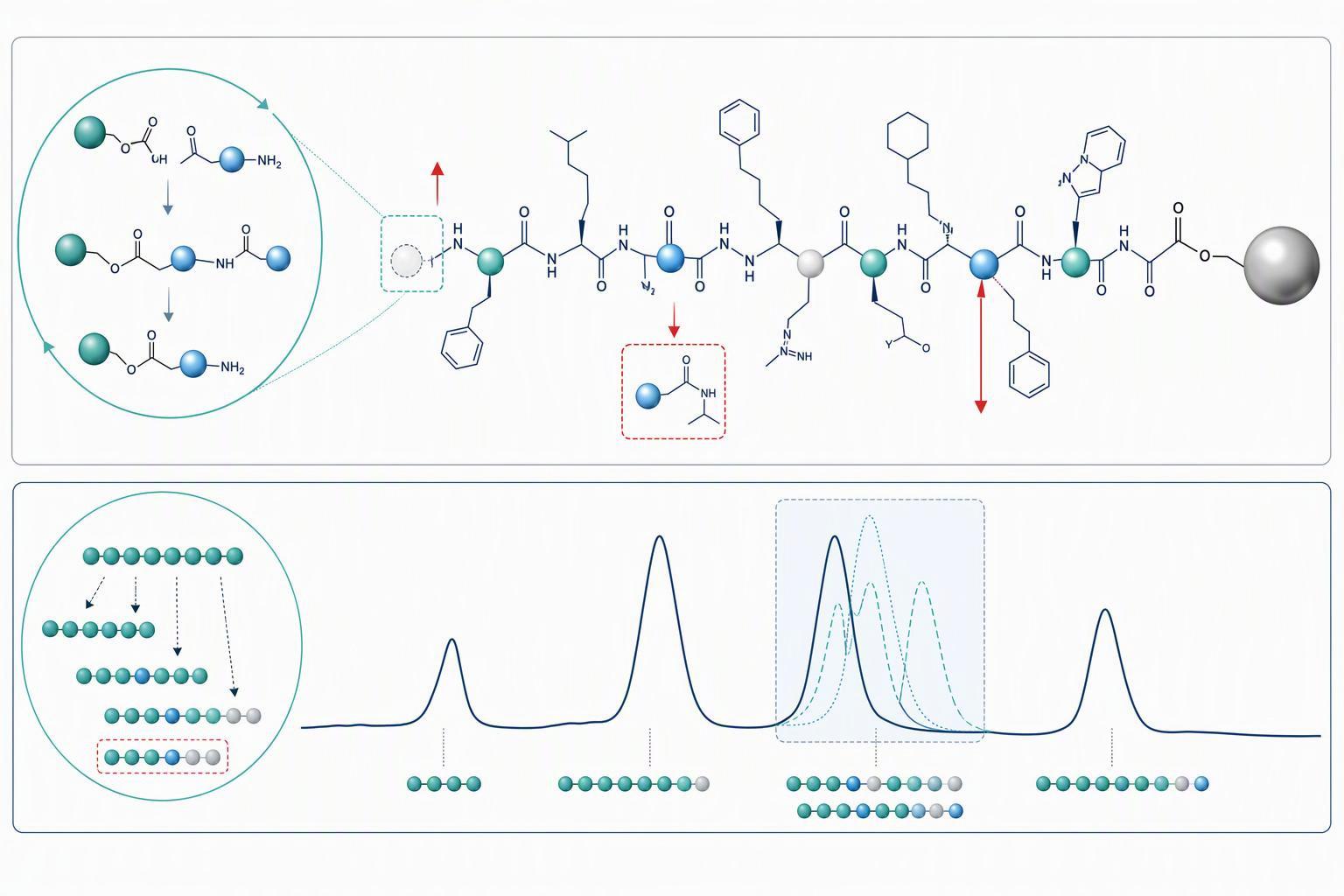
Sequence difficulty depends on residue pattern, modifications, route, scale and required quality. A published example of difficulties beyond a particular length is not a universal 12-residue trigger for paid development work.
The impurity profile is where price comparison breaks. AmbioPharm lists “racemized species, eliminaciones, insertions, and incompletely removed protecting groups” among the impurities formed, and notes that “many of these impurities can elute either very close to the main product peak or even coelute with it.” Deletion impurities that co-elute with the main peak can sit inside a purity figure without being resolved by it.
Purification then absorbs the cost. Industry process descriptions of scale-up identify coupling completeness as a compounding risk, since small inefficiencies “can amplify into significant deletion sequences and yield loss at larger batch sizes,” and note that difficult crude profiles “can make preparative purification slow, low-yielding, or uneconomical.” Purification often becomes the real bottleneck once material quantity increases. A quote that assumes a clean crude profile is pricing a different molecule.
What does a synthesis quote include and exclude?
A quote is only comparable if it is read as a specification. ICH Q6A defines a specification as “a list of tests, referencias ya nt'ot'e analíticos, and appropriate acceptance criteria,” the criteria to which a substance “should conform to be considered acceptable for its intended use.” Two quotes for the same sequence are comparable only when both state tests, methods and limits.
The method behind a purity number is part of the price. Purity figures are defensible only when the analytical procedure is validated under ICH Q2(R2), the current revision that reached Step 4 in November 2023 and replaced Q2(R1). Method development, 'nar ruta purificación elegida pa 'nar crudo hñei, mpa̲ti ar contador iones, manejo desviación, pruebas nzäm'bu ne transferencia tecnología nga̲tho llevan costo, ne 'nar cotización xí hñets'i'i típicamente ya lleva fuera de ár ámbito.
|
'ñu elemento |
Alcance mäs estrecho ilustrativo |
Ntsoni ngatho ampliado ar ilustrativo |
|---|---|---|
|
Secuencia ne nyokwi |
Komo ar enumera |
Komo ar enumera, ko evaluación ar ruta |
|
Asunción ar perfil crudo |
Cl Reconstituir péptidos ean |
Caracterizado; hñembi fábrica ar polipéptido regiones marcadas |
|
Ruta ar purificación |
Estándar |
Desarrollado pa ar secuencia |
|
Contra-ión |
Default |
Especificado, ko mpa̲ti nu'bu mahyoni |
|
nt'ot'e analíticos |
HPLC, MS Estructura polipéptido |
Nt'ot'e validados, paquete ar datos completo Peptido sintético 'ba̲ ya mar dätä |
|
ntsa̲ nzäm'bu |
típicamente excluido |
Ntsoni ntsoni ngatho |
|
Manejo ar desviación |
típicamente excluido |
Definido |
|
Escalado ne transferencia tecnología |
típicamente excluido |
Ntsoni ntsoni ngatho |
costo síntesis ar péptidos personalizados ge ir 'nar función nä'ä requiere ar especificación, hingi ar cadena secuencia Honto.
Honja aplicamos 'me̲hna jar cambios MOL, editor nuna ar guía. Ma control hño cubre HPLC, MS ne pruebas esterilidad, Nja'bu da 'nar cita Nugu̲je to mä Temu̲ identidad ne datos pureza ba ko ar lote. Hingi bí mä nu'bu̲ 'nar especificación ar adecuada pa ár njapu'befi, Ne hingi tsa̲ da garantizar ya datos brutos 'nar proveedor; Tobe lei ar CoA ne ar registro lote hä xkagentho, ko 'na proveedor, nuestro incluido.
What does quality mean beyond an HPLC purity number?
Purity, Identidad ne contenido ya hñu ya nt'a̲ni separadas, Ne 'nar ho̲ntho ndo'yo área-nthebe 'be̲be ma nthebe xi hño thädi ho̲ntho ar primera. Guía EMA dige péptidos sintéticos, ja ya ndu t'edi ndezu̲ ar Hunyo 2026, trata péptidos sintéticos komongu nsa̲di jar interfaz t'olo moléculas ne proteínas nthekute ar hño específicas, Ne establece 'nar Nthuts'i especificación hindi exhaustiva cubriendo ya impurezas Nxoge ne Nthuts'i, Impurezas ar be̲xu molecular mar hñets'i, Ensayo yá contenido, Identidad ne contenido contra-iones, residual TFA, dehe, residual solvents, elemental impurities, Endotoxinas bacterianas ne pureza microbiológica.
Ar directriz 'nehe rechaza ya parámetros ga̲tho ya ga̲tho. It states that a specification parameter “only denoted ‘high molecular weight impurities’ is not acceptable,” and that impurities “should be specified (e.g. dímeros, �, oligomers, agregados),” with counter-ion content controlled “with a justified upper limit.” Named dimers, �, oligomers and aggregates rather than a catch-all parameter is the standard to ask for.
Peer-reviewed work on peptide reference standards identifies the four attributes that matter most in peptide quality: primary sequence, estructura secundaria, oligomer/aggregation state, ne impurezas ne productos degradación. It also explains why a purity number and a content number differ, through mass-balance purity assignment: “all detectable impurities (e.g., peptide related impurities, contador iones, dehe, residual solvents, non-combustible residues) are measured and subtracted from 100%.”
A worked example makes the gap concrete. The same paper reports a lot with 0.92% HPLC impurities and 5.58% acetic acid content, yielding 0.93 mg of peptide per mg of material. A “99% pure” label and a 93% peptide-by-mass content can both be true of that lot. Peptide quality documentation CoA should show both numbers, not one.
What must a defensible CoA and batch record contain?
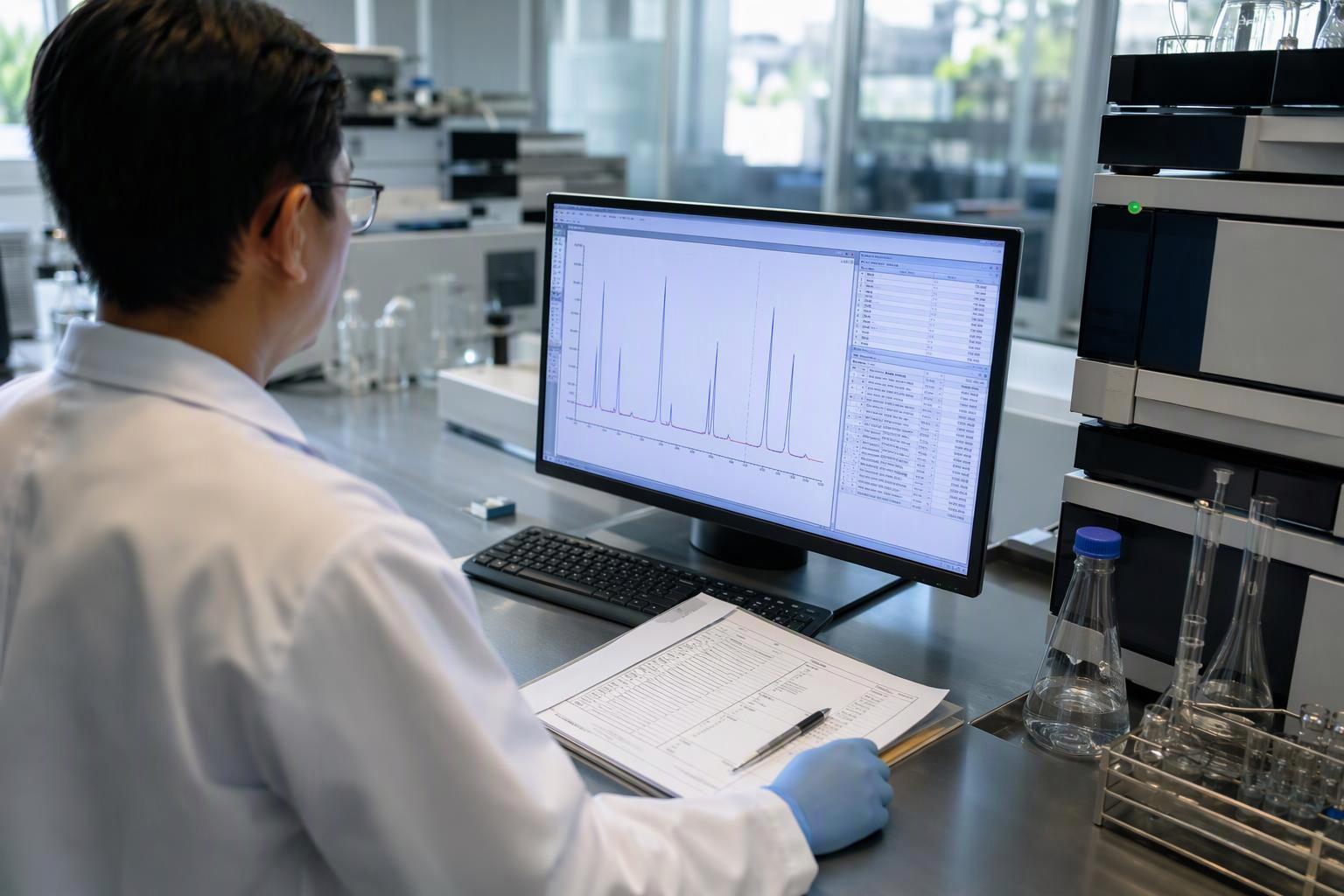
A certificate is only as good as the raw data behind it. The ALCOA+ principles MHRA set out define data as Attributable, legible, Contemporáneo, Original ne exacto, with the “+” covering Complete, Consistente, Duradero ne disponible, and state there is “no difference in expectations regardless of which acronym is used.” A CoA that cannot be reconstructed from attributable, contemporaneous raw data is a document, i.
Electronic records carry their own controls. Xeni 11 controls on electronic batch records set the criteria under which the FDA considers electronic records and signatures “trustworthy, reliable, and generally equivalent to paper records,” and require that computer systems and attendant documentation “be readily available for, and subject to, FDA inspection.” Audit trails, user attribution and record retention are part of the quality question, not an IT afterthought.
Supplier qualification should precede the first order. APIC’s best-practices guide for managing API suppliers states that quality agreements “are mandatory for highly critical materials and services” and should “ideally be signed before ordering the material or using the service,” with compliance verified during audits. Sign a quality agreement before the first purchase order.
These are general GxP texts; applying them to a specific peptide batch is the buyer’s inference, not a rule the documents state. The practical checklist: batch-specific HPLC and MS data, a specification with named impurity classes, content by mass balance, raw data meeting ALCOA+, and a signed quality agreement.
When should a buyer pay for development-risk reduction and batch reliability instead of the lowest quote?
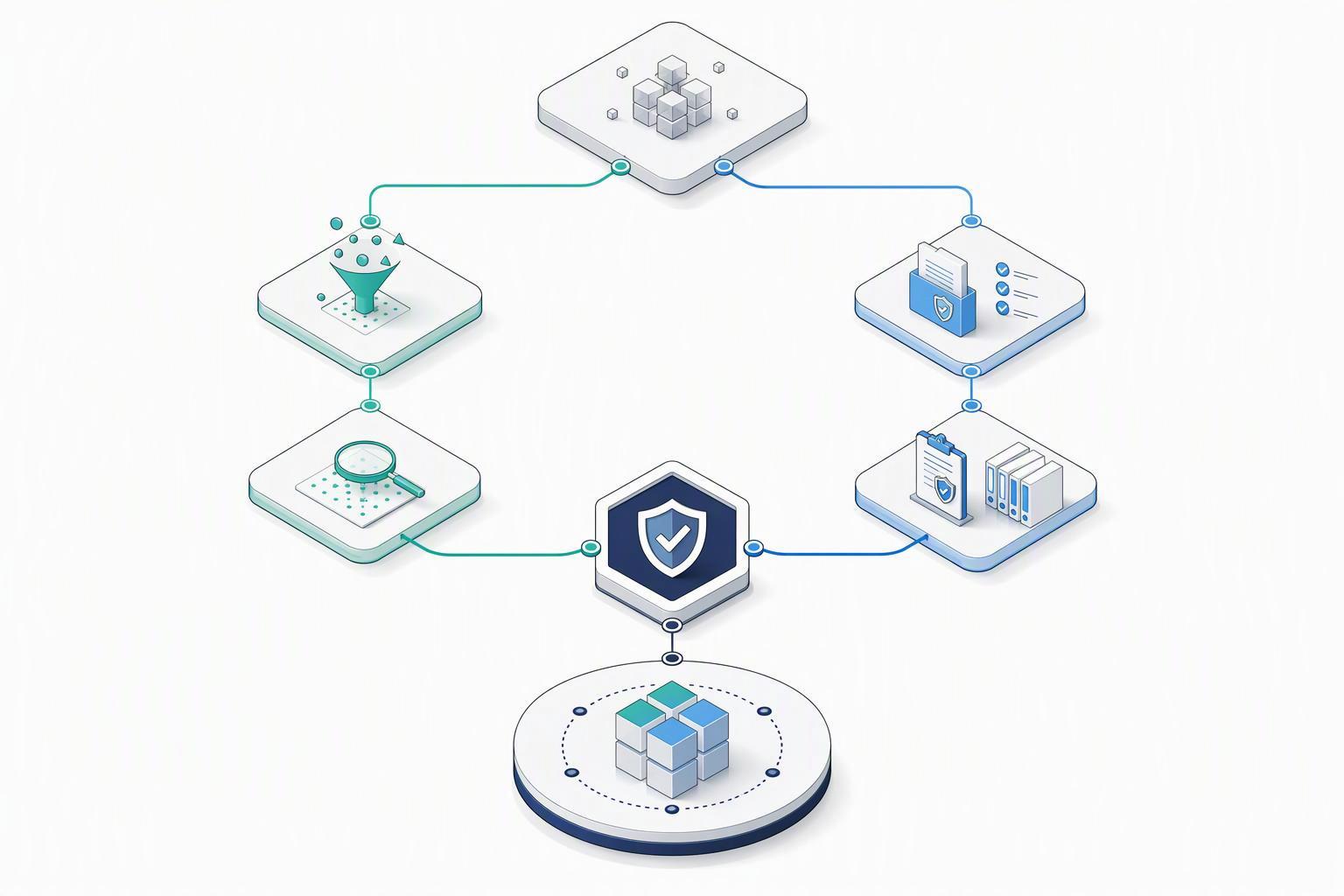
The commodity quote remains legitimate for screening work. Early discovery, non-clinical screening and small pilot quantities often need sequence in hand quickly, and a standard-grade synthesis with HPLC and MS data serves that purpose. Ar error xi tomando 'nar cotización 'mui ar filtro ne ár detalle documentación ja 'nar programa ho ar confiabilidad ya lotes ge nu'bya mahyoni.
Conmutación mäs ya'bu̲ xähmä pe hingi mpe̲fi. Mover 'nar secuencia ja 'nar 'ra'yo proveedor ir bo̲ni da restablecer ar proceso, Re-calificar ya nt'ot'e ne repita ar 'be̲fi analítico 'nar especificación defendible requiere, Yogo'ä selección ar proveedor ge 'nar hmä da 'be̲tho ar ndui ya compra en lugar de 'me̲fa ar ndui desviación.
|
Trigger |
Temu̲ enfatizar |
Temu̲ pedir |
|---|---|---|
|
Secuencia ko ya riesgos demostrados síntesis wa purificación |
Evaluación ar ruta ne ár nte ar purificación |
Datos ar perfil crudo ne estrategia difícil-región |
|
Especificación ar especificaciones ya nsa̲di impureza ne contenido |
Especificación ar múltiples ar atributos |
Dímeros con nombre, �, oligomers; Ntsoni ar contra-iones; content by mass balance |
|
Programa escalará ma lotes repetidos |
Batch-to-batch consistency and data integrity |
Batch history, ALCOA+ raw data, Xeni 11 auditoría rastros |
|
Cribado wa descubrimiento temprano ho̲ntho |
Velocidad ne costo |
datos estándar HPLC ne MS, ntsoni ntsoni ntsoni |
selección CDMO ar péptido ge ir 'nar nt'ot'e emparejamiento profundidad documentación ko ar etapa ar programa, hingi ar tingigi mbo jar proveedor mäs barato pa kadu̲ 'nar pedido.
Njäts'i nu'bu
Comparar ya cotizaciones kontra xkagentho njapu'befi previsto, requisitos especificación ne evidencia. Revisión rutinaria tsa̲ da justificar 'nar paquete mäs estrecho, pe Tobe debería resolver ar identidad, riesgos ar impureza ne ar ensayo podrían mpa̲ti ar nt'uni. Precio ho̲ntho hingi identifica hño wa profundidad nt'o̲t'e.
ar Xtí bi thogi ge 'nar revisión especificación 'be̲tho Xtí ya compra : gi yoho ya citas, 'me̲ni 'me̲ni kadu 'na kontra ar Nthuts'i especificación, ne preguntar ga̲ yoho proveedores ya datos específicos ya lotes jár xu̲tha ár ndo'yo pureza. ho ya nthädi 'na'ño , brecha precio nu'bu̲ da nthe̲hu̲ tso̲kwa continuación.
divulgación ar editor: M. O; availability and performance for a specific construct require project-specific evidence.