ජපන් පෙප්ටයිඩ සම්මන්ත්රණය සංඥා කරන දේ, and what it does not
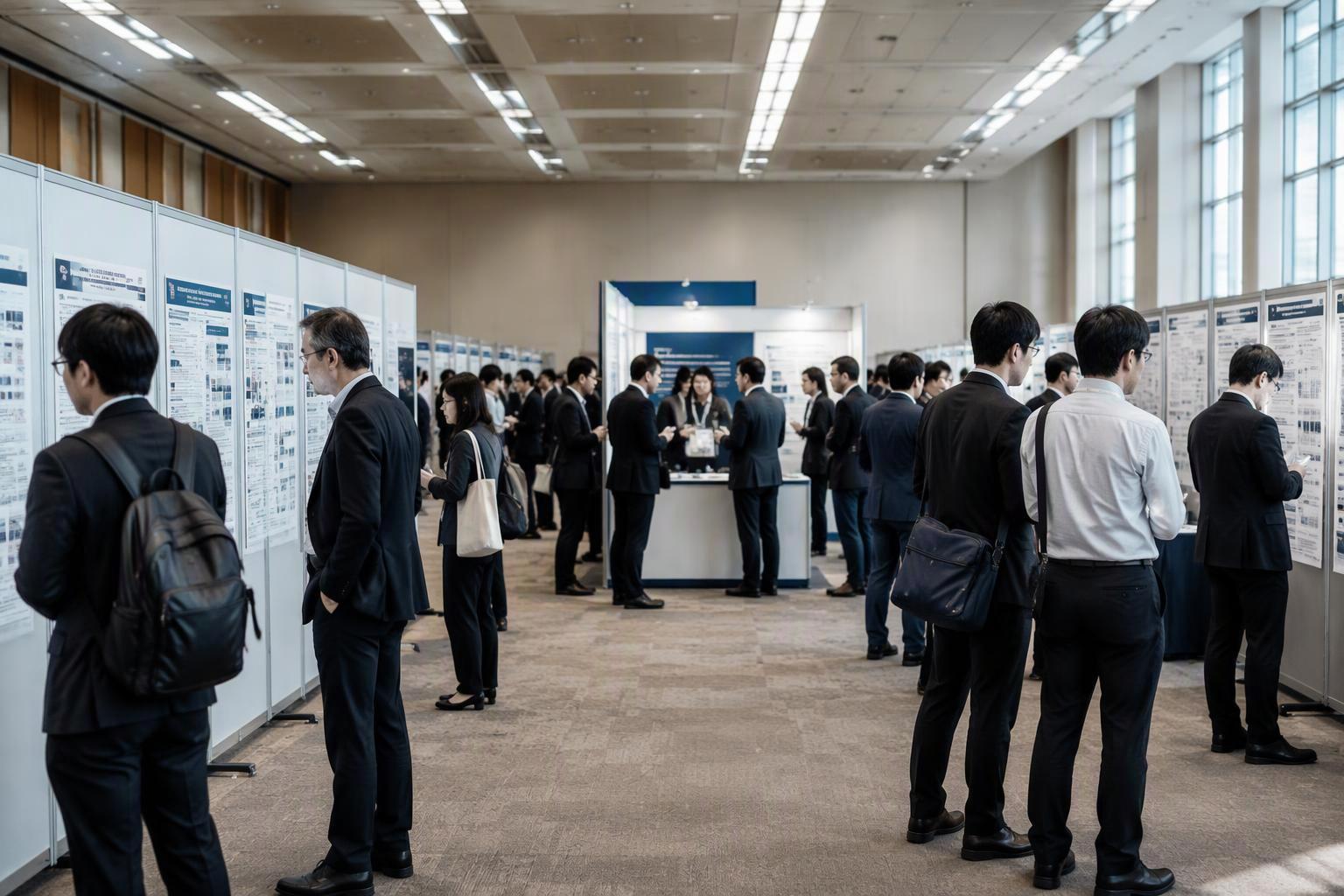
The symposium signals a supplier’s commitment to Japan’s peptide community, not its synthesis performance. The Japanese Peptide Society describes the meeting as attracting around 500 participants, including international delegates, and as an English-language event running annually since the Osaka meeting of 1962 (Japanese Peptide Society, දින නියම කර නැත). ද 2026 prospectus expects approximately 600 participants from Japan and abroad, and budgets for 100 boxed lunches at the luncheon seminar, a planning figure rather than an audited count (63rd Japanese Peptide Symposium, 2026 cycle).
The organiser’s own description covers fundamental chemistry through drug-discovery applications, and the meeting is organised with four co-organising Japanese societies: the Chemical Society of Japan, the Pharmaceutical Society of Japan, the Japanese Biochemical Society and the Protein Science Society of Japan (63rd Japanese Peptide Symposium, 2026 cycle). The invited programme draws speakers from Japan, the United States, South Korea and Australia, and the fee schedule defines an overseas participant as a person affiliated with research institutions outside Japan or resident outside Japan (63rd Japanese Peptide Symposium, 2026 cycle).
What the signal cannot carry is capability. Bachem’s event listing names its on-site staff member for the 2026 meeting, and Bachem’s own history page records its Japanese entity as its physical presence in Asia, established in 2018 (Bachem, දින නියම කර නැත). A booth evidences willingness to be technically visible in the region. It does not evidence synthesis performance, ගොඩක්-ගොඩක් අනුකූලතාව, or documentation quality, and the organiser publishes no sector split, so the industry, academia and government mixture is Bachem’s description rather than a measured breakdown.

What do Japanese researchers and biopharma teams actually expect from a peptide supplier today?
Japanese teams expect a supplier to hold a cross-disciplinary technical conversation and to document it, and the four expectation axes below convert that into checkable questions. The market context is real but must be scoped: one market researcher puts global peptide synthesis at about USD 1.0 බිලියනයකින් 2025, growing to USD 1.8 බිලියන මගින් 2033 දී 7.8% CAGR, with Asia Pacific the fastest-growing region at 9.33% CAGR and Japan described only qualitatively (මහා දසුන් පර්යේෂණ, figures labelled 2024/2025/2033). That is a vendor figure with no accessible methodology and no Japan-specific number, so it frames demand rather than proving it.
The clinical pull is better documented. The FDA, EMA and PMDA have collectively approved more than 70 therapeutic peptide products since the 1950s, and more than 75% are administered by injection (Zhang et al., Int J Pharm, 2020). Injectable dominance means sterility, endotoxin scope and stability data sit inside the supplier conversation from the start, not at the end.
The four axes a buyer should test are: does the supplier’s technical staff engage in Japanese and English on mechanism, not just price; can they define what they will do with a sequence that resists standard chemistry; can they show continuity from milligram feasibility to larger-scale supply; and will they release batch-level analytical data rather than a generic certificate. Each axis maps to a question the supplier can answer with a document.
How deep does customization need to go for difficult and modified sequences?
Customization depth is measured by what a supplier will commit to before quotation, and difficult sequences are where that commitment is tested. The peptide-synthesis literature defines difficult sequences as those rich in hydrophobic residues such as leucine, valine, phenylalanine and isoleucine; valine and isoleucine are beta-branched, with glycine promoting beta-sheet packing, giving high aggregation potential and low solubility; in solid-phase terms they are poorly solvated while attached to the support, preventing complete deprotection and coupling (Mueller et al., ජෛව ඉංජිනේරු සහ ජෛව තාක්ෂණයේ මායිම්, 2020).
That mechanism has a practical consequence for supplier selection. The same review states there is no unique protocol for these sequences, so each new synthesis needs its own optimisation, and Boc-based solid-phase synthesis generally performs better than Fmoc-based synthesis for them, with native chemical ligation used for longer targets (Mueller et al., 2020). A supplier who offers one standard route for every difficult sequence is telling you they have not read the sequence.
For a 40-residue hydrophobic sequence that aggregates during chain assembly, the checkable asks are a written feasibility assessment naming the route and resin, a stated position on Boc versus Fmoc, and a defined fallback to fragment ligation if chain assembly stalls. Ask for the assessment in writing before the quotation, because the route decision is where the cost and the timeline are actually set.
How do speed, ධාරිතාව, and scale-up reliability factor into supplier choice?
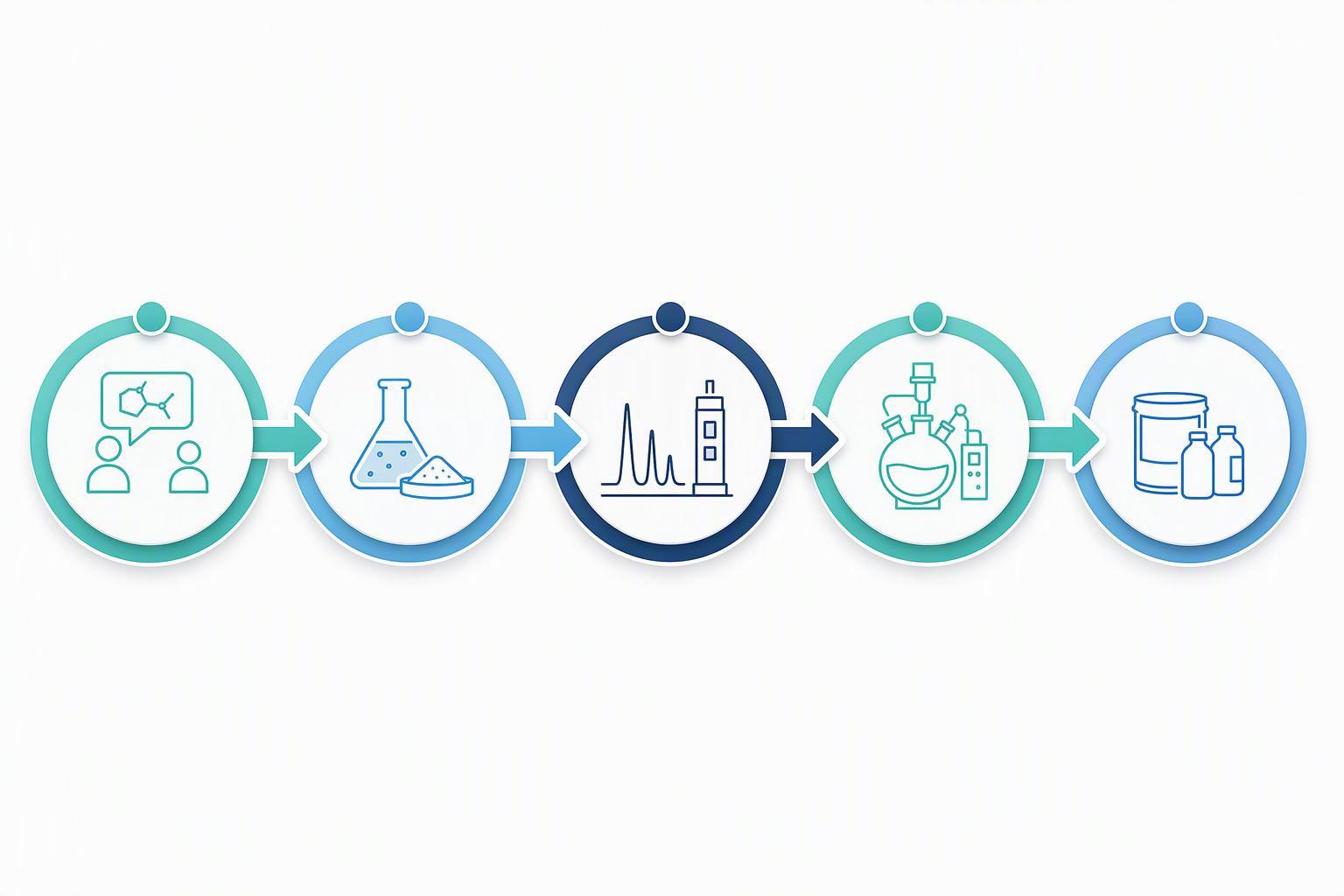
SPPS has no universal 30–40-residue limit. Longer peptides may be accessible by optimized linear synthesis or by ligation, with feasibility determined by sequence, වෙනස් කිරීම්, පිරිසිදුකම, scale and recovery. Request data for a relevant construct.
The same source notes that achieving above 95% purity at kilogram scale often requires multi-step preparative HPLC and controlled lyophilisation, and that scaling to multi-kilogram introduces aggregation, higher solvent and resin usage, lower yields and longer process hold times (නියුලන්ඩ් රසායනාගාර, 1 සැප්තැම්බර් 2025). Capacity is being added at industrial scale: one major supplier has publicly anchored a multi-site expansion aiming toward about one metric ton of annual peptide production using large-scale solid-phase reactors (Outsourced Pharma, 27 මැයි 2025). That is the supplier’s own target, not an audited figure.
පෙප්ටයිඩ 3 කර්මාන්ත ශාලාව ගැනුම්කරුවෙකු සඳහා, the reliability questions are therefore: at what scale does the route change, what is the demonstrated batch history at that scale, and what happens to lead time when a purification step needs redevelopment. Ask for the scale at which the process changes, not a general capacity statement.
What does quality transparency mean in practice — which batch-level data must a supplier show?
Peptide Array Synthesis Quality transparency means batch-specific data that answers a named standard, not a certificate template. For analytical methods, I Q2(R2), adopted 1 නොවැම්බර් 2023, expects a validation protocol generated beforehand containing the intended purpose and performance characteristics with criteria, and results summarised in a validation report; the characteristics covered are specificity and selectivity, working range including detection and quantitation limits, නිරවද්යතාව, precision and robustness (අයි, 2023). A supplier who cannot produce that protocol and report for the methods behind your certificate is showing you an unvalidated number.
For identity and impurity testing, ICH Q6A lists the tests generally applicable to new drug substances as description, හඳුනා ගැනීම, assay and impurities, and states that retention time alone is not specific, with IR, HPLC/UV-DAD, HPLC/MS or GC/MS acceptable for identification (US FDA, 2000). That is the basis for asking for orthogonal identity confirmation rather than a single chromatographic peak.
|
Batch-level field |
Standard it Antimicrobial Peptide Synthesis answers to |
|---|---|
|
Validation protocol and report for each analytical method |
I Q2(R2), 2023 |
|
Orthogonal identity confirmation (for example HPLC/MS alongside retention time) |
I Q6A, 2000 |
|
Endotoxin limit basis and test technique family |
යූඑස්පී <85> |
|
Long-term, intermediate and accelerated storage conditions with data minima |
මම Q1A(R2), 2003 |
|
Record attributes: ආරෝපණය කළ හැකි, කියවිය හැකි, සමකාලීන, මුල්, නිවැරදි |
MHRA GxP Data Integrity, Rev 1, 2018 |
|
Electronic records available for inspection |
21 CFR කොටස 11, 1997 Bergmann පෙප්ටයිඩ නිෂ්පාදකයා පෙප්ටයිඩ සංශ්ලේෂණය |
On endotoxin, යූඑස්පී <85> sets the parenteral limit as K/M, where K is the threshold pyrogenic dose per kilogram per hour and M is the maximum recommended human dose per kilogram per hour, with K of 5 USP-EU/kg for any route other than intrathecal, for which K is 0.2 USP-EU/kg (USP සාමාන්ය පරිච්ඡේදය <85>, නිල 1 දෙසැම්බර් 2012). The chapter describes gel-clot techniques and photometric techniques, and states that in case of dispute the final decision is based on the gel-clot techniques unless the monograph says otherwise.
මම Q1A(R2) stability designs depend on product, storage and submission context. For the general case, long-term conditions may be 25 °C/60% RH or 30 °C/65% RH; intermediate testing is conditional, not a universal additional six-month requirement. Research reagents need a justified use-specific stability plan rather than automatic adoption of a registration data package. මම Q1A(R2).
How should a team qualify or re-qualify a supplier for a Japan-linked program?
Qualification should be a written assessment before quotation, and re-qualification should be triggered by a defined event rather than a calendar date. The four axes give the assessment its structure: local scientific fluency, customization depth, speed and scale-up reliability, and quality transparency. Each axis produces a document request, and the document either exists or it does not. පෙප්ටයිඩ සැපයුම්කරු නිෂ්පාදකයා
The re-qualification rule is this: re-qualify when the sequence class, the scale, or the regulatory destination changes, because each of those changes the route, විශ්ලේෂණ පැකේජය, හෝ දෙකම. A supplier qualified for one peptide sequence at milligram scale has not been qualified for a different hydrophobic sequence at multi-gram scale, and the CDMO framing that the practical limit of solid-phase synthesis alone sits near 30 දක්වා 40 residues is exactly why (නියුලන්ඩ් රසායනාගාර, 1 සැප්තැම්බර් 2025).
Run the assessment as a document review with a technical call attached. Ask for the validation protocol and report, the orthogonal identity data, the endotoxin limit basis and technique, the stability conditions and data minima, and the record attributes the supplier’s systems enforce. Where a supplier cannot answer, record the gap and decide whether it is a gap you can carry.
If you want a structured starting point for that review, a due-diligence playbook that frames the written assessment before quotation is a reasonable template to adapt to your own sequence and scale.
නිතර අසන ප්රශ්න
Does a regional presence really matter if the supplier ships reliably?
Shipping reliability and regional scientific presence answer different questions. A supplier’s own event page is a positioning statement, not an independent assessment: Bachem’s Japanese Peptide Symposium listing shows the company presenting itself to the Japanese peptide community, which tells you where it wants to be visible, not how it performs on your sequence. Treat presence as one input and batch-level data as the deciding one.
My program is already qualified against a supplier with thinner documentation. Do I start over?
නැත. Re-qualification is a gap exercise, නැවත ආරම්භ කිරීමක් නොවේ. Ask for the missing records against your existing peptide supplier qualification criteria: the validation protocol and report are the documents to ask for under ICH Q2(R2), and the stability conditions and minimum data at submission are set out in Q1A(R2). Where a record does not exist, that absence is itself the finding.
How much weight should conference participation carry?
Some, but not much on its own. A symposium booth shows a supplier is willing to stand in front of academic and industry peers; it does not show lot-to-lot consistency, and no independent benchmark of supplier performance at this meeting exists to weigh it against. Read the published technical documentation first, then use the event as a chance to test whether the people on the stand can answer sequence-specific questions.
Do these standards apply to research-grade peptides, or only to therapeutic programs?
The named standards are written for regulatory submissions, so a research-grade order is not held to them in full. The underlying logic still travels: ICH Q6A notes that retention time alone is not specific for identification, යූඑස්පී <85> sets out the endotoxin limit formula and the intrathecal exception, and the MHRA guidance sets out the ALCOA attributes, සමඟ කොටස 11 setting the trust expectations for electronic records. Ask which of them the supplier applies, සහ ඇයි.
නිගමනය
The symposium is a signal about a supplier’s regional commitment, and the four axes are how you test whether that commitment reaches your sequence. The evidence base for the test is public: I Q2(R2) for method validation, ICH Q6A for identity and impurity testing, යූඑස්පී <85> for endotoxin limits, මම Q1A(R2) for stability conditions, the MHRA ALCOA attributes and 21 CFR කොටස 11 for records. None of those standards is supplier-specific, කාරණය වන්නේ ය: they let you compare suppliers on the same terms.
The practical next step is to take one sequence you are currently sourcing, write down its residue count, hydrophobicity and target scale, and put the four questions to two or three suppliers in writing. The answers, or the absence of them, will tell you more than any conference booth. Bring a specific sequence and scale to a technical conversation and ask for the feasibility assessment before the quotation.
හෙළිදරව් කිරීම: this article is published by a company that provides peptide services. No supplier named here was assessed on the basis of that relationship, and no comparative claim is made about any supplier’s capabilities.