Before You Score Anyone: Fix Your Own Requirements
A peptide supplier evaluation framework only works once you have written down what you are actually buying. Four variables decide which questions matter: development stage, target scale, sterility class, and filing timeline. A partner who is excellent at 100 g non-GMP may be the wrong partner at 25 kg cGMP, and the same scorecard applied to both will mislead you in opposite directions.
Scale is the variable buyers most often fix too loosely, because scale-up risk is not linear in batch size. The dominant shifts are mass transfer, heat transfer, yig'ish, incomplete coupling, side reactions and downstream purification capacity, and small per-cycle losses compound across many sequential steps into commercial-scale failure (Neuland Laboratories peptide manufacturing commentary, retrieved 2026-04-27). A process that holds at 100 g can fail at 25 kg without any single step looking broken.

Write the four variables down before you read further. Every threshold in the sections that follow is read against them, not against an industry average.
The Six-Dimension Peptide CMO Selection Scorecard
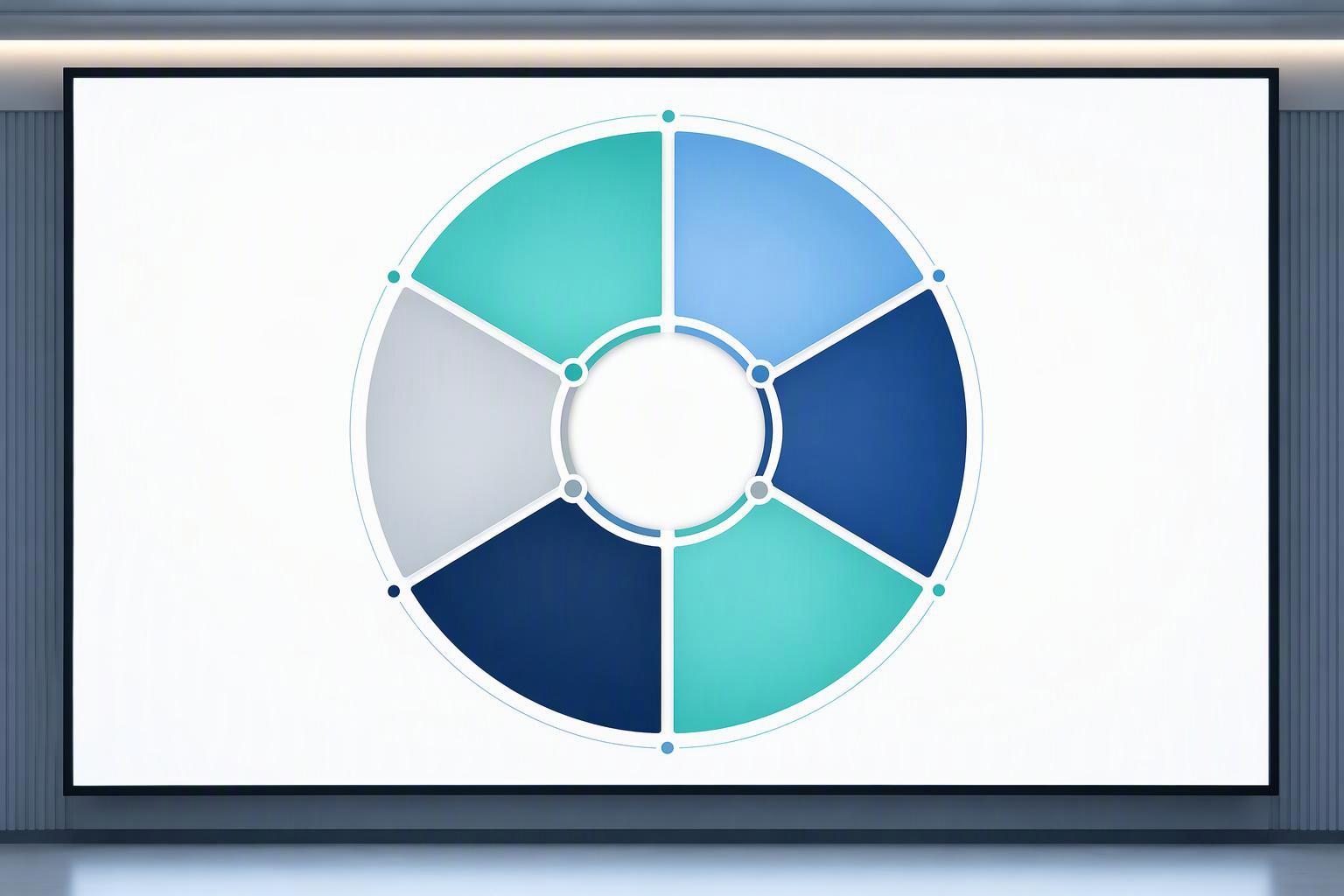
Treat this scorecard as a screening and questioning instrument. It tells you what to ask a candidate partner and what artifact should come back with the answer. It does not replace an on-site audit, a supplier qualification program, or your own QA function’s review of what you collect.
The matrix compares criteria and evidence artifacts, never vendors. Price is deliberately absent as a scored dimension: it is an output of the other six, not an input. A partner that scores badly on continuity, reproducibility and impurity control and prices low has told you which dimension is absorbing the discount.
|
Dimension |
Evidence artifact to request |
Acceptance threshold |
Failure mode it protects against |
|---|---|---|---|
|
Raw-material continuity |
Starting-material sourcing map, including named critical raw materials and any dual-sourcing policy |
Every critical starting material has a stated second source or a documented continuity plan |
A single-source protected amino acid derivative stalls your campaign on a 12-week lead time |
|
Batch-to-batch reproducibility |
Lot-to-lot trend data across multiple batches, not one CoA |
Consistent results across consecutive lots, with the variability stated |
A process that passes once in development and drifts at scale |
|
Impurity control |
Impurity profile with identification and quantification, plus the methods behind it |
Impurities identified, not just totalled, against the relevant pharmacopoeial limits |
A purity percentage that hides a deletion sequence or a diastereomer |
|
Analytical transparency |
Full method package: chromatograms, spectra, validation summary, reference standards |
Methods disclosed in enough detail for your lab to reproduce them |
Results you cannot independently verify or transfer into your own filing |
|
Chemistry Of Peptide Synthesis Scale-up readiness |
Demonstrated scale range and tech-transfer documentation |
Evidence of production at or above your target scale, with a transfer record |
A partner whose capability stops at the scale you have already outgrown |
|
Communication and change control |
Alpha Polypeptide Named technical contact, change-notification procedure, deviation-reporting timeline |
A specific person, a written procedure, and a stated notification window |
A process change you learn about after it has affected your material |
The dimensions are ordered by how early they can disqualify a partner. Continuity and reproducibility are pass/fail gates; the remaining four are scored. The sections that follow take each in turn.
Dimension 1: Raw-Material Continuity and Starting-Material Control
Raw-material continuity decides whether a signed supply agreement can actually be fulfilled, and it is the dimension buyers most often leave unexamined during peptide CMO selection. Ask for the supplier’s starting-material and protected-amino-acid sourcing strategy, and specifically whether key derivatives are single-sourced. The acceptance threshold is a named, qualified alternate source for critical raw materials, or a documented inventory and lead-time buffer. The failure mode is a single-source protected amino acid derivative on a long lead time stalling the whole program, regardless of how good the supplier’s chemistry is.
This is a documentation question, not a relationship question. ICH Q11 expects starting materials to be justified and impurity fate and purge to be understood, which is why the sourcing strategy belongs in the file rather than in a verbal assurance.
Read backward from a site’s stated role to its supply-chain function. Bachem’s knowledge center describes Vionnaz as the site that develops amino acid derivatives as starting materials and building blocks, which tells you where upstream control sits in that network. Treat published capacity and investment figures as marketing-adjacent: corroborate them with lot-specific data before you rely on them.
Dimension 2: Batch-to-Batch Reproducibility and What a Single CoA Cannot Tell You
A certificate of analysis describes one lot at release, and only the attributes the supplier chose to measure. It does not show manufacturing history, process control over time, deviations, or whether later lots will match the same impurity profile (Peptidlar kimyosi nofollow” class=”link” href=”https://link.springer.com/article/10.1007/s40005-026-00817-2″>Springer review of peptide regulatory and analytical practice, 2026). Batch-to-batch reproducibility peptides buyers actually need is a property of the process, not of a document.
Request a lot-specific CoA set covering at least three consecutive lots, plus the batch records extract. ICH Q7 expects batch traceability and documented quarantine-and-release decisions for each lot, so the records should exist before you ask. The pass condition is a consistent impurity profile and assay across those lots, not merely values that sit inside specification.
⚠️ Warning: Three consecutive lots are a screening signal, not a statistical demonstration of process capability. Treat a clean set as a reason to keep asking, not as proof that the process is controlled.
Dimension 3: Impurity Control Beyond Purity Percentage
A purity percentage is not an impurity profile. The number on the CoA tells you how much peak area belongs to the main peptide, not what the remaining area contains or whether the method Glp 1 Sintez could have seen those species at all. For peptide CMO selection, request related substances, residual solvents and counter-ion content, each with the analytical method behind it.
The EMA’s Guideline on the Development and Manufacture of Synthetic Peptides names peptide-related impurities, counter-ion identity and content, residual ion content such as TFA, and water content as attributes to assess. A single reversed-phase HPLC purity figure answers none of those four questions.
Residual solvents are the one part of the profile with hard numeric limits. ICH Q3C(R9), the 2024 revision of the residual solvents guideline, sets a Class 3 default limit of 5,000 ppm (0.5%) under Option 1, with Class 1 limits as low as 2 ppm for benzene and 4 ppm for carbon tetrachloride, and Class 2 examples including acetonitrile at 410 ppm and dichloromethane at 600 ppm. Ask which solvents the synthesis uses and which class each falls into before accepting a summary statement.
The failure mode is an impurity the release method structurally cannot resolve. Deletion, or truncated, impurities from failed couplings can be close in mass to the main peptide and co-elute with it, so HPLC alone may not separate them and LC-MS or LC-MS-MS is often needed alongside it (Creative Peptides, on peptide impurity formation and mitigation, 2024). Epimerization impurities are harder: D/L isomers can be isobaric with the target and invisible to routine MS, so detection may require chiral LC, derivatization or chiral reference standards, with histidine and cysteine the most sensitive residues (Trulogic Labs, on peptide synthesis routes and impurity profiles, 2026).
Pro Tip: Ask for the impurity profile with the method named against each attribute, not just the purity result. If a related substance is reported as “unidentified,” ask what the detection method was and whether a mass-confirming technique was run.
Set your acceptance threshold before you read anyone’s data: peptide-related impurities identified and controlled at or above 0.10%, residual solvents within ICH Q3C(R9) limits for the classes actually used, and counter-ion identity and content reported rather than assumed. Neuropeptide Synthesis
Dimension 4: Analytical Transparency and the Documentation Package
Analytical transparency is measured by what a supplier hands over before you ask, not by what it answers when you do. Request the full package: HPLC or UPLC method details with chromatograms, MS identity confirmation showing observed against theoretical mass, quantified net peptide content, counter-ion data, stability data, and reference-standard traceability. Prodigy Labs’ peptide testing guidance describes this as the difference between a complete analytical package and a summary number on a certificate of analysis.
The acceptance threshold is method validation. Non-compendial methods should be validated for accuracy, precision, selectivity, sensitivity and stability; compendial methods should be verified under your actual conditions of use. That is the framework ICH Q2(R2) sets out, and it is what makes peptide analytical transparency in a CoA auditable rather than asserted.
Pro Tip: Net peptide content and HPLC area percent are not the same measurement, and neither is the counter-ion. Area percent describes what the chromatogram resolved; net peptide content quantifies how much of the weighed powder is peptide; the counter-ion (TFA or acetate) is a separate component with its own effects on your assay. Ask which one each number represents. Maxsus peptidlar
A supplier whose method is not stability-indicating cannot detect a degradation pathway that only emerges at six months. As one illustration of scope, MOL o'zgarishlari names HPLC, XONIM, sterility and LAL endotoxin testing among its analytical methods; whether a given lot’s package includes method validation summaries, chromatograms and reference-standard traceability is a question for the supplier, not an assumption.
Dimension 5: Scale-Up Readiness and Tech-Transfer Risk
Scale-up risk is not linear in batch size. A supplier that performs well at small scale is not automatically qualified for commercial scale, so the evidence artifact to request is the tech-transfer package: the capacity plan and the process description for your intended commercial route.
The acceptance threshold is a documented scale-up history at or above your target scale, with the analytical control strategy aligned at each handoff. The failure mode is compounding. Small per-cycle losses accumulate across many sequential steps into commercial-scale failure, and hybrid routes that combine solid-phase with solution-phase or fragment coupling shift the risk to integration, where fragment purity, coupling compatibility, solvent exchange and analytical control must align at each handoff (BOC Sciences, 2026).
Solid-phase peptide synthesis is widely used from discovery to kilogram scale, but it becomes stressed as sequence length and scale increase, with reported practical limits around 30 uchun 40 yoki 50 uchun 70 amino acids depending on complexity and strategy (Andersson et al., Peptide Science, 2000; method background rather than a current figure).
Read a supplier’s own network description to infer where your scale lands. Bachem discloses site roles at Vionnaz, Torrance and St. Helens, and states a goal of increasing annual peptide output at its Vista facility to nearly one metric ton (Bachem knowledge center). That is a disclosed target, not a realized figure. Its Sisslerfeld greenfield carries an investment of more than CHF 500 million with commercial production expected in 2030 (Bachem ad hoc announcement), alongside a minimum CHF 1 billion peptide supply order over 2025 uchun 2029 (Switzerland Global Enterprise, 2025). For peptide CMO selection, the question is which disclosed site your batch actually routes to.
Dimension 6: Communication, Change Control and the Technical Contact
Communication determines how fast a problem becomes visible, and it is the only dimension on this scorecard you cannot assess from documents alone. Everything else can be read; this one has to be interrogated.
The evidence artifact to request is three things: the change-control procedure, the deviation and out-of-specification notification process, and the identity and discipline of the named technical contact. The acceptance threshold is pass/fail. A documented change-control procedure with defined notification windows, and a cross-disciplinary technical contact rather than a sales route, passes. Anything less does not.
The failure mode is specific. A supplier that changes a raw-material source or a purification step without notifying you invalidates your own comparability argument: your bridging data no longer describes the material you are receiving. The MHRA’s ALCOA data-integrity principles (attributable, legible, contemporaneous, original, accurate) describe what a defensible record of that change looks like, and ICH Q7 frames supplier evaluation as risk-based rather than transactional.
Treat this as the integration surface of a peptide partner, the equivalent of an API surface. Does the partner expose method packages, change-control interfaces and a technical contact, or only a commercial one?
Kalit olib ketish: A change-control procedure without defined notification windows is not a change-control procedure. It is a promise to tell you eventually.
Must-Haves, Red Flags and How to Use the Scorecard to Decide
Must-haves are pass/fail gates you apply before scoring. Red flags are disqualifying signals that stop the evaluation. They are not the same instrument, and mixing them is the most common way a peptide CDMO due diligence exercise produces a false shortlist.
Must-haves (pass/fail):
-
GMP status appropriate to your clinical stage
-
Lot-specific CoAs available across consecutive lots
-
A validated, stability-indicating analytical method
-
Documented change control
-
A named technical contact
Red flags (disqualifying):
-
Refusal to provide lot-specific data beyond a single CoA
-
Inability to name the analytical method behind a purity figure
-
Undisclosed or inconsistent facility and capacity figures
-
No documented scale-up history at your target scale
-
A commercial-only contact route
To decide: fix your requirements first, apply the must-haves as gates, then score the six dimensions. Treat any red flag as a stop, not a deduction. This is a screening instrument only, so route final sourcing and compliance decisions through your own QA and regulatory functions.
What Public Supplier Disclosures Reveal — and What They Cannot
Public disclosures from named suppliers are useful worked examples of how to read capability from documents, and they are marketing-adjacent documents that cannot substitute for lot-specific data. Read them for three signals: a supplier’s own site-role descriptions, which show where a given scale actually lands in the network; disclosed capacity and investment announcements, which show direction of travel rather than current capability; and published quality and regulatory pages, which show what the supplier is willing to commit to in writing.
CPC Scientific’s capacity page lists 20 uchun 25 kilograms per batch and over 1,000 kilograms per year of peptide API (CPC Scientific Manufacturing Capacity, page dated 2025-10-17). Its footprint figures do not reconcile: the same materials cite roughly 26,000 m² for the Hangzhou GMP site, while a CPhI brochure states over 15,000 m² gross floor area (CPC Scientific GMP Manufacturing Brochure, 2025-09-30). That gap is the lesson: corroborate public figures rather than smoothing them.
Bachem’s disclosed investment figures come from press releases and investor materials whose rendering was inconsistent when checked, so treat them as unverified. The CHF 220 million first phase and CHF 150 million second phase for Building K, and the claim that its final form “more than doubles” Bubendorf capacity, could not be confirmed on a readable page this session (Bachem company news, listed 2026-04-24). The roughly USD 250 million U.S. capital expenditure for 2026 uchun 2030 rests on the same footing (Bachem media release, 2026-03).
Lead-time figures carry a similar caveat. A CDMO-authored buyer’s guide puts major peptide CDMO lead times at 18 uchun 24 months and supplier qualification at 6 uchun 12 months (Neuland Labs buyer’s guide, 2026-06-23). Those are vendor assertions without published methodology, and the same guide notes that commercial GLP-1 programs now require metric-ton production volumes. Use them to frame questions, not to set expectations.
Keyingi qadamlar: Turning the Scorecard Into a Request
You now hold a working instrument rather than an impression. Six dimensions, each with an artifact to request, a threshold to apply and a failure mode to watch, plus separate must-have and red-flag lists that let you disqualify a partner before a quote is ever discussed. That is what turns peptide CMO selection from a price comparison into an evidence request, and it is the reader’s first real control point over tech-transfer and lead-time risk.
Two ways to use it. Send the artifact list to your shortlisted partners and compare what comes back, or bring the scorecard to a technical scoping call and work through the dimensions with someone who can answer for them. MOL Changes publishes as a peptide vendor, so treat this framework as one input among several and verify every claim against your own requirements.
Before you commit to any supplier, route your findings through your own QA and regulatory functions.
Frequently Asked Questions
How many lots do I need before I can judge batch-to-batch reproducibility?
No universal lot count exists. What regulators expect is a documented control strategy: ICH Q11’s expectation that starting materials be justified and impurity fate understood, plus process-validation evidence of consistency within established parameters. For peptide CDMO due diligence, ask for the trend, not the count: impurity profiles across consecutive lots, deviations and their investigations, and the specification limits those lots were released against.
Can I evaluate a supplier from their CoA alone?
Yo'q. A certificate of analysis shows only what the supplier chose to measure on one lot at release. It does not show manufacturing history, process control over time, deviations, or whether later lots will match the same impurity profile, as peer-reviewed guidance on what a certificate of analysis leaves out sets out. Treat the CoA as one input into a peptide supplier evaluation framework, not as the framework itself.
How long does peptide CMO selection actually take?
Plan for months, not weeks. A CDMO-authored buyer’s guide puts major peptide CDMO lead times at 18 uchun 24 months, with sourcing and qualifying a new GMP peptide supplier taking 6 uchun 12 months (Neuland Labs, “How to Source Peptide APIs in 2026”, 2026). Treat that range as vendor-authored: Neuland Labs sells the services it describes, so the figures indicate order of magnitude rather than a neutral benchmark.
Does sequence length change how I apply the scorecard?
It changes where the risk sits, not whether the dimensions apply. Reported practical SPPS limits of roughly 30 uchun 40, yoki 50 uchun 70, amino acids depending on complexity and strategy come from a classic review used here for method background rather than as a current figure (Andersson et al., 2000). Longer sequences push suppliers toward hybrid routes, and why hybrid routes move the risk to the handoffs between fragments explains the consequence: fragment purity, coupling compatibility, solvent exchange and analytical control must align at every handoff. Score Dimensions 4 va 5 harder for those sequences.
Is the scorecard enough to qualify a supplier?
Yo'q, and it is not meant to be. The scorecard screens: it tells you which partners are worth the cost of a full qualification. Qualification itself requires an audit, a review of the quality management system against ICH Q7 expectations for qualified suppliers and batch traceability, and your own QA and regulatory functions signing off.
Xulosa
The six dimensions in this peptide CMO selection scorecard, raw-material continuity, batch-to-batch reproducibility, impurity control, analytical transparency, scale-up readiness and communication, each come with a pass/fail gate and a red flag, and the two lists stay separate on purpose. Price is an output of those six dimensions, not a substitute for them: a low quote that fails a must-have is not a cheaper option, it is a deferred cost.
Write your four requirements down, request the artifact set, and score the responses before your next supplier conversation. Route the final sourcing and compliance decision through your own QA and regulatory functions.
MOL Changes publishes as a peptide vendor; this framework is offered as an evaluation instrument, not a verdict on any supplier.
Request the analytical documentation package and have it reviewed against the six dimensions with a technical contact rather than a sales route.