What Lonza’s GS-ORI-GO vectors actually change in the gene-to-lead-clone timeline
Peptide Testing Supplier Polypeptide Chain The change is a workflow edit, not a new cell line. Lonza piav GS-ORI-GO tias yog kev hloov tshiab ntawm GS Xceed workflow uas ntxiv product-expression promoter muaj zog thiab tswj glutamine synthetase kom nruj dua (Lonza's GS-ORI-GO white paper page, 2026-10-08). Host cell nyob li qub; Yam hloov yog qhov chaw uas kev xaiv raug siv.
Lub npe xov xwm yog kev hloov ncaj qha ntawm bulk pools mus rau clonal cell lines, Tshem tawm qhov yuav tsum tau muaj enriched pools thiab methionine sulfoximine (MSX) Kev xaiv, Per Lonza's 3 June 2026 Kev ceeb toom xov xwm. Qhov txheej txheem tom qab qhov kev nruj ntawd yog qauv: CHOK1SV cov hlwb GS-KO tsis muaj endogenous glutamine synthetase, Yog li tsuas yog cov hlwb uas muaj vector thiaj ciaj sia hauv cov khoom tsis muaj glutamine (Lonza cov GS qhia tawm system kev tshuaj xyuas).

Lonza qhia tias lead-clone titers siab dua 11 g/L thiab ntau dua a 30% increase in titers across mAbs, bispecifics and fusion proteins (Lonza's 3 June 2026 Kev ceeb toom xov xwm), alongside 97% bulk pool stability with greater than 90% clone stability (Lonza’s account of the step savings). Those figures carry a qualification worth stating plainly: an industry review labels some of Lonza’s reported pool-stability and lead-clone data “data not shown” (industry review of CHO selection systems, 2026-07-26). The timeline claim is similarly bounded. Lonza reports toxicological-grade drug substance in approximately two months and IND readiness in as little as six months, with the footnote that this is based on pool material, from DNA transfection to delivery of IND-enabling CMC modules, typical timelines, subject to agreement with regulatory authorities (Lonza on early expression vector design, 2026-09-21).
Which part of the speed-up is a platform feature and which is a general integration principle
Separate the proprietary mechanism from the workflow logic and the transferable part becomes visible. The Ori element, the LHP-1 promoter and the GS-KO selection mechanism are Lonza-specific and do not transfer to a peptide program. What transfers is the direction of the fix: a constraint that used to be resolved downstream was moved upstream, and a handoff was removed rather than accelerated.

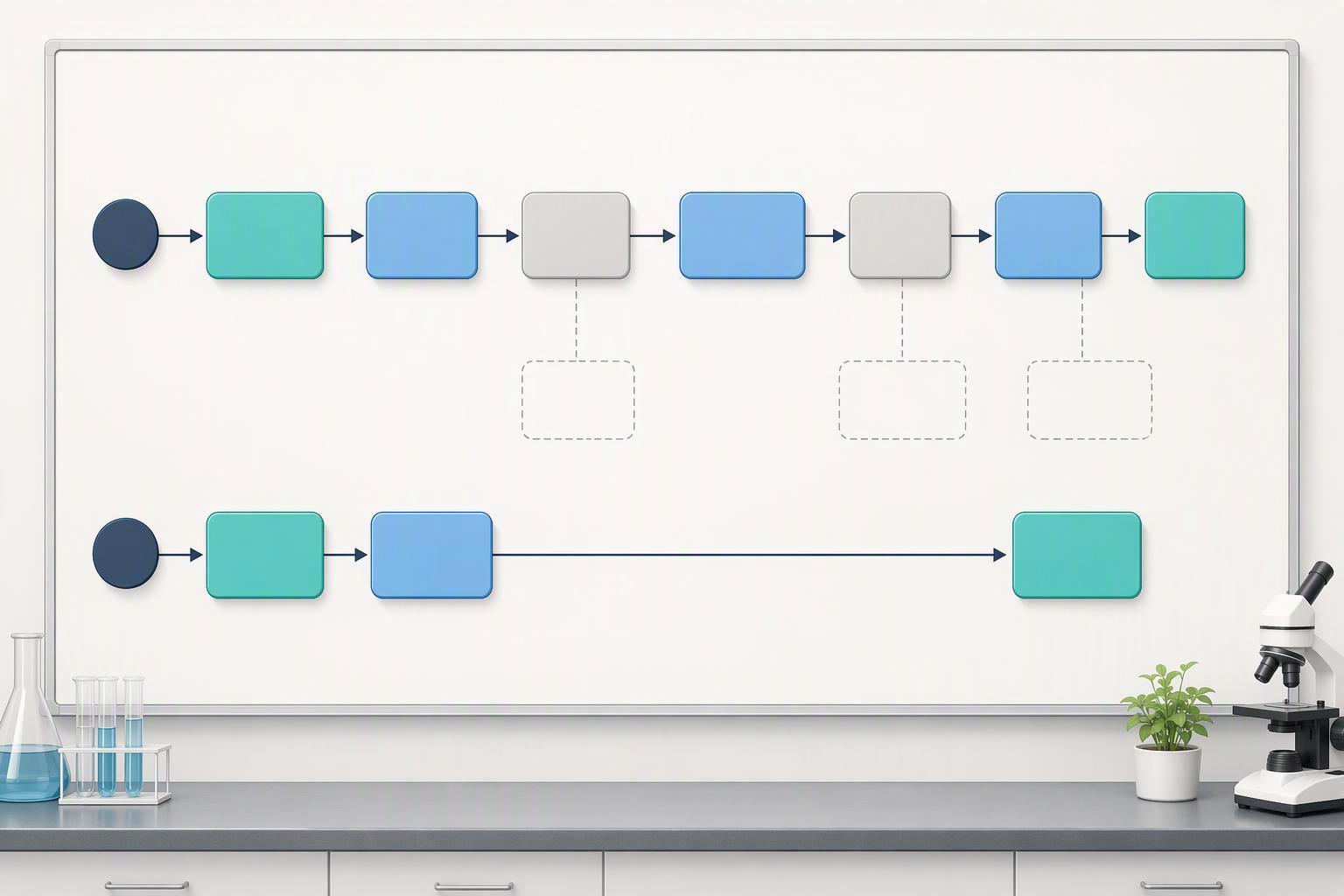
The step savings illustrate the distinction. Lonza reports that removing enrichment plus MSX selection saves up to two weeks in cell line development, roughly a 15% reduction in gene-to-research cell bank timelines (Lonza’s account of the step savings). That is a platform feature. The principle underneath it is that two selection stages were collapsed into one, which is a scheduling decision any development group can make.
Independent bioprocess reporting frames the same structure without naming a platform: cell-line-development biology sets the timeline potential, analytics most often determines how fast a defensible decision can be made, and scheduling and tech-transfer coordination amplify both (bioprocess reporting on where decisions stall, 2026-07-26). A second vendor’s endpoints show the same convergence from a different starting point: Sartorius reports DNA to research cell bank in just 9 weeks and a released master cell bank in less than five months (Sartorius 4Cell platform brochure (PDF)). The endpoints differ and are not directly comparable, but both compress the front end and leave the analytical decision as the gate.
What early peptide sequence design must assess before the first synthesis request
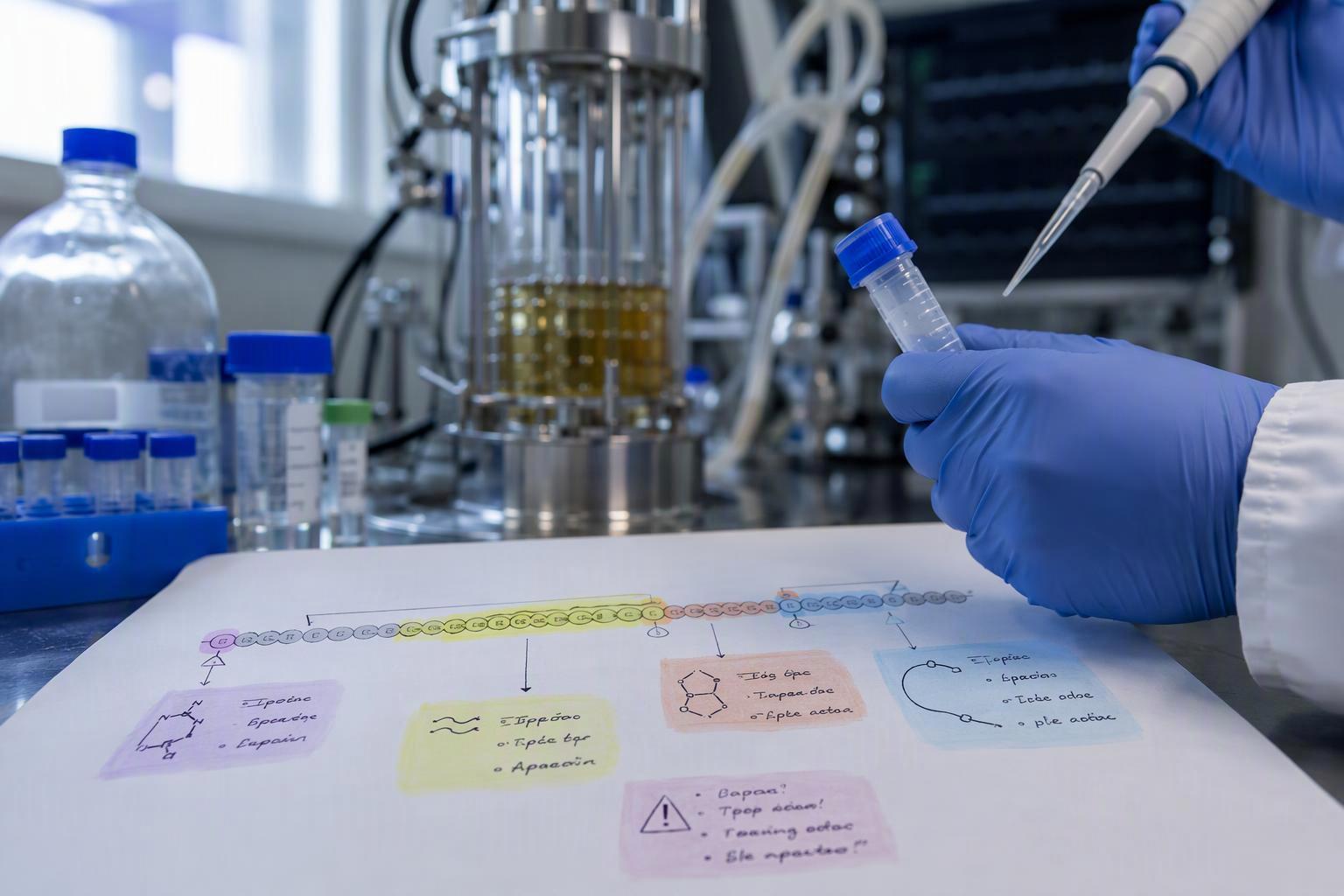
Early peptide sequence design is where the downstream cost is set, because the sequence determines how hard the synthesis and the purification will be. A peer-reviewed review of hydrophobic peptide synthesis identifies the predictors: hydrophobic clustering, beta-sheet and aggregation propensity, low net charge density, hindered coupling regions at Val, Ile, Thr and Pro, and multiple cysteines that reduce isolated yield (peer-reviewed review of hydrophobic peptide synthesis, 2020-03-04). Those are sequence-level properties, and they are visible before anyone orders resin.
The same review documents what a difficult sequence costs. Peptides over 50 to 60 amino acids remain a challenge, and a hydrophobic transmembrane 34-residue rat bradykinin receptor fragment gave 4% yield in DMF and 12% hauv 80% NMP/DMSO (peer-reviewed Oxytocin Peptide review of hydrophobic peptide synthesis). A 34-residue fragment is not a long peptide, which is the point: length is a poor proxy for difficulty.
The practical response is a design-stage decision about backbone protection. Installing backbone protection before the onset of aggregation and thereafter at every six residues would prevent the onset of difficult sequences (advances in Fmoc solid-phase peptide synthesis, 2016). That is a synthesis-planning choice, and it is cheapest to make before the first synthesis request rather than after a failed lot.
Where a peptide development workflow actually loses time: synthesis, purification, or analytical release
Kev sib xyaw, purification, analytics and scheduling can each limit a peptide program. Identify the critical path from the actual route and handoff records; a CHO platform announcement or a CDMO commentary cannot rank these bottlenecks across all peptides.
The relevant impurity profile depends on sequence, chemistry and purification. Do not infer a fixed impurity count or a universal 0.10%/0.5% requirement from a CDMO commentary. FDA withdrew its 2021 general synthetic-peptide ANDA guidance in July 2026; consult current product-specific recommendations.
Synthesis itself has become faster, which shifts the bottleneck further downstream. A peer-reviewed study reports wash-free SPPS cycle times of approximately 3.5 minutes per amino acid on a model sequence and approximately 7.3 minutes per amino acid for an 86-mer and an 89-mer, with up to 95% overall waste reduction and 28.4 L of waste for a 25 mmol liraglutide synthesis against 139.7 L for the wash-based run (wash-free SPPS cycle times and solvent reduction, 2023-12-09). Faster synthesis delivers crude material sooner, and the crude lot still has to clear purification and analytical release testing. Vip Peptide
What must be locked before the first custom peptide order is placed
Four items have to be settled before the first custom peptide order, and each one is a specification decision rather than a purchasing decision. The first is the target sequence with its difficulty assessment, since the predictors above determine whether the route needs backbone protection. The second is the salt form and counterion, because counterion mass is a real fraction of the material: TFA ntsiab lus ncav cuag txog 35% ntawm tag nrho qhov hnyav ua ntej hloov, piv rau kwv yees 25% xav tau stoichiometrically (kev tshawb fawb pom zoo txog peptide TFA counterion, 2025).
Qhov thib peb yog qhov chaw huv. Ib qho chromatographic purity figure thiab ib qho net peptide ntsiab lus yog kev ntsuas sib txawv, thiab qhov kev qhia tso tawm yuav tsum hais tias qhov twg tswj hwm. Qhov plaub yog pob tshuaj ntsuam uas yuav nrog txhua pawg, vim tias kev kuaj tso tawm yog txhais los ntawm cov yam ntxwv uas qhov program xav tswj.
Cov yam ntxwv ntawd tau teev hauv USP <1503> Cov yam ntxwv zoo ntawm cov tshuaj peptide synthetic, uas teev npe los ntawm HPLC coelution, MS, amino acid analysis, MS-MS, NMR, peptide mapping thiab chirality, kev ntsuas los ntawm HPLC raws li ib qho qauv piv txwv, peptide ntsiab lus los ntawm kev tshuaj xyuas amino acid, kev txheeb xyuas nitrogen lossis NMR quantitative, thiab impurities (USP <1503> cov yam ntxwv zoo, official 2021-08-01; tam sim no yog official 2025-02-12). Locking the attribute list before the first order is what makes the first lot comparable to the tenth.
Which records must exist before scale-up, and what each field has to carry
Scale-up records are a data-integrity question before they are a manufacturing question. The audit-trail requirement is explicit: use of secure, tsim los ntawm computer, time-stamped audit trails to independently record the date and time of operator entries and actions that create, modify, or delete electronic records, with record changes not obscuring previously recorded information and audit trail documentation retained at least as long as the subject records (21 CFR 11.10(e) audit trail requirements). The same section requires system validation, accurate and complete copies in human-readable and electronic form, record protection for the retention period, access limited to authorized individuals, operational system checks and authority checks (21 CFR 11.10(e) audit trail requirements).
Qhov kev cia siab ntawm qhov chaw los ntawm cov lus piav qhia txog kev ruaj ntseg ntawm cov ntaub ntawv: ALCOA txhais tau tias muaj peev xwm muab rau, nyeem tau yooj yim, tam sim no, qub thiab raug, thiab ALCOA-plus ntxiv tag nrho, sib haum xeeb, ruaj khov thiab muaj, tsis muaj kev sib txawv hauv kev cia siab txawm siv lub npe luv twg (MHRA GxP cov lus qhia txog kev ncaj ncees ntawm cov ntaub ntawv (PDF), 2018). Siv rau ib daim ntawv teev npe peptide lot, txhais tau tias txhua chromatogram, mass spectrum thiab counterion ntsuas nqa leej twg khiav nws, thaum, ntawm cov cuab yeej twg, thiab hauv ib daim ntawv uas tsis tuaj yeem hloov tau.
Kev ruaj ntseg ntawm daim ntawv thiab kev haum rau kev siv thiab theem. Cov cai sau npe ICH dav dav tsis txhais tau tias kev khaws cia, kev suav batch lossis sijhawm kawm rau research intermediate. Txuas txhua qhov txiaj ntsig rau lot, protocol tiag tiag thiab cov qauv lees txais.
How to tell a decision-ready peptide intermediate from a finished lot
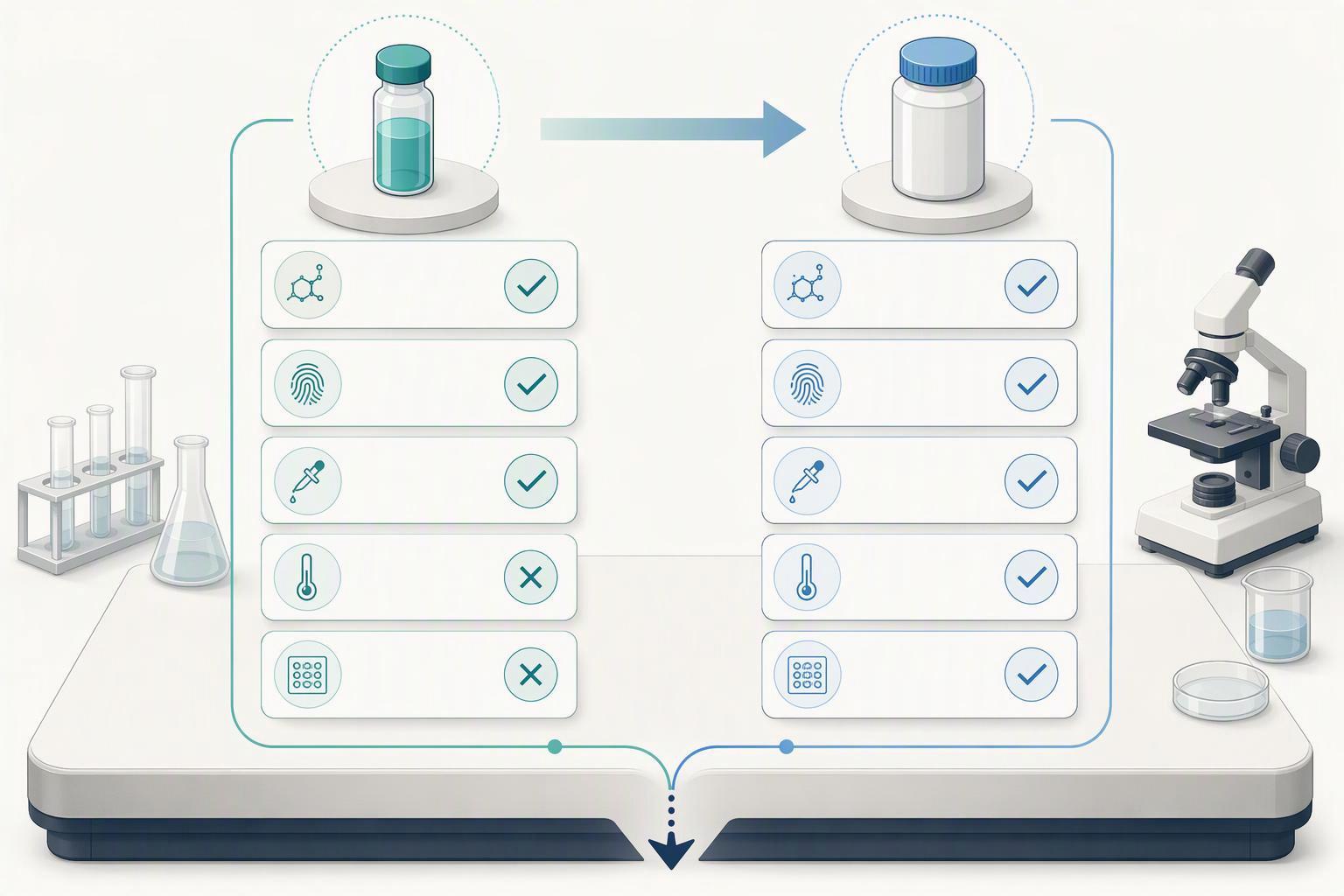
Ib qho nruab nrab npaj txiav txim siab teb ib lo lus nug; Ib pawg tiav teb tag nrho. Qhov txawv yog cov yam ntxwv uas cov khoom tau raug kuaj, Tsis yog tus naj npawb huv ntawm daim ntawv pov thawj.
Ib qho nruab nrab npaj txiav txim siab muaj chromatographic purity, Ib qho kev lees paub tus kheej thiab txaus cov ntaub ntawv impurity los txiav txim siab seb puas yuav txuas ntxiv. Qhov ntawd yog ib qho kev ntsuas qis dua kev tso tawm. Ib qho khoom tiav nqa tag nrho cov yam ntxwv: Kev txheeb xyuas los ntawm cov txheej txheem orthogonal, Kev ntsuas raws li ib qho qauv piv txwv, Kev tsim polypeptide wholesale Cov ntsiab lus Peptide, Thiab ib qho profile impurity tshwj xeeb thiab tsis tau piav qhia, Qhov twg yog qauv USP <1503> Qhia tawm (USP <1503> cov yam ntxwv zoo).
Cov txiaj ntsig hloov pauv tiv thaiv ion nyob ntawm peptide, Kev txwv txheej txheem thiab kev kuaj pom. Ib qho kev tshawb fawb tshiab tsis yog ib qho piv txwv muaj zog dua thaum siv cov qauv thiab txoj kev tshuaj xyuas sib txawv. Verify residual TFA on the proposed lot.
Cov Lus Nug Nquag Nug
Is the gene-to-lead-clone analogy a validated equivalence for peptides?
PM, and it is worth being blunt about that. Nothing in the published record ties the GS expression system to solid-phase chain assembly, counterion exchange or TFA removal. What carries across is narrower and more useful: the habit of moving a downstream constraint upstream and deleting a handoff, not the biology of any one platform. Custom Peptide
Can Lonza’s figures be relied on if some supporting data are labelled “data not shown”?
Treat them as vendor-reported rather than independently confirmed. The titre and pool-stability numbers circulate across Lonza’s own materials, so they corroborate one another without being separate evidence, and an industry review of CHO selection systems flags part of that dataset as “data not shown”. The direction is credible; qhov tseeb tsis tuaj yeem tshuaj xyuas tau.
Is purification still just a downstream service?
Daim ntawv qhia hnub qhia txawv. Kev tshem tawm, cov hom epimerised thiab oxidised tuaj yeem zaum ze rau qhov chaw hauv qhov hnyav thiab hydrophobicity uas co-elution yog ib qho kev ua raws cai, thiab ib qho 30-residue chain tuaj yeem tso tawm 50 to 100 cov impurities xaiv. Bioprocess qhia txog qhov chaw uas kev txiav txim siab nres ua rau qhov chaw txwv ntawm kev txiav txim tshuaj xyuas es tsis yog ntawm kab, yog li ntawd kev saib kev ntxuav raws li ib qho kev pabcuam uas koj yuav thaum kawg tsis to taub qhov chaw lub sijhawm mus.
Can a team with a locked sequence recover without restarting?
Feem ntau yog, thiab qhov kho nyob hauv kev npaj synthesis es tsis yog hauv kev txiav txim nws tus kheej. A peer-reviewed review of hydrophobic peptide synthesis piav txog kev teeb tsa backbone tiv thaiv ua ntej pib sib sau ua ke thiab tom qab ntawd ntawm txhua qhov seem thib rau, uas txo qhov nyuaj yam tsis kov qhov kev txiav txim. Peptide nyob raws li tsim; txoj kev thiab txoj kev ntxuav hloov. That is the practical reason early peptide sequence design should log a manufacturability read alongside the sequence, so a locked order still has somewhere to go.
Xaus lus
The transferable lesson from GS-ORI-GO is not a promoter or a selection marker. It is that the fastest programs decide the hard things early: which sequence properties will drive synthesis difficulty, which salt form and counterion the program will carry, which attributes the certificate has to report, and which records will exist before scale-up. Lonza’s own numbers show what early integration buys on the biologics side, with lead-clone titers higher than 11 g/L and IND readiness in as little as six months under a qualified footnote (Lonza's 3 June 2026 Kev ceeb toom xov xwm; Lonza on early expression vector design). The peptide-side equivalent is a locked attribute list and a validated method set before the first order, not a faster reactor.
The next step is a checklist review: confirm the sequence difficulty assessment, the salt form, the purity basis and the analytical package are all settled, then confirm the lot record can produce an audit trail that satisfies 21 CFR 11.10(e) before the first scale-up batch is scheduled.