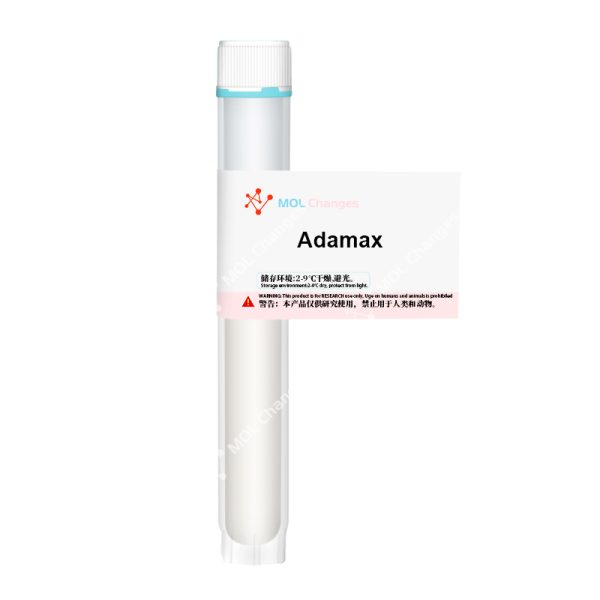
Adamax is a synthetic heptapeptide derived from sanamve; the specific amino acid sequence being Ac-MEHFPG-AG-NH₂.
Semax itself, a fragment of mahomoni adrenocorticotropic (ACTH), possesses potent neurotrophic and cognitive-enhancing properties.
Structural limitations within semax lead to significant limitations to its half-life and efficiency of crossing the blood-brain barrier.
To alleviate these limitations scientists introduced a bulky adamantylacetate group through covalent bonding at the carboxyl terminus.
This modification significantly improved the pharmacokinetic properties of the peptide molecule.
Introduction of this moiety provides near complete resistance to subsequent enzymatic degradation; retention time of the active form of adamax within the body is greatly prolonged.
More excitingly, the previously mentioned ‘ingenious’ design promotes an increase in efficiency with which the peptide crosses said barrier, and enhanced specificity and selectivity is achieved.
Compromising no biological activity, all known effects of semax are either maintained or enhanced.
Kutsatizana
Ac-MEHFPGP-Adam-NH2
Nambala ya CAS
/
Molecular Formula
C50H68N10O12S
Kulemera kwa Maselo
1033.212
Research Of Adamax:
1.Therapeutic Efficacy and Clinical Potential
Clinical trials have shown Adamax to outperform Semax in promoting the growth and protection of ubongo wotengedwa neurotrophic factor (Mtengo wa BDNF) ndi ku mfundo nerve growth factor (NGF).
Replacing Semax as a therapeutic agent, particularly for psychiatric disorders or social cognition enhancement, is a very real possibility.
2.Cognitive Enhancement (Intelligence being a subset)
Direct stimulation of BDNF upregulation is Adamax’s primary function.
Neuronal cell activity, new neuron generation/differentiation and all associated synaptic improvements are what the research is currently focused on.
Hippocampal and prefrontal cortex activity is also increased.
Long term experimental groups have and will continue to show, quantifiably, superior memory and learning abilities.
3.Zotsatira za Neuroprotective
Adamax’s cognitive enhancement and intelligence-boosting functions originate not only from its direct promotion of neural cell growth, but also from demonstrable neuroprotective properties.
Effective reduction of cerebral infarction areas in stroke patients has been demonstrated; stimulation and subsequent recovery of various necrotic cells is another key aspect of this neuroprotection.
Kuchepetsa excitotoxicity and providing near-constant antioxidant effects are additional, well-documented activities.
Positioning itself within this realm, Adamax holds much promise as a true therapeutic agent for neurodegenerative disorders – Alzheimer’s being the prime example, Parkinson’s following closely behind.
4.Stress and Anxiety Relief
Adamax enhances the human ability to adapt to environmental changes; the brain itself must rapidly adjust to, and resist, a variety of physiological stressors resulting from these quick environmental shifts.
Maintaining some form of homeostasis is the end goal.
Modulation of the hypothalamic-pituitary-adrenal (HPA) olamulira is central to this process, increasing or decreasing the appropriate release of neurotransmitters, all lesser ‘stress responses’ being suppressed.
Anxiolytic effects are a primary benefit – drowsiness and cognitive impairment (the near universal side effects of traditional anxiolytics) are completely avoided.
Enhancing cognitive function during any form of anxiety relief is what makes Adamax particularly alluring to researchers and patients alike.
COA
Mtengo wa HPLC
MS