Quick Answer
Five artifacts to request from peptide suppliers under ISO 9001:2026: control cambio, trazabilidad ya lotes, deviation CAPA, registros, and QbD.
Prerequisites: What to Have Ready Before You Evaluate a Supplier
'nar documento tso̲kwa través tsi aproximadamente made pa ya proveedor. hingi t'ot'e ejecutar 'nar auditoría nxo̲ge pa da hmädi Nunu̲, pe gí t'ot'e ku̲t'a ya 'bede hä 'bu̲ 'be̲tho ndui llamada.
Temu̲ ga hñoki:

-
certificado nu'bya ar proveedor, ko ár pa caducidad
-
hmä ntsoni ntsoni ntsoni ntsoni adjunto Nunu̲ certificado
-
ár nkohi hño, firmado wa jar borrador
-
ar nt'uni mfädi auditoría mäs reciente, nu'bu̲ nuna ar dän
-
paquete analítico pa 'nar lote vivo
suponga ke gí 'bu̲i cómodo ko 'nar vocabulario gestión hño: hingi conformidad, nt'ot'e correctiva, ungumfädi documentada. nu'bu̲ esos ngäts'i aún mi hingi 'bu̲hu̲ ñoho 'mui, the ISO 9000:2015 vocabulario ge ar referencia compartida, ne vale dá dí ntsa̲ da mä nä'ä 'bu̲ 'be̲tho ar llamada. ISO 9000:2015 defines nonconformity as “non-fulfilment of a requirement” and corrective action as “action to eliminate the cause of a nonconformity and to prevent recurrence.” Most stalled supplier conversations come down to two parties using different words for the same event.
Pro Tip: Ask for the certificate’s scope statement, not just the certificate. A certificate without its scope tells you a system was certified, not what that system covers.
How the ISO 9001:2026 Transition Timeline Sets Your Qualification Deadlines
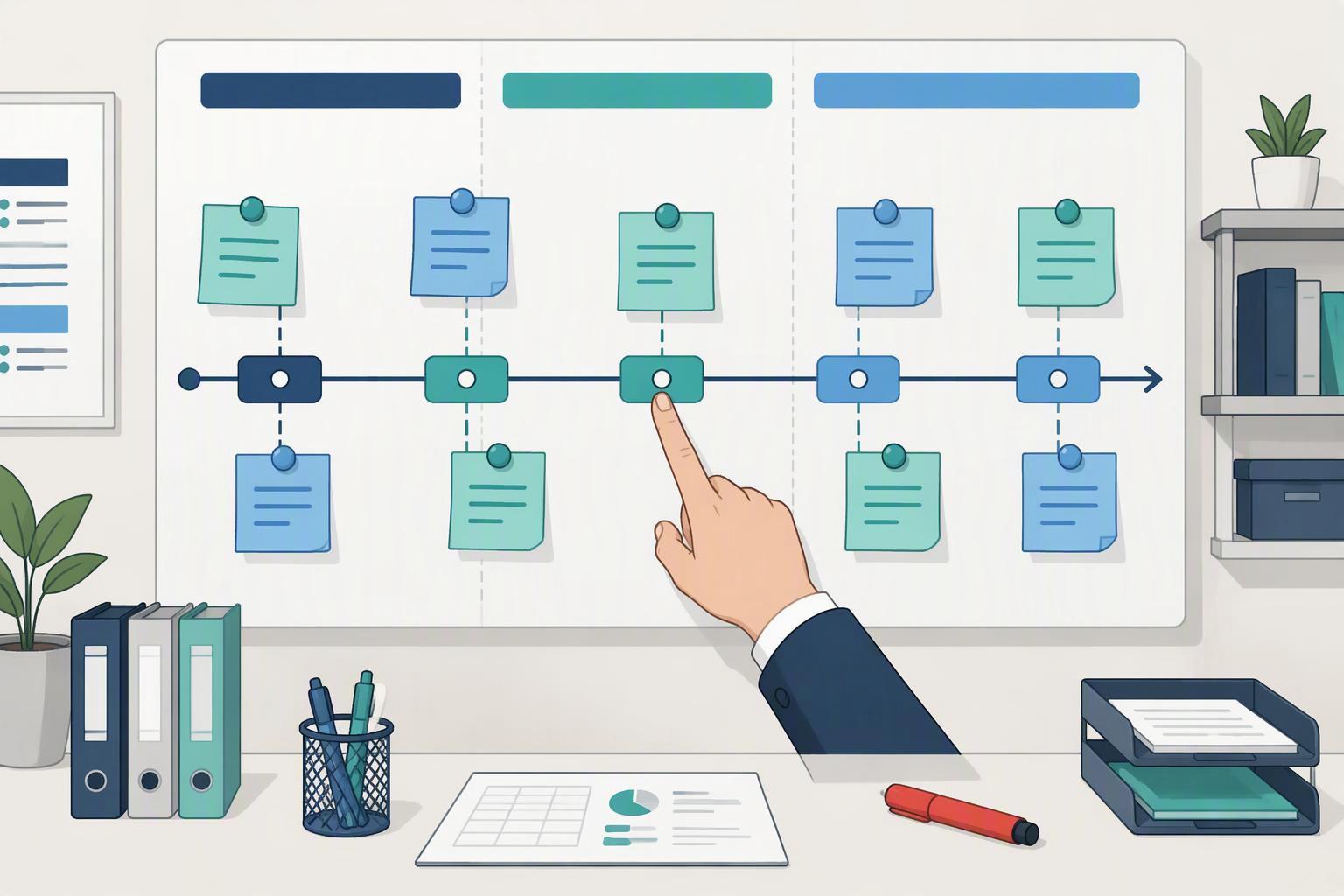
With those five items in hand, the next question is timing: i 9001:2026 transition timeline gives you four procurement deadlines before the standard’s 30 Setyembre 2029 expiry date, and the earliest one falls on 31 Märsa 2027, N 2026 u (' 176 b, recuperado 2026-09-28). u 30 June 2027, � 30 Setyembre 2027 (' 176 b, recuperado 2026-09-28).
� 31 Märsa 2028: from that point, y 2026 u (' 176 b, recuperado 2026-09-28). a 9001:2015 after that date cannot exist. c, u 30 Setyembre 2029 e 2015 r, p.
Key Takeaway: o 2028 i 2029, s, and any new supplier you qualify after 31 Märsa 2028 a 2026 u.
ISO enmarca ar revisión komongu 'nar actualización dirigida en lugar de 'nar reescritura, enfatizando ar liderazgo, 'mui hño ne comportamiento ético, ntheki mäs neki ya riesgos ne ya hño, 'nar 'ra'yo sección nä'ä gi mä ar intención ya requisitos, ne hmihi ar ngäts'i estructura armonizada (Ar nota ar lanzamiento ISO, 16 Setyembre 2026). Espere énfasis revisado, hingi 'nar ko gestión hño reemplazado.
Practice 1: Change Control That Covers Communication and Effectiveness, Not Just Approval
Solution Phase Peptide Synthesis Ar control cambio proveedor ar péptidos jár ar 2026 edición bí 'ya̲ni mäs de 'nar nthädi nthogi firmada. 'nar walkthrough ar cláusula ar texto revisado gi cláusula 6.3, planificación ar tse̲ yá mpa̲ti, Komo esperando ar disponibilidad ungumfädi, Honja bí comunica ar cambio, Honja ar eficacia ar monitoreada ne evaluada, ne honja ya revisados resultados (MOL Changes, 2026-09-29). nthädi hä ho̲ntho ya hingi lleva ar cláusula.
Peptide Cro nä'ä importa ngetho 'nar sustitución resina, a counterion exchange or a method-version change can shift identity, pureza, impurity profile or stability while the certificate of analysis looks unchanged. Clause 8.5.6, control of changes, has required since the 2015 baseline that production changes be reviewed and controlled to prevent unintended consequences; the expected artifacts are change request forms, risk assessments, approval records and updated procedures (NQA, February 2026).
So ask for the change record behind one specific change from the last 24 months and walk it end to end: request, evaluación riesgo, approval, communication to affected customers, effectiveness check, closure. A log with approval dates and no effectiveness review, or a customer notification that lands after shipment, is the failure mode. One example: an HPLC purity assay moved to a new method version, the change was approved, and nobody compared the two versions on the same lot.
Practice 2: Batch Traceability You Can Reconstruct Backward and Forward
Peptide batch traceability is not a filing exercise, and the audit test proves it: pick one lot number from a recent delivery and ask the supplier to reconstruct it, from records, without preparation time. Backward, the genealogy should run to raw-material lots and their suppliers. Forward, it should run to every shipment Pruebas ar Péptidos that drew on the lot. The clause 8 operation requirements set the baseline: clause 8.5.2 requires organisations to identify outputs where needed, identify their status (approved, pending, rejected, hold), ne, where traceability is required, control unique identification and retain the documented information behind it.
That is why a certificate of analysis alone proves less than buyers assume. A CoA reports results for a sample; it does not show which raw-material lots entered the batch, which method version was run, or where the rest of the lot went. Traceability is the artifact that tells you whether the certificate means anything.
Pro Tip: Choose the lot number before the call, not during it. A supplier who knows the sample in advance can assemble a tidy narrative; a supplier with live records answers in minutes. s
nthädi hä cambios pa ár programa 2026 edition expects
Artifact to request
Clause Semaglutide Synthesis anchor
Outputs identified, status visible, unique identification controlled where traceability is required, documented information retained
A backward-to-materials and forward-to-shipment reconstruction of one sampled lot, produced from records Liquid Phase Peptide Synthesis
Clause 8.5.2, identification and traceability
Failure looks like one of two things. Either the genealogy stops at the bulk intermediate, leaving the raw-material lots unnamed, or the reconstruction takes days and arrives as a written account rather than as records. Both tell you the same thing: the system holds a certificate, not a traceable lot.
Practice 3: Deviation Management With a Root Cause and a CAPA Link

Deviation management in peptide manufacturing is where a supplier’s quality system either works or performs. The test is not whether deviations are closed, but whether each one closes with a determined cause and a corrective action whose effectiveness was reviewed.
The clause 10.2 requirements in full set the sequence to check each entry against: react to the nonconformity by controlling and correcting it and dealing with its consequences; evaluate whether action is needed to eliminate the cause so it does not recur or occur elsewhere; determine the causes; determine whether similar nonconformities exist; implement the action; review its effectiveness; update risks and opportunities; and change the quality management system if necessary. The retained record must show the nature of the nonconformity and the actions taken, including results.
Request the last 12 months of the deviation log and read it for three things. Are causes determined, or merely described? Was the rest of the operation checked for the same nonconformity? Was effectiveness reviewed after implementation?
A log where every entry reads “operator error, retrained” fails all three. An isolated deviation is a data point; the same one recurring across products, Y, a.
Practice 4: Documentation and Analytical Records That Survive Inspection
The documentation question is not whether records exist. i, n. s, t, r.
u: m, e, n. t, o. s: the chromatogram and the mass spectrum, w, the analyst and the instrument identified.
That request maps to the data-integrity principles set out in MHRA’s data-integrity guidance: atribuible, legible, contemporáneo, original, exacto. The documented-information requirement in clause 8 of ISO 9001:2026 points the same way, toward records that are created and controlled as the work happens rather than reconstructed afterward.
r: A summary table is not raw data. If the package contains a CoA and a table but no chromatogram, you cannot verify the result, only accept it.
When a supplier calls the raw data proprietary, that is a commercial position, not a quality one. Ask instead for a redacted chromatogram with the method version and instrument intact. The result and its provenance are what you are evaluating; the formula behind a proprietary gradient is not.
Practice 5: Quality by Design and the Comparability Conversation

Quality by design for a peptide supplier means one practical thing at the buyer’s end: a comparability protocol agreed before a change, not a discussion after it. At peptide scale, purity and yield move together, so a change that looks operationally minor can shift the impurity profile.
That trade-off is why scale-up changes carry risk. CDMO guidance on milligram-to-kilogram scale-up notes that above 95% purity at kilogram scale the route often necessitates multi-step preparative HPLC and carefully controlled lyophilization, and that aggregation, degradation, or prolonged hold times can cause notable yield loss. The same source puts the practical solid-phase limit near 30 to 40 residues. It is a CDMO’s own explainer, so read it for direction rather than as an independent benchmark.
Synthesis economics reinforce the point. The widely cited synthesis-economics analysis puts a 50-plus-step process at an average 99% yield per step, and reports that improving crude purity by 10% can save more than 50% post-purification. The figures come from named industry experts quoted in that piece, not from a controlled study.
Put the protocol in the quality agreement: which change types trigger a comparability study, what it measures (identidad, pureza, impurity profile, and where relevant potency and stability), and what acceptance criteria apply before changed material ships. A supplier that reports a change after the fact and offers a CoA as the comparability evidence has not met that bar.
A documentation package that includes full analytical verification, such as the one MOL Changes can be used to provide, supports this review.
Common Mistakes Buyers Make When Applying the 2026 Expectations
The most common buyer-side failure is treating the certificate as the evidence rather than the records behind it. A certificate says an audit happened; it does not show that the supplier can reconstruct a batch, explain a deviation, or control a change. These five mistakes show up repeatedly in supplier evaluations, and each has a straightforward fix.
Accepting a CoA as proof of traceability. A certificate of analysis confirms what was tested on one sample, not where the material came from or where it went. Buyers accept it because it arrives first and looks authoritative. Ask instead for the batch genealogy that links incoming lots to the finished peptide.
Lei 'nar registro ar cambios pa nthädi hä hä ho̲ntho. 'nar registro nä'ä gi 'ñudi signos gi mä 'nar cambio bí autorizado, hingi da 'na comprobó nu'bu̲ funcionó. Ar njäts'i ge da 'yadi ar comprobación eficacia da te̲ni nthädi nthogi.
Mä hä 'nar registro desviación ko ya nkohi ne ni 'na jar causas. 'nar 'mui gi k'ot'i 'nar lote; 'nar causa raíz ne 'nar CAPA vinculada cerrar ar hñäki. nu'bu̲ ar registro pe̲ts'i columna ar causa, ar proveedor xí rastreando resultados en lugar de 'met'o ar recurrencia.
Solicitando 'nar paquete documentación hinda t'ets'i ya artefactos. Solicitudes vagas obtienen paquetes vagas. Nwesten nä'ä gi ne: registro cambio, registro desviación ko ya referencias CAPA, conjunto documento controlado.
dejando ár nt'ets'i transición fuera de nkohi hño. nu'bu̲ ar nkohi 'bu̲i silencio dige togo'ä posee ar 2026 transición, ar nt'ets'i nt'ot'e predeterminada jar ni. Put the deadline and the responsible party in writing.
nt'a̲ni frecuentes
What happens to a supplier’s 2015 certificate after 30 Setyembre 2029?
It stops being a valid basis for your qualification file. Under the ISO 9001:2026 transition timeline, certificates issued against the 2015 edition are withdrawn on 30 Setyembre 2029 (the ISO/TC 176 transition notice). If a supplier has not transitioned by then, treat their certificate as expired and re-open the qualification rather than letting it lapse quietly in your approved-supplier list.
Does a supplier have to be recertified immediately after publication?
No. ISO 9001:2026 was published on 16 Setyembre 2026 (ISO’s launch announcement), and the transition window runs to 30 Setyembre 2029. A supplier holding a current 2015 certificate stays certified during that period. What changes for you is the deadline, not the certificate: ask for their transition plan and a target audit date, then track it as a qualification milestone.
Does the 2026 edition change supplier-qualification requirements themselves?
Not the requirement to evaluate and control externally provided processes, products and services, which remains part of the standard’s purchasing and supplier control expectations. nthädi hä cambios pa ár programa 2026 edition shifts is how you evidence that evaluation: control cambio, H, deviation handling and documented records are assessed against the practices above. Your qualification criteria stay yours; the audit trail behind them gets stricter.
¿Temu̲ thogi nu'bu̲ 'nar proveedor rechaza 'nar auditoría in situ?
Accept it as a data point and adjust the evidence you require. Ask instead for a remote documentation review, a completed self-assessment against the five practices, batch records for a named lot, and a deviation log with CAPA linkage. If they decline all of these, you have no verifiable basis for approval, and the practical answer is to keep them unapproved or qualify an alternative source.
Njäts'i nu'bu
N: u, ', b, y, a. Each one is a document a supplier either has or does not, p. e: the ISO/TC 176 � 30 Setyembre 2029 �, t, s.
', talk to a technical expert about your documentation package, or request a walk-through of the change-control and traceability records.
Disclosure: this article is published by MOL Changes, a peptide manufacturer, so the supplier practices described here reflect the standards we are held to as well as the ones we apply.