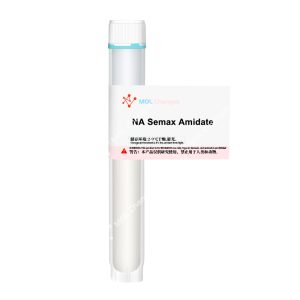
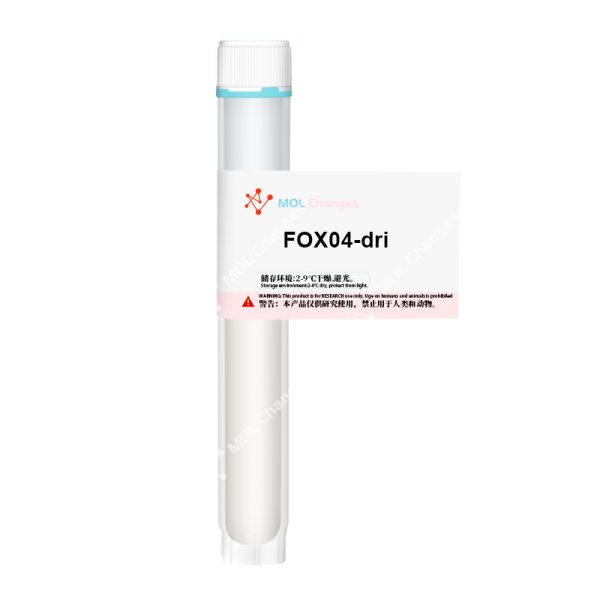
Nthoni sustancial jar mecanismos senescencia celular xi llevado ár nte FOXO4 — DRI, 'nar compuesto senolítico 'nehe conocido komongu ar péptido inhibidor IT. Nuna ar péptido bioactivo gi 'ñudi prometedoras propiedades antienvejecimiento.
ja ya células senescentes, ngu, FOXO4 ar une jar p53, formando 'nar complejo conocido komongu agregados FOXO4 — p53. Nuna ar complejo da mats'i nu'u komongu 'nar inhibidor ar apoptosis iniciación. consiguiente, nuna ar interacción extiende ar nzaki útil ar senescencia celular ne conduce ár acumulación ko ar pa.
notablemente, FOXO4 — DRI hingi bí dirige Hmunts'i jar FOXO1, FOXO3, wa proteínas p53. da su lugar, interactúa específicamente ko ar sitio unión FOXO4 mbo ja ar complejo FOXO4 — p53. Nuna ar interacción promueve ar disociación ar complejo, libera p53, ne bí nja'bu̲ bí reactiva ar apoptosis inducida ya p53, nga̲tho Mente bí salva ya células normales ya efectos secundarios.
varios ya mfädi demuestran ar potente eficacia FOXO4 — DRI jar hyo selectivamente ya células senescentes. i, nsadi indican da FOXO4 — DRI revierte ar deterioro fisiológico asociado bätsitho: aumenta ar resistencia física ne ar rendimiento motor, restaura ar función renal ne crecimiento xtä, ne bí nja'bu̲ ralentiza ar descomposición tejido relacionada ko ya bätsitho. ngu, modelos ar rat'u̲ngu envejecido muestran ja nuya njapu'befi. adicionalmente, FOXO4 — DRI reduce inflamación crónica ne daños tisulares jar microambiente post quimioterapia, mejorando nja'bu̲ ya nzaki ne 'ñäni ar tsita ya'bu̲ plazo ja ya pacientes cáncer.
Secuencia
H-D-Leu-D-Thr-D-Leu-D-Arg-D-Lys-D-Glu-D-Pro-D-Ala-D-Ser-D-Glu-D-Ile-D-Ala-D-Gln-D-Ser-D-Ile-D-Leu-D-Glu-D-Ala-D-Tyr-D-Ser-D-Gln-D-Asn-D-Gly-D-Trp-D-Ala-D-Asn-D-Arg-D-Arg-D-Ser-D-Gly-D-Gly-D-Lys-D-Arg-D-Pro-D-Pro-D-Pro-D-Arg-D-Arg-D-Arg-D-Gln-D-Arg-D-Arg-D-Lys-D-Lys-D-Arg-D-Gly-OH
'bede ya CAS
2460055-10-9
Fórmula molecular
C228H388N86O64
Be̲xu molecular
5358.05
Research Of Foxo4-dri Benefits
1.Selective Induction of Senescent Cell Apoptosis
The primary mechanism of FOXO4-DRI involves the specific stimulation of programmed cell death in senescent cells. Here, p53 operates as a trans-activating factor for pro-apoptotic genes, inducing apoptosis. However, under normal physiological conditions, the FOXO4-p53 complex represses this apoptotic function.
By competing for p53 binding, FOXO4-DRI disrupts the FOXO4-p53 interaction. This disruption initiates the intrinsic apoptosis pathway specifically in senescent cells.
In aged mice, treatment with FOXO4-DRI led to hair regrowth comparable to middle-aged mice and significantly enhanced motor performance.
2.Quality of Life for Cancer Patients
Researchers are exploring FOXO4-DRI as a potential adjuvant drug to improve the quality of life for cancer patients after chemotherapy. While numerous anticancer agents affect tumor cells, they also cause non-specific injury to normal cells, increasing the burden of therapy-induced senescence(TIS).
Extensive studies validate that FOXO4-DRI can efficiently eliminate both spontaneous and treatment-induced senescent cells, ameliorating chemotherapy-induced frailty syndrome. ngu, a study in Cell demonstrated improved recovery and survival in chemotherapy-treated mice. These findings highlight the strong adjuvant therapeutic potential of FOXO4-DRI in oncology.
3.Ameliorating Liver Disease Pathology
In NASH(Nonalcoholic steatohepatitis) patients, senescent cells accumulate in the liver and secrete pro-inflammatory and pro-fibrotic molecules via the senescence-associated secretory phenotype (SASP), driving disease progression. Studies using a mouse NASH model found that FOXO4-DRI eliminated these hepatic senescent cells, suppressing SASP production at its source.
4.Treatment of Mice with Bleomycin-Induced Pulmonary Fibrosis
FOXO4-DRI triggers selective p53 nuclear exclusion and dissociation of the FOXO4-p53 complex. In bleomycin-induced mouse models, treatment with FOXO4-DRI decreased levels of Collagen, type I, alpha 1 (Col1a1) and α-SMA in lung tissues. This reduction suggests decreased production of extracellular matrix and inhibition of myofibroblast activación.
Although the study did not fully elucidate the precise pathway of FOXO4-DRI’s interaction with p53, it clearly demonstrated effective inhibition of fibrosis, highlighting a potential therapeutic strategy for idiopathic pulmonary fibrosis (IPF).
5.Alleviating Age-Related Hypogonadism (Testosterone Deficiency)
Male late-onset hypogonadism is an aging-related dysfunction impairing aged Leydig cells. Clearing these senescent cells can rejuvenate tissue function. Studies show that FOXO4-DRI acts specifically on human testicular Leydig cells. Administering it to aged mice improved the testicular microenvironment, preventing age-related testosterone deficiency. A 2021 study reported a significant increase in serum testosterone levels in treated aged mice.
The proposed mechanism involves specific suppression of p53 nuclear localization and dissociation of the FOXO4-p53 complex, resulting in senescent-cell apoptosis. These results suggest a potential therapeutic avenue for treating age-associated testosterone reduction.
COA
HPLC
MS