Why catalog breadth is a weak proxy for custom peptide supply capability
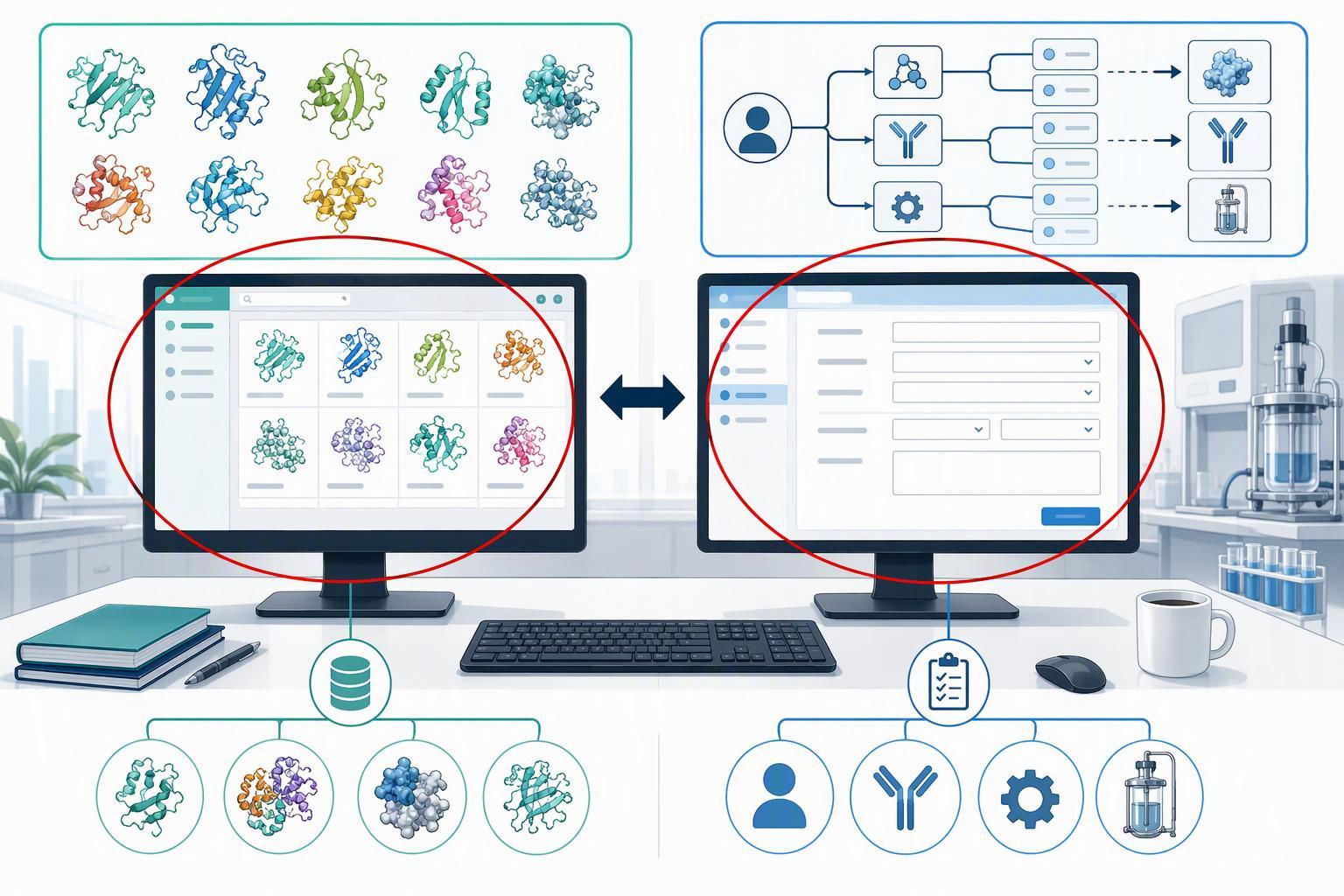
A large catalog says nothing about whether a supplier can run a sequence you send them. Grand View Research puts the recombinant proteins market at USD 3.4 billion in 2025, USD 3.9 billion in 2026 and USD 6.6 billion by 2033 pri 8.0% CAGR, while the peptide synthesis market is forecast to reach USD 1,840.6 million by 2033 from USD 961.4 milijon v 2024 pri 7.8% CAGR (Grand View Research, 2026; Grand View Research, 2026). The two forecasts measure different things, and the peptide figure covers the whole peptide-synthesis market, not custom synthesis alone.
The participant lists diverge in a way that matters for a buyer. Bio-Rad’s Proteins & Peptides catalog is organized around cytokines, hormones, growth factors and chemokines supplied as recombinant, purified or HRP-linked formats, and the custom service it describes is custom antibody work, not custom peptide production (Bio-Rad, pridobljeno 2026). Miltenyi Biotec’s published portfolio is built around biopharma and cell-therapy manufacturing rather than a documented custom peptide platform (Miltenyi Biotec, pridobljeno 2026). Neither statement is a claim about what those companies can make; it is a statement about what they publish.

A supplier’s own service page is the better proxy. ProteoGenix publishes custom peptide synthesis of more than 150 aminokisline, od $2.12 per amino acid with a minimum charge of €69 per peptide, purity from crude to ≥98%, delivery from 10 business days, and MS plus HPLC profiles in the standard QC report (ProteoGenix, pridobljeno 2026). That is a molecule-level commitment a buyer can test against a quote. Catalog volume is not.
What does customization depth actually mean for a peptide supplier — sequence, construct and route?
Customization depth is the residue range, construct types and synthesis routes a supplier will commit to in writing, plus the scale at which those commitments hold. A direct recombinant-versus-chemical comparison of a cysteine-rich peptide shows how much the route changes the answer: the 39-residue spider toxin Ba1 was produced at 11 mg per 0.1 mmol of amino acid assembly by chemical synthesis, against recombinant yields of 100 μg/L and 900 μg/L of culture for the two His-tagged constructs, which carried 247 in 77 residues respectively (Clement et al., 2015). The recombinant route’s construct overhead is part of the comparison, not a footnote.
Route selection follows a screen rather than a single rule. Chemical synthesis is preferred for roughly 5 do 40 or 50 ostanki, for non-natural residues such as D-amino acids, β-amino acids and N-methyl or isotopic labels, for synthetic and site-specific modifications, and for short timelines; recombinant expression is preferred above roughly 40 do 50 ostanki, for genetically encoded sequences, for biosynthetic modifications such as glycosylation when the host produces the correct structure, and for long cysteine-rich multi-disulfide constructs, though the host may misfold the product and must be validated (Clement et al., 2015, 2015). SPPS of peptides of fewer than 50 residues by Fmoc chemistry is “relatively routine”, while chemical synthesis of long peptides above 50 amino acids remains challenging, especially at large-scale manufacture (Wang et al., 2022).
|
Screen |
Chemical synthesis |
Recombinant expression |
|---|---|---|
|
Residue range |
približno 5 do 40/50 |
above roughly 40 do 50 |
|
Nenaravni ostanki |
preferred |
limited to genetically encoded |
|
Spremembe |
synthetic, site-specific |
biosynthetic, host-dependent |
|
Disulfide burden |
folding step required |
Custom Peptide Synthesis Factory long multi-disulfide constructs |
|
Intavis Peptide Synthesizer Timeline |
sh Kaiser Peptide Manufacturers Supplier Test Peptide Synthesis ort |
longer, construct-dependent |
Ask for the maximum length and the named route in the quote. A number stated on a service page and a number a supplier will warrant on your sequence are different commitments, and the first is the only one you can check before ordering.
What modification expertise should I verify before awarding a project?
Modification expertise is verifiable through a named list plus evidence from a prior project in the same chemical class. Site-specific peptide and protein modification reactions fall into four categories: exploiting disparities in chemical environments at the N-terminus, C-terminus or internal residues; tag-and-modify approaches; proximity-driven chemical modification; and enzymatic strategies (Duan et al., 2026). A supplier claiming broad modification capability should be able to place your requested chemistry in one of those categories and name the route it uses.
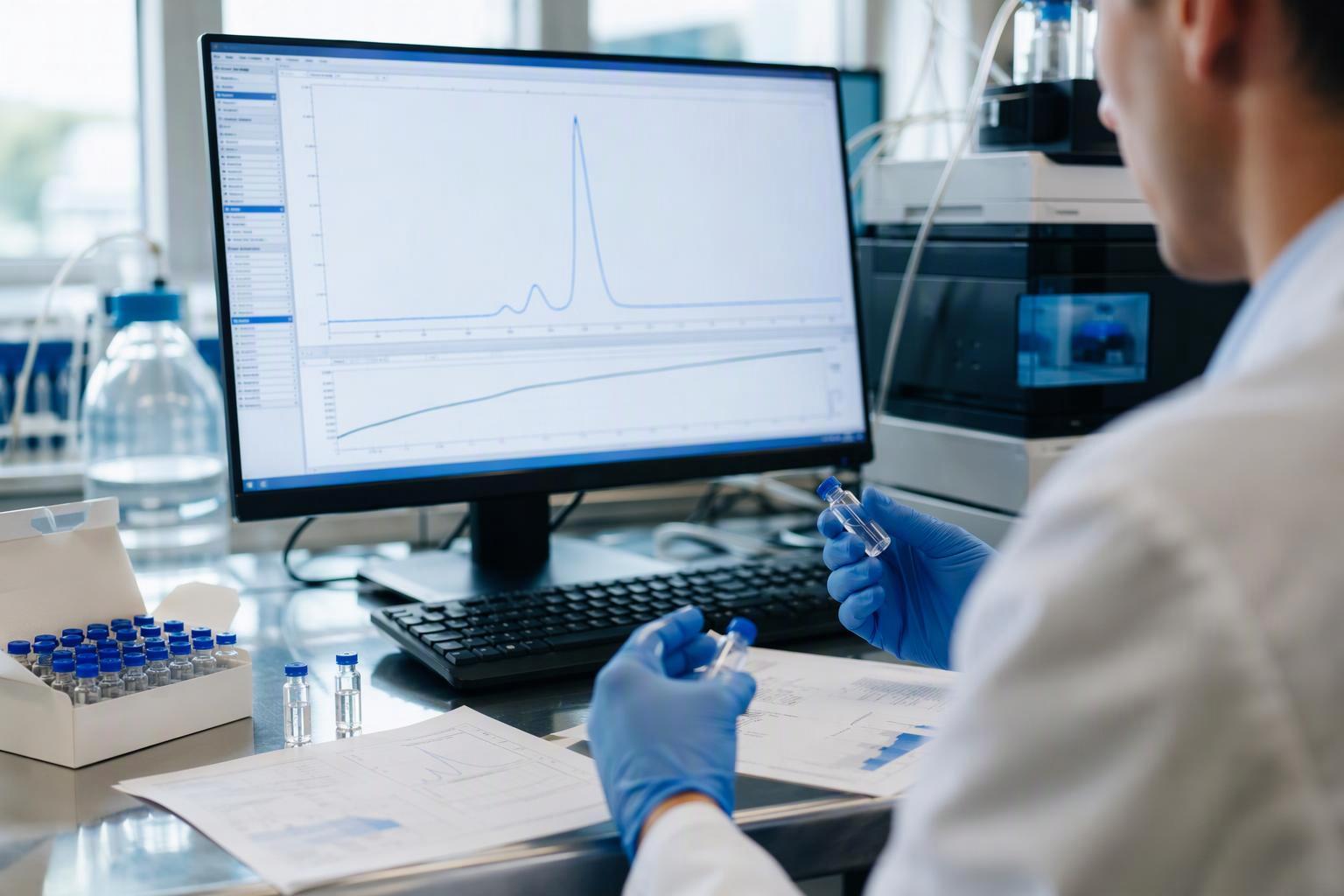
The verification method matters more than the list. Ask for a prior project in the same class, the route used, the crude profile before purification, and whether the modification survived cleavage and deprotection. A 2026 Nature Chemistry study of 539 sequences filtered out non-canonical amino acids entirely because only 49 such sequences were available for training, which is a direct limit on how far predictive tools reach into modified peptides (Tamás et al., 2026). No source in this set supports applying aggregation prediction to peptides containing non-canonical amino acids, so a supplier’s claim to predict behaviour for a modified sequence should be treated as unproven. Large Scale Peptide
A practical request list: the modification name and the chemistry used; the protecting-group scheme; the crude HPLC trace before purification; the mass spectrum confirming the modification’s mass shift; and the yield of the modified product after cleavage. If a supplier cannot produce the crude trace, the modification claim rests on the purified result alone, which hides the synthesis.
What belongs in a lot-specific analytical data package, and which standards govern it?
A lot-specific CoA is a record of tests on one defined lot, and its identity fields include the peptide name, internal or catalog number, full N-to-C sequence with terminal modifications and disulfide connectivity, molecular formula and average or monoisotopic mass, counterion form such as TFA, acetate or chloride, a lot number matching the vial, the synthesis record, kromatogram, mass spectrum and release decision, plus manufacture, analysis and release dates and physical form (PeptidesInfo, 2026). The lot number is the anchor. A sequence without terminal modifications or counterion form does not define the material. Peptide Manufacturers Factory
Each analytical result row should carry the attribute tested, method ID and version, specification or acceptance criterion, measured result with units, sample preparation, instrument identifier, analyst and reviewer, a pass or fail statement, and a link to the chromatogram or mass spectrum, with MHRA ALCOA+ principles (pripisati, berljiv, sočasno, original, accurate) as the expectation to apply (PeptidesInfo, 2026). I Q2(R2) and Q14, published as final FDA guidances on 7 marec 2024 in 89 FR 16582, define the validation parameters a defensible method must address: accuracy, precision, specificity, detection limit, quantitation limit, linearity, range and robustness, and Q2(R2) covers the analytical use of spectroscopic data (Federal Register, 2024). A method ID that does not map to those characteristics is a label, not a method.
del 11 scope depends on the regulated records and applicable predicate rules. FDA’s enforcement-discretion policy does not waive predicate requirements or all Part 11 controls. Confirm which provisions and controls apply to the intended system and use.
What happens when the first synthesis route fails, and how should research support be evaluated?
The cited aggregation study concerns a selected synthesis dataset. Its approximately 49.9% aggregation rate is not an industry failure rate, and it does not show that residue order is generally unimportant. Zaporedje, chemistry, process and assay conditions all affect route feasibility.
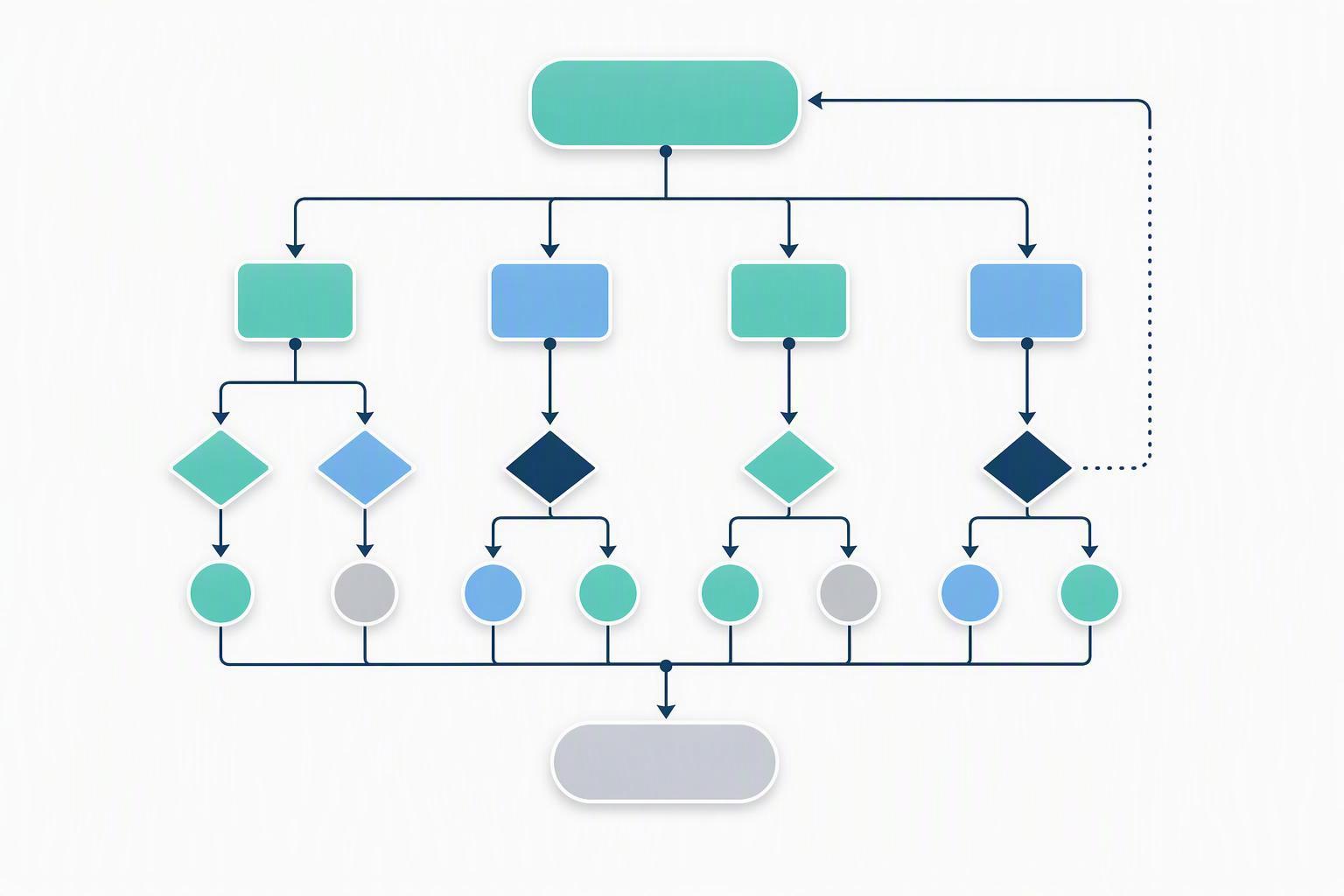
Investigate crude analytical data before repeating a failed synthesis. Options may include resin loading, solvent, coupling chemistry, backbone protection or fragment assembly. The cited pseudoproline examples show sequence-specific changes; describing a rise from 17% do 75% kot 58 percentage points avoids confusing absolute and relative improvement.
Evaluate research support against that tree. Ask which branch the supplier would take on your sequence and why, whether the re-synthesis is charged, and who reads the crude trace. A supplier that answers with a protocol name rather than a diagnosis has not engaged with the sequence.
What decision rule should a buyer apply in a supplier review?
Apply a two-part rule: confirm the four criteria from documentation before the quote, then require the failure response in writing before the purchase order. Custom peptide synthesis supplier selection turns on written commitments, not on catalog size or on a market report’s participant list.
The documentation check covers sequence length and route, the modification list with a prior project in the same class, a sample lot-specific CoA with method IDs and raw traces, and a named technical contact who reads crude data. The written commitment covers what happens if the first route fails. Supplier-quoted lead times give the planning frame: milligram research scale runs 1 do 4 weeks, gram or pilot non-GMP runs 2 do 4 weeks, and kilogram or GMP and API work runs 3 do 6 months (Pangu Peptide, page updated 2026-09-22). These are advertised windows from suppliers, not measured performance, so treat them as planning ranges and confirm them in the quote.
A research peptide supplier and a CDMO differ by service, quality system and evidence rather than by the fact that both sell peptides: a CDMO adds process development, scale-up, method validation, impurity control, regulatory documentation and cGMP manufacturing across discovery to commercial supply (Decibio, 2026-05-20). Decide which one your project needs before you compare quotes, because the two answer different questions.
Pogosto zastavljena vprašanja
Does a supplier’s catalog size predict custom synthesis capability?
št. Bio-Rad’s Proteins & Peptides catalog is built around catalog and workflow products, and its described custom service is custom antibody work, not custom peptide production (Bio-Rad, pridobljeno 2026). Capability shows up on a service page that states residue range, pot, purity and scale, as ProteoGenix’s does with more than 150 aminokisline, ≥98% purity and delivery from 10 business days (ProteoGenix, pridobljeno 2026).
How long should a custom peptide order take?
Supplier-quoted windows are 1 do 4 weeks at milligram research scale, 2 do 4 weeks for gram or pilot non-GMP work, in 3 do 6 months for kilogram or GMP and API scale (Pangu Peptide, posodobljeno 2026-09-22). These are advertised ranges, not benchmarks, and a difficult sequence can extend them.
What purity should I specify?
Vendor purity grades and turnaround examples are commercial descriptions, not universal acceptance criteria. Define identity, impurity risk, vsebino, functional suitability and required delivery date for this project, and obtain a current quotation for the exact construct.
Can aggregation be predicted for my sequence?
Partly. Amino acid composition largely determines aggregation, and a model trained on 539 sequences predicts aggregation propensity and ranks substitutions that reduce it (Tamás et al., 2026, marec 2026). The same study filtered out non-canonical amino acids, so prediction does not extend to modified peptides.
Zaključek
The four criteria hold together as one test: customization depth in residues and route, modification expertise proven on a prior project in the same class, analytical transparency down to method IDs and raw traces, and research support that responds to a failed synthesis with a diagnosis rather than a repeat. The market landscape explains why this matters. A report naming Bio-Rad, Miltenyi Biotec and ProteoGenix describes participants in recombinant proteins, and the peptide synthesis market those buyers actually purchase from is forecast to reach USD 1,840.6 million by 2033 (Grand View Research, 2026).
The next step is a documentation request before any quote: a sample lot-specific CoA with method IDs, a prior project in your modification class, the maximum sequence length the supplier will warrant, and the named person who will read your crude trace. Ask what changes when the first route fails. The answers separate a supplier that can run your sequence from one that lists it.