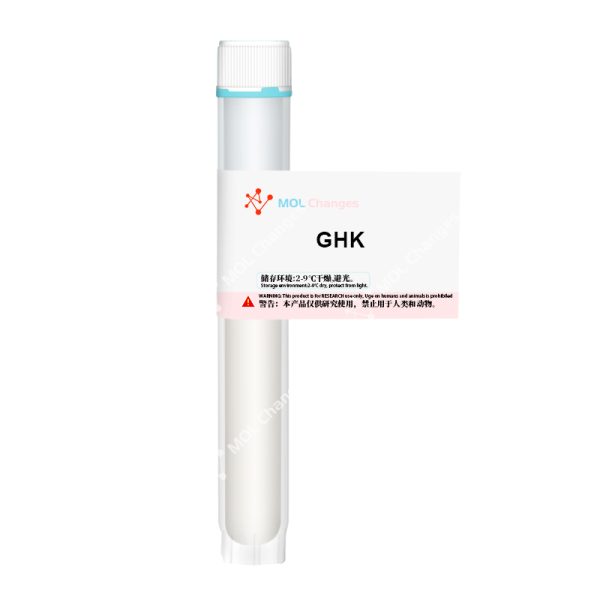
Glycyl-L-Histidyl-L-Lysine, or GHK, is a tripeptide made up of glycine, histidine, na lysine. This peptide occurs naturally within the human body; blood plasma, saliva, and urine all contain it, with levels declining as part of the aging process. GHK binds to copper ions (Cu²⁺) to form a GHK-Cu complex. The complex itself activates various cellular signaling pathways; a broad spectrum of biological effects results from this activation.
Mfuatano
Gly-His-Lys
Nambari ya CAS
49557-75-7
Mfumo wa Masi
C14H24N6O4
Uzito wa Masi
340.38
Research Of GHK/Tripeptide-1
1.Versatile Biological Activities
GHK functions in both a signaling and carrier peptide capacity. Kama peptidi inayoashiria, skin cells are prompted to produce increased amounts of elastini, proteoglycans, glycosaminoglycans, and ultimately collagen. The carrier aspect delivers the essential trace element copper directly to these cells.
These dual roles are responsible for the broad range of biological activities GHK exhibits – tissue repair being the prime example, pamoja na kupambana na uchochezi and notable antioxidant properties, potential anticancer effects, and distinct Regulation of gene expression.
2.Ngozi Regeneration And Repair
Supporting skin regeneration is one of GHK’s most thoroughly documented effects. Studies confirm collagen (and specific glycosaminoglycans/decorin) synthesis is stimulated. Regulation of key metalloproteinases (breakdown of the matrix ya nje ya seli being their primary function) and anti-proteases has also been demonstrated.
The previously mentioned dual action gives GHK a comprehensive regulatory effect on all aspects of skin protein breakdown; preventing both excessive accumulation of damaged proteins and complete degradation.
3.Kizuia oksijeni / Kupambana na uchochezi Properties
Strong antioxidant and broad-spectrum anti-inflammatory capabilities are possessed by GHK. Harmful free radicals from lipid peroxidation are neutralized, keratinocytes specifically being protected from UV-induced damage. Complete blocking of the copper dependent oxidation of LDL(Low-Density Lipoprotein) is another clear example of this protective mechanism.
4.Gene Expression Regulation
GHK supports connective tissue repair and remodeling through gene expression. The reversal of the genetic signature of COPD(Chronic Obstructive Pulmonary Disease) is a significant line of research; 127 genes are implicated in the disease and GHK has been shown to restore them to a healthy state.
5.Molecular Mechanism Studies
Emerging research demonstrates that GHK can reset aberrant gene and protein expression, na UPS(Ubiquitin-Proteasome System) kazi, toward a healthier state.
Anti-aging and health promotion, as a result of all of the above, is a highly desirable objective of GHK application.
Its therapeutic potential is therefore considerable.
COA
HPLC
MS