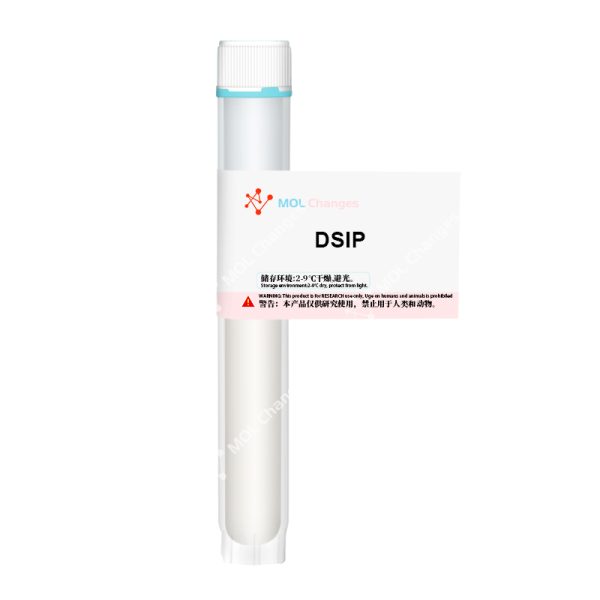
Delta sleep-inducing peptide (DSIP) is a biologically active neuropeptide composed of nine amino acids. The discovery of DSIP represented a shift in the understanding of sleep regulation—from the previous paradigm of specific central nuclei unilaterally controlling sleep to the recognition of the role played by endogenous sleep regulators.
This peptide exhibits broader physiological functions and a distinct mechanism of action. Its ability to rapidly cross the toto mo e ʻuto(BBB) is one of its notable properties; its participation in regulating the hipotalamisi-pituita-ʻatenila (HPA) axis and influence on systemic homeostasis are all well-documented effects.
Beyond its core sleep-regulating functions (deep sleep promotion, improved sleep architecture, and enhanced sleep quality), DSIP displays strong neuroprotective and, to a significant extent, reparative capabilities. Improving neuronal resistance to various forms of overstimulation is a key example of this.
Endocrine regulation mo e thermoregulation are also established activities of DSIP. Kimuí ni mai, antioxidant and detoxification activities have been observed.
Fakahokohoko
Trp-'Ala-Kili-Kili-Asp-'Ala-Ser-Kili-Kili
Fika CAS
62568-57-4
Fomula Molekula
C35H48N10O15
Mamafa Molekula
848.33
Research Of Delta Sleep Inducing peptide (DSIP)
1.The Sleep-Inducing Effects
Sleep regulation is the primary function most commonly associated with DSIP. A potent and selective promotion of slow-wave sleep is its most consistently reported effect. Traditional exogenous sleep aids work through completely different mechanisms; DSIP, as an endogenous neuroregulatory peptide, physiologically modulates (in a well-tolerated manner) the user’s sleep architecture. Increasing the duration of deep sleep is a direct correlate of improved sleep quality.
A study involving 400 patients suffering from severe insomnia, who received continuous DSIP injections for a week, showed significant improvements in all measured aspects of sleep quality. Patients with neurotic irritability, tautautefito, showed a marked increase in adaptability to external stimuli post-injection.
These results underscore DSIP’s powerful role in sleep regulation and its potential in treating neurological disorders.
2.Body Temperature and Motor Function Regulation
Certain drugs that enhance brain dopamine activity can alter body temperature. DSIP interacts with these drugs, inducing the aforementioned changes.
Studies in mice showed that small to moderate doses of DSIP reduced motor activity and body temperature under 4°C conditions.
When mice were returned to a 22°C environment, DSIP administration was associated with an increase in body temperature.
3.Endocrine Regulatory Function
The HPA axis is the core sisitemi neulotokilini for the body’s stress response.
Overactivation of this system leads to abnormal, chronically elevated cortisol levels. DSIP counteracts this effect by inhibiting CRH and ACTH release.
4.Neuroprotective and Reparative Functions
DSIP has demonstrated neuroprotective and reparative properties that represent a significant aspect of its therapeutic potential.
It shows promise for the treatment of ngaahi mahaki faka‘auha ‘o e ngaahi neave , among other conditions.
COA
HPLC
MS