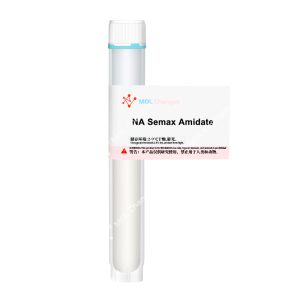
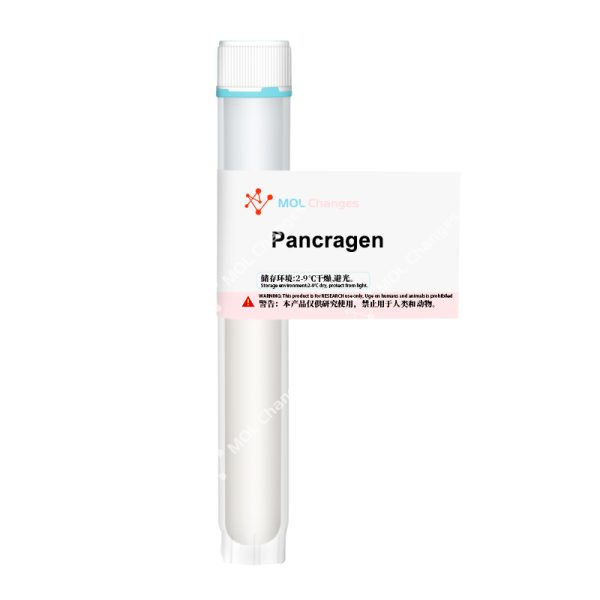
Pancragen is a bioactive synthetic peptide composed of four amino acids.
Research into pancreatic function led scientists to discover a hormone-like active component within pancreatic extracts; stimulating the pancreas itself being the primary observed effect.
The exact composition of this hormone was initially unclear.
Advancements in isedale molikula and subsequently peptide synthesis technology allowed for its precise replication – continuous optimization and targeted modification of a core fragment from the original extract being the means by which Pancragen was synthesized.
Post-synthesis, significant clinical research value was attributed to it.
Enhancing pancreatic tissue stability, promoting repair, and regulating metabolic homeostasis are its well documented primary benefits.
Broad egboogi-iredodo and protective effects are also seen within the liver, kidneys, nervous system and other organs.
Ọkọọkan
H2N-Lys-Glu-Asp-Trp-OH
Nọmba CAS
/
Ilana molikula
C26H36N6O9
Òṣuwọn Molikula
576.607
Research Of Pancragen Peptide
1.Protection and Regeneration of Pancreatic β-Cells
Depletion of these cells is the core pathological factor in Àtọgbẹ.
Mimicking endogenous growth factors or survival signals, inhibition of apoptosis is a key mechanism; protecting (ni o kere igba die) beta cells and creating a supportive microenvironment for cell regeneration.
Stable blood glucose levels are maintained, indirectly through improved peripheral tissue ifamọ insulin – reducing various aspects of insulin resistance and enhancing iṣẹ mitochondrial.
Pancragen activates those previously mentioned survival pathways (PI3K/Akt ati MAPK/ERK).
Initiating apoptotic pathways under an inflammatory attack is successfully inhibited.
Clinical trials are currently investigating true cellular regeneration as an end point.
Stimulating division and proliferation of at least some cells, combined with the earlier mentioned microenvironment, represents a fundamental reversal of diabetes progression.
2.Metabolic Regulation (as above)
Systemic improvement of insulin sensitivity is seen in animal models.
Cytoprotection reduces hepatic and adipose àsopọ chronic inflammation.
Direct and indirect effects on insulin receptor and transporter activity are all part of the overall improvement in insulin sensitivity.
Antioxidant and anti-inflammatory effects of Pancragen are of significant research value.
Neuropathy and metabolic syndrome type damage, or any disease related to oxidative wahala, can and should benefit from Pancragen therapeutic applications.
COA
HPLC
MS