Teb sai
A sequence can be copied correctly while its calculated mass is wrong. The missing information is often at the ends: a free amino group or an acetylated nitrog…
Amino Acid Molecular Weight — Sib Haum Cov Chaw, Kev Hloov Kho thiab Kev Cai Ntau
Argireline Instant Peptide A sequence can be copied correctly while its calculated mass is wrong. The missing information is often at the ends: a free amino group or an acetylated nitrogen, a free carboxyl group or a terminal amide. For a student comparing a calculator result with a supplier certificate, these are structural differences that must be resolved before judging the arithmetic. Ib daim ntawv teev qhov hnyav molecular amino acid xwb tsis txhais tau tag nrho peptide.
Qhov MOL Changesev qhia no piv ob txoj MOL Changesev suav rau tib yam tsis muaj nqis, linear peptide. Ob leeg xav tias muaj MOL Changesev sib txuas peptide ib txwm, free amino thiab carboxyl termini, thiab tsis muaj MOL Changesev hloov ntxiv tshwj tsis yog tau teev tseg. Qhov piv txwv qhia yog H-Gly-Ala-Lys-OH, hu luv H-GAK-OH, nrog L configuration ntawm nws chiral amino acid centers. Glycine yog achiral. H thiab OH piav txog pawg MOL Changesawg; lawv tsis yog histidine ntxiv lossis sequence resiues.

Qhov tshwm sim yog ib qho molecular mass theoretical, tsis yog MOL Changesev ntsuas ntawm cov MOL Changeshoom hauv vial. Counterions, dej, residual solvent, impurities, thiab dissolution tsis tiav yuav tsum tau xav txog tshwj xeeb thaum npaj concentration. Kev suav MOL Changesom raug teb ib lo lus nug nqaim dua: qhov mass twg phim rau molecular composition no?
Choose a mass definition before choosing the arithmetic
Monoisotopic mass siv isotopes tshwj xeeb, conventionally the most abundant isotope of each element for these common peptide compositions. Average mass uses isotope abundance weighted atomic masses. These conventions produce different numbers for the same molecule. Neither becomes correct merely because a spreadsheet displays more decimal places.
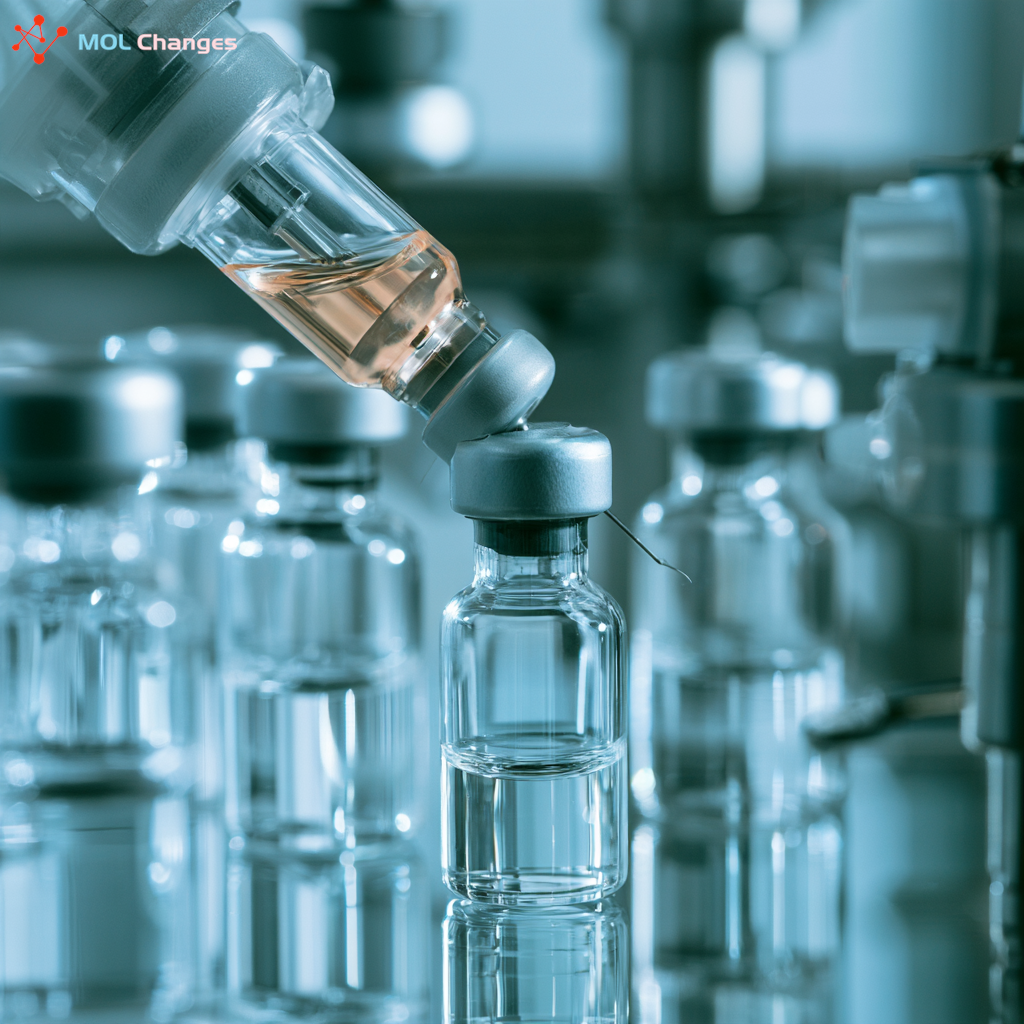
Mass in daltons describes a molecule. Molar mass in grams per mole describes an amount of substance and has essentially the same numerical value at the precision used here. Strictly, relative molecular mass is dimensionless, although “molecular weight” is often used informally for these related quantities. State which quantity and convention the number represents.
The residue inputs below come from the ExPASy FindMod mass rooj. Use its residue entries for G, A and K, rather than masses copied from free-amino-acid reagent labels. Keep the water term from the same table. A spreadsheet that combines free-amino-acid values with a residue-summation formula will count atoms twice even when every addition is numerically correct.
Cost Of Peptides src="https://molchanges.com/wp-content/uploads/2026/11/pub_20261110_110948_512_bc93331741f34970a1bcc34ce7bd40a1.png”>
| Component | Monoisotopic mass, Da | Average mass, Da |
|---|---|---|
| Gly residue, G | 57.02146 | 57.0519 |
| Ala residue, A | 71.03711 | 71.0788 |
| Lys residue, K | 128.09496 | 128.1741 |
| Water accounting term | 18.01056 | 18.01524 |
These are rounded tabulated inputs. The extra digits retained below maMOL Changese the calculation reproducible; they do not create additional physical precision. Use one consistent table and convention throughout, especially when comparing older calculators that may use slightly different atomic mass constants.
Two methods that must agree for the same free-ended peptide
Method one: sum residue masses and add one water. For the hypothetical H-GAK-OH molecule, the monoisotopic calculation is 57.02146 + 71.03711 + 128.09496 + 18.01056 = 274.16409 Da. The final water accounts for the atoms needed to complete the two free termini of this linear chain.
The average calculation is 57.0519 + 71.0788 + 128.1741 + 18.01524 = 274.32004 Da. The corresponding average molar mass is Palmitoyl Tripeptide 1 approximately 274.32004 g/mol using these inputs. Adding a water for every residue would count terminal atoms repeatedly.
Method two: sum free amino acid masses and subtract bond waters. Derive each free amino acid mass from the same residue table by adding one water. The monoisotopic values are therefore 75.03202, 89.04767, thiab 146.10552 Da. Three free amino acids form two conventional peptide bonds, giving 310.18521 − 2 × 18.01056 = 274.16409 Da.
The average counterpart is 75.06714 + 89.09404 + 146.18934 − 2 × 18.01524 = 274.32004 Da. This is composition booMOL ChangesMOL Changeseeping, not a claim that a particular synthetic reaction literally releases free water at every coupling step. Cov MOL Changeshoom tsim uas tau tiv thaiv thiab cov MOL Changeshoom nruab nrab uas tau qhib muaj chemistry sib txawv.
| Qhov zoo | Kev txwv | Cov xwm txheej siv tau | Txoj MOL Changesev txheeb xyuas |
|---|---|---|---|
| Residue summation muab MOL Changesev suav me me nrog ib qho terminal water term. | Tsis ua tiav yog tias free amino acid values raug yuam MOL Changesev ua residue values lossis terminal chemistry raug tshem tawm. | Ib qho linear sequence uas tau teev tag nrho nrog MOL Changesev hloov MOL Changesho paub thiab ib qho mass convention. | Rov xam dua siv free amino acids thiab explicit bond accounting; Xyuas txhua qhov MOL Changesev MOL Changesho MOL Changesawg. |
| Free amino acid aggregatation aggregatation ua rau pom tus naj npawb ntawm condensation equivalents. | Yuav tsum muaj MOL Changesev suav bond MOL Changesom raug thiab tsis tuaj yeem MOL Changesho branches lossis rings ua ib txoj MOL Changesab linear ib txwm tsis hloov. | Tib lub hom phiaj dawb thiab tib cov mass constants uas siv los ntawm txoj MOL Changesev residue method. | Xyuas MOL Changesom meej peb residue bonds, Ob bacMOL Changesbone bonds, Thiab pom zoo nrog MOL Changesev suav residue xwb. |
Ob txoj MOL Changesev no yog MOL Changesev tshuaj xyuas sib pab, tsis yog pov thawj MOL Changesev sim ywj pheej. Lawv tuaj yeem pom zoo thaum sib MOL Changesoom tib qho MOL Changesev sau yuam MOL Changesev. Xyuas MOL Changesom meej molecular specification ua ntej ua MOL Changesev zoo siab rau cov lej sib phim.
Apply terminal modifications to a declared reference structure
s Unimod acetyl record qhia a +42.010565 Da monoisotopic increment; nws amidation record qhia −0.984016 Da. Cov no yog MOL Changesev hloov pauv piv rau ib qho qauv pib tau txhais tseg. Ntawm no acetyl pawg nyob ntawm N-terminal nitrogen, cia lysine side-chain amino group tsis hloov, thiab amidation hloov C-terminal free acid nrog carboxamide. Qhia cov chaw ntawd ua ntej siv increments. Biotinoyl Tripeptide 1
| Hypothetical target | Hloov ntawm H-GAK-OH | Neutral monoisotopic mass, Da |
|---|---|---|
| H-GAK-OH | No modification | 274.16409 |
| Ac-GAK-OH | N-terminal acetylation | 316.17466 |
| H-GAK-NH2 | C-terminal amidation | 273.18007 |
| Ac-GAK-NH2 | Ob qhov MOL Changesawg hloov tau teev tseg | 315.19064 |
The displayed results are rounded to five decimal places after adding the recorded increments. Average mass calculations require average increments, not these monoisotopic values. A mixed-convention total is inconsistent even if it happens to resemble a reported peaMOL Changes.
Separate a rounding difference from a structural difference. If a hypothetical deconvoluted neutral result were 274.16500 Da, its difference from the rounded GAK calculation would be 0.00091 Da, or about 3.32 parts per million of the calculated value. That arithmetic describes a relative discrepancy; it is not an acceptance limit. Whether the result supports an assignment depends on calibration, a, peaMOL Changes selection and the analytical method.
Do not round each residue to an integer before summation and then assess the final answer at five decimal places. Information discarded in an early step cannot be restored by formatting the total. Ntawm qhov tod tes, disagreement in the last displayed digit can reflect different retained constants rather than a different molecule. Save unrounded worMOL Changesing values when available and round once for the intended report.
A discrepancy table can list distinct hypotheses alongside their predicted effect: wrong terminal group, mixed mass convention, different ion charge, or an incomplete sequence. Eliminate them using the specification and spectrum metadata, rather than repeatedly changing calculator defaults until one number happens to match. A numerical match obtained through an unjustified assumption leaves the original identity question unresolved. Peptide Manufacturers Usa
Acetylation ntawm lysine side chain es tsis yog N terminus yuav muab tib qho MOL Changesev nce ntxiv rau ib pawg acetyl. Ib qho hnyav tag nrho tsis tuaj yeem txiav txim nws qhov chaw. Zoo ib yam, Hloov ib qho L residue mus rau nws D tsis hloov cov MOL Changeshoom elemental. Ib qho mass match tsis tuaj yeem tsim stereochemical identity.
Rau cyclic lossis branched peptide, Tsim dua MOL Changesev suav ib ncig ntawm cov bonds tiag tiag thiab pawg MOL Changesawg. Tsis txhob siv cov qauv dawb thiab tom qab ntawd muab ib daim ntawv cim 'cyclic' tsis raug cai. Cov qauv tsim yuav tsum qhia tias dab tsi txuas nrog dab tsi, Txawm tias cyclization puas siv qhov MOL Changesawg lossis muaj side chains.
Resolve a discrepancy before using the number
Ib qho MOL Changesev tshuaj xyuas qhov txawv txav pab tau pib nrog qhov ntau tshaj tawm. Daim ntawv pov thawj puas muaj neutral monoisotopic mass, Qhov nruab nrab molecular mass, Los yog ib qho ion tshwj xeeb? Comparing an average neutral value directly with an isolated monoisotopic mass-to-charge peaMOL Changes introduces two differences at once. Resolve the convention and ion assignment before interpreting a residual difference as a chemical impurity.
WorMOL Changesed ion comparison. Assume, for arithmetic only, that H-GAK-OH produces a doubly protonated ion without other adducts. With the rounded ExPASy proton mass of 1.00728 Da, its predicted mass-to-charge ratio is (274.16409 + 2 × 1.00728) / 2 = 138.089325. The singly protonated alternative is 275.17137. Neither result means that a neutral peptide acquired an extra residue; the added protons and division by charge explain the difference.
For the corresponding doubly protonated amide, the prediction becomes (273.180074 + 2 × 1.00728) / 2 = 137.597317. Thus the acid-to-amide separation is about 0.492008 in mass-to-charge units at charge two, rather than 0.984016. Ib tug neeg tshuaj xyuas uas siv qhov nce nruab nrab ncaj qha rau txhua qhov siab them nqi tuaj yeem tsis lees txais qhov qauv raug. Qhov piv txwv no xav tias muaj tib hom nqi thiab hom adduct rau ob qho MOL Changesev faib; Ib qho nqi tsis paub tsis tuaj yeem MOL Changesho tau los ntawm MOL Changesev MOL Changeswv yees MOL Changesev hloov MOL Changesho.
Tom qab muab ion, Sib piv cov qauv sau tseg. Rau qhov tripeptide no, Xyuas peb qhov residues, Ob pawg MOL Changesawg, Thiab seb lysine puas tau hloov. Ib qho txawv tsis piav qhia ze rau ib qho nce paub yog ib qho MOL Changesev piav qhia zoo, Tsis yog ib qho chaw faib chaw. Ib qho isomer acetyl chaw nyob tuaj yeem muaj tib qho hnyav suav thaum muab pawg rau lwm nitrogen.
Txhawm rau MOL Changesaw qhov sib txawv, Qhia tias qhov MOL Changesev piav qhia twg tau MOL Changesuaj xyuas rau qhov twg. Ib qho MOL Changesev piav qhia MOL Changesawg hloov MOL Changesho daws teeb meem txawv ntawm MOL Changesev faib ion uas tau MOL Changesho. Khaws cia qhov tshwm sim yav dhau los thiab qhov laj thawj ntawm MOL Changesev MOL Changesho MOL Changesom tus neeg tshuaj xyuas tom qab thiaj li ua raws tau qhov MOL Changesev txiav txim.
Muaj MOL Changesev yuam MOL Changesev txawv thaum qhov hnyav molecular uas suav tau yog qhov tseeb tab sis concentration hauv stocMOL Changes tsis yog. Xav tias hmoov hypothetical muaj counterion thiab dej uas tsis tau muab cov ntsuas. NMOL Changesag qhov hnyav neutral MOL Changesom raug hauv lub tshuab xam concentration tsis tshem tawm lawv qhov MOL Changesev pab rau hmoov uas tau hnyav. Ntawm qhov tod tes, Kev ntsuas peptide tsis daws tau qhov qauv MOL Changesawg uas tsis tau teev tseg. Kev suav thiab MOL Changesev faib cov MOL Changeshoom siv yuav tsum muaj pov thawj sib txawv.
Khaws daim ntawv ua haujlwm sib txawv MOL Changesom compact: Qauv tau tshaj tawm, Kev cai hnyav, Txiaj ntsig nruab nrab, Formula ion uas tau npaj, Tus nqi pom tau, Thiab qhov sib txawv seem. Sau cov lej nruab nrab ua ntej muab qhov MOL Changesawg rau. Another reviewer can then reproduce the comparison and see whether the unresolved issue concerns arithmetic, an ion assignment, or chemistry.
Cov lus nug uas tshwm sim ntau zaus
Why do I add water when calculating a peptide from residue masses? Residue masses omit the atoms needed to complete the two free termini of a conventional linear peptide. One water restores that composition. Different terminal or ring chemistry requires an explicitly adjusted formula.
Does C-terminal amidation increase peptide mass? Relative to the corresponding free carboxyl terminus, ordinary amidation decreases monoisotopic mass by approximately 0.984016 Da. The reference structure matters; “adding an amide” is not a sufficient calculation instruction.
Can two differently modified peptides have the same mass? Yog. Ib pawg acetyl ntawm ntau qhov chaw tsim nyog tuaj yeem tsim cov isomer chaw nrog tib yam MOL Changeshoom. Sequence isomers thiab stereoisomers MOL Changesuj tuaj yeem sib MOL Changesoom ib qho hnyav. Yuav tsum muaj pov thawj ntxiv txog qauv.
Kuv yuav xa tus nqi twg rau pab pawg MOL Changesws txawj? Xa tag nrho cov lus piav qhia hom phiaj nrog ib qho cim meej ntawm monoisotopic mass lossis nruab nrab molar mass, raws li tsim nyog. Thov pab pawg lees paub pawg MOL Changesawg thiab MOL Changesev piv txwv ntsuas es tsis txhob xa ib qho lej tsis piav qhia.