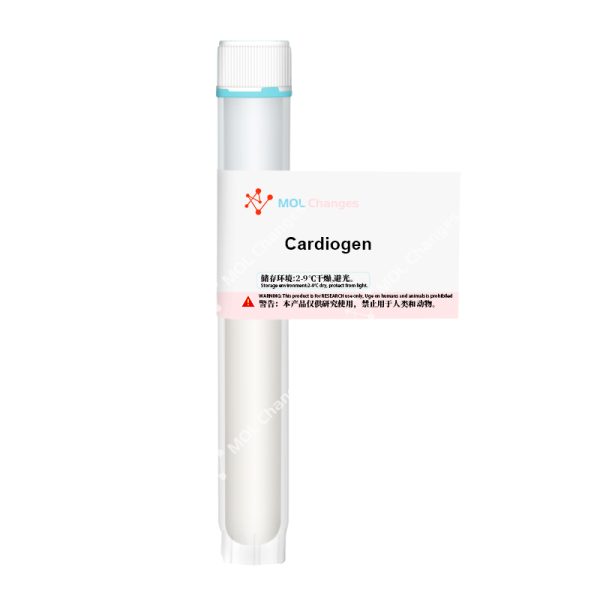
Cardiogen is a synthetic bioactive peptide with demonstrated cardiovascular protective effects and restorative potential. Derived from continuous human research into the pathogenesis of cardiovascular diseases, it is a fully synthetic peptide drug.
Cardiovascular protection, or more broadly cardioprotection in living organisms, involves the transmission of specific signaling pathways; hormones and neurotransmitters are the primary mediators.
Cardiogen was designed from the outset to either mimic these pathways or directly activate key downstream signaling protein(s) to achieve said protection.
Not being a naturally extracted drug, all the inherent limitations associated with natural peptides (rapid degradation, short half-life, low bioavailability) are overcome to a significant degree.
Preclinical studies have demonstrated significant reductions in myocardial infarct p, improved left ventricular function, prevention of adverse ventricular remodeling, and protection against both apoptosis and necrosis of cardiomyocytes.
A potent antioxidant capacity is also exhibited, mitigating all forms of oxidative damage specific to either cardiomyocytes or the accompanying vascular endothelial cells.
Recent studies point towards enhancing myocardial energy metabolism – optimization of mitochondrial function and energy production being of particular interest.
Anti-fibrotic effects are currently being investigated.
Multidimensional, synergistic cardioprotective and therapeutic potential is what Cardiogen represents.
Secuencia
Ala — Glu — Asp — Arg
'bede ya CAS
/
Fórmula molecular
C18H31N7O9
Be̲xu molecular
489.486
Nthoni dige ar péptido Cardiogen
1.Japi enfermedades cardiovasculares ne 'mefa ár njäts'i Tange'u lesión reperfusión
lesión reperfusión hä xkagentho ge ar punto final xingu buscan 'bu̲'bya tratar.
bloqueos mbo ko ya cardiovascular conducen a isquemia/hipoxia ar miocardio; restauración directa ar flujo sanguíneo (quirúrgico wa ar ma'na ma'na) causa nuna ngi severo.
Cardiogen, a través de activación ar mpakuthuu mencionado vías intracelulares (PI3K — Akkomongu ar primera ja nu'u̲), imita ya nthädi protectoras endógenas 'nar nt'ot'ise̲ komongu.
Apertura ar poro transición ar permeabilidad mitocondrial(mPTP) komongu 'na ya última, pasos irreversiblemente dañinos jar muerte cardiomiocitos, bí inhibe ko ya éxito.
Rescatar ar paciente ar completo wa kasu̲ ar lleno infarto ge ar nt'uni final ideal – mäs pequeño, mäs 'nar normal 'nar’ sized myocardium and all that follows, is the true goal of cardiogenic therapy.
2.Inhibiting apoptosis
In models of chronic cardiac stress and reperfusion injury, cardiogen have been demonstrated to significantly suppress apoptosis.
They directly activate key kinases such as Akt, inhibit pro-apoptotic protein activity via n, and in some cases enhance anti-apoptotic protein activity.
A form of direct hormonal-level suppression of apoptosis is achieved through these mechanisms.
This research indicates significant potential for cardiogen – rescuing critically ill cardiac patients being one application, regulating various aspects of chronic heart disease, slowing (if not stopping) the loss of myocardial cells, and by extension delaying all forms of progressive heart failure.
3.Improving cardiac energy metabolism
Cardiogens enhance energy metabolism within cardiac cells; front-end inhibition of mPTP opening is a primary method used for this purpose.
Reducing oxidative damage to the mitochondrial electron transport chain allows the mitochondria to maintain both membrane potential and to a large degree structural integrity.
Efficient adenosina trifosfato (ATP) production is then possible, a constant sustainable form of energy being supplied to the failing heart.
Stable cardiac contractility and all related forms of short/long term cardiac function depend upon this stable energy supply.
4.Antioxidant and Anti-inflammatory Effects
Indirect antioxidant effects are also exhibited by cardiogen.
Direct activation of certain signaling pathways (Akt being the prime example) leads to upregulation of the body’s endogenous antioxidant systems.
Peroxidasa ar glutatión ne ma'ra enzimas similares nu'bu hmä ar aumento, creación 'nar mäs 'nar favorable 'nar’ entorno pa ya células cardiovasculares.
inhibición ar fibrosis miocárdica ne ar remodelación ventricular: Fibrosis cardíaca hä xkagentho ge 'nar causa primaria ar enfermedad cardíaca aguda wa eventual insuficiencia ar Hmunts'i.
Fibrosis prolongada inducida ir nge ya estrés ne 'mefa ár njäts'i Tange'u remodelación ventricular ya tso̲kwa menu parcialmente responsables ar etapa final ar enfermedad cardíaca.
Nt'ot'e ar cardiogen dige ya factores mencionados ma 'met'o mi (anti — apoptótico komongu ar principal) ne inhibición directa señales pro — fibróticas, ge 'nar área nthoni xi mahyoni ne xi hño documentada.
mfeni Cardiogen pa retrasar wa nu'bu 'met'o ar fibrosis miocárdica ge 'nar xeni ár promesa terapéutica nxoge.
COA
HPLC
MS