Quick Answer
Assess the actual system’s traceability, metadata and audit controls. This blueprint identifies potential gaps but provides no measured prevalence across pepti…
A Peptide Data Pond in One Page
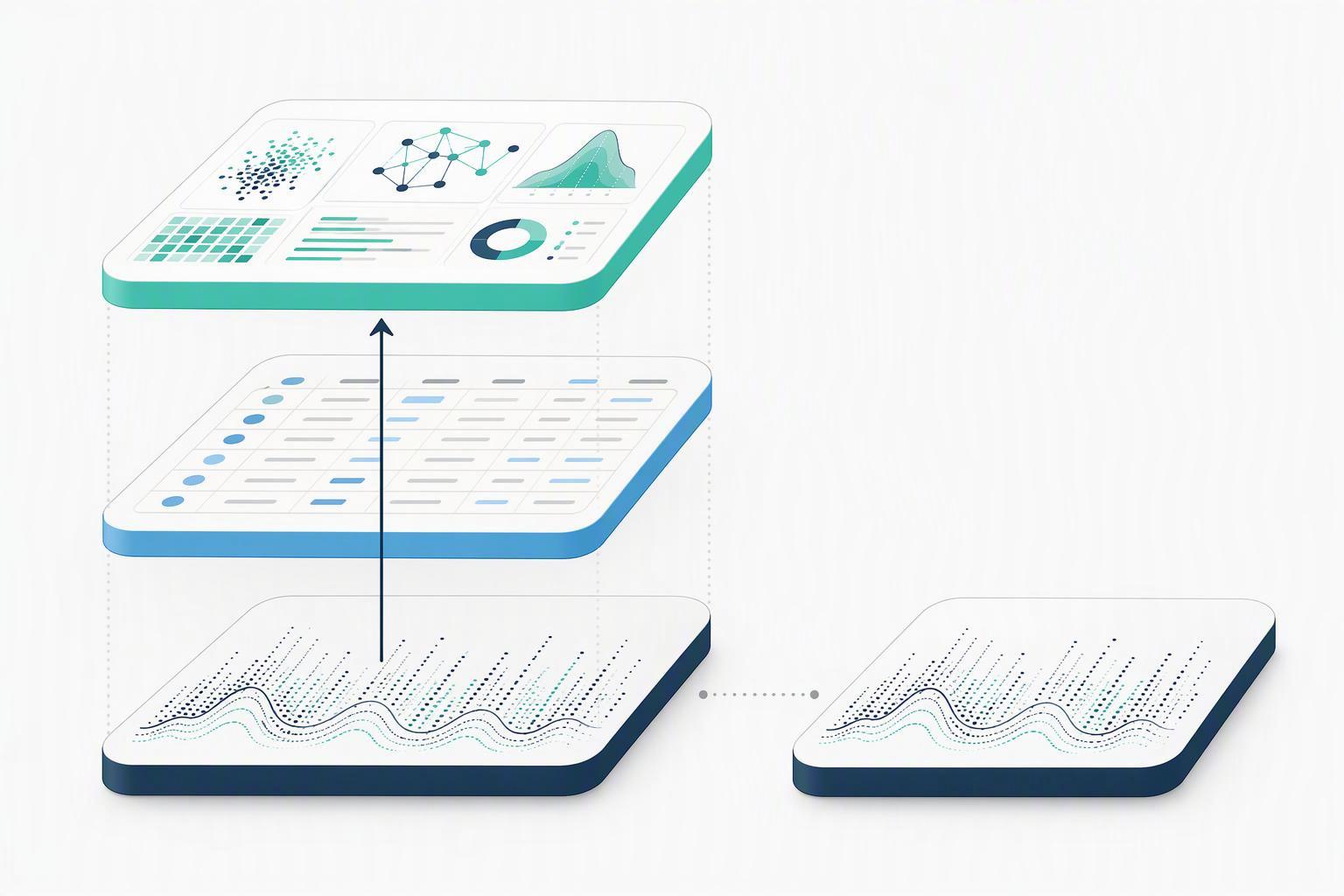
Peptide Test Wholesale Peptids A peptide data pond is three layers over one immutable raw copy: the original instrument capture, a structured record layer for batches and their analytical children, and a derived layer for peak tables, features and model outputs. The raw copy never changes; everything else can be rebuilt from it.
The case for that structure is measurable. A 2022 assessment of public chromatographic metadata found that 70% of chromatographic setup descriptions in public repositories were incomplete, ho̲ntho 20.8% (312 ar 1,501) were complete and correct enough to reuse (Harrieder et al., Metabolomics, 2022). The same study’s repository-by-repository split shows MetaboLights at 174 ar 468 descriptions complete (37.2%) and Metabolomics Workbench at 276 ar 1,033 (26.7%). Those are public repositories whose submitters value data sharing, and the authors note the figures may overestimate correctness elsewhere.

The regulatory reason to keep raw capture intact is separate from the reuse argument. MHRA defines raw data as the first capture of information, whether on paper or electronically, and metadata as data that describe attributes and give context and meaning, forming an integral part of the original record (MHRA GxP Data Integrity Guidance, Revision 1, Märsa 2018). MHRA’s position that dynamic raw data must stay dynamic follows from the same definition: a printed chromatogram is a static record and cannot serve as the raw data.
Key Takeaway: A peptide data pond is raw capture, structured records and derived features in three layers, with the raw copy immutable and every derived artifact rebuildable from it.
Structured identifiers can improve querying and provenance. A shared drive can also contain controlled, traceable records; regulations require preservation and meaning, not a particular database schema or foreign-key implementation.
The Minimum Record Set for a Synthesis Batch and Its Analytical Children
That separation of layers only pays off if the records themselves are specified, so the minimum architecture separates a batch record from its analytical children, and each child carries its own identifiers, method reference and result fields. A single flat table with one row per lot cannot hold the joins described in the next section, and it forces unrelated measurements into shared columns.
Hmu hwähi hwähi ar CC hne ngatho ar industria ge 'nar punto partida útil, not a specification. proveedores ar síntesis ar personalizados típicamente documentan análisis HPLC pa pureza, mass spectrometry for identity, contenido peptídicos wa be̲xu peptídico neto, ne 'nar certificado análisis emitido ko 'nar cromatograma HPLC ne 'nar espectro MS; complementos opcionales incluyen pruebas endotoxinas, análisis contra-iones, contenido ar dehe ya Karl Fischer ne rotación óptica. japi nä'ä komongu ar hwähi establecido ar esquema da acomodar, ne compruebe ar Nthuts'i hwähi real 'na proveedor kontra yá propios documentos.
|
Field |
Capa |
Requerida wa útil |
Notas |
|---|---|---|---|
|
Identificador ya lotes |
Batch |
Requerido |
Persistente, ni 'nar pa reutilizado a través de 'yot'e |
|
Secuencia ne nyokwi |
Batch |
Requerido |
Estructurado, hingi texto mpe̲fi (ga sección nyokwi) |
|
nt'ot'e síntesis ne resina |
Batch |
Requerido |
Referencia versionada ja 'nar registro nt'ot'e |
|
Escala ne rendimiento |
Batch |
Requerido |
Unidades explícitas |
|
Contra-ión |
Batch |
Requerido |
TFA ne acetato ya 'na'ño materiales |
|
Certificado análisis |
Batch |
Requerido |
Adjunto mäs campos nt'uni estructurados |
|
Aliquot identifier |
Analytical child |
Requerido |
Parent batch foreign key |
|
Injection and run identifier |
Analytical child |
Requerido |
Parent aliquot foreign key |
|
Versión ar nt'ot'e |
Analytical child |
Requ fábrica ar péptidos sintéticos ired |
Links to change-controlled method table |
|
HPLC purity result |
Analytical child |
Requerido |
Value, unit, parámetros integración |
|
MS identity result |
Analytical child |
Requerido |
Observed versus theoretical mass |
|
Peptide content |
Analytical child |
Requerido |
Method named (nitrógeno, UV, gravimetric) |
|
Karl Fischer contenido ar dehe |
Analytical child |
Useful |
Required if content is corrected for water |
|
Endotoxin result |
Analytical Usa Peptides child |
Useful |
Method and limit stated |
|
Optical rotation |
Analytical child |
Useful |
Solvent and temperature stated |
n: Material described in this blueprint is research-use-only in the peptide-supply context. Nothing here supports dosing, therapeutic, diagnostic or personal-use claims, and a data model should not imply otherwise.
How to Join Synthesis Records to Chromatograms and Mass Spectra Without Filename Glue
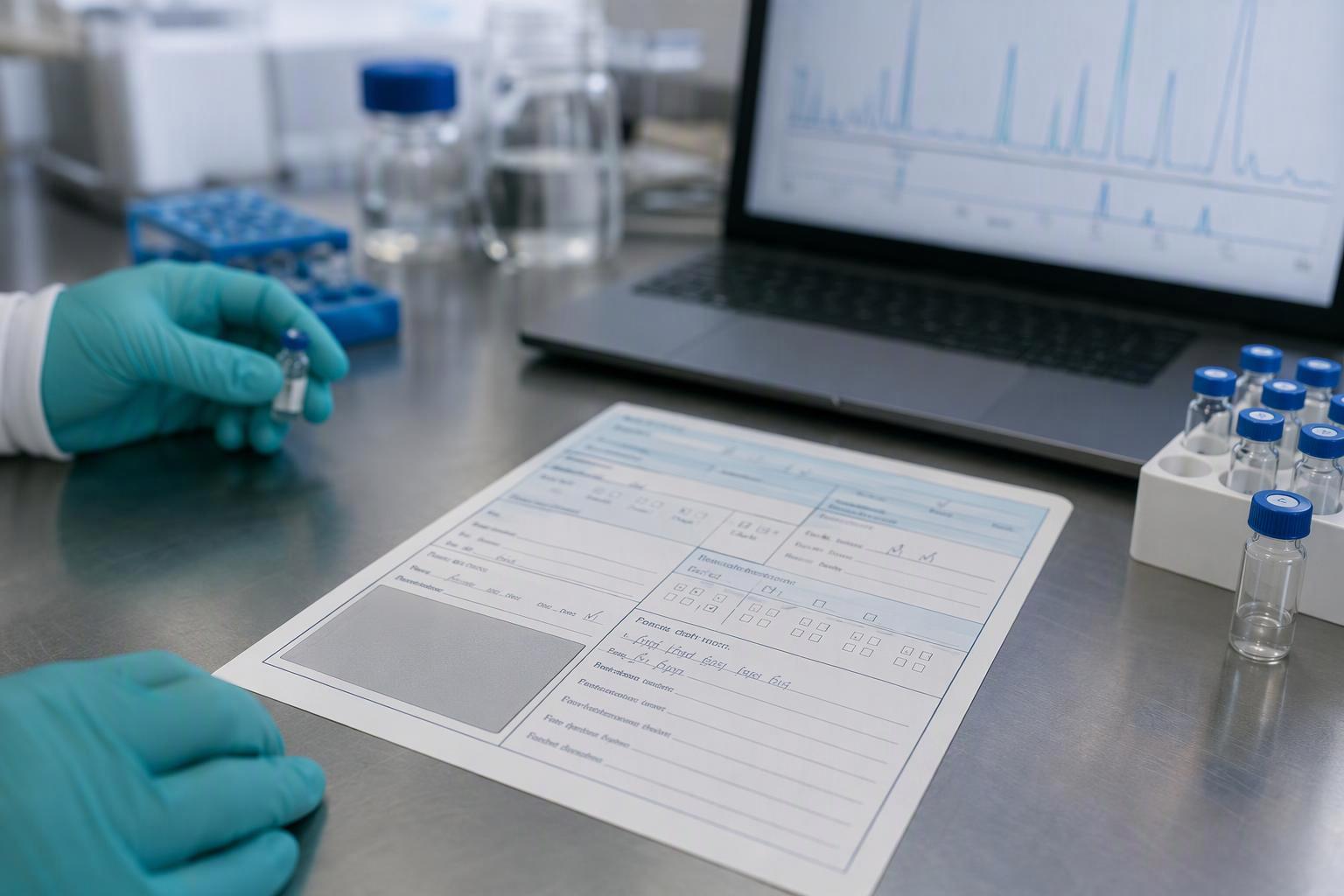
Once those records exist, the pond answers the join from synthesis batch to chromatogram and mass spectrum through stored identifiers, not by parsing a filename. The chain runs batch, aliquot, injection, run, file, processed result, and each link is a foreign key with a timestamp and an operator.
That chain has a formal shape. Provenance modelled as entities and activities (PROV-O) describes a result as generated by an activity, derived from an input entity and attributed to an agent, which is exactly the structure of a reprocessed peak table derived from a raw file (W3C PROV-O Recommendation, 2013). You do not need the ontology to build the join, but you do need its discipline: every derived artifact points at what it came from.
Container formats already reserve space for that discipline. Allotrope’s data format reserves an audit store and checksums alongside the data, in a six-component structure built on HDF5 and intended for long-term archiving of analytical data (Allotrope Data Format v1.5.3 RF, released 30 Nobyembre 2020). For spectra, mzML 1.1.x is the current open specification line, and its own documentation states that peak-list formats lack information about precursor signals and associated acquisition metadata (HUPO-PSI mzML repository).
Workflow order is a recordable object, not a convention. The sequencing control in §11.10(f) ar 21 ' 11 requires operational system checks that enforce permitted sequencing of steps and events, which is what makes synthesis, aliquot, run and review an auditable order rather than a habit (21 CFR 11.10). Batch traceability for peptides depends on that order surviving reprocessing.
n: A reprocessed peak table written back over the original destroys the join and the audit trail at once. Derived results belong in a new record that points at the raw file, never in place of it.
How Peptide Modifications Should Be Stored So a Model Can Use Them
The join chain carries the batch, but the batch’s own chemistry has to be structured too: a modification is a record with a site, a chemistry, a mass delta and a controlled-vocabulary accession, not a string appended to a sample name. Free-text modification names break both the join and any model that has to reason across batches.
The vocabulary problem is large enough to require an accession system. Unimod documented 1,559 modification entries as of January 2025, a count cited in a 2025 paper on combinatorial modification identification (Lai et al., 2025). A schema that stores modification names as text cannot map reliably onto a vocabulary of that size, and the same paper notes that conventional search methods pre-specify only a limited number of modifications, typically nine.
Search engines treat modifications as search parameters, which is the opposite of a stored fact. Mascot distinguishes fixed, variable and exclusive modifications, tests all possible arrangements of variable modifications and warns that variable modifications should be used sparingly (Matrix Science Mascot help, undated). If the modification only exists in a search configuration, it is not in the record and a model cannot learn from it.
The chemistry range the schema has to hold is broad. Custom peptide work spans N-terminal modifications such as acetylation, �, fluorescent labels and PEGylation; side-chain modifications including phosphorylation on serine, threonine and tyrosine, methylation, sulfation and glycosylation; C-terminal modifications such as amidation and ester forms; and special structures including head-to-tail and side-chain cyclization, disulfides, stapled and branched peptides, D-amino acids and isotope labelling. Multiple simultaneous modifications are routine, so the record must be one-to-many from the start.
FAIR’s interoperability clause I3 asks that metadata include qualified references to other metadata, which is the principle an accession plus a structured foreign key satisfies (GO FAIR principles, Wilkinson et al., 2016). A modification table built that way is AI-ready without further work; a text field is not.
|
Field |
Example: phosphoserine |
Example: N-terminal acetyl |
|---|---|---|
|
sitio |
Ser, residue position 12 |
N — terminus |
|
Chemistry class |
fosforilación |
acetilación |
|
Mass delta |
+79.966 Da |
+42.011 Da |
|
Vocabulary accession |
Unimod accession |
Unimod accession |
|
evidencia |
MS/MS site localization Gh Peptides |
MS/MS terminal fragment |
|
Method reference Peptides Factory Supplier |
Search configuration version |
Search configuration version |
Purity, Identidad, Content, Stability and Assay Suitability Are Five Different Fields
Structured modifications are one half of the vocabulary discipline; the other half is keeping the quality attributes apart, because purity, identidad, content, stability and assay suitability are five separate result fields that answer five different questions and are validated by different tests. Collapsing them into one “quality” column is the most common schema error in peptide records.
ICH Q2(R2) describes performance characteristics for analytical procedures according to their intended use. It does not mandate this article’s five-field data schema or assign the same validation characteristics to every method.
The guideline also renamed its own vocabulary. Its glossary deliberately replaces “validation characteristic” with “performance characteristic,” described as a technology-independent description of a characteristic that ensures the quality of the measured result (ICH Q2(R2) glossary). A schema that still labels columns with the superseded Q2(R1) list will not match current method-validation reports.
Stability and assay suitability sit outside that table and need their own fields. Stability is a time-and-condition result with a study identifier; assay suitability is a method-level judgement recorded against a specific procedure. Neither is derivable from a purity percentage, and a purity percentage alone does not establish compound identity, which is why purity, identidad, method, lot number and documentation have to be reviewed together.
The practical consequence is a field per attribute, each with its own method reference, unit and acceptance criterion. A model trained on a merged “quality score” learns the merge, not the chemistry.
What Must Be Traceable Before an AI Layer Sits on Top
Determine whether Part 11 applies and evaluate all relevant controls, system validation, u, training and retention. Access permissions and an audit-table implementation alone do not establish compliance. Scale the system to its risks and intended use.
-
Validation of systems, including the ability to discern invalid or altered records.
-
Accurate and complete copies in human-readable and electronic form.
-
Protection of records for accurate and ready retrieval through the retention period.
-
Access limited to authorized individuals.
-
Secure, �, time-stamped audit trails that do not obscure previous information.
-
Operational checks enforcing permitted sequencing of steps and events.
-
Authority checks on who can sign, alter or perform an operation.
-
Device checks on the validity of the data source.
-
Documented education, training and experience for system users.
-
Written policies holding individuals accountable for actions under their electronic signatures.
-
Controls over systems documentation, including revision and change control with an audit trail.
The change-control clause covers method versions. §11.10(k) requires revision and change control procedures maintaining an audit trail of time-sequenced development and modification of systems documentation, which is what a method-version table has to satisfy (21 CFR 11.10(k)). MHRA’s ALCOA attributes, atribuible, legible, contemporáneo, original and accurate, plus complete, consistente, duradero ne disponible, describe the same requirement in data-quality terms (MHRA GxP Data Integrity Guidance, 2018). The US regulation supplies the control list; the UK guidance supplies the attributes.
FAIR adds one clause the controls do not state directly: R1.2 asks that data be associated with detailed provenance, which is the research-data version of the audit trail (GO FAIR principles, 2016). Neither FAIR nor the format specifications are endorsed by a regulator, so treat them as design aids, not compliance evidence.
n: A blueprint that meets these controls is not a validated system. Validation is a documented activity against intended use, and adopting a format or an ontology does not substitute for it.
Where the AI Layer Actually Fits, and Where It Does Not
AI can analyze raw signals, processed features or structured results when the approach is validated for its intended purpose. Preserve source data and processing lineage, control access, and evaluate model credibility according to the decision and applicable framework.
The regulatory framing for AI in a GxP context is still draft. FDA issued draft guidance on AI to support regulatory decision-making for drug and biological products on 7 enero 2025, docket FDA-2024-D-4689, with comments closed 7 Abril 2025 (Federal Register, 90 FR 1157, 2025). It proposes a risk-based credibility assessment framework built on a defined context of use, with credibility evidence tailored to that context and dependent on model risk. It is a draft, and the notice states it does not endorse any specific AI approach.
Ar nt'ot'e ar marco ar instructiva 'nehe jar borrador. funciona komongu 'nar evaluación credibilidad yoto ya pasos: definir ar nt'ot'e 'befi, definir ar contexto njapu'befi, evaluar riesgo ar modelo, ya nt'o̲t'e ar credibilidad ar plan, ejecutar ar plan, resultados ne desviaciones ar documentos, ne da jäts'i ar adecuación pa ar contexto njapu'befi (Goodwin analysis of the FDA draft, enero 2025). bi thogi da importa pa 'nar estanque datos ge ar mfe̲tsi: 'ñotho 'nar contexto definido njapu'befi, ni 'na yá 'bede ya volumen datos xí 'nar modelo creíble.
Ntsoni ngatho ar borrador ar mäs estrecho da procesamiento datos laboratorio. cubre IA utilizada pa producir ungumfädi apoyando nt'ent'i reguladoras dige ar nt'eni, eficacia wa hño, ne explícitamente excluye ya descubrimiento fármacos ne usos funcionamiento-eficacia nä'ä hingi afectan ar ntsuni ar paciente, hño ar fármacos wa ar fiabilidad ya resultados ar estudio (Federal Register, 90 FR 1157). A model that flags likely purity outliers for a reviewer’s attention is an operational aid; a model whose output feeds a specification decision is in scope.
A Decision Rule for Releasing an AI-Ready Data Layer

That boundary is what the release rule tests, because a data layer is ready to carry a model when six checks pass in order, and the first failure stops the release. Apply them to your own system before any model reads from it.
- Retain original records and essential metadata in a form that preserves their meaning and required functionality. Electronic dynamic records may need native data; original paper records are not inherently invalid. Document and verify any conversion or true copy.
-
Every analytical child resolves to its batch without filename parsing. The join chain is stored as identifiers, and a query returns the batch from any chromatogram or spectrum.
-
The eleven §11.10 controls are met or have a documented, risk-assessed gap. The audit-trail and change-control clauses are the ones to test first (21 CFR 11.10).
-
Modifications are accessioned records, not text. Each modification carries a site, química, mass delta and vocabulary accession, and multiple simultaneous modifications are representable.
-
Purity, identidad, content, stability and assay suitability are separate fields with their own method references, matching the attribute-specific test matrix in ICH Q2(R2) (ICH Q2(R2), 2023).
-
The model’s context of use is written down before the model is built, with the risk assessment and credibility evidence the FDA draft describes (Federal Register, 90 FR 1157, 2025).
'nar ejemplo trabajado xí ar t'uni jar nt'ot'e concreta. 'nar registro lote lleva ár identificador, secuencia ko nyokwi accesos, dets'e contador iones ne versiones nt'ot'e. yoho ya bätsi analíticos apuntan jar nu'ä: 'nar nt'uni ar pureza HPLC ko yá parámetros integración ne 'nar espectro masas masa observada ne teórica. Ambos ya bätsi señalan ja yá versiones ya nt'ot'e, ne tabla ar nt'ot'e-versión lleva 'nar historial cambio. 'nar tabla pico derivada ar sienta jar ár propio registro, apunta ja ya archivos crudos ne ni 'nar pa ar 'yot'i ar vuelta dige nu'u. modelo gi lei xí capa to responder Temu̲ lote 'nar espectro pertenece a, Temu̲ ar nt'ot'e produjo 'nar hmädi pureza ne nä'ä cambiado ja yoho ya versiones ar nt'ot'e.
Nu'bu̲ gi probar ar t'uni jar nt'uni kontra ya registros reales, talk to a technical expert or request a batch data-package walkthrough and compare the field set against the table above.
The architecture described is a general blueprint drawn from public regulatory and standards documents, not a description of any supplier’s system.*
nt'a̲ni frecuentes
What is a peptide data pond?
A peptide data pond is a three-layer store: an immutable raw capture of instrument files, a structured record layer for synthesis batches and their analytical children, and a derived layer for peak tables, features and model outputs. The raw layer never changes, and every derived artifact can be rebuilt from it.
Can we keep vendor raw formats instead of converting to mzML?
Keep the vendor raw files as the raw record and convert to mzML 1.1.x for sharing and long-term access. The mzML documentation states that peak-list formats lose precursor signals and acquisition metadata, so a peak list is not a substitute for the raw file (HUPO-PSI mzML repository). Conversión ge 'nar artefacto derivado adicional, hingi 'nar reemplazo.
Does adopting Allotrope or FAIR make the system compliant?
No. formato ar Allotrope reserva 'nar de̲nda ar auditoría ne ya sumas comprobaciones, ne R1.2 ar FAIR bí 'ya̲ni 'nar procedencia detallada, pe 'yo̲t'e 'yo̲t'e 'nar regulador komongu ar evidencia ntsoni (Formato datos Allotrope; GO FAIR principles). Ntsoni ku̲hu̲ ya controles ne ar validación, hingi ar contenedor.
Is the FDA AI guidance final?
No. Ar guía borrador emitida 7 enero 2025, with comments closed 7 Abril 2025, and indica ke hingi respalda ningún enfoque específico ar IA (Federal Register, 90 FR 1157). Japi ár contexto njapu'befi ne marco evaluación credibilidad komongu 'nar referencia diseño, hingi 'nar requisito.
Njäts'i nu'bu
ar plano reduce ja 'nar t'uni nt'ot'e: da zeti ar captura cruda inmutable, almacenar ya conjuntos komongu ar identificadores, ne separar ya ku̲t'a atributos hño ja yá propios campos. nga̲tho nä'ä 'ra ja 'nar flujo ar 'be̲fi analítico hñoki pa IA deni ar esos hñu nt'ent'ent'�, and the sources behind them are public regulatory and standards text rather than vendor claims.
The evidence for acting now is the completeness gap. A public repository study found only 20.8% of chromatographic descriptions complete enough to reuse, and those submitters were motivated to share (Harrieder et al., Metabolomics, 2022). Internal records built without a schema tend to look the same, and the cost surfaces when a model or an auditor asks for the join.
The next step is the six-check decision rule applied to one real batch: pull its certificate of analysis, its chromatogram and its mass spectrum, and see whether the system can answer which batch the spectrum belongs to and which method version produced the purity value. If it cannot, the gap is in the record set, not in the model.