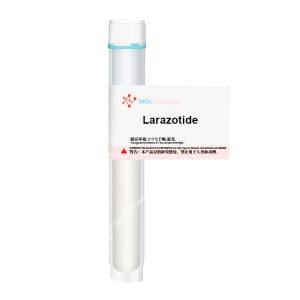
Dihexa is a new oligopeptide bioactive peptide specifically designed for the treatment of neurodegeneratiewe siektes.
Eerste berig in 2012, it originated from the exploration and subsequent reverse engineering of angiotensin IV‘s effects on various endogenous brain signaling pathways.
The non-natural molecular design of Dihexa enhances cell specific selectivity towards target sites; significant improvements in metabolic stability have been documented, strong oral bioavailability and high central nervous system penetration being two of its more notable qualities.
Serving as a highly efficient and potent c-Met receptor agonist, all aspects of central nervous system development, repair and to a large extent regeneration, are facilitated by it.
Volgorde
Hexanoyl-Tyr-Ile-Ahx-NH2
CAS nommer
1401708-83-5
Molekulêre Formule
C27H44N4O5
Molekulêre gewig
504.67
Research Of Dihexa Peptide
1.Therapeutic Potential and Mechanisms of Action
Improving learning and memory abilities is one of the more directly observable positive effects.
Neuronal damage from multiple factors – oksidatiewe stres, β-amyloïed (Aβ) related toxicity, mitochondrial dysfunction – can be inhibited by Dihexa.
Theoretical applications for treating a wide range of degenerative neurological diseases (Alzheimer se siekte, Parkinson se siekte, Huntington’s being prime examples) follow from this line of research.
Oligodendrocyte precursor cell differensiasie, myelin related regeneration, cerebral blood flow/energy supply improvements and to some degree anti-tumour effects are all supported by current evidence.
Great potential exists for Dihexa as a therapeutic agent.
2.Enhancing Learning and Memory
The HGF/CMet system is a key factor in promoting hippocampal development.
In a maze experiment, the Dihexa group demonstrated stronger learning ability; finding hidden platforms, they did so in significantly shorter times than the control group.
The HGF-Tg group itself showed both higher accuracy and enhanced learning persistence.
Compared to the wild-type control, increased HGF expression led to a clear rise in specific hippocampal receptor cells – enhancing learning and memory being one of the more direct positive effects observed.
3.Promoting Synapsis and Dendrite Formation
As 'n hepatocyte growth factor (HGF)/c-Met receptor agonist, Dihexa activates various signaling pathways (PI3K/Akt primêre wees, MAPK/ERK secondary), directly facilitating new synapse and to a large extent dendrite formation within neurons.
Dendrite loss is a primary direct cause of all forms of persistent memory decline; learning impairment follows closely behind.
Animal experiments point towards Dihexa having a true therapeutic potential for Alzheimer’s specific diseases.
4.Neuroprotection and Anti-apoptosis
Neurodegenerative diseases progress through multiple pathways – oksidatiewe stres, various forms of mitochondrial dysfunction, and the end result of abnormal protein aggregation leading to neuronal apoptosis.
Dihexa, by stimulating the aforementioned HGF system, effectively interrupts this process; inhibiting (or delaying) the full transmission of apoptotic signals is a crucial part of its neuroprotective action.
5.Promoting myelin regeneration
Myelin is that fatty sheath wrapping the axon of a neuron, accurate and rapid nerve signal transmission depending on it.
Myelin deficiency diseases lead to all sorts of neurological dysfunctions.
Oligodendrocyte precursor cells (en tot 'n punt, all neural cells) can be stimulated to promote regeneration of myelin, and Dihexa has a clear and positive effect on the nervous system as a whole.
COA
HPLC
MS