Melangkah 1: Pisahkan Pengujian Identitas Dari Data Kemurnian
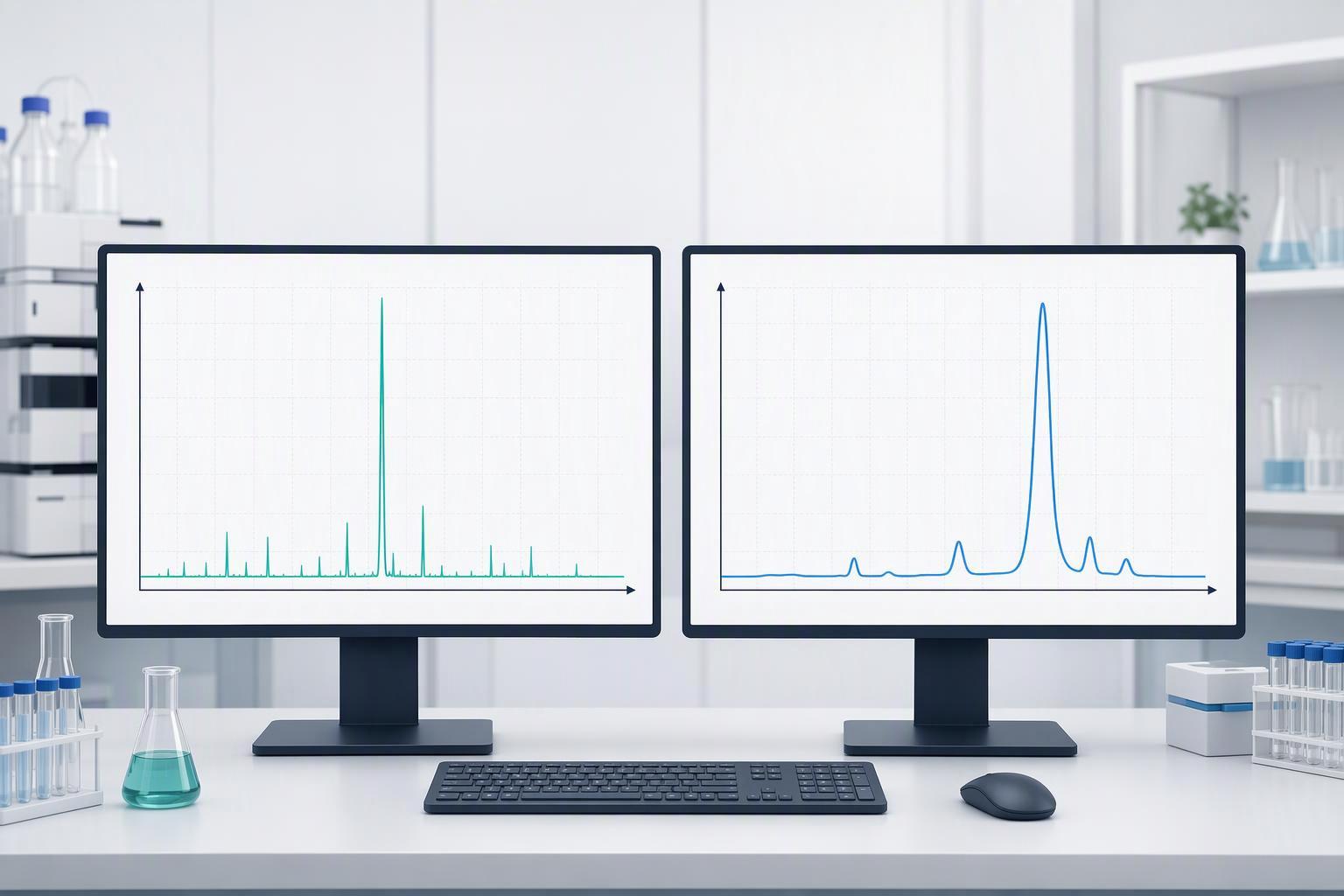
Identitas dan kemurnian adalah pertanyaan analitis yang terpisah, dan pemasok yang hanya menjawab satu saja tidak menjawab keduanya. Identitas menanyakan apa materinya: itu memerlukan hal yang spesifik, konfirmasi ortogonal seperti spektrometri massa, LC-MS/MS, analisis asam amino, NMR, pemetaan peptida, atau retensi HPLC terhadap standar referensi (Pekerjaan standar referensi USP, 2023). Spektrometri massa memisahkan molekul berdasarkan rasio massa terhadap muatan dan melaporkan berat molekul; LC-MS/MS menambahkan langkah fragmentasi yang membaca informasi urutan. Kemurnian adalah pengukuran yang sama sekali berbeda: itu mengkuantifikasi peptida target relatif terhadap pengotor dan zat terkait, dan tidak mengatakan apa pun tentang apakah targetnya adalah molekul yang tepat.
Kesenjangan tersebut adalah mode kegagalan yang layak untuk disebutkan. Suatu senyawa dapat membaca 99% murni dengan HPLC dan masih merupakan peptida yang salah, karena angka kemurnian yang tinggi bukanlah bukti jati diri. Dalam pengujian kemurnian BPC-157, kromatogram yang bersih menegaskan bahwa satu spesies mendominasi sampel, bukan berarti spesiesnya adalah BPC-157.

Kemurnian dihitung dari area puncak terintegrasi: target area puncak dibagi dengan total area puncak terintegrasi, dikalikan dengan 100. Konvensi ini mengasumsikan HPLC fase terbalik pada kolom C18 dengan deteksi UV pada 220 nm, panjang gelombang tempat ikatan peptida menyerap (Dokumentasi kualitas peptida GenScript).
Apa yang harus diperiksa: apakah paket dokumentasi berisi metode identitas (MS, LC-MS/MS, atau setara) dilaporkan secara terpisah dari metode kemurnian, atau apakah ia menyajikan persentase kemurnian tunggal sebagai keseluruhan cerita analitis?
Toko =”https://molchanges.com/wp-content/uploads/2026/10/pub_20261002_013927_165_11203be2c7974a76b7f4d56fce8c9749.png”>
Melangkah 2: Baca Klaim Kemurnian untuk Metodenya, Banyak, Laboratorium, dan Tanggal
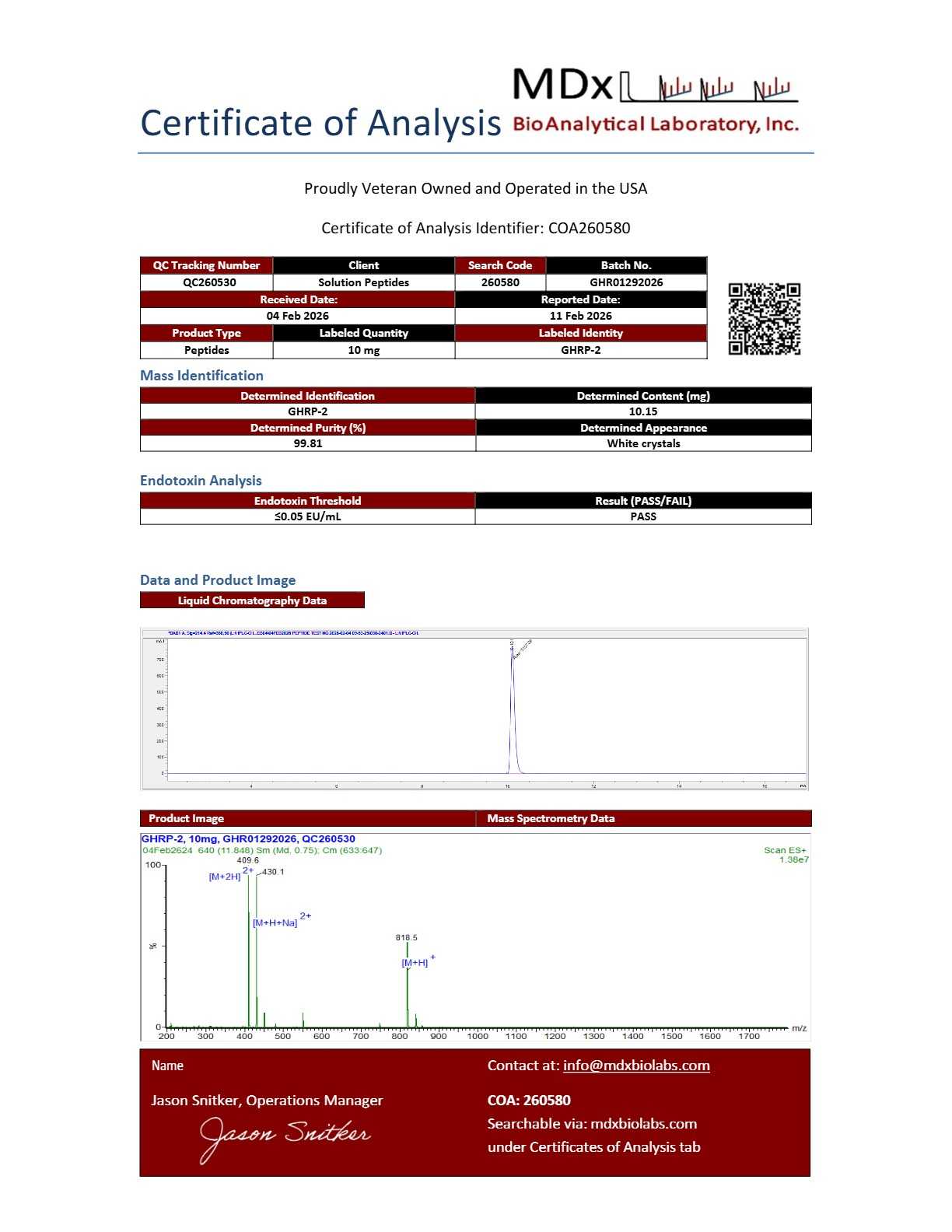
Karena identitas dan kemurnian adalah pertanyaan terpisah, persentase kemurnian menjadi bukti hanya jika metodenya, nomor lot, laboratorium pengujian, dan tanggal analisis bepergian dengannya. Bidang tersebut adalah inti dari sebagian besar persyaratan analisis sertifikat peptida.
Sintesis Peptida Mulailah dengan metodenya. Hasil HPLC-UV fase terbalik yang dapat dipertahankan menyebutkan panjang gelombang deteksinya, kolom, dan gradien, dan menyatakan standar yang divalidasinya. Metode yang dipublikasikan di salah satu laboratorium kontrak menggunakan C18 5 mikron, 4.6 × 250 mm kolom dengan gradien air/asetonitril mengandung 0.1% TFA atau asam format, membaca terutama di 214 nm dengan a 280 saluran sekunder nm, melaporkan pengotor hingga 0.1% dari total luas puncak, dan divalidasi ke ICH Q2(R1) dan USP <621> (Tes Lab ACS, diambil 2026-01-01). Itu adalah metode HPLC yang terdokumentasi, bukan hanya persentase. Jika CoA menyatakan “≥98% (HPLC)” dan berhenti di situ, Anda tidak dapat mengetahui apakah nomor tersebut berasal dari metode yang divalidasi atau suntikan tunggal pada sistem yang tidak dikalibrasi.
Perbedaan kedua lebih penting daripada yang diharapkan sebagian besar pembeli: angka persentase area UV bukanlah kandungan peptida bersih berdasarkan beratnya. USP menetapkan kemurnian peptida berdasarkan keseimbangan massa, mengukur setiap kelas pengotor yang terdeteksi, termasuk kotoran terkait peptida, ion lawan, air, sisa pelarut, dan residu yang tidak mudah terbakar, dan mengurangkan totalnya 100% (Pekerjaan standar referensi USP, 2023). Karena kemurnian persen area UV tidak mengukur ion lawan, TFA atau garam asetat, kadar air, atau sisa pelarut, persentase area yang tinggi dapat hidup berdampingan dengan kandungan peptida bersih yang jauh lebih rendah berdasarkan beratnya.
Kemudian periksa lot dan tanggalnya dengan pesanan Anda sendiri. Angka kemurnian termasuk dalam satu lot yang diuji pada satu tanggal, bukan ke lini produk. Saat Anda menskalakan dari miligram ke gram, minta CoA nya Peptida Sintetis banyak yang sebenarnya Anda terima, dan bandingkan tanggal analisisnya dengan tanggal pengiriman. CoA tertanggal delapan belas bulan sebelum pengiriman menjelaskan kumpulan bahan yang berbeda dari yang ada di dalam kotak.
Seperti apa kegagalannya: CoA dengan persentase kemurnian, tidak ada garis metode, tidak ada tanggal analisis yang spesifik, dan tidak ada kromatogram. Anda tidak memiliki cara untuk mengetahui apakah angka tersebut diukur, diperkirakan, atau disalin dari batch sebelumnya.
Melangkah 3: Minta Paket Dokumentasi dan Periksa Terhadap ALCOA+
Setelah Anda mengetahui bidang mana yang dibutuhkan untuk klaim kemurnian, langkah selanjutnya adalah meminta seluruh paket, karena CoA bukanlah sebuah dokumen tunggal. Ini adalah sebuah paket, dan paket itulah yang Anda periksa.
Tanyakan bidang-bidang ini sebelum Anda mengevaluasi hal lain: nomor lot, tanggal pembuatan, tanggal analisis, laboratorium pengujian, metode analitis, kromatogram atau referensi jejak, hasil identitas spektrometri massa, kondisi penyimpanan, dan pernyataan eksplisit tentang apa yang terjadi bukan diuji. Bidang terakhir adalah bidang yang dihilangkan sebagian besar pemasok, dan ketidakhadirannya memberi tahu Anda lebih banyak daripada kehadirannya. Ini adalah persyaratan analisis sertifikat peptida inti yang dilakukan oleh peninjau kualifikasi.
Nilailah paket tersebut atribut integritas data ALCOA+, yang mengharuskan catatan dapat diatribusikan, terbaca, sejaman, asli dan akurat, ditambah lengkap, konsisten, bertahan lama dan tersedia. Lima atribut asli menelusuri panduan CGMP FDA yang diselesaikan pada bulan Desember 2018; Panduan integritas data GxP MHRA, Revisi 1 (Berbaris 2018), menambahkan empat sisanya. Contemporaneous adalah pengujian yang menangkap sebagian besar paket yang lemah: tanggal analisis direkonstruksi beberapa bulan setelah sintesis gagal.
Paket khusus dari MOL Changes mengilustrasikan formulir yang dapat diperiksa: sebuah laporan analitis yang terkait dengan suatu lot bernama, dengan data berkualitas yang dapat dilacak untuk penelitian dan keperluan industri. Perubahan MOL mengoperasikan Kelas 100 produksi ruang bersih ultra-steril dengan HPLC internal, MS dan uji sterilitas, dan memproduksi peptida khusus dan katalog dari miligram hingga kilogram.
⚠️ Peringatan: CoA dibuat oleh pihak yang berkepentingan dengan hasilnya; pengujian pihak ketiga yang independen adalah hal yang meningkatkan bobot pembuktiannya.
Melangkah 4: Terapkan Kontrol Tujuan Penggunaan sebagai Kriteria Kualifikasi
Dokumentasi memberi tahu Anda apa yang telah diuji; Kontrol tujuan penggunaan memberi tahu Anda apa yang diyakini pemasok tentang kegunaan produk tersebut. Penelitian hanya menggunakan pelabelan peptida dan bukan boilerplate, dan memperlakukannya sebagai contoh adalah bagaimana pembeli akhirnya memenuhi syarat sebagai penjual yang berhadapan dengan konsumen. RUO menunjuk pada produk yang diproduksi dan dijual untuk penelitian laboratorium, apakah itu penelitian in vitro, pengujian hewan, kimia analitik, atau penyelidikan praklinis. Produk tersebut tidak dibuat berdasarkan GMP farmasi, belum menjalani pengujian yang diperlukan untuk penggunaan manusia, dan tidak membawa persetujuan peraturan (Jurnal Peptida, 2025).
Label saja tidak menentukan apa pun. Di bawah FD&C UU, penggunaan yang dimaksudkan, bukan penafian, memerintah: peptida yang dipasarkan atau dimaksudkan untuk diagnosis, menyembuhkan, perlakuan, atau pencegahan penyakit pada manusia adalah obat berdasarkan undang-undang federal, apa pun yang tertera pada labelnya. FDA menimbang pelabelan dan pengemasan, periklanan dan pemasaran, dan totalitas bukti (Jurnal Peptida, 2025).
Jadi baca seluruh etalase, bukan halaman produk. Pemasok yang menerbitkan panduan dosis, testimoni penggunaan manusia, atau klaim sebelum dan sesudah telah memberi tahu Anda pasar yang dituju, apa pun yang tertulis di footernya. Pemasok yang materialnya berada di bidang analitis dan laboratorium telah memisahkan produk tingkat penelitian dari produk yang dapat diperoleh konsumen.
Tidak ada dalam panduan ini yang merupakan panduan medis atau dosis, dan tidak ada produk yang dirujuk di sini yang ditawarkan untuk digunakan manusia.
Melangkah 5: Uji Apakah Pemasok Berkomunikasi Secara Transparan
Transparansi adalah kriteria kegagalan sebagian besar pemasok, karena mereka harus mengeluarkan sesuatu untuk dilewati. Pemasok yang berkomunikasi dengan baik akan memberi tahu Anda apa yang tidak dibuktikan oleh dokumentasinya, sebutkan laboratorium yang melakukan pengujian tersebut, dan mempublikasikan catatan lot bertanggal, bukan hanya satu angka kemurnian yang tidak bertanggal.
Tiga sinyal lulus/gagal membawa sebagian besar bobot dalam verifikasi pemasok peptida tingkat penelitian:
-
Menyatakan batasan-batasan dokumennya sendiri. Pemasok yang lewat mengatakan dengan jelas bahwa sertifikat analisis (KoA) mengkonfirmasi identitas dan mengukur kemurnian untuk satu lot, dan tidak menimbulkan kemandulan, tingkat endotoksin, atau kesesuaian untuk penggunaan klinis apa pun. Pemasok yang gagal membiarkan CoA menyiratkan lebih dari apa yang terlihat.
-
Nama laboratorium penguji. Pemasok yang lewat mengidentifikasi laboratorium tersebut dan apakah laboratorium tersebut milik sendiri atau independen. Pemasok yang gagal menulis “diuji oleh pihak ketiga” tanpa nama laboratorium, yang merupakan klaim, bukan rekor.
-
Menerbitkan catatan lot bertanggal. Pemasok yang lewat menunjukkan nomor lot dengan tanggal analisis yang dapat Anda cocokkan dengan kiriman Anda. Pemasok yang gagal menunjukkan satu nomor kemurnian tanpa lot dan tanpa tanggal.
Untuk Tip: mintalah dua CoA dari lot berbeda dari peptida yang sama dan bandingkan profil pengotornya, bukan hanya tokoh utama kemurnian.
Pengamatan kategori yang berguna: di seluruh halaman pemasok yang ditinjau untuk panduan ini, tidak ada yang mengajari pembaca cara membaca CoA, seperti apa hasil yang lulus versus yang gagal, atau cara mengenali CoA yang dipalsukan atau diduplikasi. Halaman pemasok peringkat teratas juga tidak mencantumkan tanggal publikasi atau pembaruan tingkat halaman. Perlakukan halaman tak bertanggal sebagai sinyal tersendiri, dan tanyakan langsung kepada pemasok kapan catatan terakhir diperbarui.
Melangkah 6: Masukkan Lima Kriteria ke dalam Alur Kerja Kualifikasi Pemasok

Jalankan lima kriteria secara berurutan, bukan daftar periksa yang Anda ambil sampelnya. Konfirmasi identitas diutamakan, karena angka kemurnian untuk molekul yang salah tidak ada artinya. Tinjauan kemurnian menyusul, lalu paket dokumentasi, kemudian kontrol penggunaan yang dimaksudkan, lalu transparansi. Pemasok yang gagal pada tahap apa pun akan ditolak pada tahap itu; Anda tidak membawanya ke depan untuk melihat apakah sisanya terlihat lebih baik.
Alasan untuk menjalankan rangkaian sendiri dibandingkan menerima tingkat kelulusan yang dilaporkan sendiri oleh pemasok adalah karena angka kegagalan yang dipublikasikan lebih sempit daripada yang terlihat.. Program pengujian pihak ketiga telah mempublikasikan puluhan ribu hasil, termasuk 9,997 botol peptida diserahkan untuk dianalisis, yang mana BPC-157 menyumbang 756 tes di seluruh 110 vendor (laporan peptidabeat.com pada kumpulan data Finnrick, kumpulan data diperbarui 2026-09-03). The widely repeated claim that roughly one in three samples fail basic expectations comes from that same single dataset, self-reported and not peer-reviewed, and the proportion has held stable over 12 ke 14 months of reporting on the gray-market peptide boom. One dataset, echoed across outlets, is not independent corroboration.
That is the case for peptide supplier due diligence as a buyer-side control. Research-grade peptide supplier verification is something you perform against artifacts you inspect, and no documentation package substitutes for it. Produksi Peptida
Kesalahan Umum yang Harus Dihindari
Accepting a high purity figure as proof of identity. A 98% HPLC result says the main peak dominates the chromatogram; it does not say the peak is the right molecule. Identity comes from mass spectrometry, where the observed molecular weight matches the designed construct. Pemasok mengaburkan keduanya karena satu angka kemurnian lebih mudah dipasarkan dibandingkan cerita analitis dua bagian. Mintalah keduanya, dan periksa apakah metode identitas menyebutkan massa yang diharapkan.
Memperlakukan angka persen area UV sebagai kandungan peptida bersih berdasarkan beratnya. Deteksi UV di 214 nm merespons tulang punggung peptida, jadi persentasenya mencerminkan luas puncak relatif, bukan berapa banyak peptida yang ada di dalam botol. Counterion sisa, air dan garam tidak terlihat oleh detektor tetapi ada di neraca. Ini adalah kesenjangan paling umum dalam persyaratan analisis sertifikat peptida: angka persentase area UV bukanlah kandungan peptida bersih berdasarkan beratnya, dan pemasok yang menyajikannya telah salah memahami pengujian tersebut atau mengandalkan Anda untuk memahaminya.
Mencantumkan pengujian tanpa menunjukkan seperti apa kelulusan atau kegagalannya. Di seluruh halaman pemasok yang ditinjau untuk panduan ini, kromatogram dan spektrum muncul sebagai hiasan dan bukan sebagai hasil dengan kriteria penerimaan yang dinyatakan. Spesifikasi yang tidak dapat Anda bandingkan dengan nilai yang dilaporkan bukanlah suatu spesifikasi.
Membiarkan halaman tidak bertanggal. CoA atau halaman spesifikasi yang tidak bertanggal tidak dapat dikaitkan dengan banyak hal, revisi metode atau laboratorium pengujian, yang melemahkan ketertelusuran yang disediakan oleh dokumen tersebut.
Pengambilan Kunci: sosok kemurnian tanpa metode, banyak, laboratorium dan tanggal adalah klaim, bukan pengukuran.
Pertanyaan yang Sering Diajukan
Bagaimana cara membedakan CoA yang dipalsukan atau diduplikasi dari yang asli?
Periksa apakah nomor lot pada sertifikat sesuai dengan lot pada label vial dan slip pengepakan, lalu carilah kromatogram atau spektrum yang spesifik untuk kelompok tersebut, bukan angka yang digunakan kembali di seluruh produk. Dokumen yang tidak mencantumkan nama laboratorium penguji dan tanggal analisis, atau yang kromatogramnya muncul kembali di bawah nomor lot kedua, belum terverifikasi. Meminta file data mentah di balik laporan adalah pemeriksaan terkuat yang tersedia. Tentang
Dapatkah saya memverifikasi klaim pemasok bahwa pihak ketiga menguji peptidanya?
Sebagian. Anda dapat mengonfirmasi keberadaan laboratorium bernama tersebut, menawarkan metode yang dikutip, dan menerbitkan laporan dalam format itu. Apa yang tidak dapat ditunjukkan oleh dokumen tersebut adalah bahwa sampel yang dikirimkan berasal dari lot yang Anda terima. Kesenjangan tersebut tidak bersifat hipotetis: melaporkan ledakan peptida pasar abu-abu menemukan bahwa sekitar sepertiga dari ribuan produk yang dianalisis gagal dalam pemeriksaan kualitas dasar, proporsi yang secara luas tidak berubah selama ini 12 ke 14 pengumpulan data selama berbulan-bulan. Pengujian independen terhadap sampel yang disimpan dari tanda terima Anda sendiri adalah satu-satunya cara untuk menutupnya.
Apa yang harus saya lakukan jika CoA melaporkan kemurnian tanpa kromatogram atau kecocokan lot?
Tanyakan artefak yang hilang sebelum mengevaluasi jumlahnya. Sosok kemurnian tanpa metode, banyak pengenal, dan kromatogram pendukung tidak dapat ditelusuri ke apa pun, jadi ini berfungsi sebagai pernyataan pemasaran dan bukan bukti analitis. Perhatikan juga apa yang bukan merupakan angka kesucian: panduan dokumen peptida FDA menetapkan setidaknya satu ambang pengotor terkait peptida sebesar 0.10% zat obat untuk karakterisasi pengotor, persyaratan karakterisasi dan bukan bukti identitas. Bertemu dengan Anda sertifikat persyaratan analisis peptida berarti memegang identitas, kemurnian, dan keterlacakan lot sebagai catatan terpisah, bukan satu persentase judul.
Apakah label yang hanya digunakan untuk penelitian mengubah posisi hukum pemasok?
Ini menggeser kerangka daripada menyelesaikan pertanyaan. Label yang hanya digunakan untuk penelitian menyatakan tujuan penggunaan produk, dan regulator menilai perilaku pemasok bertentangan dengan maksud tersebut. Seperti yang diungkapkan oleh salah satu analisis hukum mengenai wilayah abu-abu, penggunaan yang dimaksudkan, bukan penafian, memerintah. Dalam praktiknya, penelitian hanya menggunakan pelabelan peptida adalah sinyal kualifikasi: pemasok yang secara konsisten memisahkan bahan tingkat penelitian dari produk yang digunakan konsumen, dan tidak menerbitkan panduan dosis atau penggunaan pada manusia, lebih mudah untuk memenuhi syarat dibandingkan perusahaan yang pemasarannya bertentangan dengan labelnya sendiri. Ini bukan nasihat hukum; konsultasikan dengan penasihat untuk yurisdiksi Anda.
Kesimpulan
Kelima kriteria tersebut merupakan satu kebiasaan: memisahkan identitas dari kesucian, baca setiap klaim kemurnian untuk metodenya, banyak, laboratorium dan tanggal, periksa paket dokumentasi terhadap ALCOA+, memperlakukan kontrol penggunaan yang dimaksudkan sebagai gerbang kualifikasi, dan perhatikan bagaimana pemasok menjawab pertanyaan yang canggung. Uji tuntas pemasok peptida bukanlah audit yang dilakukan satu kali saja, melainkan praktik yang memilih pemasok yang artefaknya dapat diperiksa dibandingkan pemasok yang klaimnya hanya dapat dipercaya.. CoA yang sangat spesifik yang memberi nama laboratorium pengujian, metode analisis dan tanggal analisis memberi Anda sesuatu untuk diarsipkan, bandingkan antar kelompok dan serahkan ke rekan kerja; persentase kemurnian tanpa konteks itu tidak memberi Anda apa pun untuk diperiksa.
Jika Anda ingin menjalankan kerangka kerja terhadap paket nyata, meminta contoh paket CoA atau berbicara dengan pakar teknis. Keduanya merupakan langkah komitmen rendah yang memungkinkan Anda menguji dokumentasi sebelum mengambil keputusan pembelian.
Penyingkapan: MOL Changes memiliki kepentingan komersial dalam standar kualitas peptida dan memasok peptida tingkat penelitian dengan dokumentasi analitis yang sangat spesifik. Tidak ada dalam panduan ini yang merupakan panduan medis atau dosis, dan semua produk yang dibahas hanya untuk keperluan penelitian.
Ditinjau oleh tim teknis Perubahan MOL. Konsultasikan dengan profesional yang berkualifikasi sebelum membuat keputusan tentang bahan penelitian.