Why nitrosamine risk is product-specific rather than a single universal assumption
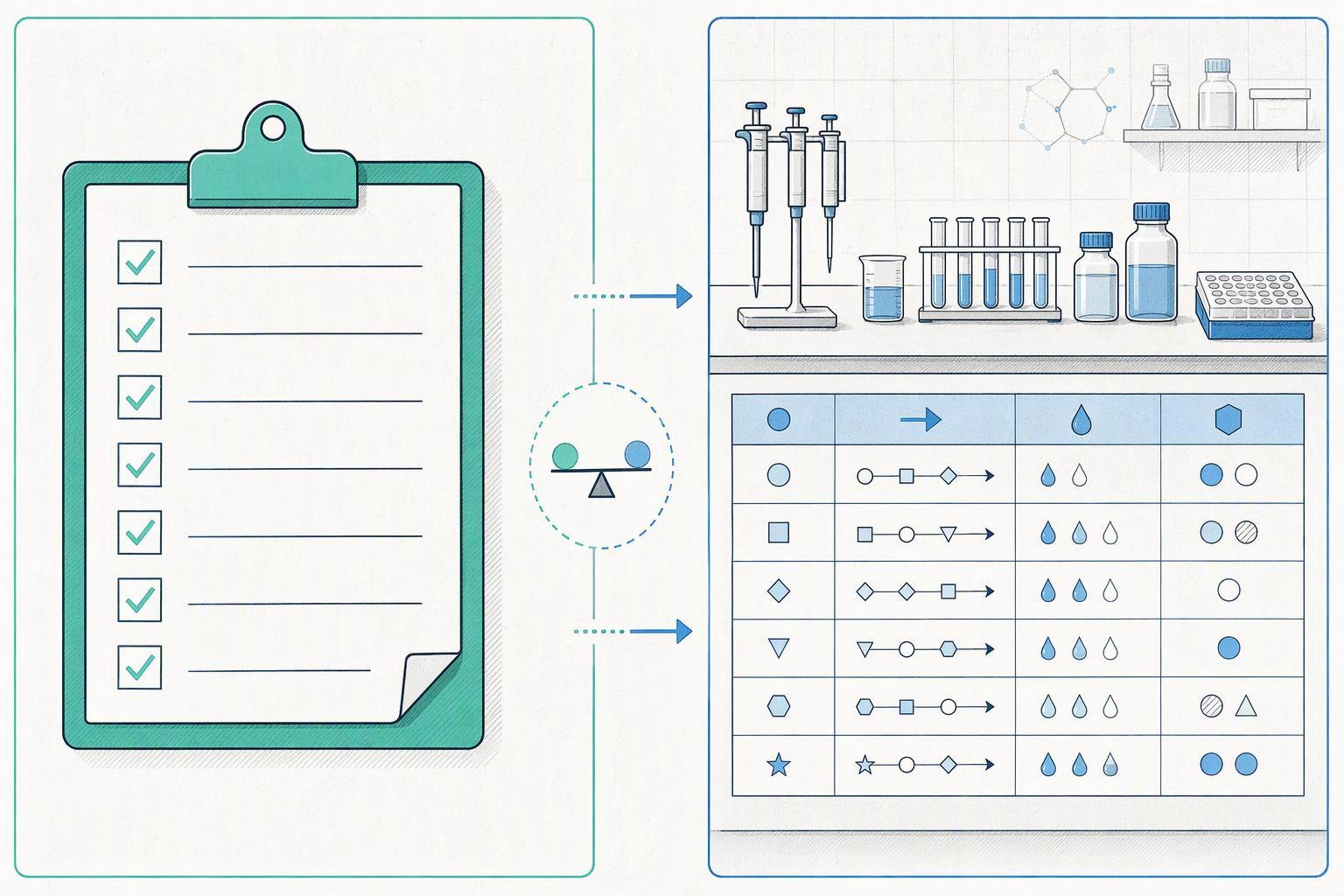
Synthesis Of Polypeptide Supplier Pseudoproline Synthesis A product-specific nitrosamine risk assessment is required because the acceptable intake depends on the individual nitrosamine structure, and the risk lines depend on the individual synthesis. FDA’s explanation of the potency-categorisation approach states that NDSRIs are generally unique to each drug and that there are usually no existing safety data available to establish AI limits, so each structure is assessed individually through a flow chart that assigns a potency category. That is the toxicological half of the argument.
The procedural half is that the assessment is owned by the marketing authorisation holder working with the API and finished-product manufacturers and their raw-material suppliers, using quality risk management principles as outlined in ICH Q9, and that a risk identified in the API or finished product triggers confirmatory testing without delay, Per the EMA’s nitrosamine Q&A (Rev.23, Lub Kaum Hli 2025). Qhov tshwm sim yog tias tsis muaj ib tus lej twg tuaj yeem hais tau thoob plaws hauv ib qho peptide portfolio.

Cov lej sib txawv raws li thaj chaw, thiab qhov sib txawv loj tshaj plaws hauv pawg muaj zog tshaj plaws. FDA daim ntawv teev kev noj tau txais rau nitrosamines muab 100 ng/hnub rau CPCA Category 2, 400 ng/hnub rau Category 3, thiab 1,500 ng/hnub rau Category 4 thiab 5, thaum Health Canada's nitrosamine guidance lists Category 1 at 18 ng/day and Categories 2 los ntawm 5 at 100, 400, 1,500 thiab 1,500 ng/hnub. Ob lub rooj sib haum xeeb los ntawm Category 2 mus saum toj, yog li txoj cai ua haujlwm yog cim npe thaj tsam ntawm txhua tus naj npawb es tsis yog nruab nrab.
Which peptide-manufacturing inputs can actually introduce nitrosamine risk
Qhia txoj kev tsim thiab kev contamination: amines lossis precursors uas muaj kev pheej hmoo, nitrosating agents, kev tiv thaiv thiab kev khaws cia, cov khoom rov siv dua, kev contamination thiab kev nqa mus rau lwm qhov ntawm nitrosamines ua ntej. Tsis muaj amine hauv cov khoom xav tau tsis txhais tau tias nitrosamine contamination tsis muaj kev contamination.

Sab nitrosating ntawm lub vijtsam yog ib daim ntawv teev npe. EFPIA txoj kev tswj kev pheej hmoo tshuaj-tshuaj npe nitrites xws li sodium nitrite thiab nitrous acid, nitric oxide, nitrosyl halides, dinitrogen trioxide thiab dinitrogen tetroxide, thiab organic nitrites xws li tert-butyl nitrite. Txoj kev ua haujlwm tib yam qhia tias nitrite tsis yog nitrosating agent nws tus kheej, tab sis tuaj yeem ua nitrosating nyob rau hauv tej xwm txheej xws li aqueous acidic media, qhov sib txawv no tsim nyog sau tseg kom tus neeg tshuaj xyuas tsis txhob saib txhua qhov nitrite hais tias yog kev pom tau sai.
Daim ntawv teev amine uas muaj kev pheej hmoo yog qhov uas peptide process txawv ntawm small-molecule. EFPIA txoj kev tswj kev pheej hmoo tshuaj-tshuaj npe amines uas tau muab tso ua impurities lossis degradants ntawm amide solvents DMF, DMAc thiab NMP; the tertiary amine bases triethylamine, diisopropylethylamine (DIPEA) thiab N-methylmorpholine (NMM); quaternary ammonium salts such as tetrabutylammonium bromide; and primary amines such as monoethylamine. It also flags that solid inputs such as NaCl, NaOH, K2CO3 and charcoal can carry ppm levels of nitrosating agents, while liquid reagents, organic solvents and low-pH aqueous solutions are generally considered nitrite-free.
The mechanism is not hypothetical. A review of documented nitrosamine incidents traces NDMA in valsartan to dimethylamine as a residual contaminant in DMF, the NMBA precursor to degradation of NMP, and NDIPA and NEIPA to dealkylation products of DIPEA. The WHO GMP annex on nitrosamines sets the scope at the level of route of synthesis, cov khoom siv, solvents and equipment, which is the granularity a peptide input screen needs.
How process conditions change that risk
P, e, b. s Synthetic Polypeptide Supplier WHO GMP annex on nitrosamines states that the use of nitrite or another nitrosating agent as a quenching reagent should be avoided if vulnerable amines may be present at that or a later process step and sufficient depletion is not guaranteed, q.
h. A review of documented nitrosamine incidents o, v, reagents or upstream contamination will likely generate associated nitrosamines during that disposition. The same review describes metformin as relatively stable and requiring co-existing nitrosating agents, moisture and heat, with nitrites and nitrates in excipients plus wet granulation moisture and drying heat initiating nitrosation.
The risk does not stop at the synthesis route. The EMA’s nitrosamine Q&A (Rev.23, Lub Kaum Hli 2025) added the risk of nitrosamine formation from active substances or their related impurities containing a vulnerable amine during finished-product formulation and storage due to traces of nitrites, and tells MAHs who did not consider this in step 1 to reconsider their evaluations and proceed to step 2 testing as appropriate. For a peptide manufacturer, that means the quench reagent, its stoichiometry, the pH and the order of addition are recorded variables, and so are drying, storage and packaging. An assessment that stops at the synthesis route and never reaches those steps leaves the failure mode unexamined, which is the point at which a nitrosamine risk assessment for peptide manufacturing stops being defensible.
Does the synthesis route change the assessment
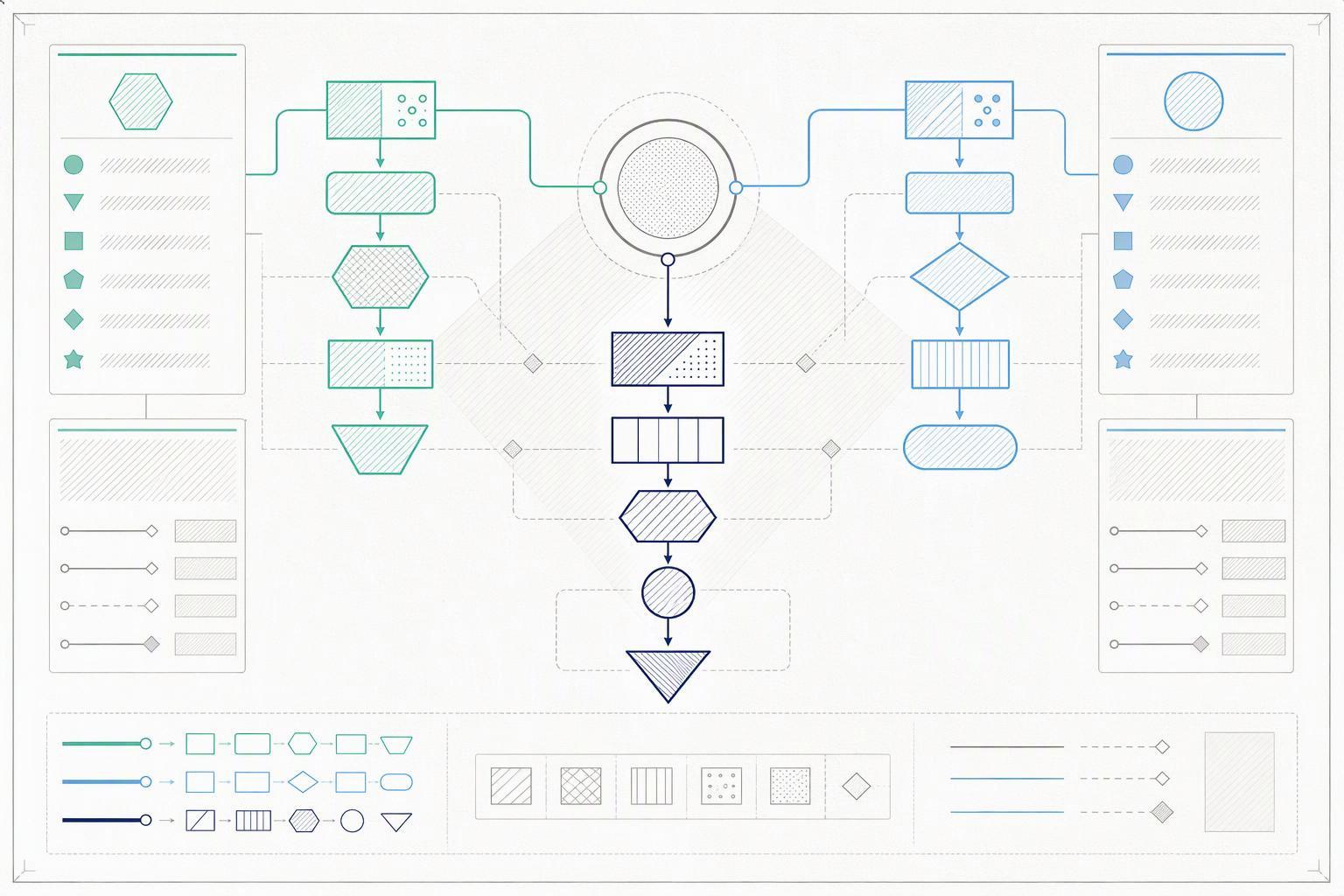
Yog, the route changes which reagent classes enter the assessment, but it does not change the assessment method. EFPIA txoj kev tswj kev pheej hmoo tshuaj-tshuaj partitions the amine and nitrosating-agent sources by the reagents, catalysts and solvents a given process uses, so the route determines the input list rather than the conclusion.
In SPPS, assess the actual bases, solvents, impurities and recovery streams. Piperidine, commonly used for Fmoc removal, is a secondary amine; DIPEA used in coupling is a tertiary amine. Their structures and reaction pathways differ, so do not describe all deprotection and coupling bases as tertiary amines.
The route map also determines who owns which record. Bachem’s SPPS-specific nitrosamine risk-assessment webinar positions the CDMO as a gatekeeper for potential nitrosamine contamination between starting materials and drug formulation, which is the interface where a peptide supplier’s documentation has to hand off cleanly Solid Phase Peptoid Synthesis to the finished-product manufacturer. The EMA guideline on synthetic peptides supplies the expected documentation set for a synthetic peptide API, including starting materials, reagents and impurities, so the nitrosamine file can be built as an extension of the CMC file rather than a parallel exercise.
What analytical controls and confirmatory testing does the assessment require
I, b. ICH Q2(R2) requires that for impurity tests the QL for the analytical procedure be equal to or below the reporting threshold, t, x, o, j. The same guideline defines the quantitation limit as the lowest amount of analyte in a sample that can be quantitatively determined with suitable precision and accuracy.
<k"e" v"max-width:640l;e:1.5e;s:12l;line-height:1.3;p:a"> <u"0 0 560 380" v"max-width: 100%; b: auto; t: s, u, a; p: #1s; --chart-muted: #64748y;" o"g" aria-labelledby="nitrosamine-method-sensitivity-vs-required-limits-title nitrosamine-method-sensitivity-vs-required-limits-desc"> <style> /* The renderer puts the chart in an iframe whose element background is black, and the iframe is a different shape to the chart, so the letterbox bands showed as black frames around it (prod 09-22). The document inside the iframe is transparent by default; painting it here covers the element background, and when the chart is inlined instead this matches nothing. Keep angle brackets out of this block: a style element inside an SVG is parsed as foreign content, so one stray bracket discards every rule in it. */ html, body { background: #ffffff; e: 0; } @media (prefers-reduced-motion: reduce) { * { animation: none !important; transition: none !important; } } </style> <rect x="0" y="0" width="560" height="380" rx="8" fill="#ffffff" /> <title id="nitrosamine-method-sensitivity-vs-required-limits-title">Nitrosamine method sensitivity vs required limits</title> <desc id="nitrosamine-method-sensitivity-vs-required-limits-desc">Nitrosamine method sensitivity vs required limits: values for GC-MS/MS, LC-MS/MS (low), LC-MS/MS (high), FDA LC-HRMS, Sitagliptin NDSRI. Nitrosamine method sensitivity vs required limits. horizontal bar data: GC-MS/MS 0.005; LC-MS/MS (low) 0.01; LC-MS/MS (high) 0.02; FDA LC-HRMS 0.05; Sitagliptin NDSRI 0.1; Limit at 300 mg/day 0.088.Source: EMA Q&A, EMA/409815/2020 Rev.23 2025-10-10.</desc> <text x="280.0" y="29" text-anchor="nruab nrab" font-size="18" font-weight="800" fill="currentColor">Nitrosamine method sensitivity vs required limits</text> <line x1="145" y1="298.0" x2="510" y2="298.0" stroke="currentColor" opacity="0.08" /> <line x1="145" y1="243.0" x2="510" y2="243.0" stroke="currentColor" opacity="0.08" /> <line x1="145" y1="188.0" x2="510" y2="188.0" stroke="currentColor" opacity="0.08" /> <line x1="145" y1="133.0" x2="510" y2="133.0" stroke="currentColor" opacity="0.08" /> <line x1="145" y1="78.0" x2="510" y2="78.0" stroke="currentColor" opacity="0.08" /> <text x="136.0" y="97.5" text-anchor="xaus" font-size="11" fill="currentColor" opacity="0.8"><tspan x="136.0" dy="0">GC-MS/MS</tspan></text> <rect x="145" y="78.0" width="1.8" height="30.0" rx="4" fill="#f97316" /> <text x="154.8" y="97.5" font-size="11" fill="currentColor">0.005</text> <text x="136.0" y="135.5" text-anchor="xaus" font-size="11" fill="currentColor" opacity="0.8"><tspan x="136.0" dy="0">LC-MS/MS (low)</tspan></text> <rect x="145" y="116.0" width="3.6" height="30.0" rx="4" fill="#38bdf8" /> <text x="156.7" y="135.5" font-size="11" fill="currentColor">0.01</text> <text x="136.0" y="173.5" text-anchor="xaus" font-size="11" fill="currentColor" opacity="0.8"><tspan x="136.0" dy="0">LC-MS/MS (high)</tspan></text> <rect x="145" y="154.0" width="7.3" height="30.0" rx="4" fill="#a78bfa" /> <text x="160.3" y="173.5" font-size="11" fill="currentColor">0.02</text> <text x="136.0" y="211.5" text-anchor="xaus" font-size="11" fill="currentColor" opacity="0.8"><tspan x="136.0" dy="0">FDA LC-HRMS</tspan></text> <rect x="145" y="192.0" width="18.2" height="30.0" rx="4" fill="#22c55e" /> <text x="171.2" y="211.5" font-size="11" fill="currentColor">0.05</text> <text x="136.0" y="249.5" text-anchor="xaus" font-size="11" fill="currentColor" opacity="0.8"><tspan x="136.0" dy="0">Sitagliptin</tspan><tspan x="136.0" dy="12">NDSRI</tspan></text> <rect x="145" y="230.0" width="36.5" height="30.0" rx="4" fill="#facc15" /> <text x="189.5" y="249.5" font-size="11" fill="currentColor">0.1</text> <text x="136.0" y="287.5" text-anchor="xaus" font-size="11" fill="currentColor" opacity="0.8"><tspan x="136.0" dy="0">Limit at 300</tspan><tspan x="136.0" dy="12">mg/day</tspan></text> <rect x="145" y="268.0" width="32.1" height="30.0" rx="4" fill="#fb7185" /> <text x="185.1" y="287.5" font-size="11" fill="currentColor">0.088</text> <text x="280.0" y="366" text-anchor="nruab nrab" font-size="10" fill="var(--chart-muted, currentColor)">Source: EMA Q&A, EMA/409815/2020 Rev.23 (2025-10-10)</text> </svg> </figure>
With AI in ng/day and maximum daily dose M in mg/day, AI/M gives a concentration in ng/mg, numerically equal to ppm. Expressed in ppb, multiply that value by 1,000. State units explicitly and apply the current jurisdiction-specific rules for multiple nitrosamines, omission or reduced testing.
Published method performance gives you the benchmark range. A 2025 review of nitrosamine analytical methods compiles reviewed LC-MS/MS methods at 0.05 ppm, GC-MS/MS methods as low as 0.001 ppm, and an FDA LC-HRMS method at 1 ng/mL, with NDMA and NDEA around 0.1 to 0.5 ng/mL on a 5 mg/mL sample basis. Those figures come from small-molecule API and sartan matrices, so they are benchmarks, not peptide performance: peptide-matrix LOQ depends on matrix effects, sample preparation and the polarity of the target, and no published nitrosamine LOQ measured in a peptide drug-substance matrix was located for this article. State the matrix with every LOQ you cite.
Testing cadence follows the risk conclusion. The EMA’s nitrosamine Q&A (Rev.23, Lub Kaum Hli 2025) sets testing at 10% of annual batches or 3 per year, whichever is higher, where the source of risk is understood and levels are consistent batch to batch, and requires all batches to be tested where fewer than three are made annually. The MHRA’s list of common nitrosamine submission gaps names inadequate sensitivity of analytical methods and incomplete risk evaluation among the defects it rejects, which is why the nitrosamine risk evaluation checklist should carry the method’s LOQ, its matrix and its validation status as separate line items.
What records make the conclusion auditable for a client audit or regulator
The record set that survives an audit is the one that mirrors the official template fields, because that is what a reviewer compares against. The CMDh nitrosamine risk-evaluation template requires the MAH name and address; the product type; the product and API or intermediate name; the marketing authorisation number; the EU procedure number for MRP or DCP products; the API manufacturer name and address; the finished-product manufacturer name and address; the confirmatory-testing timeline; plus a risk classification of high, nruab nrab lossis qis thiab ib pawg hauv paus uas suav nrog kev tsim khoom lossis kev sib kis, kev tsim khoom lossis kev ruaj khov, kev tsim khoom, thiab kev tsim hauv lub cev. Ib qho ntaub ntawv ntawm tus neeg muab peptide yuav tsum muaj peev xwm sau tag nrho cov teb chaws ntawd rau API feem.
Cov cai sau ntawv uas ua rau cov teb chaws ntawd muaj peev xwm tiv thaiv yog tib yam li cov uas siv rau txhua batch record. Ib daim ntawv pov thawj tshuaj xyuas yuav tsum tau tshuaj xyuas raws li ib qho ntaub ntawv batch tshwj xeeb es tsis yog ib qho lus tshaj tawm kev lag luam dav dav, thiab ib qho feem pua huv xwb tsis txaus los txheeb xyuas tag nrho cov compound: purity, tus kheej, method, lot number thiab cov ntaub ntawv yuav tsum tau ntsuas ua ke. The WHO GMP annex on nitrosamines ntxiv cov ntaub ntawv hauv kev muab khoom uas nws xav kom khaws cia, suav nrog lub npe ntawm tus tsim khoom raw thiab nws tus neeg muab khoom, cov luag haujlwm ntawm cov neeg tsim khoom tiag tiag, thiab txhua tus neeg ntim dua thiab cov neeg faib khoom uas tuav cov khoom ua ntej API tsim.
Cov ntawv sau ntawm cov neeg muab khoom tsis kaw qhov teeb meem nws tus kheej. Health Canada's nitrosamine guidance hais tias cov lus tshaj tawm ntawm cov tuam txhab tsim khoom thiab cov neeg muab khoom tsis yog qhov hloov rau kev ntsuam xyuas kev pheej hmoo ruaj khov tag nrho los ntawm MAH, thiab the EMA’s nitrosamine Q&A (Rev.23, Lub Kaum Hli 2025) muab lub luag haujlwm rau MAH ua haujlwm nrog cov neeg muab API kom paub tseeb tias API zoo txais tos, suav nrog kev txwv amine nruj dua li phau ntawv tshuaj thaum cov khoom tiav xav tau. Ib qho lus qhia ntawm cov neeg muab khoom yog ib qho kev nkag mus rau hauv ntaub ntawv, tsis yog qhov xaus ntawm nws.
When is confirmatory testing required versus when does a documented negative assessment close the question
<k"e" v"max-width:640l;e:1.5e;s:12l;line-height:1.3;p:a"> <u"0 0 560 380" v"max-width: 100%; b: auto; t: s, u, a; p: #1s; --chart-muted: #64748y;" o"g" aria-labelledby="kev lees paub-kev kuaj xyuas thaum kev pheej hmoo raug txheeb xyuas lub npe lees paub-kev kuaj hnyav-thaum kev pheej hmoo raug txheeb xyuas-piav qhia"> <style> /* The renderer puts the chart in an iframe whose element background is black, and the iframe is a different shape to the chart, so the letterbox bands showed as black frames around it (prod 09-22). The document inside the iframe is transparent by default; painting it here covers the element background, and when the chart is inlined instead this matches nothing. Keep angle brackets out of this block: a style element inside an SVG is parsed as foreign content, so one stray bracket discards every rule in it. */ html, body { background: #ffffff; e: 0; } @media (prefers-reduced-motion: reduce) { * { animation: none !important; transition: none !important; } } </style> <rect x="0" y="0" width="560" height="380" rx="8" fill="#ffffff" /> <title id="kev kuaj xyuas kev lees paub thaum-kev pheej hmoo raug txheeb xyuas lub npe">Kev kuaj xyuas kom paub tseeb thaum pom kev pheej hmoo</title> <desc id="kev kuaj xyuas kom paub tseeb thaum kev pheej hmoo raug txheeb xyuas">Thaum kev pheej hmoo raug txheeb xyuas, EMA xav tias yuav muaj kev sim rau 10% of annual batches or 3 per year, whichever is higher, thiab tag nrho cov batch thaum tsawg dua 3 ua txhua xyoo. Kev kuaj xyuas kom paub tseeb thaum pom kev pheej hmoo. lollipop data: tsawg dua 3 batch/xyoo 3; 10% ntawm batch txhua xyoo 10; Yam tsawg kawg ib xyoos 3.Source: EMA Q&A, EMA/409815/2020 Rev.23, Q&A 8 2025-10-10.</desc> <text x="280.0" y="29" text-anchor="nruab nrab" font-size="18" font-weight="800" fill="currentColor">Kev kuaj xyuas kom paub tseeb thaum pom kev pheej hmoo</text> <line x1="145" y1="298.0" x2="510" y2="298.0" stroke="currentColor" opacity="0.08" /> <line x1="145" y1="243.0" x2="510" y2="243.0" stroke="currentColor" opacity="0.08" /> <line x1="145" y1="188.0" x2="510" y2="188.0" stroke="currentColor" opacity="0.08" /> <line x1="145" y1="133.0" x2="510" y2="133.0" stroke="currentColor" opacity="0.08" /> <line x1="145" y1="78.0" x2="510" y2="78.0" stroke="currentColor" opacity="0.08" /> <text x="136.0" y="118.7" text-anchor="xaus" font-size="11" fill="currentColor" opacity="0.8"><tspan x="136.0" dy="0">Tsawg dua 3</tspan><tspan x="136.0" dy="12">batch/xyoo</tspan></text> <line x1="145" y1="114.7" x2="254.5" y2="114.7" stroke="currentColor" opacity="0.15" stroke-width="1" /> <circle cx="254.5" cy="114.7" r="6" fill="#f97316" /> <text x="266.5" y="118.7" font-size="11" fill="currentColor">3</text> <text x="136.0" y="192.0" text-anchor="xaus" font-size="11" fill="currentColor" opacity="0.8"><tspan x="136.0" dy="0">10% ntawm txhua xyoo</tspan><tspan x="136.0" dy="12">batch</tspan></text> <line x1="145" y1="188.0" x2="510.0" y2="188.0" stroke="currentColor" opacity="0.15" stroke-width="1" /> <circle cx="510.0" cy="188.0" r="6" fill="#38bdf8" /> <text x="522.0" y="192.0" font-size="11" fill="currentColor">10</text> <text x="136.0" y="265.3" text-anchor="xaus" font-size="11" fill="currentColor" opacity="0.8"><tspan x="136.0" dy="0">Yam tsawg kawg ib xyoos</tspan></text> <line x1="145" y1="261.3" x2="254.5" y2="261.3" stroke="currentColor" opacity="0.15" stroke-width="1" /> <circle cx="254.5" cy="261.3" r="6" fill="#a78bfa" /> <text x="266.5" y="265.3" font-size="11" fill="currentColor">3</text> <text x="280.0" y="366" text-anchor="nruab nrab" font-size="10" fill="var(--chart-muted, currentColor)">Source: EMA Q&A, EMA/409815/2020 Rev.23, Q&A 8 (2025-10-10)</text> </svg> </figure>
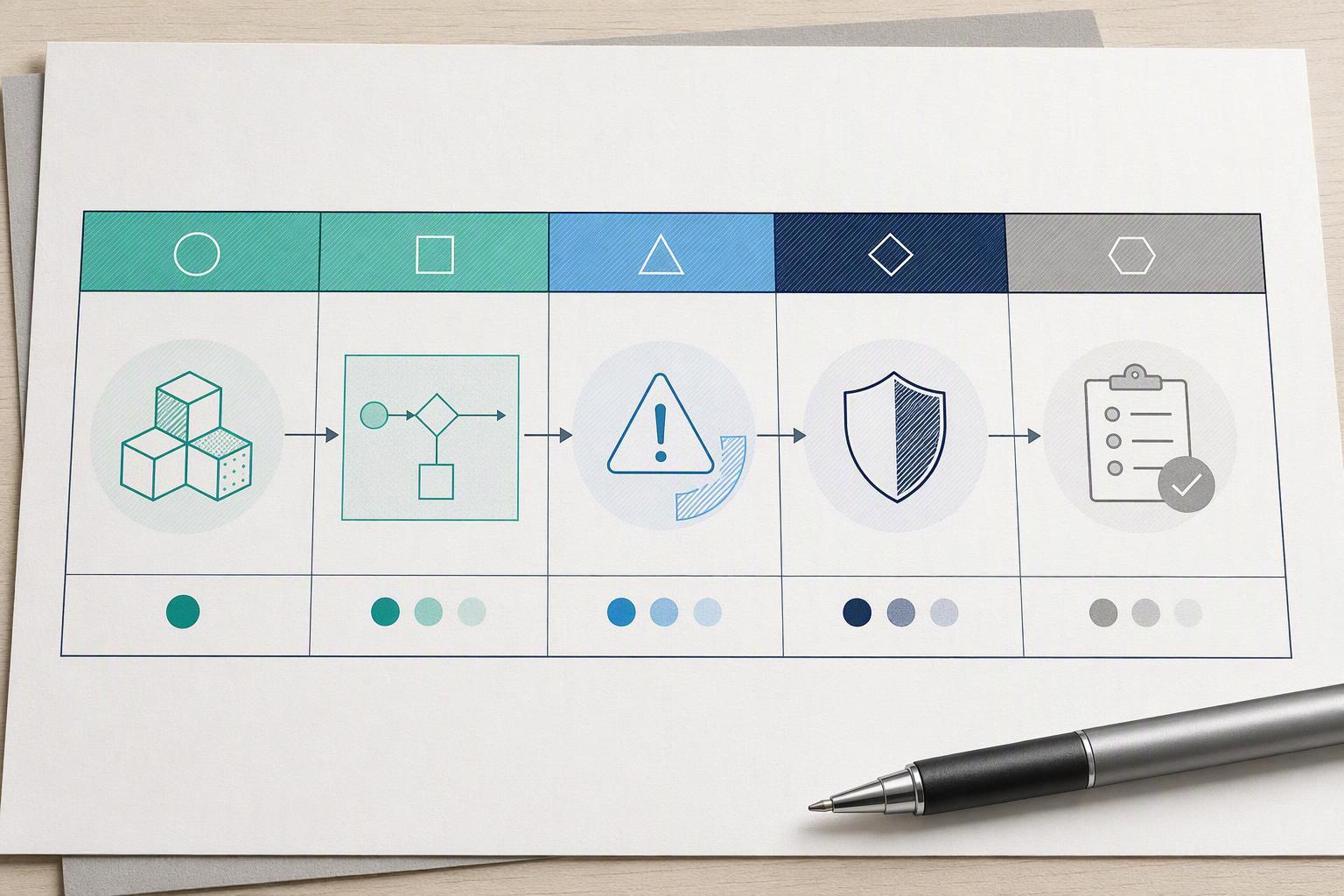
Kev kuaj xyuas kom paub tseeb yog tsim nyog thaum kev ntsuam xyuas kev pheej hmoo pom tau kev pheej hmoo, thiab tsis xav tias yuav tshwm sim thaum kev ntsuam xyuas xaus tias tsis pom kev pheej hmoo. Health Canada's nitrosamine guidance hais tias kev kuaj xyuas kom paub tseeb tsis xav tias yuav tshwm sim thaum kev ntsuam xyuas kev pheej hmoo xaus tias tsis pom kev pheej hmoo, thiab the EMA’s nitrosamine Q&A (Rev.23, Lub Kaum Hli 2025) ua rau muaj kev ua rau sab tod: yog tias muaj kev pheej hmoo pom hauv API lossis cov khoom tiav, MAH yuav tsum ceeb toom rau cov thawj coj muaj peev xwm thiab ua kev kuaj xyuas kom meej yam tsis muaj kev qeeb ntxiv.
A documented no-risk conclusion can be appropriate when the complete product and process assessment supports it. Record assumptions, supplier evidence, contamination controls, formation and purge reasoning, and changes that would reopen the assessment; a negative amine screen alone is insufficient. Spot Peptide Synthesis
Confirmatory and reduced-testing decisions depend on the applicable guidance, measured levels, process understanding and consistency. Do not treat a low AI fraction or a single absent precursor as unconditional permission to omit controls. Record the guideline version and the evidence satisfying each condition.
Cov Lus Nug Nquag Nug
Does every peptide need confirmatory nitrosamine testing?
Testing follows the documented product-specific risk evaluation and applicable regulatory expectations. The presence of an amine alone neither proves nitrosamine formation nor automatically determines testing. Assess amine susceptibility, nitrosating sources, process conditions, impurities, formulation and storage; review the conclusion when relevant information changes. Peptide Wholesale Supplier
Which acceptable intake limit should a peptide manufacturer cite?
The one in force in the jurisdiction the file is written for, named alongside the number. Limits are not harmonised at the low end. Health Canada’s CPCA table sets Category 1 at 18 ng/hnub, thaum FDA daim ntawv teev kev noj tau txais rau nitrosamines applies 26.5 ng/day to the same category. PAWG 2 los ntawm 5 agree at 100, 400, 1,500 thiab 1,500 ng/hnub. Averaging the two Category 1 values would be wrong; pick the regime that governs the product and say so in the file. Where two nitrosamines are present, Health Canada’s cumulative-limit rule caps NDMA plus NMBA at 96.0 ng/day and NDMA plus NDEA at 26.5 ng/hnub, so the single-impurity number is not the whole calculation.
How sensitive does a nitrosamine method need to be?
Sensitive enough to show the level sits below the threshold the assessment relies on, which is a fraction of a product-specific limit rather than the limit itself. ICH Q2(R2) requires the quantitation limit of a quantitative impurity method to be at or below the reporting threshold, and defines that limit as the lowest amount determinable with suitable precision and accuracy. Published nitrosamine methods reach quantitation limits in the low parts-per-billion range, but those figures come from small-molecule matrices. No peptide-matrix figure was located, so sensitivity has to be demonstrated in the manufacturer’s own matrix rather than borrowed from the literature.
Is a supplier declaration enough to close a risk line?
PM. A declaration is an input to the assessment, not a substitute for it. Health Canada's nitrosamine guidance states that manufacturer and supplier declarations do not replace the manufacturer’s own robust risk assessment, thiab the WHO GMP annex on nitrosamines requires supply chains to be audited for at-risk materials. Supplier nitrite data cannot be read as a generic limit either: Capsugel’s product-specific nitrosamine risk-management announcement notes that translating an acceptable intake into a product-specific concentration limit depends on composition, so the same nitrite figure means different things in different formulations.
When will the ICH M7 nitrosamine addendum be final?
A work-plan target is not a guaranteed adoption date. Check the current ICH M7 maintenance status and applicable regional nitrosamine guidance when planning the assessment.
Xaus lus
Start from the product and route, then map formation, contamination, carryover and storage pathways. Evaluate the controls and analytical evidence needed to support each conclusion, document residual uncertainty and set reassessment triggers.
The record set is what makes the conclusion survive review. The CMDh nitrosamine risk-evaluation template defines the fields, thiab Health Canada's nitrosamine guidance defines the limit of what supplier paperwork can carry. Build the nitrosamine risk evaluation checklist around those fields, keep the method’s LOQ and matrix attached to the risk line it closes, and label the jurisdiction on every acceptable-intake figure you cite.
Two limits are worth stating plainly. This framework documents a risk conclusion for chemically synthesized peptides; it does not replace a product-specific toxicological assessment. And no published nitrosamine LOQ measured in a peptide drug-substance matrix was located for this article, so method sensitivity has to be established in your own matrix rather than adopted from a small-molecule benchmark. Next step: muab koj cov peptide portfolio tam sim no tso rau ntawm input screen thiab txheeb xyuas cov khoom uas muaj amine thiab nitrosating partner hauv tib txoj kev ua haujlwm.