Modificaciones de péptidos
modificación N-terminal
¿Qué es la modificación N-terminal??
La acetilación N-terminal elimina la carga del extremo amino de un péptido.. En general, Se recomienda la modificación por acetilación si el péptido debe imitar su estructura natural en la proteína.. Además, La modificación por acetilación estabiliza la cadena peptídica y la hace menos susceptible a la degradación enzimática al final de la cadena peptídica..
Además de la acilación, otras modificaciones N-terminales (p.ej., urea, carbamato, sulfonamida, alquilamina) se puede realizar.
Los radioligandos suelen estar unidos al extremo N de un péptido si la farmacodinamia del péptido lo permite.. Por ejemplo, DOTA, USAR, NODAGA, etc.. se puede adjuntar.
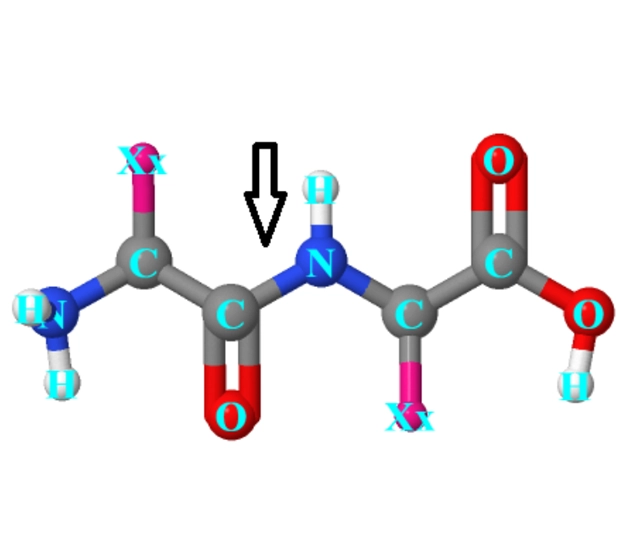
Técnica de modificación del terminal N
Tipo de modificación
La modificación N-terminal mejora la estabilidad de los péptidos porque esta modificación genera una estructura similar a la estructura de la proteína natural.. De este modo, este método de modificación puede mejorar la actividad biológica del polipéptido y prevenir la degradación enzimática.
|
5-familia
|
BSA (-NH2 del terminal N)
|
ácido hexanoico
|
|---|---|---|
|
5-FAM-Ahx |
CBZ |
HÍNICO |
|
Abz |
dansyl |
KLH (-NH2 del terminal N) |
|
Acetilación |
dansyl-ahx |
ácido láurico |
|
Acrílico |
ácido decanoico |
ácido lipoico |
|
Alloc |
DTPA |
Pinturas |
|
benzoilo |
Ácido graso |
MCA |
|
Biotina |
FITC |
miristoilo |
|
Biotina-Ahx |
FITC-Ahx |
ácido octanoico |
|
BOC |
fmoc |
ÓVULO (-NH2 del terminal N) |
|
Br-Ac- |
Formilación |
Palmitoilo |
Citas destacadas
Bibliotecas de péptidos derivados de proteomas para un perfil de especificidad profunda de reactivos de modificación N-terminal
Los extremos N de proteínas y péptidos son objetivos importantes para la modificación selectiva con reactivos quimioproteómicos y herramientas de bioconjugación.. La α-amina N-terminal ocurre solo una vez en cada cadena polipeptídica., convirtiéndolo en un objetivo atractivo para la bioconjugación de proteínas. en las celdas, Se pueden generar nuevos extremos N mediante escisión proteolítica y capturarlos mediante reactivos de modificación N-terminal que permiten la identificación de sustratos de proteasa en todo el proteoma con espectrometría de masas en tándem. (LC-MS/MS). Comprender la especificidad de la secuencia N-terminal de los reactivos de modificación es fundamental para cada una de estas aplicaciones.. Las bibliotecas de péptidos derivados de proteomas en combinación con LC-MS/MS son herramientas poderosas para perfilar la especificidad de secuencia de reactivos de modificación N-terminal. Estas bibliotecas son muy diversas., y LC-MS/MS permite el análisis de las eficiencias de modificación de decenas de miles de secuencias en un solo experimento. Las bibliotecas de péptidos derivados de proteomas son una herramienta poderosa para perfilar las especificidades de secuencia de reactivos de etiquetado de péptidos enzimáticos y químicos.. Subtiligasa y 2-piridinacarboxaldehído (2PCA) son dos reactivos que se han desarrollado para la modificación selectiva de péptidos N-terminales y se pueden estudiar utilizando bibliotecas de péptidos derivados de proteomas.. Este protocolo describe los pasos para generar bibliotecas de péptidos derivados de proteomas N-terminalmente diversos y para aplicar estas bibliotecas para perfilar la especificidad de los reactivos de modificación N-terminales.. Detallamos los pasos para perfilar la especificidad del 2-piridinacarboxaldehído., un reactivo de modificación química, y subtiligasa, un reactivo de modificación enzimática. Estos protocolos se pueden adaptar fácilmente a fuentes de proteoma alternativas y otros reactivos de etiquetado de péptidos N-terminales..
Servicios relacionados de modificación de péptidos
glicosilación de péptidos
glicosilación de péptidos
La glicosilación de péptidos es una modificación covalente que potencialmente puede mejorar las propiedades fisicoquímicas de los péptidos.
Leer másFosforilación de péptidos
Fosforilación de péptidos
Puede producirse fosforalización en serina. (S, Ser), treonina (t, tr) y tirosina (Y, tiro) cadenas laterales por formación de enlaces fosfoéster
Leer másPéptidos grapados
Péptidos grapados
Introducción de dos aminoácidos no naturales que contienen α-metilo., Grupos α-alquenilo durante la síntesis en fase sólida de cadenas peptídicas.
Leer másPéptido cíclico
Péptido cíclico
La ciclación de péptidos mejora la estabilidad conformacional de los péptidos. (en relación con sus análogos lineales) y es una estrategia común en el desarrollo de péptidos..
Leer másmodificación de péptidos
Amplia experiencia en modificación de péptidos., proporcionando múltiples vías viables para la investigación de péptidos.
