Perinteinen näkemys: Automaatio on vastaus puhdistuksen pullonkaulaan
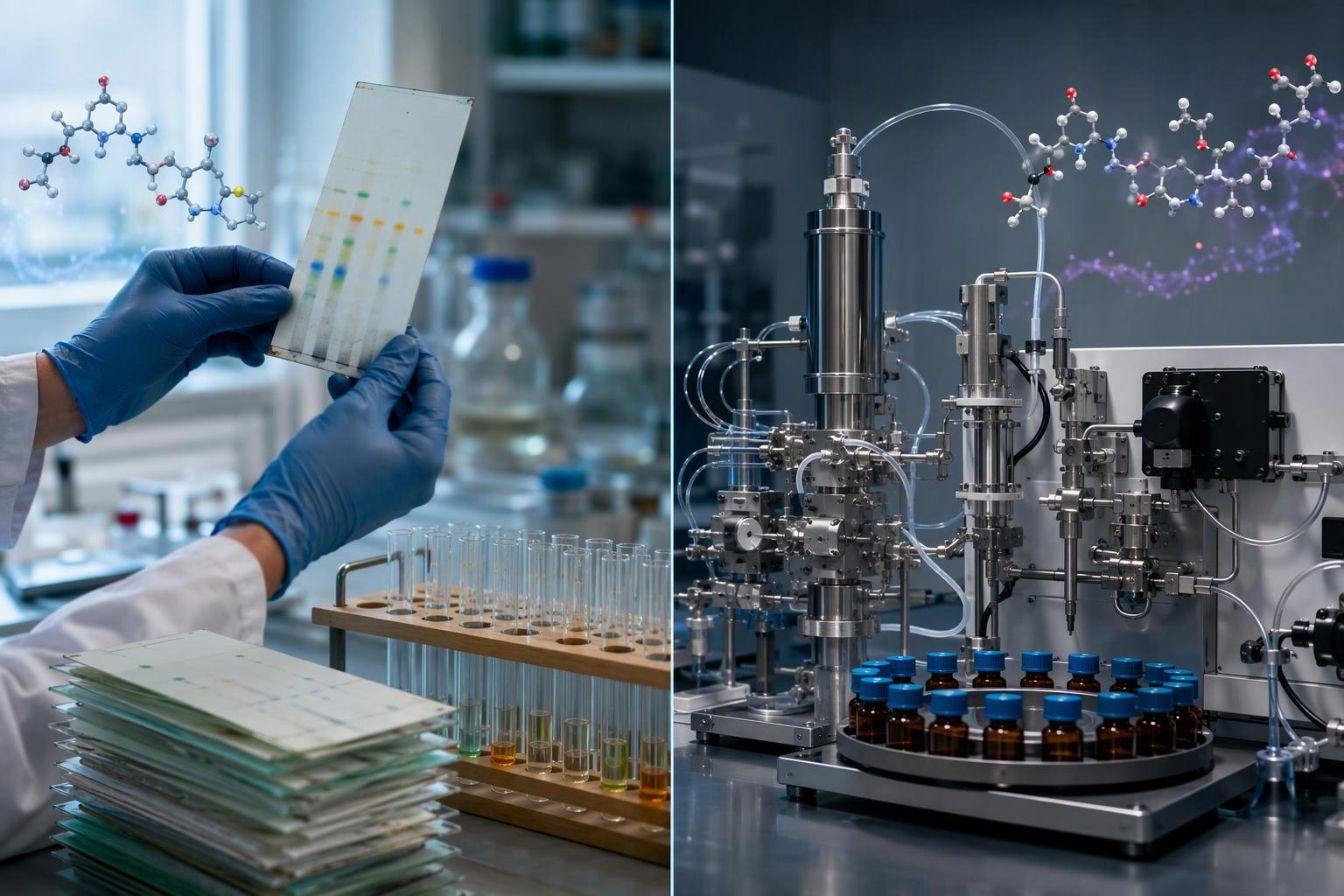
Valtavirran kanta on suoraviivainen: kiinteän faasin peptidisynteesi jättää raakamateriaalin samalle 50–80 %:n raakapuhtausalueelle, ja puhdistus on paikka, jossa tuo epäpuhtauskuorma on poistettava ennen kuin mitään alavirtaa voi edetä. Tämä alue on rehellinen perusta kutsua puhdistamista loppupään pullonkaulaksi, ja siksi manuaalisen jakeen työvoiman intensiteetti ja gradienttimenetelmien erien välinen epäjohdonmukaisuus saavat niin paljon huomiota.

Miksi näkymä on suosittu, on helppo nähdä. Automaattinen rinnakkaispuhdistus ratkaisee todella suuren suorituskyvyn synteesiongelman, ja hitaan puhdistuksen loppupään kustannukset ovat pikemminkin todellisia kuin retorisia.
Se, mistä se tulee, on tärkeämpää kuin se, mitä siinä sanotaan. Kehystys perustuu pääasiassa toimittajan alustan dokumentaatioon ja tapahtuman yhteenvetoon, jotka käsittelevät puhdistusta yhtenä vaiheena prosessissa eikä ongelmana omissa vikatiloissaan. Siksi myös termiä peptidipuhdistusmenetelmän robustisuus käytetään löyhästi kentällä, kiinteistönä alustalla oletetaan olevan ennemmin kuin ostajan vahvistamana.

Miksi automaation vakiopituus hajoaa
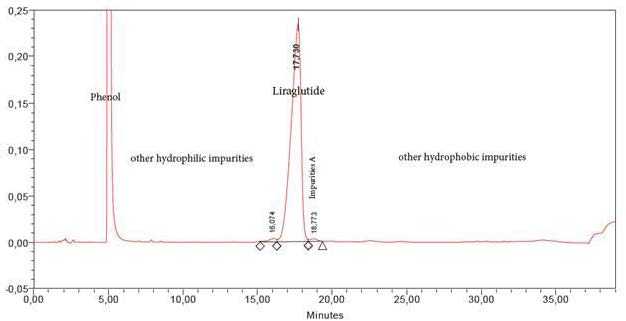
Useimmat väitteet tekoälystä peptidien puhdistuksessa tehdään väärällä abstraktion tasolla. Ne kuvaavat, mitä alusta voi yleensä tehdä, ei sitä, mitä se saavuttaa tietyllä sarjalla, ja kuilu näiden kahden asian välillä on se, missä menetelmäkehitysbudjetit katoavat.
Säilytysennuste on selkein tapaus. DeepRT saavutti R²:n 0.996 modifioimattomilla peptideillä, mutta tarvittiin siirtooppimista R²:n pitämiseksi 0.978 translaation jälkeisillä muokatuilla (DeepRT, PMC, haettu 2026-02-10). Sama kuvio näkyy DeepLC:ssä, missä siirtooppiminen vaati erillisen sovituksen pH-siirretylle perus-pH-tietojoukolle ja epätyypilliselle TMPP-muunnetulle tietojoukolle (DeepLC-siirto-oppiminen, PMC, haettu 2026-02-10). Malli ei siirry ilmaiseksi.
Palautus ei myöskään ole alustan ominaisuus. Yhdessä tutkimuksessa, a 9.4 mm puolipreparatiivisen kolonnin keskiarvo 90.7% palautuminen 0,75–200 mg:n välillä, kun taas a 2.1 mm kapeareikäinen pylväs antoi 82.1% klo 6 mg ja a 1.0 mm mikroreikä antoi 78.0% klo 3.0 mg (sarakkeen muoto ja palautus, PMC, 2006). Palautus vaihtelee sarakemuodon ja kuormituksen mukaan, ei alustalla.
⚠️ Varoitus: Alustatason ominaisuusvaatimus ei ole sekvenssikohtainen suoritustodiste. Pyydä sekvenssisi kromatogrammi, sinun kuormallasi, kolumnillesi.
Vaikeimmat jaksot ovat siellä, missä autonomialla on vähiten todisteita. 34 tähteen hydrofobinen transmembraanifragmentti antoi 4% saanto DMF:ssä ja 12% sisään 80% NMP/DMSO, ilman tuotetta yhdellä Fmoc-SPPS-ehdolla (hydrofobisten fragmenttien synteesi, PMC, 2006). Peptidipuhdistusmenetelmän kestävyys on juuri se, mitä nämä tapaukset testaavat, ja se on juuri se, mitä sävelkorkeus jättää pois. Sävelkorkeus kuvaa helppoa tapausta ja yleistää vaikeaksi.
Mitä tiedot todella osoittavat tekoälystä peptidien puhdistuksessa
Spps-peptidi AI:n puolustettava osuus peptidien puhdistuksessa on kapea, ylävirtaan, ja ehdollinen, ei päästä päähän. Itsenäinen työ liittyy menetelmäkehitykseen, ei fraktionkerääjässä.
Selkein esimerkki on sekvenssitietoinen ANN-retentiomalli, joka on koulutettu noin 345 000 peptidillä 12,059 LC-MS/MS-analyysit, joka saavutti keskimääräisen eluointiajan tarkkuuden noin 1.5% ja sijoitettu 50% peptidien ±1,52 %:n virheen sisällä (Parannettu Peptidiä valmistavat yritykset peptidin eluutioajan ennuste, 2006). Kertoo enemmän muokatuista sarjoista: malli erotti isomeeriset peptidit, joilla on yhteinen m/z, käyttämällä sekvenssiä yksinään. Sillä on merkitystä, koska pelkkä massatunnistus ei pysty ratkaisemaan isomeerejä, ja juuri se aukko pysäyttää PEGylatedin menetelmän kehittämisen, fluoresoiva, tai glykosyloidut kohteet.
Vastaesimerkit osoittavat, missä autonomiavaatimus loppuu. PEG-pituuden heterogeenisyys pakottaa valinnan puhtaus vastaan talteenotto: puhdistuksen täytyy erottaa oligomeerit, jotka eroavat toisistaan 44 Ja, vastaan 57 Da glysiiniä, pienin aminohappojäännös (N-terminaalisen PEGylaation vaikutus peptidiepitooppien synteesiin ja puhdistukseen, 2024). Raportoitu puhtaus saavutettu 99.5% keskimäärin, mutta vain puhtaudella ostettu kapealla piikkileikkauksella, joka kerää vähemmän tuotetta. Optimoitu valmisteleva työnkulku siirrettävyyden korjausmallilla saavutti yllä olevat alkuperäiset puhtaudet 90% ylittävillä tuotoilla 30% (Analyysin ja siirrettävyyden parantaminen peptidien puhdistuksessa, 2026). Se on siirrettävissä oleva tulos, not an autonomy result.
Key Takeaway: Treat autonomy as a per-step property with an evidence gate, not a platform property. Decide automatable, not automatable, or needs a human gate per sequence class.
Parempi lähestymistapa: Todistuksilla suojattu autonomia
Neuroscience Research Area Hand a purification step to an autonomous system only when the vendor has supplied batch-specific evidence for that step on your sequence class. That single condition separates evidence-gated autonomy from the standard automation pitch, which asks you to trust a platform and then verify the output. Merrifield Synthesis
Four principles define the approach:
-
Mass-directed fraction collection carries the strongest case. UV and MS triggers are complementary rather than redundant: UV catches poorly ionizing compounds, MS catches peptides with low UV extinction, and a combined trigger excluded impurities in a documented peptide case.
-
UV-only collection is not equivalent when coeluting impurities sit within 0.1 min of the target. In that multi-step case, MS triggering restored selectivity when UV separation was poor under standard conditions.
-
Orthogonal confirmation is a gate, not a final checkbox. FDA Q6A treats a single retention time as non-specific and accepts two different-principle procedures or a combined one, mikä on the Q6A decision logic that makes orthogonality a gate.
-
Recovery and purity are optimized together. Aggressive pooling fragments the product into narrow cuts.
Vihjeille: Design the orthogonal gate into the workflow, not into final QC. A confirmation step that runs after pooling cannot recover a fraction that was already mis-pooled.
The proof point to demand is a documented transferability result, such as the correction model published in the 2026 peptide purification study: a vendor who can show how a method transfers between systems has shown you the evidence standard, not just the instrument.
Kuinka soveltaa tätä: Mitä vaaditaan ennen kuin luovutat askeleen
Start by asking for batch-specific chromatograms, not a platform capability deck. Everything below is a documentation request, not a technology question.
-
Classify your sequence against the known hard cases (one afternoon). Hydrofobinen, syklinen, disulfide-containing, PEG- or label-conjugated, and isobaric species each stress a different part of the method. Flag which criteria are at risk before you talk to anyone.
-
Demand batch-specific chromatograms and MS data (one to two weeks of correspondence). The method and time window must be stated. Representative traces are not evidence about your sequence.
-
Require a defined sterility and endotoxin testing scope, not an implied one. Ask which tests, on which samples, at which stage.
-
Require validation gates tied to the intended-purpose basis of Q2(R2) ja the Q14 design space that makes “robust” a defined term. That framing treats robustness as a lifecycle property, not a claim.
-
Require at least two orthogonal methods, per the 0.10% impurity-identification threshold and the two-method rule, koska identification by a single retention time is not specific.
Track recovery and purity as a pair. Test whether the design space survives a small deliberate parameter change. Expect evidence-gathering to dominate the first quarter.
Varoitukset ja perinteinen näkymä
The strongest limitation of this assessment is that it rests on published application notes and vendor documentation, and none of the sources gathered for it publishes a co-elution frequency for deletion and truncation impurities. The claim that orthogonal confirmation cannot resolve deletion co-elution is therefore a gap Tripeptidi 1 in the evidence, not a finding. The sources state co-elution qualitatively, noting that deletion-related impurities can be chromatographically similar to the target and may partially co-elute, without quantifying how often (Journal of Pharmaceutical Investigation peptide quality review, 2026, haettu 2026-07-15).
Context matters too. For unmodified, well-behaved sequences in high-throughput screening, the conventional automated-parallel-purification pitch is largely correct, and the evidence gate is cheap to satisfy. Method development is a hybrid workflow, not model-only design: analytical scouting and rules of thumb narrow the space, then systematic optimization refines gradient, virtaus, and modifier (preparative RP-HPLC peptide literature, 2025). Tripeptidi 1
The AI-in-chromatography material is also recent and vendor-flavored, niin 2026 capability may be framed here as moving from concept to closed-loop execution when it has in fact moved further. The argument is about the burden of proof, not whether autonomy works: a vendor who supplies batch-specific evidence has met the standard this article sets.
Tietojen paljastaminen: MOL Changes has a commercial interest in peptide quality standards and provides HPLC and MS purity testing.
Usein kysytyt kysymykset
Onko massaohjattu fraktioiden kerääminen hintansa arvoinen, kun UV toimii vain helpoissa sekvensseissä?
On easy sequences, often not. UV and MS as complementary triggers earn their cost when coeluting impurities share the target’s chromophore, which is exactly where UV-only collection fails silently. The honest test is your own hard method, not a vendor’s easy one.
Olemme jo ostaneet vain UV-alustan. Aloitetaanko alusta?
Ei. Recovery data across column formats shows the collection hardware is rarely the limiting step; the trigger logic is. Adding a mass trigger to an existing UV platform is a smaller change than replacing it, and it preserves your validated fraction handling.
Toimittajan sovellusmuistiinpanot osoittavat vahvan suorituskyvyn. Mikset ottaisi niitä nimellisarvolla?
Because a documented transferability correction model exists precisely because retention predictions drift between instruments and gradients. Ask for the batch-specific chromatograms and MS confirmation behind the note, on your sequence class, before you treat the number as yours.
Sulkeeko siirtooppiminen modifioitujen peptidien välisen aukon?
Osittain. Transfer learning across modification classes improves retention prediction for sequences near the training set, but the evidence thins for heavy isotope labels, glycopeptides and cyclic peptides, where the modification changes the separation mechanism itself. Treat those as gate-and-verify, not hands-off.
Johtopäätös: Todistusstandardi on panos
The useful question about AI in peptide purification is not whether an algorithm can improve a separation, but which steps a vendor has proven on your sequence class, with your kind of modification, sinun mittakaavassasi. That reframing is the contribution, and it is the one thing this article asks you to carry into your next vendor conversation.
The shift it implies runs in two directions. Buyers should treat batch-specific chromatograms, MS data with a stated method and time window, a defined sterility scope, and explicit validation gates as the minimum evidence package before handing over a step. Vendors should publish that package instead of platform capability claims. The stakes are not abstract: at regulated kilogram scale, reaching above 95% purity generally requires multi-step preparative HPLC and controlled lyophilization, ja yield loss accumulates across method transfer, overlap control, drying and hold times (KNAUER peptide purification scale-up application note, 2025). Autonomy that cannot show its evidence on your sequence will not absorb that loss for you.
An industry where autonomous purification claims are as auditable as the analytical methods they depend on is a realistic near-term goal, and it starts with what buyers agree to accept as proof.
If you are evaluating an autonomous or semi-autonomous purification step, talk to an expert about the analytical documentation that should accompany it.