Mitä BPC-157:n täytäntöönpanotietue todella osoittaa
Sääntelykuva muuttui päivätyn aikataulun mukaisesti, ja jokainen vaihe dokumentoidaan. Heinäkuussa 23, 2026, the FDA:n Pharmacy Compounding Advisory Committeen kokoussivu listattu BPC-157 (vapaa pohja) ja BPC-157-asetaatti ulseratiivisen paksusuolitulehduksen käytön estämiseksi, aineita ehdottavien tiedotusmateriaalien kanssa ei lisätään 503A Bulks -luetteloon. Valiokunta äänesti äänin 8–6 yhden tyhjää ja suositteli niiden lisäämistä joka tapauksessa, kuten McDermott lukee PCAC-tuloksesta levyjä.
Tämä äänestys ei laillistaa yhdistämistä. FDA kertoi kokouksessa, että se "poikkeaa harvoin" PCAC:n suosituksista, mutta viimeinen lisäys vaatii huomautuksia ja kommentteja koskevaa säännöstöä, joka voi osua sisään 2027 tai venyttää useiden vuosien ajan. Siihen asti, BPC-157 on luokan ulkopuolella 1 ja pois lopullisesta 503A Bulks -luettelosta.
Täytäntöönpano ei odottanut sääntöjen laatimista. Viisi elokuussa päivättyä CDER-varoituskirjettä 24, 2026 meni online-peptidimyyjiin, ja kaikki viisi väittivät "vain tutkimuskäyttöön", kun taas heidän sivustoilla oli annostustietoja, pistosohjeet ja annoslaskurit. Kesäkuussa 2026, Alabama Medical Board erikseen kielsi lääkäreitä yhdistämästä, tutkimustason peptidien antaminen tai jakaminen potilaille.
Miksi vain tutkimuskäyttöön tarkoitettu merkintä ei ole hallintostrategia?
Vain tutkimuskäyttö on ilmoitus käyttötarkoituksesta, ei ole laillinen suoja. FDA voi edelleen löytää hyväksymättömän uuden lääkkeen, jossa myyjän verkkosivusto kokonaisuudessaan osoittaa ihmisten käytön, kohdan alla 201(g)(1) ja osiot 301(d) ja 505(a) FD:stä&C laki, kuten Arent Fox Schiff selittää syyskuussa 18, 2026 elokuun analyysi 24, 2026 varoituskirjeitä. Nuo kirjeet olivat puhdasta hyväksymätöntä uutta huumevalvontaa, ja sama analyysi koskee nettoimpressiostandardia: suojattu markkinointikieli voi silti tehdä tuotteesta väärän tuotemerkin, jos kokonaismarkkinointikuva viittaa ihmisen käyttöön.
Tämä ero on vain koko tutkimuskäyttö verrattuna terapeuttisiin väitteisiin. Tunniste ei määrää ympäröivän sivun sisältöä, tuotekuvaus, annostelukieli, tai asiakkaiden suosittelut kommunikoivat.
Vikatila on ennakoitavissa. Toimittaja leimaa RUO pulloon, julkaisee sitten sivun, joka on kuin kuluttajatuoteluettelo, ja etiketti lakkaa toimimasta. Hallinto tarkoittaa etiketin hallintaa, väitteiden tarkistaminen ennen julkaisemista, valvoa, mitkä kanavat kuljettavat tuotetta, ja haitallisten tapahtumien raporttien ottaminen vastaan niiden hylkäämisen sijaan.
Mitä eräkohtainen analyysitodistus todistaa ja mitä se ei
Eräkohtainen tutkimuspeptidien analyysitodistus on vähimmäisasiakirja, joka toimittajan tulee pystyä tuottamaan, ja se on asiakirja, joka useimmiten erehtyy laatutodistukseksi. Se todistaa, että joku testasi nimetyn erän ja kirjasi tuloksen. Se ei todista, kuka testin teki, mitä menetelmää he käyttivät, tai vastaako injektiopullon materiaali etiketissä olevaa materiaalia.
The 2024 Laittomien verkkoapteekkien semaglutidituotteiden monitekijäinen laatu- ja turvallisuusanalyysi, julkaistu Journal of Medical Internet Research, testasi kolmea verkkomyyjiltä ostettua injektiopulloa. Mitattu semaglutidipitoisuus ylitti ilmoitetun määrän +28.56%, +38.69% ja +33.58%, vastaan +5.05% viitteeksi Ozempic 1 mg kynä (JMIR, 2024). The same three lyophilized samples were devoid of viable microorganisms at the time of testing, which shows how narrow a single passing result is: a clean microbial count says nothing about how much active material the vial contains.
Scope matters here. Three vials, one compound, purchased from online sellers, tested in 2024. The finding is not generalizable to every gray-market product, and it does not describe supplier-issued CoAs in general. It shows what a label figure and the physical material can separately be.
Peptidien HPLC-puhtaustestauksen rajat
A 98% tai 99% HPLC purity figure measures one method under one set of conditions. It is not a statement about what else is in the vial. The documented limits of single-method HPLC purity determinationare structural rather than incidental: co-eluting impurities can hide under the main peptide peak, and UV detection near 214 to 220 nm misses species that absorb weakly or not at all, including sugars, glycols, lipidit, salts and buffer residues (PMC, “HPLC Analysis and Purification of Peptides”; the article is undated, retrieved for this review).
The number is also method-dependent. Kolonnin kemia, kaltevuus, liikkuva vaihe, ilmaisun aallonpituus, flow rate and integration parameters all shape the result, so two laboratories can report different purities for the same lot without either being wrong.
That is why a purity percentage establishes neither identity nor safety. Orthogonal mass-spectrometric confirmation is what ties the peak to the intended sequence, and it says nothing about residual trifluoroacetate counterion content, liuotinjäämät, water content or bioburden. Those are separate measurements, reported separately, or not reported at all.
Endotoksiinin ja steriiliyden dokumentaatio: Kaksi eri kysymystä
A supplier that reports “sterility tested” has answered one question and left another open. Endotoxin and sterility documentation for research peptides are two separate records, and a lot can pass one while failing the other. USP <85> bacterial endotoxins testing, usually run as a Limulus amebocyte lysate (LAL) määritys, is quantitative for endotoxin only, reported in endotoxin units (EU) or EU/mg, and it does not detect viable microbes. USP <71> sterility testing is growth-based instead: the standard’s described method uses membrane filtration or direct inoculation into two media, fluid thioglycollate and soybean-casein digest, incubated for not less than 14 päivää, with the primary USP <71> document as the authority to check rather than a lab summary.
That distinction matters because a clean endotoxin figure is not a clean lot. In the three BPC-157 vials tested by researchers and published in JMIR, endotoxin ranged from 2.1645 to 8.9511 EU/mg, which is a quantitative endotoxin result, not a sterility result.
Key Takeaway: LAL versus USP <71>
| Menetelmä | Detects | Cannot detect | | LAL (USP <85>) | Endotoksiini, quantitatively, in EU or EU/mg | Viable bacteria, fungi, or any non-endotoxin contaminant | | Steriiliys (USP <71>) | Viable microorganisms that grow under the test conditions | Endotoksiini, and any organism that does not grow in the two media used |
A lot-matched result requires both tests run on the same lot number, with the lot number printed on each report.
Peptiditoimittajan laatu- ja hallintokehys
A peptide supplier quality and governance framework is a set of auditable evidence requests, not a certificate you file once. Each dimension below works the same way: you request a specific record, it proves one bounded thing, and past that boundary it proves nothing. Run the six dimensions as a checklist before qualification and at every re-qualification.
Audit report or questionnaire response, ISO 9001 soveltamisalaan, site and contact details
The quality system behind the batch exists and can be inspected
Nothing about the specific lot’s analytical results
The peptide supplier quality and governance framework only holds if the records stay attached to the material. One caution on the first row: a batch-specific certificate of analysis for research peptides is only as strong as its lot linkage. A CoA without the shipped lot number is a marketing document, not a release record. Mukautetut peptidisynteesiyritykset
Dokumentaatio-odotukset käytännössä
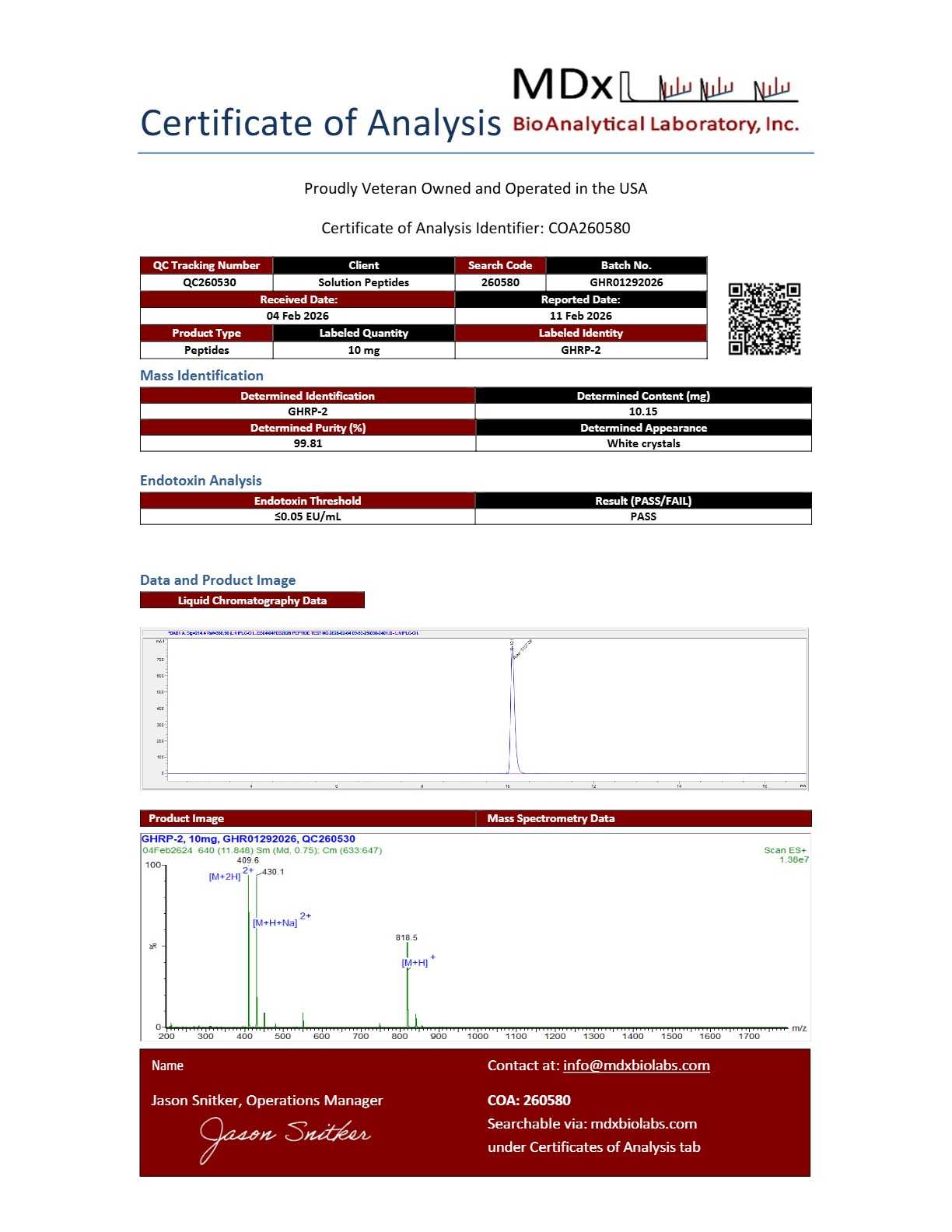
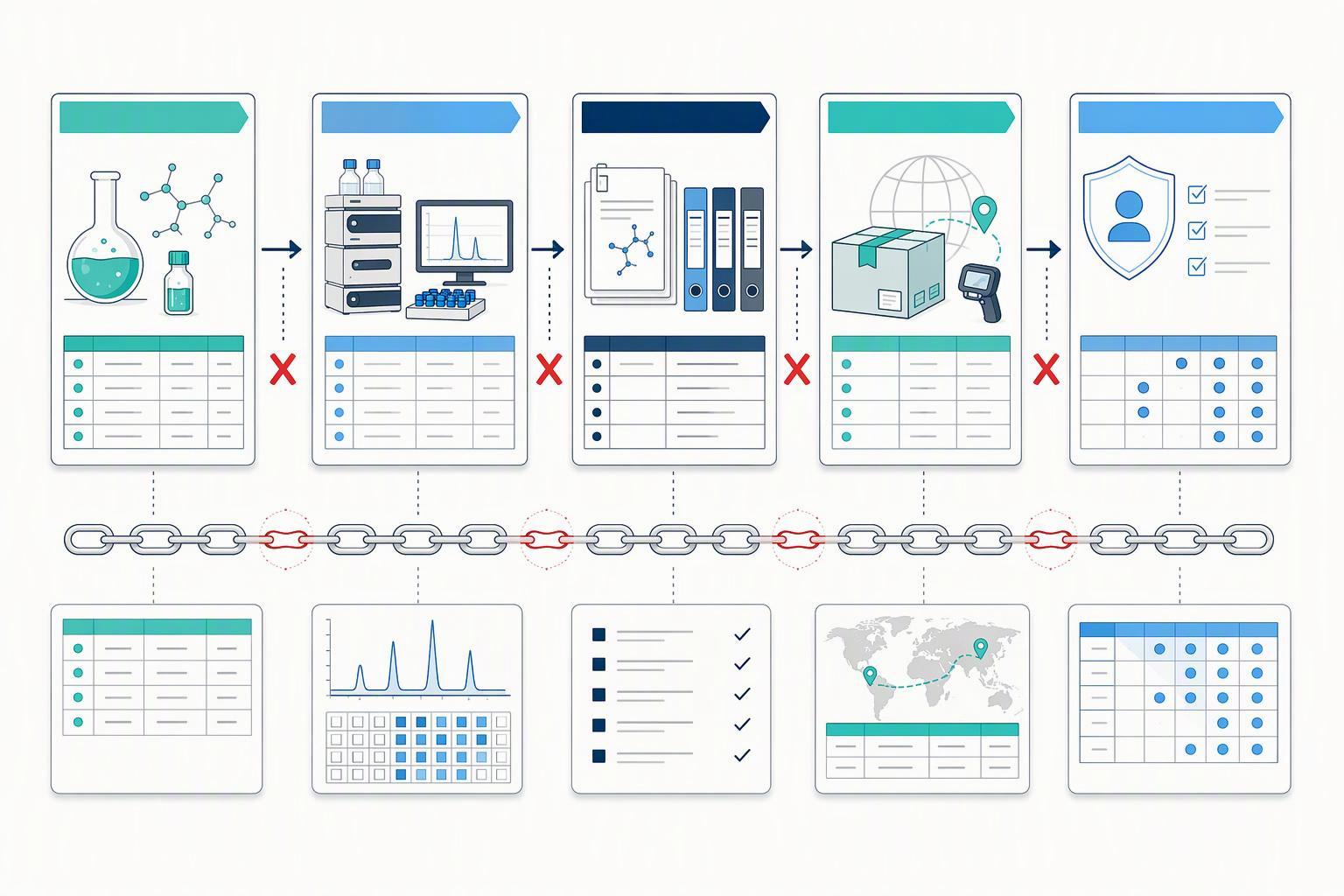
A lot-matched release package is a set of documents that all carry the same lot number and all describe the same physical material. In practice it usually contains four things: a batch-specific certificate of analysis, the chromatogram that produced the purity figure, the mass spectrum that confirms identity, and any endotoxin or sterility result claimed for that lot. The chain breaks when one of those documents is generic rather than lot-specific.
Three failures show up repeatedly. A supplier reuses a single CoA across multiple lots, so the purity figure describes a reference batch rather than the vial in hand. A chromatogram is supplied without its integration table, which means the reader cannot see how the purity percentage was calculated or which peaks were excluded. Endotoxin testing is claimed on the CoA but the supporting report is not lot-matched, leaving no way to connect the result to the material shipped.
MOL Changes toimii Luokassa 100 ultra-sterile cleanroom production with per-lot analytical release documentation including batch chromatogram and MS. Two gaps remain unresolved in the material available for this article: the specific cleanroom and environmental-monitoring evidence behind that production claim, and the exact wording of the brand’s research-use-only label. Neither should be inferred. Ask for both directly, and treat a supplier who cannot produce them as a supplier whose documentation chain has not been demonstrated.
Aloitus: Toimittajan hyväksyminen ennen ensimmäistä tilausta
Start with one request: a lot-matched release package for a specific catalog number. Ask for the certificate of analysis, chromatogram and spectrum tied to the lot number printed on the vial you would actually receive. If the CoA references a different lot, or a “representative” lot, you have learned something useful before spending anything.
Then check that identity confirmation is orthogonal to the purity method. A mass spectrometry result and an HPLC purity figure answer different questions; two readings of the same chromatogram answer one. Where a supplier cannot show a second, independent method, treat identity as unconfirmed.
Kolmas, get change-control and deviation handling in writing before scale-up. Ask how you will be notified if a synthesis route, sarakkeessa, or testing laboratory changes, and who signs off on a deviation. A supplier who answers this in a document is easier to qualify than one who answers it in a call.
Vihjeille:Run these three checks on a small first order. The documentation package costs the supplier little and tells you more than any capability page.
To work through the full framework with your own catalog numbers, request a documentation package or talk to an expert. This article is published by a peptide supplier, so treat the criteria here as a buyer’s checklist rather than neutral advice.
Usein kysytyt kysymykset
Mitä tutkimuspeptidien eräkohtaisen analyysitodistuksen tulee sisältää??
It should tie one document to one lot number and report methods, not just results. Vähintäänkin: peptide sequence and lot number, the purity method (typically HPLC-UV or HPLC-CAD), the identity method (massaspektrometria), the quantity method (amino acid analysis or UV content), and the acceptance criteria each result was judged against. A purity figure with no method, no lot and no specification is a number, ei dokumentaatiota.
Suojaako tutkimuksessa pelkkä merkintä toimittajaa??
Ei. RUO is a distribution control, ei ole laillinen suoja. It tells the buyer the material is not intended for human or veterinary use, but it does not protect a supplier from responsibility for misleading therapeutic claims or marketing that implies clinical benefit. A supplier that stamps RUO on the vial while implying therapeutic use elsewhere has created a contradiction, not protection.
Mitä HPLC-puhtaustesti ei kerro?
An HPLC purity figure tells you the proportion of the main peak by the detector’s response, and nothing about what the remaining percentage is. It does not identify residual counterions such as trifluoroacetate, liuotinjäämät, vesipitoisuus, or the impurity peaks themselves. Independently tested research peptides have measured as low as 7.70% purity against 99% label claims, which shows how far a headline number can sit from the underlying reality.
Ovatko endotoksiini ja steriiliystesti sama asia?
Ei, and treating them as interchangeable is a common documentation error. Endotoxin testing measures lipopolysaccharide, typically by the LAL method in USP <85>. Sterility testing looks for viable microbial contamination, typically by membrane filtration or direct inoculation under USP <71>. A product can pass one and fail the other.
Kuinka erottaa laillinen tutkimustoimittaja kyseenalaisesta?
A legitimate research supplier answers specific questions with specific documents. Ask for the batch-specific certificate of analysis with lot number and methods, the chromatogram and mass spectrum for that lot, the endotoxin and sterility methods by name, and the facility’s quality certification. A supplier that responds with a generic brochure, a purity percentage with no method, or a refusal to name the testing laboratory is telling you what its documentation is worth.
Johtopäätös
The single most important thing to carry away is that documentation is a chain the buyer has to test, not a document the supplier hands over. Analyysitodistus, kromatogrammi, an endotoxin result and a sterility statement each answer a narrower question than the folder they arrive in suggests, and the gaps between them are where risk accumulates. The peptide supplier quality and governance framework in this guide exists to make those gaps visible before an order is placed, not after a batch is in hand.
The enforcement record is moving quickly. The August 2026 warning letter set reflects the state of regulatory attention at that moment and may be superseded as further actions are published, so treat it as a dated snapshot rather than a settled position. Re-check the primary sources directly when a qualification decision depends on them.
The next step is small and concrete: pick one supplier already on your list, request the batch-specific records for a single lot, and trace each claim back to the method that produced it.
Teknologiajohtaja; Peptidisynteesin asiantuntijaYdinosaaminen: Monimutkainen peptidisynteesi, ei-luonnolliset aminohappomuunnokset, ja syklisten peptidien ja nidottujen peptidien rakentaminen.
Elämäkerta:Zejun Pengillä on laaja kokemus orgaanisesta kemiasta ja peptidisynteesistä. Hän hallitsee kiinteän faasin peptidisynteesin yhdistetyn soveltamisen (SPSS) ja nestefaasipeptidisynteesi (LPPS), ja on erityisen taitava voittamaan "erittäin vaikeasti syntetisoitavia sekvenssejä" (kuten ultrapitkäketjuiset peptidit, erittäin hydrofobisia sekvenssejä, ja moninkertainen disulfidisidoslaskostus). Hänen johdollaan, tiimi on onnistuneesti voittanut tekniset pullonkaulat useissa erikoisversioissa (kuten N-metylaatio, PEGylointi, ja fluoresoiva leimaus), ylläpitää synteesin onnistumisprosentti yli 98%.
Hei hei! 👋 Tervetuloa MOL Changesiin. Kuinka voimme auttaa sinua tänään? Kysy rohkeasti peptidisynteesistämme, CRO-palvelut, or any product inquiries — just type your message below and we'll continue the conversation on WhatsApp.