Me pehea te whakamahi i tenei rarangi arowhai mo te kaiwhakarato peptide
Ko tenei rarangi arowhai mo te kaiwhakarato peptide he takirua, wehea, me te raupapa ki te rarangi wa kati. Ko ia mea he patai Ae/Kao, kia taea e koe te tohu ki tetahi tuhinga kaua ki te hanga whakaaro mo te kaihoko. Ka whakarōpūhia nga taonga ma te waahanga tauwhitinga, ehara i te kaupapa, na te mea ka huri to huanga i te wa e neke ana te mahi: Ko te tukunga a BioNTech o JPT Peptide Technologies kei raro i nga tikanga kati me te tumanako ka kati 2026, ko te tikanga ko te waa i mua i te kati ka taea tonu e koe te whiriwhiri kupu.
Ko nga wahanga e toru e rere ana. I mua i te kati ka hipokina te whakamohiotanga huringa-o-mana me te whakaatu, katahi ko te tikanga me te whakatakotoranga mana. I te tukunga ka hipokina te rarangi tono rekoata whakawhiti-hangarau me te tohu tohu waahi i muri i te huringa mana. I muri i te tukunga ka hipokina te hanga taapiri me te tiaki i nga kaupapa kua roa.

Kotahi te arorau ka rere i roto i nga mea e toru: tohua te tuatahi me te taapiri kia riterite, a raupapa i taua puna tuarua ki te rarangi wa kati kaua e timata i muri i te panuitanga. Ko te tauākī haere tonu ehara i te kirimana kirimana, no reira kia rite ki nga korero a te iwi, ehara hei taunakitanga.
Taketake Matua: He ruarua te rarangi arowhai, whakarōpūhia e te wahanga, me te whakahau mo te rarangi wa kati, na te mea he nui ake to huanga i mua i te kati.
Tuhipoka whanui: ko te tuku-tonu me te aratohu tuhinga, ehara i te tohutohu ture, ture ranei. Whakapumautia au ake herenga me o QA me o mahi ture.
I mua i te kati: whakamohiotanga huringa-o-mana me te whakaatu
Ko nga mana whakamohiotanga ka mahi anake mena he kirimana me te wa ki taau ake raarangi tohu tohu. Whakamahia enei patai e ono ki te whakamatautau he aha te tikanga o te whakaaetanga ki te kaiwhakarato kia whakaatu, ā, āhea.
|
# |
Tuemi rarangi arowhai |
He aha te take |
|---|---|---|
|
1 |
Kua tautuhia te keu huringa-o-mana, a ka kapi i tenei tauwhitinga? |
Ko te nuinga o nga wa ka whakahuahia e nga kaiwhaiwhai te whiwhi ingoa, hanumi, te whakawhiti i te mana pooti, hoko o te pakihi, me nga kaupapa matua-kaimahi, te waahi-whakahou ranei; he tauwhitinga karekau e tau ki tetahi o aua mea, kare he aha. |
|
2 |
Kei te herea te matapihi panui tuhi ki to matapihi whakawhiwhi tohu, ehara i te "panui whaitake"? |
He marama te roa o te whakawhiwhi tohu; Ko te panui i whanganga i roto i te waatea maramataka kaore he wa ki te mahi. |
|
3 |
Kua whakaaturia e te kaiwhakarato te hinonga ture i muri i te katinga me te mana o te punaha-kounga? |
Ka whakawhiwhia e te rangatira hou nga herenga GMP, na me mohio koe ko wai kei te pupuri i a raatau inaianei. |
|
4 |
Kua whakaaturia e ia te pupuri i nga kaimahi matua me te hunga e pupuri ana i te kirimana i muri i te kati? |
Ko te haere tonutanga o te iwi me te hoa taurite te mea e whai mana ai te toenga. |
|
5 |
Kei te hiahiatia he panui mo te waahi, QC-pae, raw-mate, purenga, takai me nga huringa tapanga? |
Ko nga huringa hanga taonga ko nga mea e tino herea ana ki "i mua i te whakatinanatanga". |
|
6 |
Ko te rara i runga i te rongoa, kei te kawe whakahe ranei, motika whakamutu, tohu tohu ranei? |
Peptide Synthesis Resin He maha nga mea kua tuhia he kore rongoa me nga mana whakamutu, ka huri katoa i to huanga. |
Mo te rara o raro anatomy, Ko te wehenga o IntuitionLabs o nga kirimana kounga-CDO he whakaatu pehea te whakaoho i nga kaupapa, Ko te nuinga o nga wa ka tuhia nga matapihi panui me nga mana tohu tohu. I te taha ture, Te tātaritanga a ECA mo te reta whakatupato a te FDA mo te whakarereketanga o te mana pupuri hanga te take mahi: Ka whakatauhia e te FDA te whakarereketanga o te mana pupuri hei GMP-haangai, ka riro i te rangatira hou nga herenga. Ko to huanga te whakaaetanga, ehara i te mea ka huri te mana whenua.
I mua i te kati: tikanga me te mana motuhake

Ko te mana whakahaere tikanga ka whakatau mena ka taea e koe te huri. E toru nga tohatoha, a me whakaingoatia e te whakaaetanga ko wai koe kei roto: tikanga a te kaihoko, kei hea te kaihoko e whakahaere ana i nga whakahoutanga, rautaki whakamana me te mana whakamahi; nga tikanga kua whakawhanakehia e te kaihoko, kei te hiahia tonu te kaihoko ki nga mana kirimana hei whakamahi, whakawhiti me te whakamahi tonu i te tikanga; me nga tikanga whakawhanakehia tahi, me tino toha e te whakaaetanga te mana o te tikanga, nga raraunga, te putea whakamana me nga mana whakawhiti (Nga Whakaaetanga Kounga Pharma, 2026-01-08).
Ko te ahua tiaki he mau tonu, e kore e taea te whakakore, rangatiratanga-kore, Ko te raihana ka taea te whakawhiti me te raihana iti e hipoki ana i te whakamahi i te kaiwhakarato, i tetahi taiwhanga tuatoru ranei, whakawhiti atu ki tetahi kaiwhakarato whakakapi, nga whakarereketanga a te GMP-peia, me te oranga o te taumahi, te whiwhinga ranei. Ki te kore te rara oranga, an acquisition can extinguish your rights.
|
Te tohatoha |
Who controls revisions |
Who holds the validation package |
What the buyer needs |
|---|---|---|---|
|
Buyer-owned |
Buyer |
Buyer |
Nothing further |
|
Vendor-developed |
Peptide 3 Kaihoko |
Kaihoko |
Licence to use, whakawhiti Merrifield Peptide Synthesis and keep using |
|
Jointly developed |
Tirihia |
Named party |
Express allocation of method, data and transfer rights |
A certificate of analysis does not substitute for this. Raw-data access means the reviewer can see the chromatograms, tūāwhiorangi, calculations and audit trails behind a summary, and the normal model is retention on site with availability for review rather than bulk export (Nga Whakaaetanga Kounga Pharma, 2026-01-08). Ask for the peptide tech transfer records that let someone reconstruct what was done.
On specifications, vendor-stated practice norms put individual impurities at ≤0.1%, with ≥95% purity at kg scale usually needing multi-step preparative HPLC plus controlled lyophilisation, and batch records showing >98% purity with a full impurity profile (Nga Huringa MOL, 2026-09-22). These are practice norms, not regulatory thresholds.
I te tukunga: te rarangi tono rekoata whakawhiti hangarau
Ask for the transfer dossier by name, i roto i te tuhituhi, and list its contents item by item. A certificate of analysis answers a different question than peptide tech transfer records do.
The request list below follows the dossier structure in WHO’s technology-transfer annex, the standing technical annex on transferring pharmaceutical manufacturing between sites. Each item is answerable yes or no.
-
Master and batch records, including master formulas. Proves the process is documented as run, not reconstructed afterwards.
-
Process description with route rationale, critical process parameters and in-process controls. Proves the receiving site can reproduce the route, not just the final sequence.
-
Analytical methods with validation or qualification reports, plus system-suitability and transfer evidence. Proves the methods travel with the product.
-
Impurity history, the known impurity list and the limits rationale. Proves limits were derived, not inherited.
-
Reference standards with source, qualification and retention. Proves the measurement baseline is traceable.
-
Stability data with conclusions and retest or shelf-life recommendations. Dipeptide Proves the assigned shelf life has a basis.
Three closing items tie the package together: hītori huringa-mana, deviations and investigations with disposition rationale, and a comparability or transfer summary report linking acceptance criteria to results.
Mo te Aki: Paste this list verbatim into your request and ask for the comparability summary by name. It is the one document that shows whether the criteria were met, rather than restating them.
Expect a summary rather than raw data. The difference between an auditable summary and raw data matters here: a dossier should let a qualified reviewer reconstruct what was done and why, which is a higher bar than a signed certificate. A complete transfer package, of the kind MOL Changes assembles, contains these documents as a set.
I te tukunga: tohu paenga i muri i te huringa mana
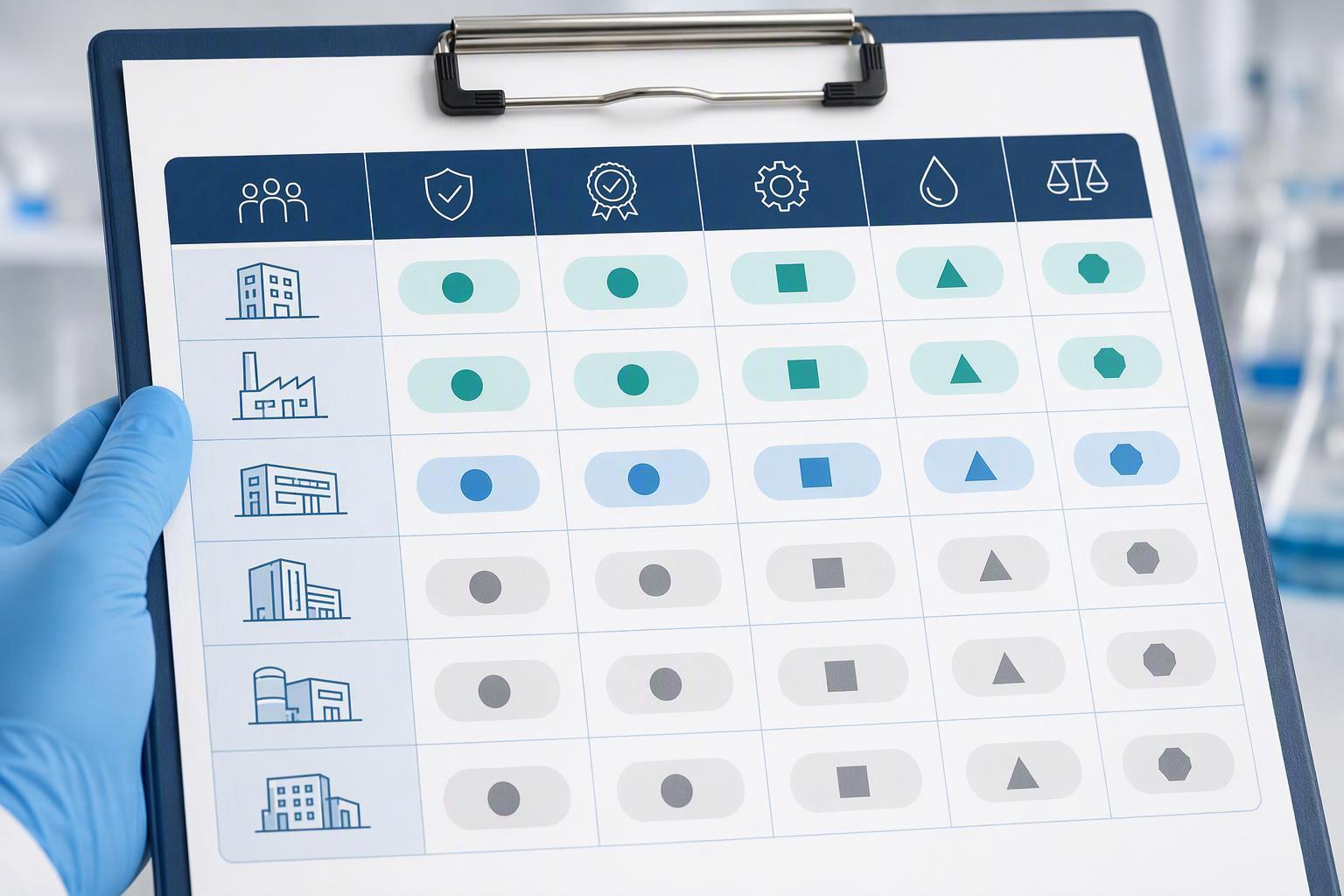
A change of legal entity is a new qualification event, not an administrative update, and peptide site qualification after ownership change should be treated as a fresh evidence request rather than a records amendment.
The FDA has cited recent ownership changes as a risk-based inspection criterion, and in the warning letter ECA analysed, the agency addressed both the previous and the current owner and concluded that oversight was inadequate where deficiencies persisted across the change. Te panui mahi: the new owner may run the same equipment and still present a different quality system, so the buyer’s evidence has to be rebuilt against the entity that now holds the licence.
Five binary items cover the handover:
|
Tūemi |
Confirmed |
Pending |
Kaore i whakaratohia |
|---|---|---|---|
|
Post-closing legal entity and its quality-system status confirmed |
|||
|
GMP status current and documented for the site as it will operate after close |
|||
|
Equipment equivalency assessed against the equipment your data was generated on |
|||
|
Utilities and environmental controls documented and comparable Acetyl Hexapeptide 1 |
|||
|
Comparability data available where site or ownership changed |
For the last item, the comparability summary in WHO’s technology-transfer annex sets the pattern: acceptance criteria stated first, results reported against them, not a narrative of what was done.
The transaction itself is modest in headcount terms. The acquirer’s LEO III Fund announcement states that roughly 130 employees transfer with the sale and that the Berlin site will run as a stand-alone company. Small transfers do not shrink the qualification question; they simply make it easier to answer quickly if the documents exist.
I muri i te tukunga: hanga pūrua me te tiaki i nga kaupapa kua roa
A backup source protects a program only if it is qualified before a constraint appears. Second-source qualification for a peptide or API typically runs 6 ki 18 months including process transfer and validation, and the same source advises starting around 18 months out and at least 12 months before the need arises (PeptideStaff’s dual-sourcing planning ranges, tikina 2026-06-21).
Six questions, each answerable yes or no:
-
Has at least one alternate CDMO or internal site been qualified before a constraint appears?
-
Is backup qualification sequenced against the closing timeline rather than started at the first supply problem?
-
Has comparability bridging been planned between primary and backup material?
-
Does the backup fit the program’s capacity and sterility requirements?
-
Is the backup’s documentation package ready to accept a transfer?
-
Does the program have a named continuity owner, defined requalification triggers, retained inventory and reference standards, change-control linkage to filings, and a review cadence?
Sequencing a second source against a closing timeline means risk assessment and shortlisting at announcement, screening and a quality agreement during the divestment window, then pilot and comparability batches before or immediately after close, with periodic bridge lots keeping the backup warm (MOL Changes’ resilient supply chain playbook, tikina 2026-08-11). The component timelines in the same source break that into risk assessment at 2 ki 4 wiki, CDMO identification at 4 ki 8 wiki, technology transfer at 12 ki 24 wiki, comparability studies at 8 ki 16 weeks and filing support at 6 ki 12 wiki (PeptideStaff, tikina 2026-06-21). Budget $200K to $500K for setup plus $50K to $100K a year for requalification, and note that peptide API rates at non-Chinese facilities rose 5 ki 10% year over year in Q2 2026 against flat-to-declining pricing in 2018 ki 2023 (the same planning ranges and PeptideStaff's 2026 capacity analysis, tikina 2026-09-22). Capacity pressure is expected to shape supply security for 24 ki 36 marama, with the next 12 ki 24 months constrained and announced expansions arriving from late 2027 into 2028 (the same capacity analysis).
⚠️ Whakatupato: The timeline and cost figures above are industry-reported from a vendor-adjacent cluster with no independent corroboration. They are planning inputs, not audited benchmarks.
Operational guidance on buffer stock and warm backup capacity suggests a rolling 8 ki 12 week safety stock of Fmoc-amino acids and coupling reagents, 8 week consignment stock for standard building blocks, me a 6 month buffer for stable isotope labels (Nga Huringa MOL, tikina 2026-08-11). The same operational playbook reports that a warm second source cut emergency transitions from 12 months to under 3 wiki, with boutique method transfer at 2 ki 4 wiki; that figure describes the publisher’s own capability, not an independent benchmark.
Pātai Auau
Kia pehea te roa o te tohu tohu tuarua?
Longer than most program timelines allow. PeptideStaff’s dual-sourcing planning ranges put the work in months rather than weeks, and the spread is driven by how much of the release specification is vendor-owned, whether analytical methods transfer cleanly, and how much stability data the new site must generate before it can release. Treat any single figure as vendor-adjacent planning guidance rather than a benchmark.
Ka taea e te waahi taapiri te tohu i roto i nga wiki?
Kao. The operational playbook’s own capability figure of under three weeks describes one publisher’s rapid onboarding of a site it already controls, not a qualification timeline a buyer can expect from an unrelated supplier. Site qualification after an ownership change involves method transfer, documentation review and release testing, which do not compress to that window.
He aha mena ka kore te kaiwhakarato e whakaae ki te uru ki nga raraunga mata?
Negotiate review rights instead of export. What raw-data access actually means in a quality agreement is usually retention on site with availability for inspection, so the realistic ask is a documented right to review records at the facility, not a copy of the dataset.
Ko te whakarereketanga o te mana pupuri ka puta he tuku ture?
Ehara i te aunoa, and it does not settle the question either. ECA’s analysis of an FDA warning letter on ownership change shows the new owner inherits the existing obligations, so confirm your own filing position with your QA and legal functions rather than relying on the transfer notice.
Ka taea e te kaihoko te whakahē ki te whakawhiti, ki te whakamutu ranei?
It depends on the clause. A practical breakdown of sponsor-CDO quality agreements distinguishes cure-based notification clauses, which give you a window to raise concerns, from clauses carrying termination rights, which give you an exit. Read which one you signed before the closing date, kaore i muri.
Whakamutunga
The leverage in this situation is not spread evenly across the deal. It is concentrated before close, and it shrinks the moment the transaction completes. BioNTech’s own framing of the expected 2026 close as a divestment of a non-core site tells you the seller wants a clean, dated exit; a buyer who arrives at the table with questions already written is negotiating inside that window rather than after it. The three phases above follow the same logic: before closing you ask, at handover you verify, after handover you protect what you have already qualified.
Every item is answerable Yes or No, ko wai te tohu. A completed peptide supplier continuity checklist is what turns the continuity wording in BioNTech’s statement into a documented position you can defend to your own QA function, your investors, and your regulators, rather than a comfort statement you accepted on trust.
If you would rather not run the review alone, request a transfer-readiness review and we will work through the checklist with you, item by item, before your close date.
The author has a commercial interest in peptide manufacturing services. This article is supply-continuity and documentation guidance, ehara i te tohutohu ture, ture ranei; confirm your own obligations with your QA and legal functions.