Perinteinen näkemys: Vaaka on turvallinen valinta
Suurimman osan viime vuosikymmenestä, valtavirran vastaus peptiditoimittajan valintakriteereihin on ollut yksinkertainen: kapasiteetti ensimmäisellä sijalla. Tier-1 CDMO:t ja niiden ympärille rakennetut hankintaohjekirjat käsittelevät tuotannon mittakaavaa, reaktorin tilavuus ja paikka lasketaan ensisijaiseksi riskinpoistosignaaliksi, perustelulla, jonka mukaan vain suuri valmistaja voi taata tarjonnan kysynnän kasvaessa.
Näkemys ansaitsi paikkansa. Kapasiteetin niukkuus GLP-1-aikakauden aikana oli todellinen, ja toimittajat, jotka sitoivat pääomaa varhain, ratkaisivat aidosti toimitusongelman. CordenPharman noin 900 miljoonan euron peptidilaajennus, ilmoitti heinäkuussa 2024, lisäsi suuren mittakaavan valmistusjunia Coloradossa sekä eurooppalaisen vihreän kentän. Bachemin rakennus K, sen suuren volyymin Bubendorfin tehdas, ankkuroitu CHF 332.6 miljoonan varainhoitovuoden 2025 investointi ja saattoi päätökseen siirron CDMO:sta yhteiseen markkinajärjestelyyn kohti teollista mittakaavaa, suuri volyymi.

Asteikko ei koskaan ollut väärä vastaus. Se ei yksinkertaisesti ole enää ainoa.
Miksi skaala lakkasi olemasta erottaja?

Kapasiteetti on lopettanut toimittajien erottamisen, koska kaikki ostavat samaa kapasiteettia samaan aikaan. Kun useat CDMO:t ottavat käyttöön suuren mittakaavan peptiditehtaita samassa ikkunassa, kentän lajittelussa käytetystä rajoituksesta tulee pikemminkin jaettu kustannuspohja kuin jaettu etu. Kolme ongelmaa seuraa siitä, että kalkkia pidetään turvallisena valintana.

Ensimmäinen on, että kapasiteetin rakentaminen on pääomakallista ja laimentavaa ennen kuin se lisää. Bachemin liikevoittoprosentti laski 22.0% vuonna 2024 alkaen 22.4%, jonka yritys katsoi "lisääntyneiksi poistoista uusista investoinneista". Vuoden 2024 tulosjulkistus. Malli toistui ensimmäisellä puoliskolla 2026, kun yhtiö totesi viimeisimmässä osavuosikatsauksessa, että "K-rakennuksen ylösajokustannukset vaikuttivat odotetusti liiketulokseen". Uusi kapasiteetti maksaa marginaalin ennen kuin se ansaitsee yhtään.
Toinen ongelma on se, mihin kasvu saapui, se johtui käytöstä ja sekoituksesta eikä itse mittakaavasta. Bachemin kaupallisen API:n kasvu vuoden ensimmäisellä puoliskolla 2025 johtui pääasiassa hyvästä toiminnallisesta suorituskyvystä verkostossamme, joka johti olemassa olevien tilojen optimaaliseen käyttöön," mukaan Bachemin H1 2025 tuloksia. Täyttää olemassa olevat kasvit paremmin, ei omista niitä enempää, siirsi numeroa.
Kolmas ongelma on, että leveysargumentti on ohuempi kuin otsikon kasvu antaa ymmärtää. GenScriptin vuoden 2025 liikevaihto kasvoi 61.4%, mutta GenScriptin vuoden 2025 tulokset johtuu pääasiassa lisenssituloista, pääasiassa LaNova-alilisensointia, kun taas ProBion 309.1% kasvua vääristävät kertaluonteiset erät ja palvelumaksut kasvoivat 21%. Otsikon prosenttiosuudet mittaavat kaupan ajoitusta, ei palvelukykyä.
Kun jokainen vakava pelaaja ostaa saman kapasiteetin, peptiditoimittajan valintakriteerit siirtyvät siihen, mitä kapasiteetti ei voi ostaa: reagointikykyä, erikoistuneet muutokset, analyyttinen läpinäkyvyys, ja tekninen yhteistyö.
Mitä tiedot todella osoittavat peptiditoimittajan valintakriteereistä
Lue ilmoitetut luvut uudelleen ja kuva kääntyy. GenScriptin H1 2026 välitulokset kokonaistulot olivat noin 404,2 miljoonaa dollaria, ylös 27.3% vuodesta toiseen vertailukelpoisesti; vuoden 2025 tulosraportti 959,5 miljoonaa dollaria ja 66,000+ aktiivisia Life Science Groupin asiakkaita. Nämä ovat palvelulinjan leveyslukuja. Mikään tätä vertailua varten luetuista GenScript-tulossivuista ei paljasta peptidikohtaista tulolinjaa, kapasiteettiluku tai läpimenon vertailuarvo, ja tämä vertailun puoli perustuu ohuempaan julkisuuteen kuin Bachemin puoli. Poissaolo on löytö.
Bachemin H1 2025 Tulokset osoittavat liikevaihtoa CHF 313.0 miljoonaa, ylös 30.2%, ja EBITDA-marginaali 29.1%, alkaen 23.1% vuotta aikaisemmin. Tämän muodon kasvu johtui Bachemin jo johtamien tilojen paremmasta hyödyntämisestä, ei uudesta kapasiteetista.
Sen sijaan neljä kriteeriä kantaa painon: reagointikykyä, erikoistuneet peptidimuunnokset, peptidianalyysitietojen läpinäkyvyys, ja peptidi-CDMO:n tekninen yhteistyö. Todisteet jokaisen takana ovat laadullisia, jos markkinatiedot ovat heikkoja.
|
Kriteeri |
Mitä ostaja tarkastaa |
Kelatoivat peptidit Heikko vastaus |
Vahva vastaus |
|---|---|---|---|
|
Reagointikyky |
Menetelmän siirto ja pilotti-erän ajoitus |
Mukautetut peptidit Usean kuukauden jonot, korkeat MOQ:t |
Nimetty siirtoikkuna, Napsauta Kemialliset peptidit lentäjästä kiloon |
|
Erikoistuneet muutokset |
Muutosportfolio ja sekvenssin monimutkaisuus käsitelty |
Luettelo vain luettelosta |
Tietyt muutostyypit ennakkotapauksella |
|
Analyyttinen läpinäkyvyys |
CoA fields and method documentation |
Purity percentage alone |
Menetelmä, sarakkeessa, and lot-to-lot comparability data |
|
Technical collaboration |
Scale-up handoff and transfer support |
Handoff at purchase order |
Documented transfer plan across mg to kg |
Kriteeri 1 ja 2: Reagointikyky ja erikoismuutokset
These two criteria are measured in elapsed time and chemistry classes, not in tonnes. Responsiveness means method-transfer and pilot-batch lead time; specialized modifications means whether a supplier can hold a non-standard chemistry through scale-up.
On responsiveness, the structural contrast is utilization. Bachemin H1 2025 results describe growth as coming from utilization of existing facilities rather than new capacity, which is the pattern buyers meet as slot scheduling and high MOQs on early-stage pilot batches. GenScript’s FY2025 results disclose no turnaround benchmark on the pages reviewed, so published lead times remain a qualitative range: roughly two to three weeks for standard sequences and three to six weeks for complex ones, figures that appear mainly in commercially motivated sources and should be treated as a range, not a market statistic.
varten custom peptide synthesis capabilities, evaluate by chemistry class rather than service bullets. PEGylointi, pyöräily, glycopeptides and isotope labeling each carry different failure modes, and the question is whether the supplier holds the modification through scale-up. Four sequence properties predict difficulty: hydrophobicity and aggregation tendency, ketjun pituus, usean sivuston muokkaus, and disulfide topology. Each maps to a capability, not a catalog entry.
Vihjeille: Run the buyer-side evaluation sequence in order: difficult-sequence feasibility check, then
specialized peptide modificationscapability check, then analytical package review, then the scale-up and tech-transfer conversation.
Kriteeri 3: Analyyttinen läpinäkyvyys on vaikein väärennettävä väite
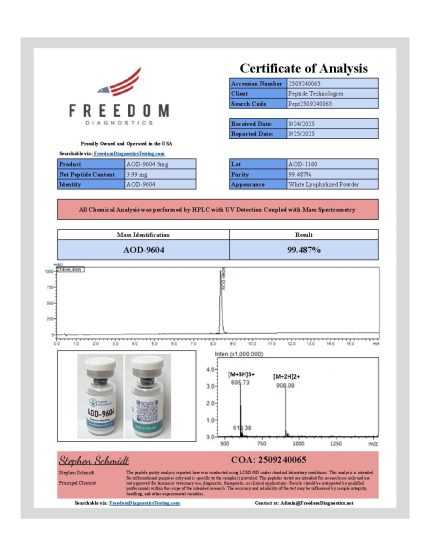
Analytical transparency is the one criterion a buyer can verify before committing, which makes it the highest-signal screen in the framework. A batch certificate of analysis is not proof on its own. What matters is whether it carries the fields a filing needs: an HPLC chromatogram with the method and column conditions, an MS spectrum confirming the expected mass, a purity figure tied to a defined method, and a stated endotoxin result.
Endotoxin thresholds tighten with the assay, and the default specification rarely matches the application. One testing-vendor resource reports that levels below 1.0 EU/mg are generally acceptable for immortalized cell lines, alla 0.05 EU/mg for primary immune cells, ja 0.1 to 0.5 EU/mg for in vivo rodent studies, with USP 〈85〉 injectable limits set at 5 EU/kg/hr on a different unit basis (Creative Proteomics endotoxin and sterility testing resource, päivätty). That is a single vendor source, and the USP 〈85〉 figure should be re-verified against the chapter itself before it anchors a specification.
Rehellinen rajoitus: USP’s 〈1503〉 chapter on synthetic peptide quality attributes and the ICH Q6B framework for justified specifications could not be read in full text in this pass, so the documentation argument here rests on supplier-side and secondary material rather than the standards themselves.
Kriteeri 4: Tekninen yhteistyö ja laajennettu kanavanvaihto
Technical collaboration is what decides whether responsiveness, modifications and analytical transparency survive the jump from pilot to commercial batch. A supplier can look strong at milligram scale and still fail the handoff: purity drifts, batch-to-batch comparability weakens, and the receiving team inherits a method it cannot reproduce. Peptide CDMO technical collaboration is therefore a selection criterion, not a courtesy.
MOL Muutokset, as one example inside this framework, describes the two sourcing extremes it positions against: “choosing either a single tier-1 contract development and manufacturing organization (CDMO) tai luottaa yksinomaan edulliseen hintaan, vahvistamaton luettelon toimittaja. Both extremes introduce systemic risk.” The same page states Peptidikemia that a warm second source, kept alive through minor annual order allocations, cuts emergency supplier transition timelines from 12 months to under 3 viikkoa. Treat that as the brand’s stated service model, not an independent benchmark; the operational case for a warm second source rests on the buyer’s own continuity planning.
The cheap alternative fails in a predictable place. Suppliers promising rapid turnaround often lack cleanroom sterility controls, vankka analyyttinen instrumentointi, tai erien välinen vertailu, which is exactly the documentation a commercial batch needs. Peptidisynteesiyritykset
Kuinka soveltaa viitekehystä
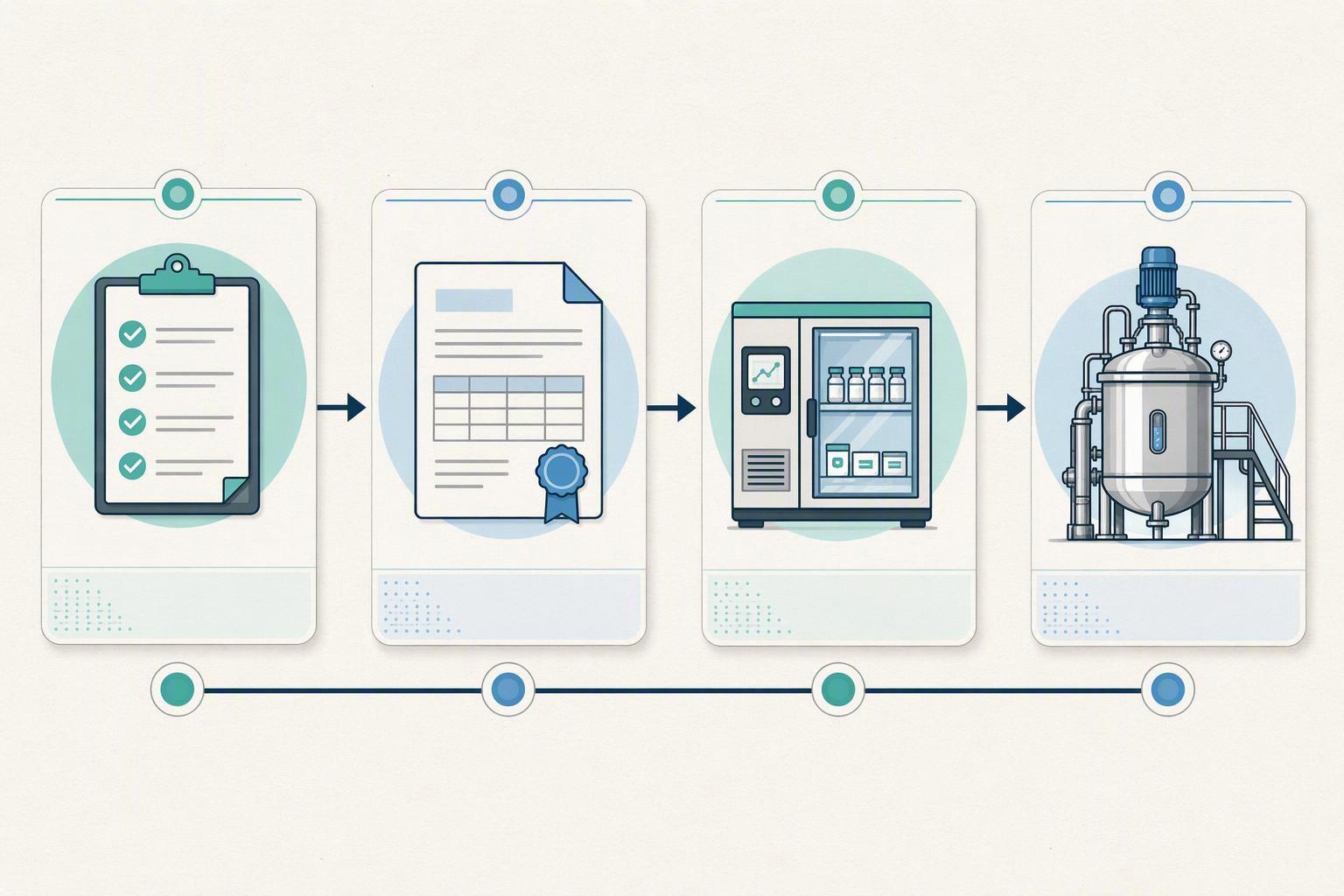
Start by sending a supplier the sequence that actually gives you trouble, not a catalog peptide. A trial synthesis on your real difficult sequence is the fastest way to see whether the responsiveness claim holds, and it takes days rather than a full evaluation cycle. Isotooppimerkityt peptidit
-
Send the difficult sequence for a trial synthesis. päivää. This is the quickest filter you have.
-
Request the modification list with named chemistries. Ask which of them survive scale-up, not just which appear in a brochure. Nopea voitto.
-
Request a real batch CoA and read the method fields, not only the purity number. Nopea voitto.
-
Open a tech-transfer conversation covering the mg to kg path and the documentation handoff. Pidempiaikainen.
-
Qualify a warm second source with a minor annual allocation. Pidempiaikainen, and the step most buyers skip until an emergency forces it.
Scoring sheet: carry the four criteria (reagointikykyä, erikoistuneet muutokset, analyyttinen läpinäkyvyys, technical collaboration) into the supplier call as a one-page grid, and score each answer against the artifact you were shown.
Measure the framework by method-transfer elapsed time, batch-to-batch comparability, and whether the analytical package clears your filing review without follow-up queries. Those three signals are the operational lever behind Bachem’s H1 2025 tuloksia, where utilization, not catalog breadth, moved the margin line. Expect the first three steps to change your shortlist within one evaluation cycle.
Varoitukset: Missä perinteinen näkemys edelleen pätee
For a late-stage commercial program with fixed, multi-year demand, tier-1 scale and a regulatory track record genuinely reduce risk, and the four criteria above do not replace that. Slot scheduling and minimum order quantities bite hardest at development and early-clinical scale, which is where this framework applies most strongly.
Two limits are worth naming. The GenScript side of this comparison rests on thinner public disclosure than the Bachem side, so part of the asymmetry may reflect disclosure practice rather than capability. And Bachem’s margin compression is self-declared as planned and transitory, a fairer framing than margin pressure alone; the company’s stated 2026 ambition of more than CHF 1 billion in sales and over 30% EBITDA-marginaali, as of the H1 2025 vapauttaa, is not the profile of a supplier losing ground.
The claim is not that scale is worthless. It is that scale has stopped being sufficient on its own.
Usein kysytyt kysymykset
But doesn’t a tier-1 CDMO’s scale protect us if demand spikes?
Scale protects the supplier’s throughput, not your queue position. The company’s stated 2026 ambition at large CDMOs is to fill capacity with programs already holding reserved slots, so a spike is exactly when an unreserved buyer waits longest. The protection you want is a warm second source with a reserved slot, not a bigger primary.
Entä jos olemme jo pätevöineet suuren toimittajan ja vaihtaminen on kallista?
You do not have to switch. Qualify a second source alongside the incumbent, which is what the operational case for a warm second source describes: minor annual allocations keep the relationship and the documentation current, so an emergency transition is a phone call rather than a fresh qualification. The incumbent keeps the volume; the second source keeps you covered.
Miten vastaat väitteeseen, jonka mukaan putiikkitoimittajat eivät voi tukea kaupallisia määriä??
That argument conflates a boutique’s catalog business with its custom peptide synthesis capabilities. GenScript’s FY2025 results show how license-driven growth qualification works at scale, and the same qualification logic applies downward: what matters is whether the supplier can document method transfer, lot comparability and scale-up continuity, not whether its name is large. Ask for the transfer record, not the headcount.
Isn’t analytical transparency just a matter of asking for the CoA?
Ei. A CoA is a summary; peptide analytical data transparency is whether the underlying method, the lot it was run on and the specification it was judged against travel with the number. Endotoxin thresholds tighten with the assay, so a certificate that reports a value without the method and limit tells you little. Ask which assay, which lot, which specification, and whether peptide CDMO technical collaboration extends to reviewing the data with you.
Johtopäätös: Mitä ostajien tulisi kysyä 2026
Scale is now table stakes in peptide supplier selection criteria, and the four criteria that actually separate suppliers are responsiveness, erikoistuneet muutokset, analytical transparency and technical collaboration. Bachemin H1 2026 results make the point: net sales rose 4.3% to CHF 326.4 million while the EBITDA margin fell 3.7 percentage points to 25.4% (Bachemin H1 2026 tuloksia, heinäkuu 2026). Capacity growth no longer guarantees pricing power or service quality.
So ask for artifacts, ei vakuutuksia. Request a representative CoA with the analytical method behind each specification, a written list of modifications the supplier has actually delivered, and a named technical contact who owns the scale-up handoff. Where suppliers publish nothing comparable, treat the gap as a finding: GenScript’s FY2025 results show how little peptide-specific disclosure reaches buyers who need to compare (GenScriptin vuoden 2025 tulokset). The market improves when the CoA, the modification list and the transfer path become the comparison surface.
If you are evaluating suppliers now, request a representative CoA package and a technical consultation before you commit to a slot.
Tämän artikkelin on julkaissut MOL Changes, which offers custom peptide synthesis and analytical documentation services. Consider that interest when weighing the framework above.