Mikä kimmoisa peptidi R&D-ohjelmat itse asiassa muuttuvat, kun budjetti liikkuu
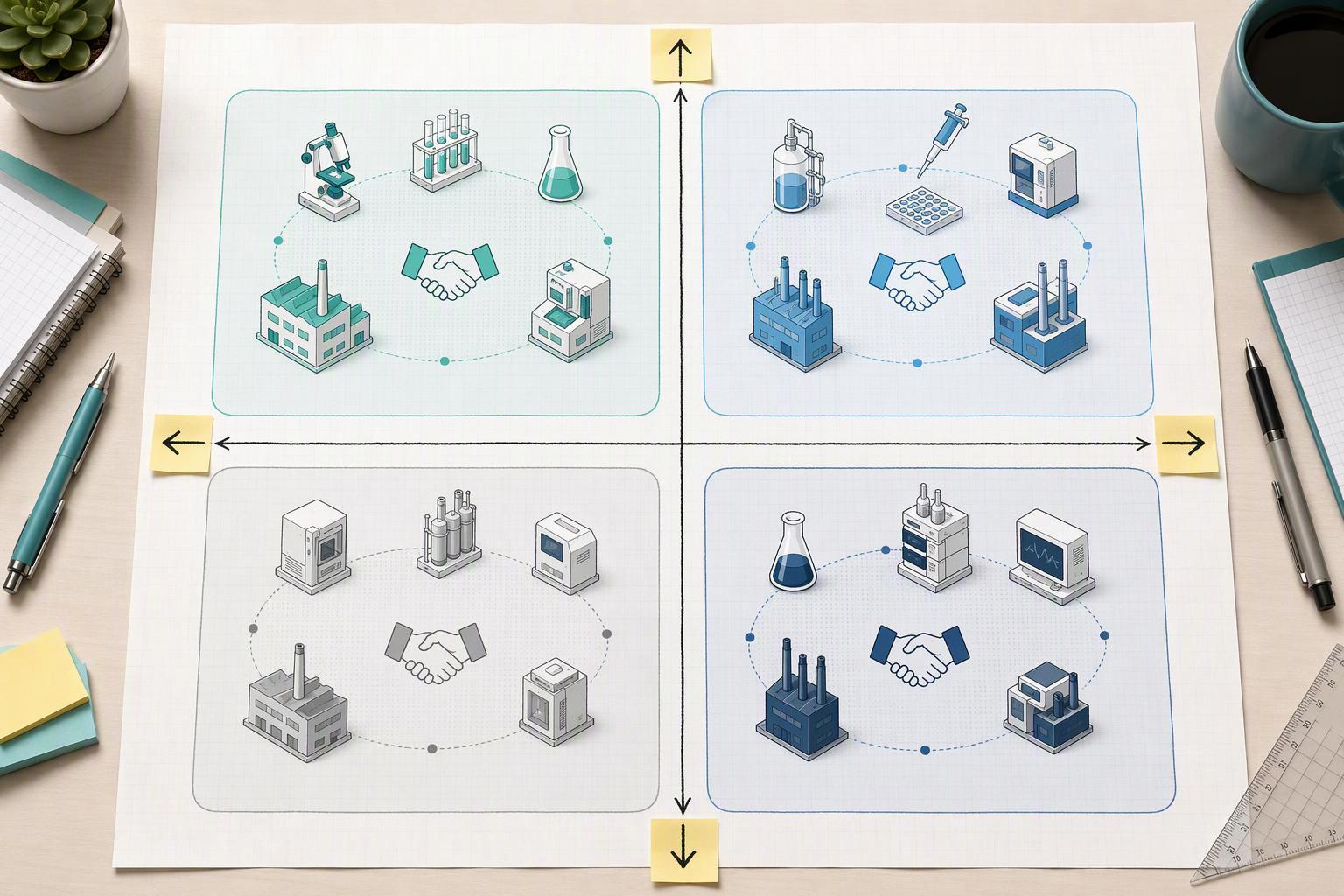
Resilienssi peptidissä R&D on ohjelman suunnittelun ominaisuus, ei toimitusketjuista tai molekyylien stabiilisuudesta. Kestävä ohjelma on sellainen, jonka seuraava virstanpylväs selviää rahoitussokista: sarja etenee edelleen, tietopaketti kasvaa edelleen, eikä mikään yksittäinen päätös sitoo koko talousarviota yhteen peruuttamattomaan vaiheeseen.
Tällä erolla on merkitystä, koska työn takana olevat rahat liikkuvat jonkun toisen kalenterissa. Liittovaltion rahoitus oli otettu huomioon 55% ($59.7 miljardia) -lta $108.8 miljardia käytetty Yhdysvaltain akateemiseen R&D vuonna 2023, institutionaalisten rahastojen kanssa 25% sekä yritykset ja valtion tai paikallishallinnon kukin osallistuvat 5% to 6% (NSF:n HERD Survey, haettu 2026-09-24). Koska liittovaltion osuus akateemista R&D on enemmistö, määrärahatason viive saavuttaa laboratoriotason suunnittelun yhden budjettisyklin sisällä.

Lähtökohta ansaitsee tarkkuuden, vaikka. Vuoden 2026 NIH- ja NSF-vähennykset olivat budjettipyyntö, ei ole vahvistettu määräraha; Kongressi piti NIH-rahoituksen edellisten vuosien tasolla. Ohjelman saavuttava shokki on yleensä aikajanan muutos, ei leikkausta.
Neljä kriteeriä määrää, kuinka paljon iskusta ohjelma imee: IP herkkyys, menetelmän omistus, kapasiteetin vaihtelu, ja siirrettävyyttä. Tämän oppaan loppuosassa arvioidaan jokaista vipua niitä vastaan.
Vihjeille: Uudelleen suunniteltujen ohjelmien toistuva kuvio on, että uponneet kustannukset, ei synteesin vaikeus, se tappaa heidät. Kerran erä, hartsi, tai menetelmäsiirtopaketti maksetaan, tiimit puolustavat sitä kauan yli pisteen, jossa data oikeuttai lopettamisen.
Harjoitella 1: Käytä joustavaa ulkoistamista kapasiteettipuskurina, ei ole oletusarvo
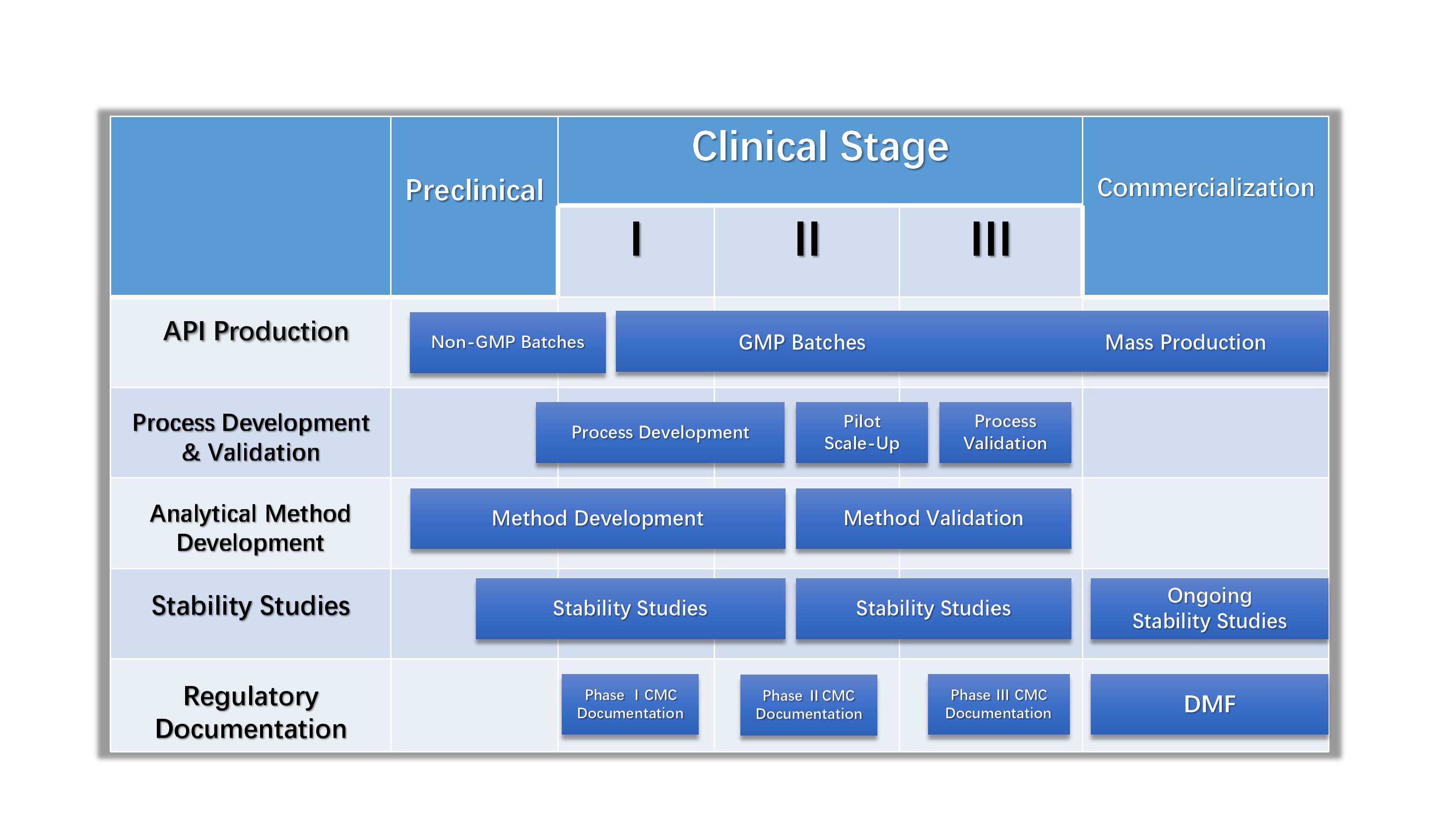
Vaihtoehtoinen toimittaja on hyödyllinen vasta sen laajuuden jälkeen, menetelmät ja tietueet on hyväksytty. Ennen apurahamenojen suuntaamista, tutustu palkintoehtoihin ja NIAID:n ennakkohyväksyntäohjeet. Se, tarvitseeko budjettimuutos hyväksyntää, riippuu palkinnosta ja laajuuden muutoksista; Älä pidä prosenttiosuutta yhdestä politiikan kontekstista yleisenä ostosääntönä.
Kun laajuus on vahvistettu, kelpuutetaan toinen toimittaja siirrettävistä esineistä hinnan sijaan: menetelmäraportit, analyysitodistuksen sisältö, ja LIMS/ELN-valmis dokumentaatio, joka sallii erän liikkua käynnistämättä tiedettä uudelleen.
Julkaistu toimittajalistahinnoittelu osoittaa, miksi kapasiteetti, ei yksikköhinta, on todellinen muuttuja: raakapeptidiajot $3.24 aminohappoa kohden noin kahden viikon kuluttua, samalla kun >98% puhtaus juoksee $19.53 aminohappoa kohden kahden tai kolmen viikon kuluttua, vähimmäismaksulla $80 peptidiä kohti (julkaistu toimittajalistahinnoittelu, haettu 2026). Käsittele näitä listahintoina yhden toimittajan julkaisemista toimitusajoista, ei tarkastettuja tapahtumatietoja; ne osoittavat kompromissin muodon, ei mitä ohjelmasi maksaa.
|
Puhtaustaso |
Listahinta (per aa) |
läpimenoaika |
|---|---|---|
|
Raaka |
$3.24 |
~2 viikkoa |
|
>75% |
$8.10 |
Ei ilmoitettu |
|
>85% |
$10.15 |
Ei ilmoitettu |
|
>90% |
$12.09 |
Ei ilmoitettu |
|
Peptidi >95% |
$14.88 |
Ei ilmoitettu |
|
P-aineen synteesi >98% |
$19 Synteesi Kuinka säilyttää peptidit Yksinkertaisesta peptidistä .53 |
2-3 viikkoa Tetras-peptidisyntetisaattori Peptidi S |
Taulukon huomautus: yhden toimittajan julkaisemat listahinnat ja toimitusajat, haettu 2026. Ei tarkastettuja tapahtumatietoja, eikä toimittajien vertailua.
Sopimus virstanpylväissä, joissa on määritellyt suoritteet ja hyväksymiskriteeri jokaisella portilla, joten pysäytetty erä pysäyttää yhden virstanpylvään ohjelman sijaan. Vikatila on yhden lähteen lukitus: when a supplier’s slot moves, the program waits, and if no transfer package exists, the science restarts from the sequence design.
Harjoitella 2: Luo mukautettu synteesi niin, että budjettimuutos pysäyttää yhden erän, ei ohjelma
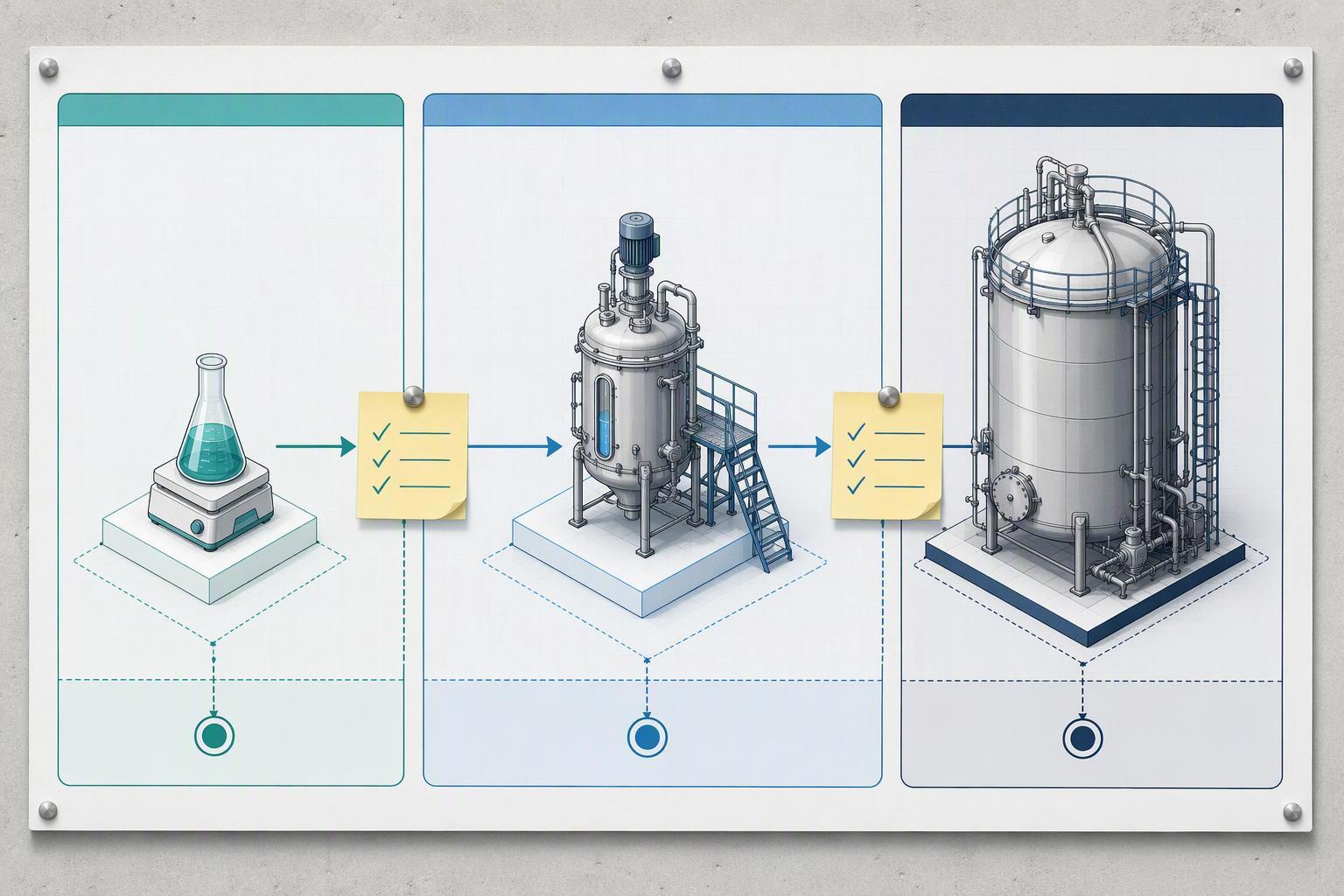
Staged custom peptide synthesis splits a sequence into three decision points instead of one purchase: a discovery batch that tests whether the chain can be made at all, a feasibility confirmation that the route reproduces, and a scale-up gate that releases the larger order. The reason to bother is mechanical. On-resin aggregation and β-sheet formation in hydrophobic or β-branched stretches collapse resin swelling and bury the reactive N-terminus, so couplings and deprotections run incomplete. Because synthesis continues after a stalled coupling, missed additions accumulate as truncation and deletion impurities that resist later removal, and overall yield falls exponentially with step count (PMC7064641, julkaistu 2020-03-04).
Five sequence classes break first-pass synthesis most often: pitkä ketju, hydrofobinen, aggregaatioaltis, multi-disulfide, and multi-site-modified. Each one is cheaper to fail at 5 mg than at 50 mg.
Illustrative failure mode: a batch ordered before solubility screening can aggregate under the assay conditions, even if synthesis succeeds. This is a planning example, not a reported MOL Changes project. Test the relevant concentration, buffer and handling conditions before committing a larger lot.
Harjoitella 3: Tarkista luettelo peptideistä ennen kuin otat käyttöön mitään
Catalog peptide screening is the cheapest way to keep a program moving when a budget moves, because it converts an open-ended synthesis commitment into a small, reversible purchase. The cost relationship is consistent across vendor list pricing: a custom sequence typically runs about 1.4× to 3.3× the catalog equivalent, widening to 2× to 4× under more conservative vendor guidance. Treat those multiples as list-price comparisons from supplier catalogs, not as quotes, and confirm them against current pricing before you build a budget line on them.
The gate criterion is testable. Catalog material is sufficient when the answer you need does not depend on the lot’s impurity profile: triage of a sequence series, epitope mapping, määrityksen kehittäminen, and method familiarization all qualify. It is insufficient when the impurity profile on the question: unusual modifications, tight impurity control, project-specific labeling, or anything that will feed a release specification.
Key Takeaway Screen with catalog peptides for triage, epitope mapping, määrityksen kehittäminen, and method familiarization. Commission custom synthesis when the work involves unusual modifications, tight impurity control, project-specific labeling, or any result that feeds a release specification.
Vikatila on hiljainen. A screening result gets invalidated later because the catalog lot’s purity grade never matched the intended use, and the assay has to be repeated on material that does.
Harjoitella 4: Yhdistä analyyttinen paketti päätösporttiin, ei tuotetasolle
Fit-for-purpose analytical testing means the package is set by what the next decision requires, not by a supplier’s product tier. A triage decision on a new sequence needs crude analysis and identity confirmation. Releasing a screening lot needs HPLC plus mass spectrometry. Vastasisältö, liuotinjäännös ja vesi, and endotoxin testing belong at the preclinical or pilot gate, where downstream use makes them material.
|
Päätöksen portti |
Tests the gate requires |
What the package does not establish |
|---|---|---|
|
Sequence triage |
Crude analysis, henkilöllisyyden vahvistus |
Puhtaus, vastaioni, liuotinjäännös, endotoxin |
|
Screening-lot release |
HPLC, massaspektrometria |
Counterion, liuotinjäännös, endotoxin |
|
Preclinical or pilot |
Counterion, liuotinjäännös ja vesi, endotoxin where downstream use requires it |
Nothing beyond the validated scope of each method |
⚠️ Varoitus: A single HPLC purity figure does not establish identity, vastaionisisältöä, liuotinjäännös, or endotoxin status. Treating one number as a release specification is the most common way a reduced package stops being defensible.
A neutral example of scope-setting: a supplier’s analytical package for a screening lot can be scoped to HPLC and MS only, with counterion and residual solvent deferred to the preclinical gate. That is a scope decision, not a quality claim, and it should be written into the method-transfer package so the next gate inherits it.
Tee sopimus virstanpylväiden ympärillä, jotta ohjelma voi laajentua tai supistua
Contract structure and the scientific plan both affect whether a program can be re-scoped. Stage work into technically meaningful deliverables with explicit acceptance and restart criteria. A smaller purchase is useful only if it still produces interpretable evidence for the next decision.
The internal counterpart is already familiar. Federal awards carry prior-approval thresholds and no-cost extension mechanics precisely because plans move, and the same logic applies to a supplier agreement. Research on how funding pauses affect labs reports that what works is protecting a small defensible core question, staging work into small droppable deliverables with gate-based decisions and written decision records, and tracking supply burn rates before re-planning. What fails is assuming money arrives on time, writing oversized milestones, and choosing to wait and see (research on how funding pauses affect labs, 2025).
Write the deliverables out by name: batch release documentation, menetelmäraportit, vakaustiedot, and a named transfer package. Then price each one separately.
The counter-perspective is real but bounded. A PLOS One study of funding delays found spending losses were partially mitigated when scientists held other grants, and bridge funding, carryover and internal reserves keep some labs running for months. The claim that philanthropy or industry can replace federal-scale funding is not supported by the sources retrieved.
Usein kysytyt kysymykset
Kuinka kauan uudelleen suunniteltu peptidiohjelma voi toimia siirtomateriaalilla ja siltarahoituksella?
Long enough to finish characterization of batches already in process, and rarely much longer. Carryover covers the assays and stability timepoints attached to material you already hold; bridge funding typically covers one additional synthesis campaign at reduced scope. Neither extends a program that has not yet committed to a route, because the feasibility work itself is the cost you deferred. Treat the combined runway as a bridge to a decision, not as a substitute for one, and set the re-planning checkpoint before the bridge is drawn rather than after.
Voidaanko luettelopeptidiä käyttää vapautumismäärityksessä?
Ei. Catalog material is qualified against the vendor’s own specification, which is not the specification your release method was validated to measure. It is appropriate for screening, for method development, and for system suitability checks where the certificate of analysis documents the purity grade and counter-ion content you need. The moment the result feeds a release decision or a regulatory filing, the material has to come from the controlled route with the documentation chain behind it.
Mitä meidän pitäisi tehdä, kun synteesireitti epäonnistuu toteutettavuusportilla?
Change the sequence or change the route, and do it before scale-up. The failure modes that surface at this gate are usually truncation and deletion impurities, plus aggregation in hydrophobic or multi-disulfide sequences. A route that fails here will not improve with more material; it will produce more of the same impurity profile at greater cost. Options are to reorder the coupling strategy, shorten the target, or accept a lower yield with a purification step that removes the truncated species. Decide which before committing the next batch.
Onko supistettu analyyttinen paketti hyväksyttävä IND:n mahdollistavaan tutkimukseen?
Only where the reduced package still meets the governing standard for the attribute in question. Identity and purity expectations sit with ICH Q2(R2) for method validation, sterility with USP <71>, bacterial endotoxins with USP <85>, and quality-system documentation with ISO 13485 tai ISO 9001 depending on your scope. A fit-for-purpose package drops tests the decision does not depend on; it does not drop a compendial test the filing requires. If you cannot name the standard that governs a test, that test is not a candidate for removal.
Johtopäätös
A resilient peptide R&D program is not a cheaper program. It is one where four levers move together as a single stage-gated model: flexible peptide outsourcing as a capacity buffer, staged custom peptide synthesis that stops at a batch boundary rather than a program boundary, catalog peptide screening before any custom order, and fit-for-purpose analytical testing matched to the decision each gate actually makes. Each lever is only as strong as the contract and the analytical scope behind it.
The thesis from the start still holds. The schedule moved; the evidence bar did not. A tighter budget changes how much you commit at each gate, not what counts as a defensible release decision, and no reduced package removes the need to know what a method can and cannot detect.
If the next step is a concrete artifact rather than a principle, request a method-transfer package or talk to a technical expert about the analytical scope your gates require.