Quale peptide resiliente R&I programmi D effettivamente cambiano quando il budget cambia
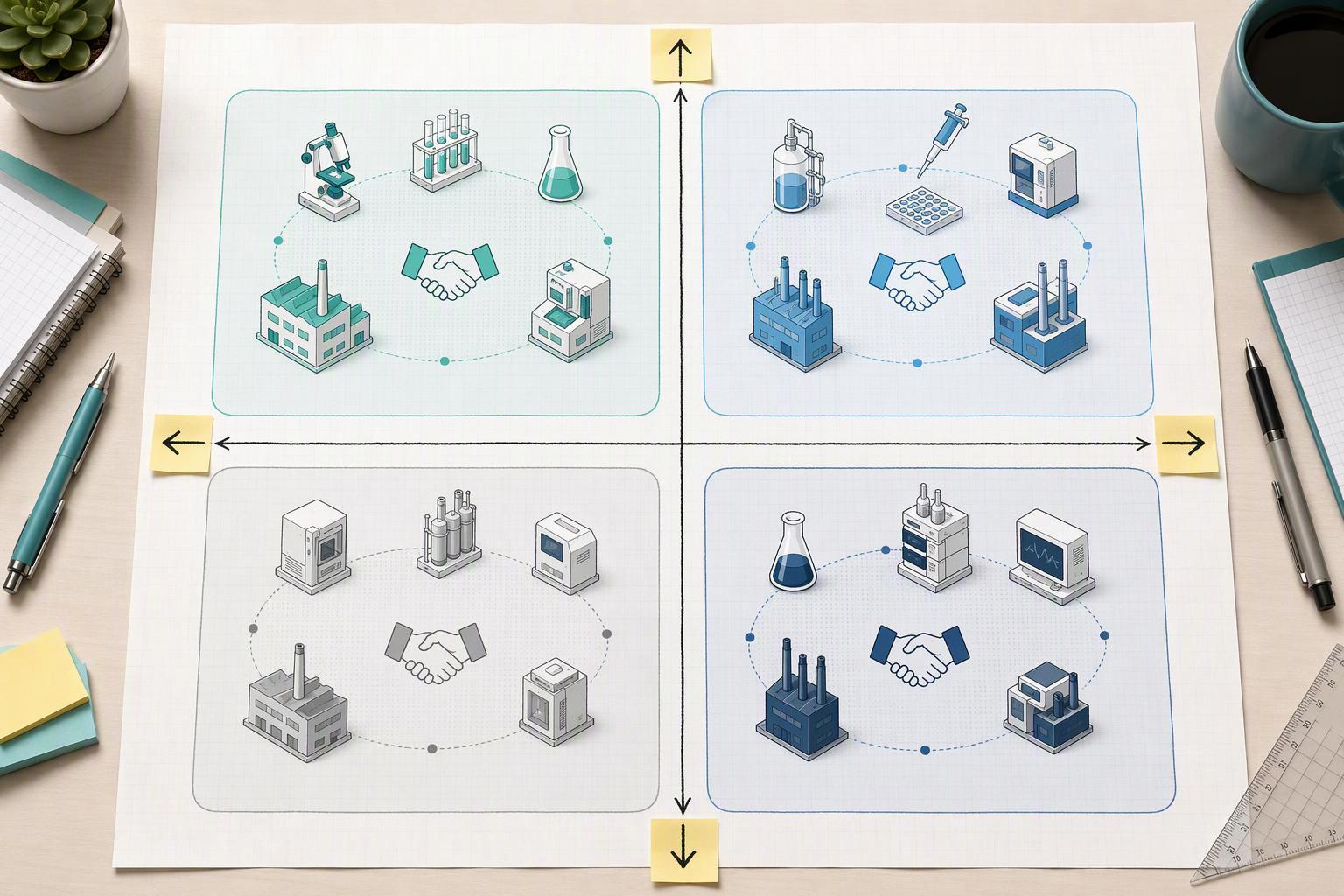
Resilienza nel peptide R&D è una proprietà della progettazione del programma, non delle catene di approvvigionamento o della stabilità molecolare. Un programma resiliente è quello il cui traguardo successivo sopravvive a uno shock finanziario: la sequenza avanza ancora, il pacchetto dati cresce ancora, e nessuna singola decisione impegna l’intero bilancio in un passo irreversibile.
Questa distinzione è importante perché il denaro dietro il lavoro si sposta nel calendario di qualcun altro. Il finanziamento del governo federale è stato contabilizzato 55% ($59.7 miliardi) del $108.8 miliardi spesi per l’accademico statunitense R&D nell'anno fiscale 2023, con la fornitura di fondi istituzionali 25% e le imprese e il governo statale o locale contribuiscono ciascuno 5% A 6% (l’indagine HERD della NSF, recuperato 2026-09-24). Perché la quota federale del accademico R&D è la maggioranza, un ritardo a livello di stanziamenti raggiunge la pianificazione a livello di laboratorio entro un ciclo di budget.

La premessa merita precisione, Anche se. Le riduzioni NIH e NSF per l'anno fiscale 2026 sono state una richiesta di budget, non uno stanziamento adottato; Il Congresso ha mantenuto i finanziamenti del NIH alla pari con gli anni precedenti. Lo shock che raggiunge un programma è solitamente uno spostamento della sequenza temporale, nemmeno un taglio.
Quattro criteri determinano la quantità di shock assorbita da un programma: Sensibilità IP, proprietà del metodo, variabilità della capacità, e trasferibilità. Il resto di questa guida valuta ogni leva rispetto a loro.
Per Suggerimento: Lo schema ricorrente nei programmi ripianificati è quello dei costi irrecuperabili, non difficoltà di sintesi, è ciò che li uccide. Una volta per lotto, una resina, oppure viene pagato un pacchetto di trasferimento del metodo, le squadre lo difendono ben oltre il punto in cui i dati giustificavano l’interruzione.
Pratica 1: Utilizzare l’outsourcing flessibile come buffer di capacità, non un valore predefinito
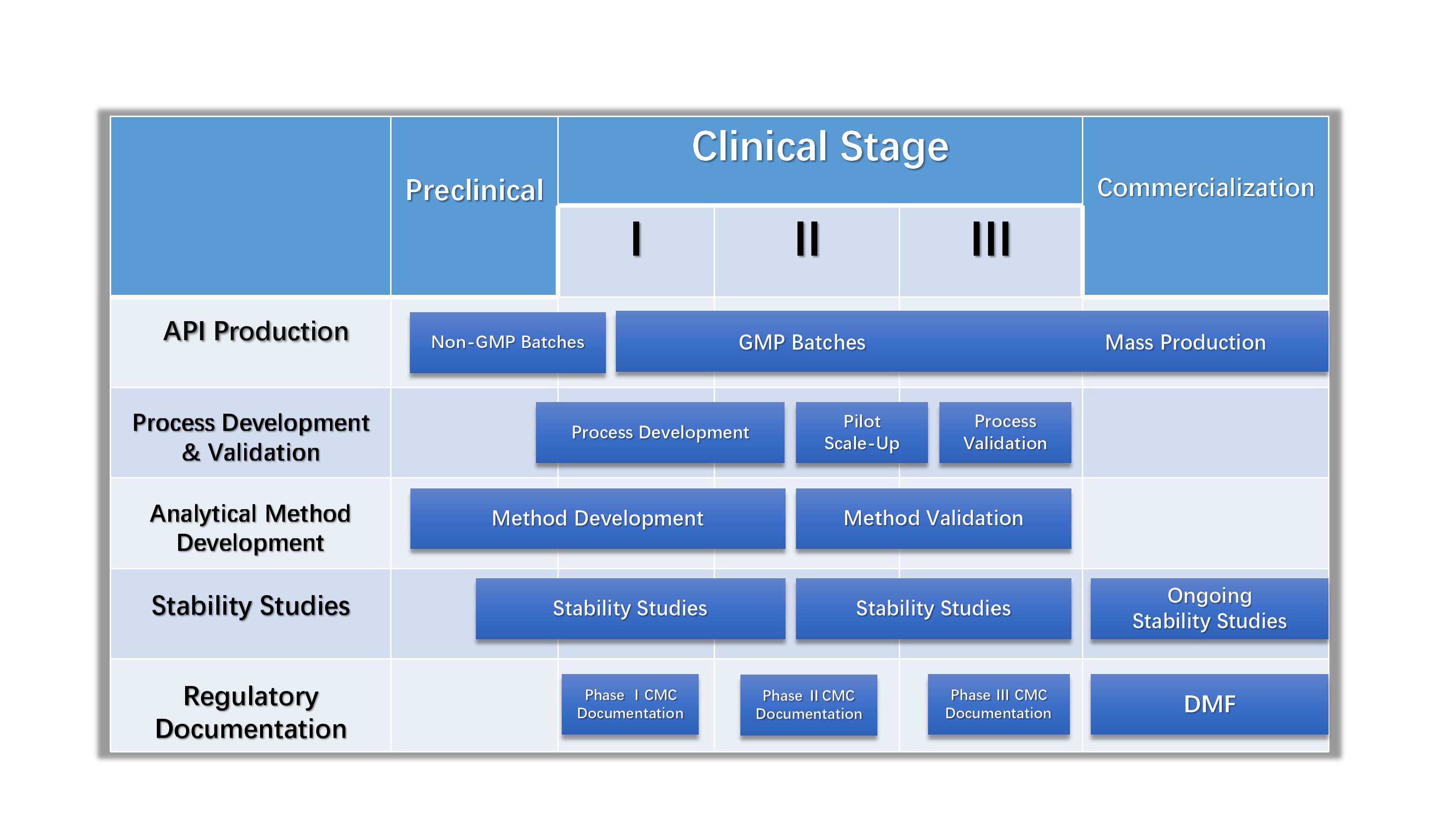
Un fornitore alternativo è utile solo dopo il suo ambito, i metodi e le registrazioni sono stati qualificati. Prima di reindirizzare la spesa per le sovvenzioni, consultare le condizioni di aggiudicazione e Guida all’approvazione preventiva del NIAID. La necessità di approvazione di una modifica al budget dipende dall'aggiudicazione e da eventuali modifiche dell'ambito; non trattare una percentuale proveniente da un contesto politico come una regola di acquisto universale.
Una volta fissato l'ambito, qualificare un secondo fornitore in base agli artefatti trasferibili piuttosto che in base al prezzo: rapporti sul metodo, contenuto del certificato di analisi, e documentazione pronta per LIMS/ELN che consente di spostare un batch senza riavviare la scienza.
I prezzi pubblicati nell'elenco dei fornitori mostrano il motivo della capacità, non il costo unitario, è la vera variabile: corse del peptide grezzo $3.24 per amminoacido a circa due settimane, Mentre >98% corre la purezza $19.53 per amminoacido a due o tre settimane, con un addebito minimo di $80 per peptide (prezzi dell'elenco dei fornitori pubblicati, recuperato 2026). Trattali come prezzi di listino derivanti dai tempi di consegna pubblicati di un fornitore, dati delle transazioni non controllati; indicano la forma del compromesso, non quello che pagherà il tuo programma.
|
Livello di purezza |
Prezzo di listino (per aa) |
Tempi di consegna |
|---|---|---|
|
Greggio |
$3.24 |
~2 settimane |
|
>75% |
$8.10 |
Non dichiarato |
|
>85% |
$10.15 |
Non dichiarato |
|
>90% |
$12.09 |
Non dichiarato |
|
Peptide >95% |
$14.88 |
Non dichiarato |
|
$19 Sintesi Come conservare i peptidi Del Peptide Semplice .53 |
2-3 settimane Sintetizzatore di peptidi Tetras Peptide S |
Nota sulla tabella: prezzi di listino e tempi di consegna pubblicati da un unico fornitore, recuperato 2026. Dati delle transazioni non controllati, e non un confronto tra fornitori.
Contratto in tappe con risultati definiti e un criterio di accettazione a ogni cancello, quindi un batch interrotto interrompe un'attività cardine anziché il programma. La modalità di errore è il lock-in da un'unica fonte: when a supplier’s slot moves, the program waits, and if no transfer package exists, the science restarts from the sequence design.
Pratica 2: Metti in scena la sintesi personalizzata in modo che una modifica al budget interrompa un batch, non il programma
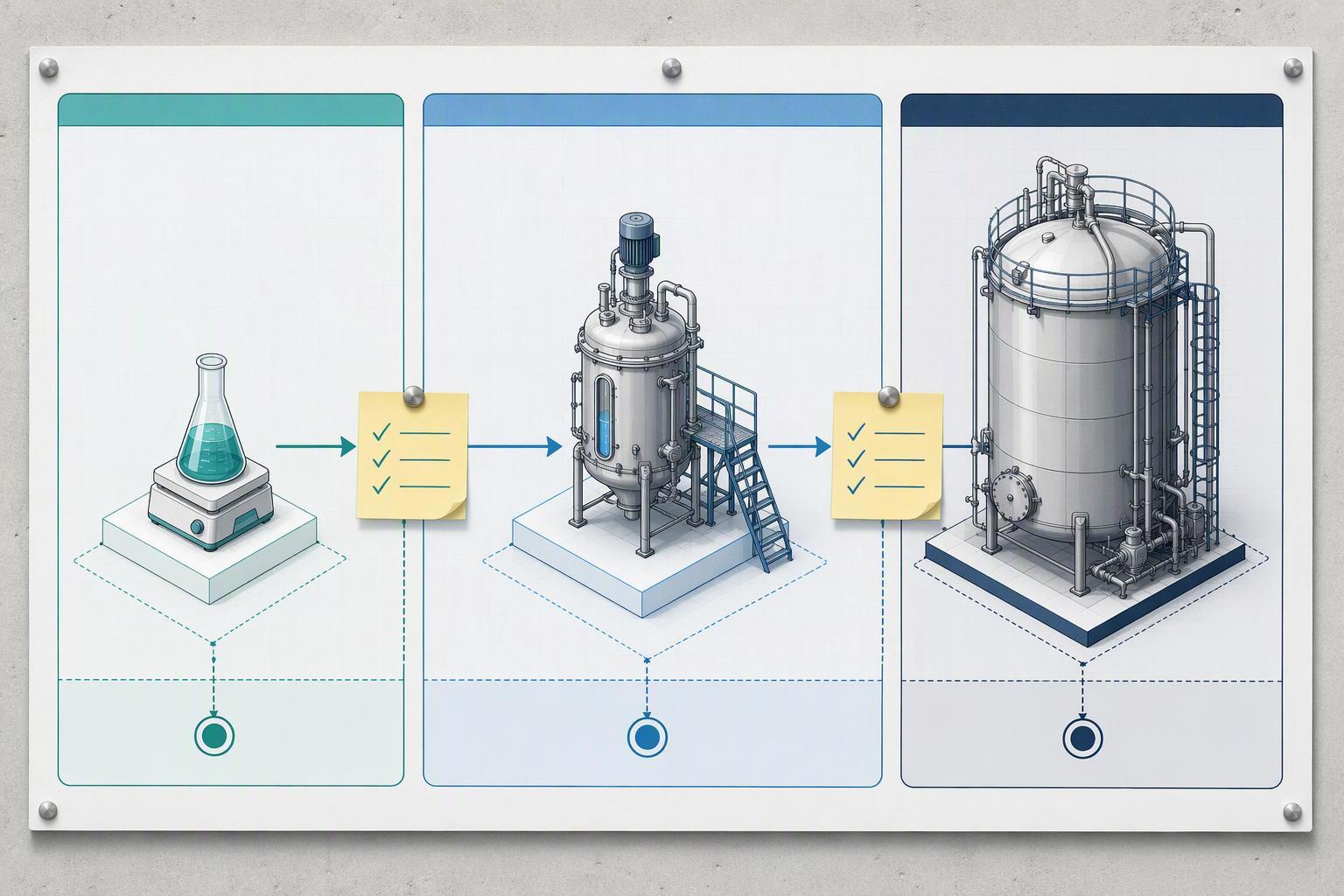
Staged custom peptide synthesis splits a sequence into three decision points instead of one purchase: a discovery batch that tests whether the chain can be made at all, a feasibility confirmation that the route reproduces, and a scale-up gate that releases the larger order. The reason to bother is mechanical. On-resin aggregation and β-sheet formation in hydrophobic or β-branched stretches collapse resin swelling and bury the reactive N-terminus, so couplings and deprotections run incomplete. Because synthesis continues after a stalled coupling, missed additions accumulate as truncation and deletion impurities that resist later removal, and overall yield falls exponentially with step count (PMC7064641, pubblicato 2020-03-04).
Five sequence classes break first-pass synthesis most often: a catena lunga, idrofobo, incline all'aggregazione, multi-disolfuro, and multi-site-modified. Each one is cheaper to fail at 5 mg che a 50 mg.
Illustrative failure mode: a batch ordered before solubility screening can aggregate under the assay conditions, even if synthesis succeeds. This is a planning example, not a reported MOL Changes project. Test the relevant concentration, buffer and handling conditions before committing a larger lot.
Pratica 3: Effettua lo screening con i peptidi del catalogo prima di commissionare qualsiasi cosa
Catalog peptide screening is the cheapest way to keep a program moving when a budget moves, because it converts an open-ended synthesis commitment into a small, reversible purchase. The cost relationship is consistent across vendor list pricing: a custom sequence typically runs about 1.4× to 3.3× the catalog equivalent, widening to 2× to 4× under more conservative vendor guidance. Treat those multiples as list-price comparisons from supplier catalogs, not as quotes, and confirm them against current pricing before you build a budget line on them.
The gate criterion is testable. Catalog material is sufficient when the answer you need does not depend on the lot’s impurity profile: triage of a sequence series, epitope mapping, sviluppo del test, and method familiarization all qualify. It is insufficient when the impurity profile È the question: unusual modifications, stretto controllo delle impurità, project-specific labeling, or anything that will feed a release specification.
Chiave da asporto Screen with catalog peptides for triage, epitope mapping, sviluppo del test, and method familiarization. Commission custom synthesis when the work involves unusual modifications, stretto controllo delle impurità, project-specific labeling, or any result that feeds a release specification.
La modalità di errore è silenziosa. A screening result gets invalidated later because the catalog lot’s purity grade never matched the intended use, and the assay has to be repeated on material that does.
Pratica 4: Abbina il pacchetto analitico al cancello decisionale, non a un livello di prodotto
Fit-for-purpose analytical testing means the package is set by what the next decision requires, not by a supplier’s product tier. A triage decision on a new sequence needs crude analysis and identity confirmation. Releasing a screening lot needs HPLC plus mass spectrometry. Contenuto della controriforma, solvente residuo e acqua, and endotoxin testing belong at the preclinical or pilot gate, where downstream use makes them material.
|
Cancello decisionale |
Tests the gate requires |
What the package does not establish |
|---|---|---|
|
Sequence triage |
Crude analysis, conferma dell'identità |
Purezza, controione, solvente residuo, endotossina |
|
Screening-lot release |
HPLC, spettrometria di massa |
Controriforma, solvente residuo, endotossina |
|
Preclinical or pilot |
Controriforma, solvente residuo e acqua, endotoxin where downstream use requires it |
Nothing beyond the validated scope of each method |
⚠️ Attenzione: A single HPLC purity figure does not establish identity, contenuto di controione, solvente residuo, or endotoxin status. Treating one number as a release specification is the most common way a reduced package stops being defensible.
A neutral example of scope-setting: a supplier’s analytical package for a screening lot can be scoped to HPLC and MS only, with counterion and residual solvent deferred to the preclinical gate. That is a scope decision, not a quality claim, and it should be written into the method-transfer package so the next gate inherits it.
Contrattare attorno alle tappe fondamentali in modo che il programma possa espandersi o contrarsi
Contract structure and the scientific plan both affect whether a program can be re-scoped. Stage work into technically meaningful deliverables with explicit acceptance and restart criteria. A smaller purchase is useful only if it still produces interpretable evidence for the next decision.
The internal counterpart is already familiar. Federal awards carry prior-approval thresholds and no-cost extension mechanics precisely because plans move, and the same logic applies to a supplier agreement. Research on how funding pauses affect labs reports that what works is protecting a small defensible core question, staging work into small droppable deliverables with gate-based decisions and written decision records, and tracking supply burn rates before re-planning. What fails is assuming money arrives on time, writing oversized milestones, and choosing to wait and see (research on how funding pauses affect labs, 2025).
Write the deliverables out by name: batch release documentation, rapporti sul metodo, dati di stabilità, and a named transfer package. Then price each one separately.
The counter-perspective is real but bounded. UN PLOS One study of funding delays found spending losses were partially mitigated when scientists held other grants, and bridge funding, carryover and internal reserves keep some labs running for months. The claim that philanthropy or industry can replace federal-scale funding is not supported by the sources retrieved.
Domande frequenti
Per quanto tempo un programma peptidico ripianificato può funzionare con materiale di riporto e finanziamenti ponte??
Long enough to finish characterization of batches already in process, and rarely much longer. Carryover covers the assays and stability timepoints attached to material you already hold; bridge funding typically covers one additional synthesis campaign at reduced scope. Neither extends a program that has not yet committed to a route, because the feasibility work itself is the cost you deferred. Treat the combined runway as a bridge to a decision, not as a substitute for one, and set the re-planning checkpoint before the bridge is drawn rather than after.
È possibile utilizzare un peptide catalogo per un test di rilascio?
NO. Catalog material is qualified against the vendor’s own specification, which is not the specification your release method was validated to measure. It is appropriate for screening, for method development, and for system suitability checks where the certificate of analysis documents the purity grade and counter-ion content you need. The moment the result feeds a release decision or a regulatory filing, the material has to come from the controlled route with the documentation chain behind it.
Cosa dovremmo fare quando un percorso di sintesi fallisce al livello di fattibilità?
Change the sequence or change the route, and do it before scale-up. The failure modes that surface at this gate are usually truncation and deletion impurities, plus aggregation in hydrophobic or multi-disulfide sequences. A route that fails here will not improve with more material; it will produce more of the same impurity profile at greater cost. Options are to reorder the coupling strategy, shorten the target, or accept a lower yield with a purification step that removes the truncated species. Decide which before committing the next batch.
Un pacchetto analitico ridotto è accettabile per uno studio che consenta l’IND?
Only where the reduced package still meets the governing standard for the attribute in question. Identity and purity expectations sit with ICH Q2(R2) for method validation, sterility with USP <71>, bacterial endotoxins with USP <85>, and quality-system documentation with ISO 13485 o ISO 9001 depending on your scope. A fit-for-purpose package drops tests the decision does not depend on; it does not drop a compendial test the filing requires. If you cannot name the standard that governs a test, that test is not a candidate for removal.
Conclusione
A resilient peptide R&D program is not a cheaper program. It is one where four levers move together as a single stage-gated model: flexible peptide outsourcing as a capacity buffer, staged custom peptide synthesis that stops at a batch boundary rather than a program boundary, catalog peptide screening before any custom order, and fit-for-purpose analytical testing matched to the decision each gate actually makes. Each lever is only as strong as the contract and the analytical scope behind it.
The thesis from the start still holds. The schedule moved; la barra delle prove no. A tighter budget changes how much you commit at each gate, not what counts as a defensible release decision, and no reduced package removes the need to know what a method can and cannot detect.
If the next step is a concrete artifact rather than a principle, request a method-transfer package or talk to a technical expert about the analytical scope your gates require.