어떤 탄력있는 펩타이드 R&D programs actually change when a budget moves
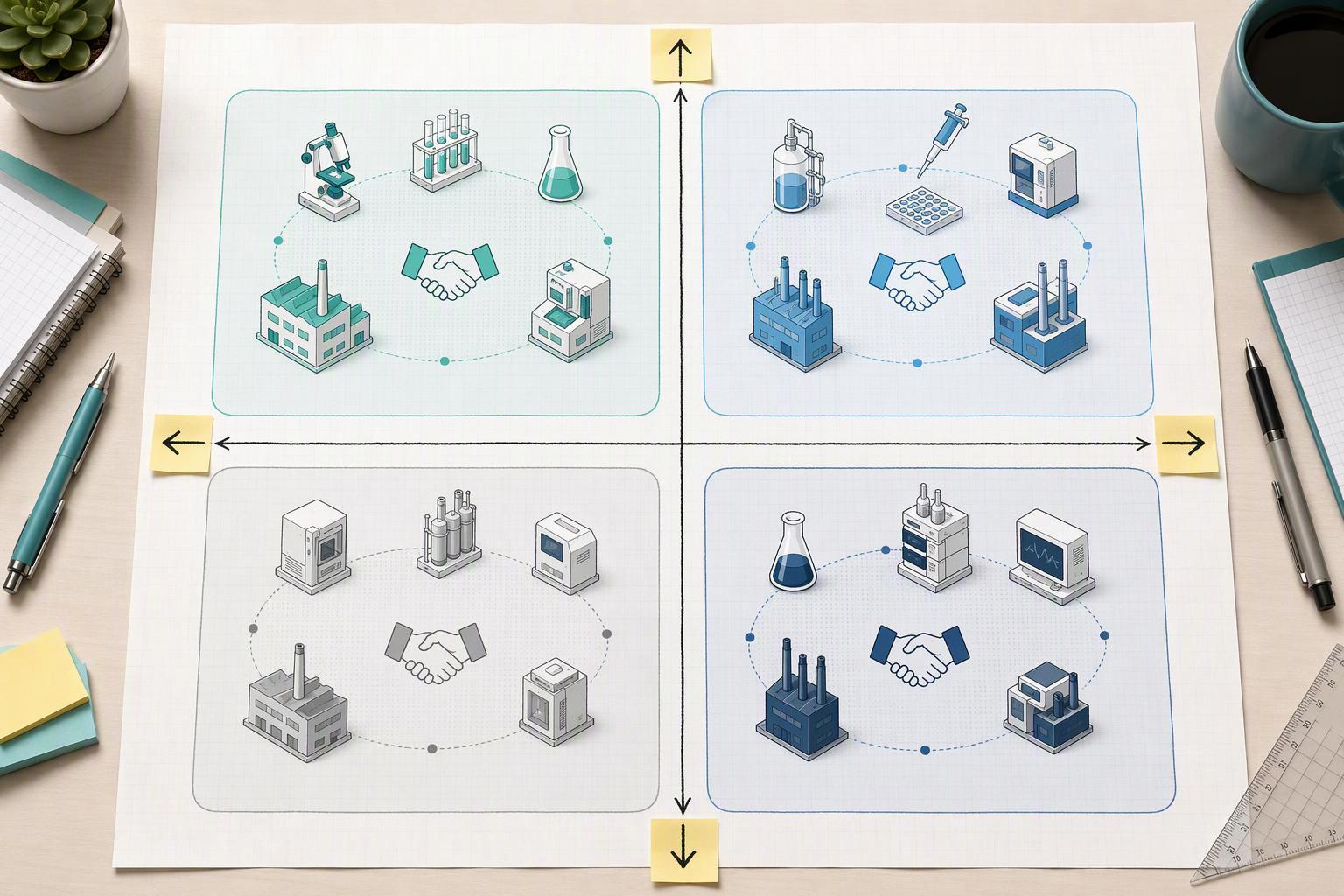
Resilience in peptide R&D는 프로그램 설계의 속성입니다., not of supply chains or molecular stability. A resilient program is one whose next milestone survives a funding shock: the sequence still advances, the data package still grows, and no single decision commits the whole budget to one irreversible step.
That distinction matters because the money behind the work moves on someone else’s calendar. Federal government funding accounted for 55% ($59.7 10억) ~의 $108.8 billion spent on US academic R&D in FY2023, with institutional funds supplying 25% and business and state or local government each contributing 5% 에게 6% (the NSF’s HERD Survey, 검색됨 2026-09-24). Because the federal share of academic R&D is the majority, a delay at the appropriations level reaches lab-level planning within one budget cycle.

The premise deserves precision, though. The FY2026 NIH and NSF reductions were a budget request, not an enacted appropriation; Congress maintained NIH funding on par with previous years. The shock that reaches a program is usually a timeline shift, not a cut.
Four criteria decide how much of that shock a program absorbs: IP sensitivity, method ownership, capacity variability, and transferability. The rest of this guide evaluates each lever against them.
팁의 경우: The recurring pattern across re-planned programs is that sunk cost, not synthesis difficulty, is what kills them. Once a batch, a resin, or a method-transfer package is paid for, teams defend it long past the point where the data justified stopping.
관행 1: Use flexible outsourcing as a capacity buffer, not a default
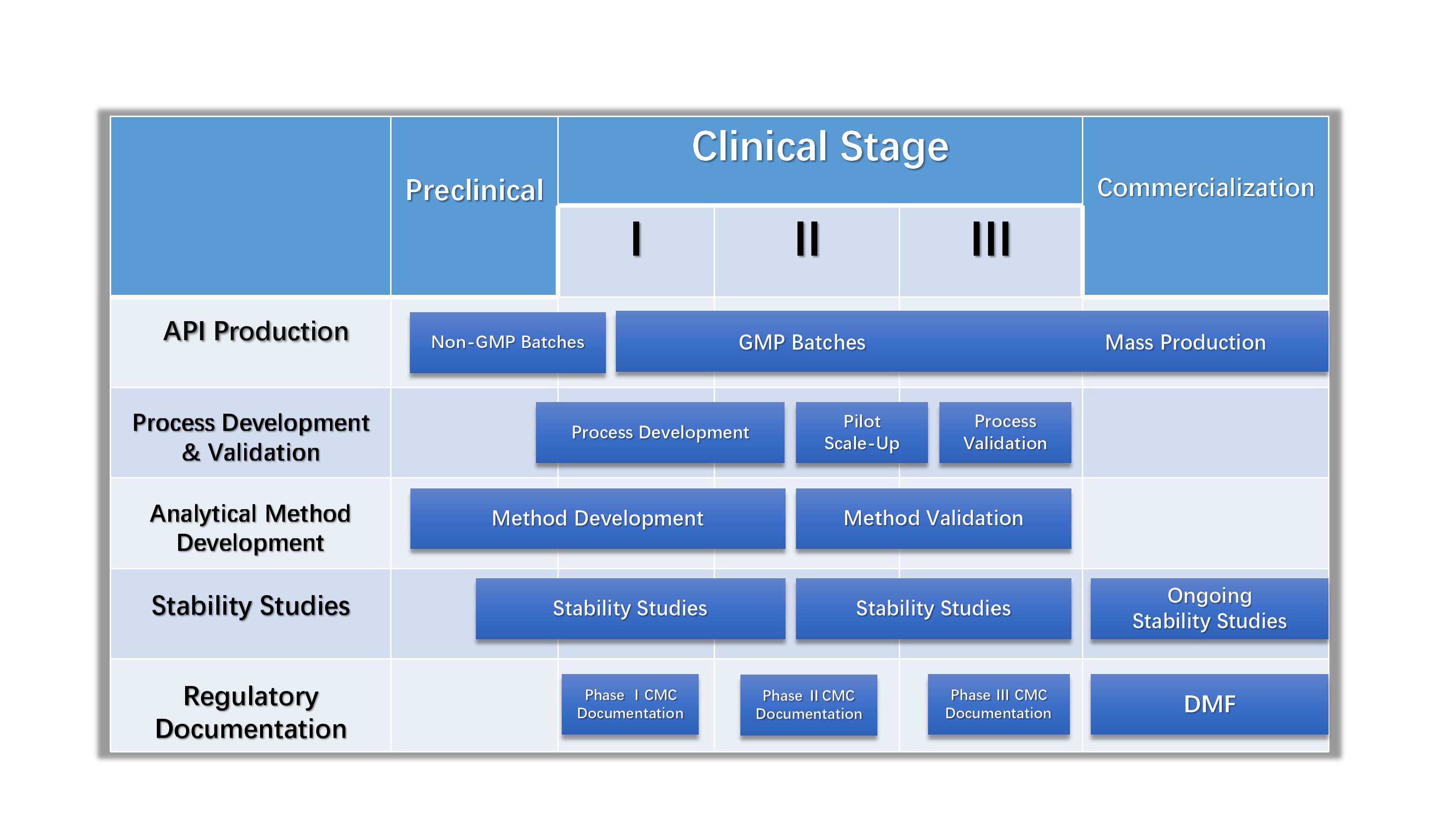
An alternate supplier is useful only after its scope, methods and records have been qualified. Before redirecting grant expenditure, consult the award conditions and NIAID’s prior-approval guidance. Whether a budget change needs approval depends on the award and any change of scope; do not treat a percentage from one policy context as a universal purchasing rule.
Once the scope is fixed, qualify a second supplier on transferable artifacts rather than on price: method reports, certificate-of-analysis content, and LIMS/ELN-ready documentation that let a batch move without restarting the science.
Published vendor list pricing shows why capacity, not unit cost, is the real variable: crude peptide runs $3.24 per amino acid at roughly two weeks, ~하는 동안 >98% purity runs $19.53 per amino acid at two to three weeks, with a minimum charge of $80 per peptide (published vendor list pricing, 검색됨 2026). Treat these as list prices from one vendor’s published lead times, not audited transaction data; they indicate the shape of the trade-off, not what your program will pay.
|
Purity tier |
List price (per aa) |
Lead time |
|---|---|---|
|
조잡한 |
$3.24 |
~2 weeks |
|
>75% |
$8.10 |
Not stated |
|
>85% |
$10.15 |
Not stated |
|
>90% |
$12.09 |
Not stated |
|
펩타이드 >95% |
$14.88 |
Not stated |
Table note: list prices and lead times published by a single vendor, 검색됨 2026. Not audited transaction data, and not a comparison across suppliers.
Contract in milestones with defined deliverables and an acceptance criterion at each gate, so a stopped batch stops one milestone rather than the program. The failure mode is single-source lock-in: when a supplier’s slot moves, the program waits, and if no transfer package exists, the science restarts from the sequence design.
관행 2: Stage custom synthesis so a budget change stops one batch, not the program
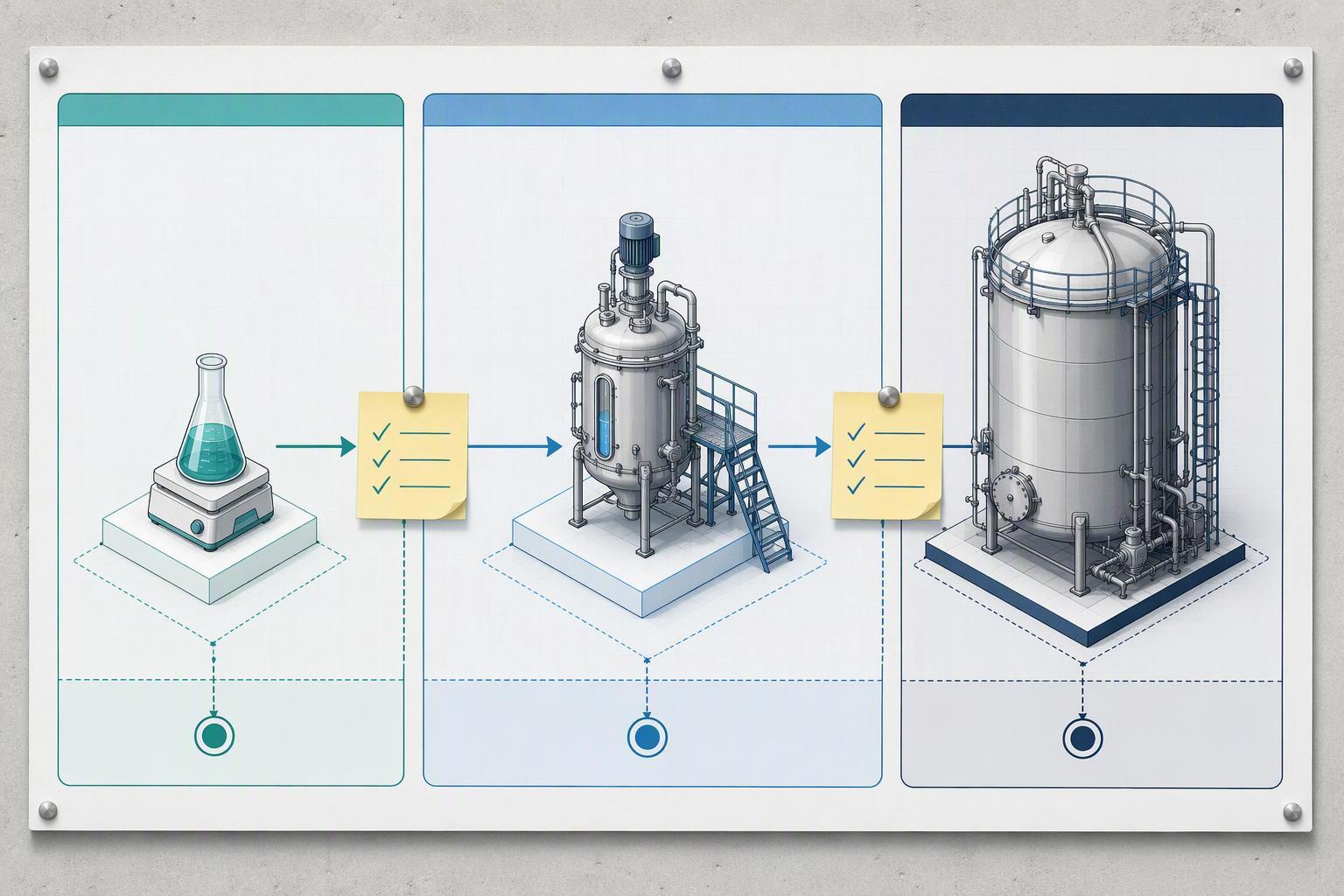
Staged custom peptide synthesis splits a sequence into three decision points instead of one purchase: a discovery batch that tests whether the chain can be made at all, a feasibility confirmation that the route reproduces, and a scale-up gate that releases the larger order. The reason to bother is mechanical. On-resin aggregation and β-sheet formation in hydrophobic or β-branched stretches collapse resin swelling and bury the reactive N-terminus, so couplings and deprotections run incomplete. Because synthesis continues after a stalled coupling, missed additions accumulate as truncation and deletion impurities that resist later removal, and overall yield falls exponentially with step count (PMC7064641, 출판됨 2020-03-04).
Five sequence classes break first-pass synthesis most often: 긴 사슬, 소수성의, 집계되기 쉬운, 다중 이황화물, and multi-site-modified. Each one is cheaper to fail at 5 mg than at 50 mg.
Illustrative failure mode: a batch ordered before solubility screening can aggregate under the assay conditions, even if synthesis succeeds. This is a planning example, not a reported MOL Changes project. Test the relevant concentration, buffer and handling conditions before committing a larger lot.
관행 3: Screen with catalog peptides before you commission anything
Catalog peptide screening is the cheapest way to keep a program moving when a budget moves, because it converts an open-ended synthesis commitment into a small, reversible purchase. The cost relationship is consistent across vendor list pricing: a custom sequence typically runs about 1.4× to 3.3× the catalog equivalent, widening to 2× to 4× under more conservative vendor guidance. Treat those multiples as list-price comparisons from supplier catalogs, not as quotes, and confirm them against current pricing before you build a budget line on them.
The gate criterion is testable. Catalog material is sufficient when the answer you need does not depend on the lot’s impurity profile: triage of a sequence series, epitope mapping, 분석법 개발, and method familiarization all qualify. It is insufficient when the impurity profile ~이다 the question: unusual modifications, tight impurity control, project-specific labeling, or anything that will feed a release specification.
핵심 내용 Screen with catalog peptides for triage, epitope mapping, 분석법 개발, and method familiarization. Commission custom synthesis when the work involves unusual modifications, tight impurity control, project-specific labeling, or any result that feeds a release specification.
실패 모드는 조용하다. A screening result gets invalidated later because the catalog lot’s purity grade never matched the intended use, and the assay has to be repeated on material that does.
관행 4: Match the analytical package to the decision gate, not to a product tier
Fit-for-purpose analytical testing means the package is set by what the next decision requires, not by a supplier’s product tier. A triage decision on a new sequence needs crude analysis and identity confirmation. Releasing a screening lot needs HPLC plus mass spectrometry. 반대이온 함량, residual solvent and water, and endotoxin testing belong at the preclinical or pilot gate, where downstream use makes them material.
|
Decision gate |
Tests the gate requires |
What the package does not establish |
|---|---|---|
|
Sequence triage |
Crude analysis, 신원 확인 |
청정, 반대이온, 잔류용매, 내독소 |
|
Screening-lot release |
HPLC, 질량분석법 |
반대이온, 잔류용매, 내독소 |
|
Preclinical or pilot |
반대이온, residual solvent and water, endotoxin where downstream use requires it |
Nothing beyond the validated scope of each method |
⚠️ 경고: A single HPLC purity figure does not establish identity, 반대이온 함량, 잔류용매, or endotoxin status. Treating one number as a release specification is the most common way a reduced package stops being defensible.
A neutral example of scope-setting: a supplier’s analytical package for a screening lot can be scoped to HPLC and MS only, with counterion and residual solvent deferred to the preclinical gate. That is a scope decision, not a quality claim, and it should be written into the method-transfer package so the next gate inherits it.
Contract around milestones so the program can expand or contract
Contract structure and the scientific plan both affect whether a program can be re-scoped. Stage work into technically meaningful deliverables with explicit acceptance and restart criteria. A smaller purchase is useful only if it still produces interpretable evidence for the next decision.
The internal counterpart is already familiar. Federal awards carry prior-approval thresholds and no-cost extension mechanics precisely because plans move, and the same logic applies to a supplier agreement. Research on how funding pauses affect labs reports that what works is protecting a small defensible core question, staging work into small droppable deliverables with gate-based decisions and written decision records, and tracking supply burn rates before re-planning. What fails is assuming money arrives on time, writing oversized milestones, and choosing to wait and see (research on how funding pauses affect labs, 2025).
Write the deliverables out by name: batch release documentation, method reports, 안정성 데이터, and a named transfer package. Then price each one separately.
The counter-perspective is real but bounded. 에이 PLOS One study of funding delays found spending losses were partially mitigated when scientists held other grants, and bridge funding, carryover and internal reserves keep some labs running for months. The claim that philanthropy or industry can replace federal-scale funding is not supported by the sources retrieved.
자주 묻는 질문
How long can a re-planned peptide program run on carryover material and bridge funding?
Long enough to finish characterization of batches already in process, and rarely much longer. Carryover covers the assays and stability timepoints attached to material you already hold; bridge funding typically covers one additional synthesis campaign at reduced scope. Neither extends a program that has not yet committed to a route, because the feasibility work itself is the cost you deferred. Treat the combined runway as a bridge to a decision, not as a substitute for one, and set the re-planning checkpoint before the bridge is drawn rather than after.
Can a catalog peptide be used for a release assay?
아니요. Catalog material is qualified against the vendor’s own specification, which is not the specification your release method was validated to measure. It is appropriate for screening, for method development, and for system suitability checks where the certificate of analysis documents the purity grade and counter-ion content you need. The moment the result feeds a release decision or a regulatory filing, the material has to come from the controlled route with the documentation chain behind it.
What should we do when a synthesis route fails at the feasibility gate?
Change the sequence or change the route, and do it before scale-up. The failure modes that surface at this gate are usually truncation and deletion impurities, plus aggregation in hydrophobic or multi-disulfide sequences. A route that fails here will not improve with more material; it will produce more of the same impurity profile at greater cost. Options are to reorder the coupling strategy, shorten the target, or accept a lower yield with a purification step that removes the truncated species. Decide which before committing the next batch.
Is a reduced analytical package acceptable for an IND-enabling study?
Only where the reduced package still meets the governing standard for the attribute in question. Identity and purity expectations sit with ICH Q2(R2) for method validation, sterility with USP <71>, bacterial endotoxins with USP <85>, and quality-system documentation with ISO 13485 또는 ISO 9001 depending on your scope. A fit-for-purpose package drops tests the decision does not depend on; it does not drop a compendial test the filing requires. If you cannot name the standard that governs a test, that test is not a candidate for removal.
결론
A resilient peptide R&D program is not a cheaper program. It is one where four levers move together as a single stage-gated model: flexible peptide outsourcing as a capacity buffer, staged custom peptide synthesis that stops at a batch boundary rather than a program boundary, catalog peptide screening before any custom order, and fit-for-purpose analytical testing matched to the decision each gate actually makes. Each lever is only as strong as the contract and the analytical scope behind it.
The thesis from the start still holds. The schedule moved; the evidence bar did not. A tighter budget changes how much you commit at each gate, not what counts as a defensible release decision, and no reduced package removes the need to know what a method can and cannot detect.
If the next step is a concrete artifact rather than a principle, request a method-transfer package or talk to a technical expert about the analytical scope your gates require.