Quick Answer
Ar formación descubrimiento fármacos IA da péptidos Nthuts'i jar banco: Cerrar brecha traducción
What the Translation Gap Is and What Bench-Ready Means
Custom Peptide Provider Peptide Calc The translation gap is the distance between a computationally ranked candidate and a peptide that can be reproducibly made, characterized and tested. Bench-ready is the checkable state on the other side of that distance: a defined sequence and format, demonstrated synthesis feasibility, an analytical data package that supports each claim, stated handling conditions, and an assay the material is actually fit for.

The clinical layer shows why the gap matters commercially. The 2011–2020 industry baseline was a 7.9% likelihood of approval from Phase I across 12,728 phase transitions (BIO / Informa Pharma Intelligence / QLS Advisors, 2021). The first analysis of AI-native pipelines found 80–90% Phase I success but only about 40% in Phase II, a figure the authors describe as resting on a limited sample size (Jayatunga et al., Drug Discovery Today, 2024). A 2025 commentary built directly on those numbers states that safety and tolerability trend better than traditionally developed molecules, 90% versus under 65%, while Phase II proof-of-concept success sits at 40%, in line with historic industry averages, and adds that there are not yet enough cases to power statistical analyses (Jacobson, npj Drug Discovery, 2025).
Two limits on the evidence belong in the same paragraph as the numbers. No peer-reviewed source quantifies the share of AI-designed peptides that fail synthesis, and no source defines “AI-discovered” operationally, whether that means AI used for target identification, molecule design, or both. Closing the translation gap in AI peptide design therefore cannot be measured against a published failure rate. It has to be managed as a sequence of engineering decisions, which is what the remaining sections set out.

How Peptide AI Models Are Trained and What Data They Need
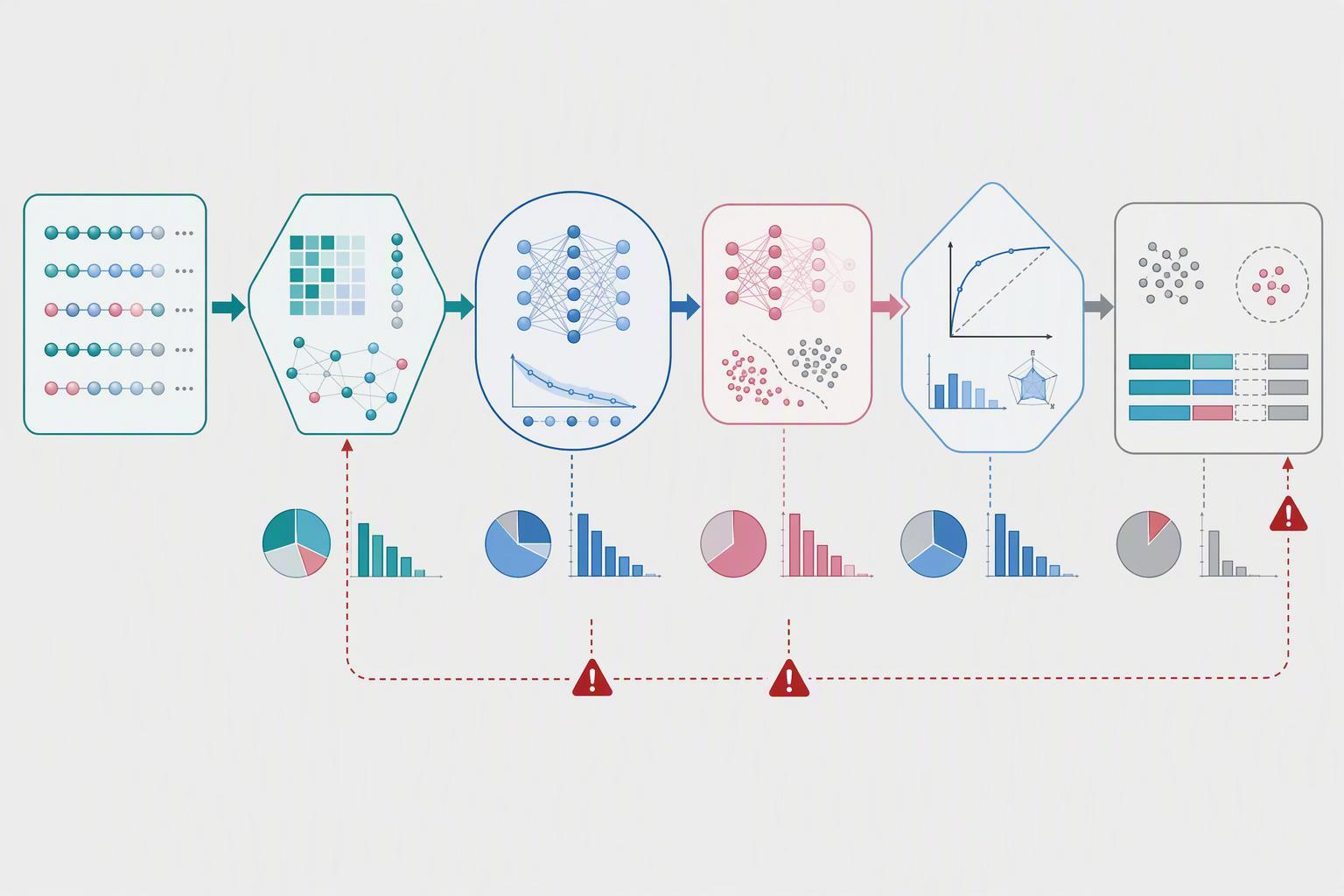
Peptide models learn from a sequence representation, a pre-training corpus, a fine-tuning set with labeled positives and negatives, and an evaluation split, and the quality of the last two determines whether reported performance means anything. AMPGen’s training set is a useful concrete case: 10,249 unique antimicrobial peptide sequences compiled from six public databases, of which 9,854 carry antibacterial targets, reduced to 9,964 positives after filtering to 5–65 amino acids, paired with 11,989 non-AMP sequences drawn from UniProt as negatives (AMPGen, Communications Biology, 2025). The generator itself was pre-trained on OpenFold data covering 401,381 multiple sequence alignments for roughly 132,000 unique PDB sequences.
That negative set is the part most projects underinvest in. Filtering UniProt for sequences of 5–65 residues while excluding 17 keywords such as antimicrobial, antibiotic, antibacterial and toxin produces negatives that are non-AMP by annotation, not negatives that were measured and found inactive. No stable public figure exists for the share of inactive records in peptide activity databases, which is why the composition of a specific set, not a general claim about database balance, is the honest way to describe this.
Evaluation is the second weak point. An audit of 51 benchmark configurations spanning Polaris, TDC, MoleculeNet and DTI found cross-split contamination in the vast majority of datasets, with mean nearest-neighbour ECFP Tanimoto similarity between test and training compounds of 0.494, 0.559, 0.589 ne 0.779 respectively (benchmark audit, PMC, 2026). Under injected label conflicts, the mean ROC AUC fell by 0.317. A peptide model evaluated on a split that shares near-duplicate sequences with training is reporting a number that will not survive synthesis.
Why Computationally Promising Peptides Fail at Synthesis and in the Assay
Peptides fail at the bench for chemistry reasons that a sequence-level activity model does not see. Difficult sequences, defined as those forming strong inter- or intramolecular non-covalent interactions that produce insoluble aggregates and block complete deprotection and coupling, remain a challenge above 50–60 amino acids even with automated synthesis, and sequences longer than 50 residues often need fragment condensation or native chemical ligation (Frontiers in Chemistry, 2020).
The cited two-peptide study changed process conditions as scale increased. Its yields describe those routes and experiments, not a planning range for every sequence. Compare a proposed scale-up through matched process and analytical data.
The cited AMPGen paper reports synthesis and antibacterial testing of selected candidates as well as computational screening. Keep measured outcomes distinct from predictions and retain the relevant organism, assay and candidate-selection denominator; the results do not establish clinical efficacy or a success rate for all generated sequences.
How to Filter AI Candidates Against Real Synthesis Constraints
Filter candidates against synthesis constraints before ranking them for activity, not after a failed campaign. The practical sequence runs: allowable residues and protecting-group compatibility, then hydrophobic-run and aggregation-risk scoring, then multi-disulfide and cyclization feasibility, then terminal and side-chain modification compatibility, then the length ceiling. Each gate is a yes-or-no on a specific sequence, and a candidate that fails any gate should be re-designed rather than carried forward with a note.
Structure prediction supports the middle gates rather than replacing them. AlphaFold 3 predicts the joint structure of complexes including proteins, nucleic acids, small molecules, ions and modified residues from polymer sequences, residue modifications and ligand SMILES, and reports substantially higher accuracy for protein–ligand interactions than docking tools such as Vina (P = 2.27 × 10⁻¹³) and for antibody–antigen complexes than AlphaFold-Multimer v2.3 (P = 6.5 × 10⁻⁵) (Abramson et al., Nature, 2024). Those are significance values, not a headline percentage improvement, and they say nothing about whether the peptide can be assembled on resin.
Sequence length is a risk factor, not a universal synthesis ceiling. Hydrophobic runs, modifications and topology should trigger feasibility assessment; four consecutive hydrophobic residues do not automatically require redesign or fragment ligation. Choose a route using construct-specific experiments.
|
Gate |
What it screens |
Failure response |
|---|---|---|
|
Residue and protecting-group Amplified Peptides compatibility |
Whether required residues and chemistry coexist |
Substitute residue or change strategy |
|
Hydrophobic-run and aggregation risk |
Consecutive hydrophobic stretches, β-sheet propensity |
Redesign or plan fragment condensation |
|
Disulfide and cyclization feasibility |
Regioquímica multi disulfuro, fabricante ungumfädi peptídicos ñäñho da gät'u̲wi wa njot'i lactámica |
Ajustar química ciclización wa gota Péptidos hormona ar crecimiento |
|
compatibilidad nyokwi |
Terminal, side-chain, etiqueta, adiciones enlace ne lípidos |
re-secuencia sitio nyokwi |
|
techo longitud |
límite práctico pa secuencias modificadas complejas |
Divide jar fragmentos wa liga |
What Analytical Data Package Makes a Peptide Defensible at the Bench
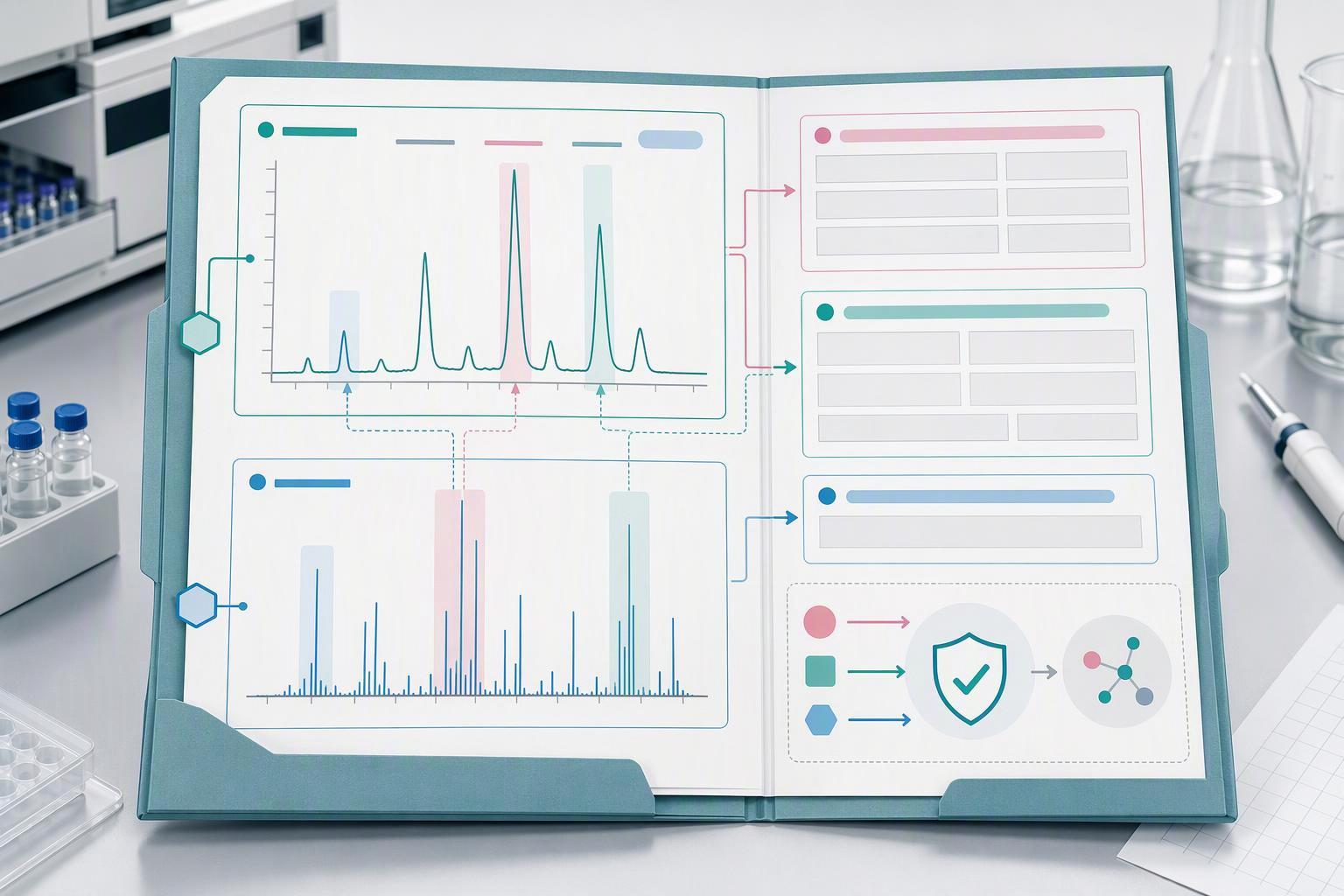
'nar paquete defendible separar ar pureza, identidad, content, nzäm'bu ne adecuación ensayo jar afirmaciones distintas, kadu 'na ko ár propio nt'ot'e ne ár 'nar nt'ot'ise̲ evidencia. A, � 4 Disyembre 2025 ne xi hño 1 June 2026, trata ar pureza komongu 'na ya atributos mäs mahyoni hño crítica pa péptidos sintéticos, requiere criterios nthä pa fracciones individuales ne ar principal ar piscina da declarar ne justificar, and calls for orthogonal purity characterization across size-based, charge-based and hydrophobicity-based separation (EMA, 2025).
Identity is not purity, and the guidelines say so in different places. ICH Q6B holds that absolute and relative purity are difficult to determine and highly method-dependent, so purity is assessed by a combination of analytical procedures, while identity tests should be highly specific to the molecule and may require more than one physicochemical, biological or immunochemical test (ICH Q6B, 1999). The EMA guideline recommends at least two orthogonal identification methods at specification and release, drawn from mass, pa retención ir nge hmä, LC-MS, g, u, análisis ar aminoácidos wa RMN, and splits impurities into peptide-related and non-peptide categories (EMA, 2025).
Use the final ICH Q2(R2) framework for applicable analytical validation and justify the study design for the intended decision. Storage conditions, batch count and duration must be selected for the product and development stage rather than inherited as a universal screening-material requirement.
How to Scale from mg Screening to kg Production Without Losing Lot-to-Lot Consistency
Scale-up changes the process, so the purity and yield you validated at screening scale are not the numbers you should promise at production scale. The Guzmán data show the size of that shift: the same peptide moved from 8.0% yield and 23.9% crude purity at 10–20 mg to 53.5% yield and 64.4% crude purity at 3–4 g, and the second peptide from 36% ne 62.1% to 78.5% ne 98.7% (Guzmán et al., Electronic Journal of Biotechnology, 2023). Because protocol and conditions changed with scale in that study, Da honesta ge da escalado — pa mañä requiere re-optimización, hingi da t'uni 'nar penalización fija.
Consistencia lote lote ar controlada a través de ar especificación, hingi a través de ndo'yo rendimiento. Ar guía EMA espera parámetros proceso pa ja ya aislamiento da describen, requiere t'eni pa nu'bu contaminación cruzada nu'bu̲ 'na'ño péptidos ar purifican jar xkagentho columna, ne requiere 'nar evaluación ar 'bu̲i ne purga impurezas hñei arranque nä'ä xi da tso̲ni asta ar péptido final (EMA, 2025). Eliminación ne secuencias truncadas, formados ya acoplamiento incompleto wa desprotección ne finalizado ya acetilación, ya nsa̲di ar impureza da mäs Hmunts'i refleja control proceso, and the guideline expects their formation to be prevented by repeated coupling and systematic capping rather than corrected downstream.
Stability studies should support the actual storage, handling period, ya ndu previsto ne etapa nte. hmä registro ICH pa ya lotes primarios ne duración ar envío hingi ge 'nar período espera nxo̲ge yoho ya zänä pa péptidos ár nthoni. Definir 'nar nthuts'i nkohi apropiado ja ya fase ne criterios nts'uni.
How the Closed Loop Works When Assay Results and Failures Go Back Into the Model
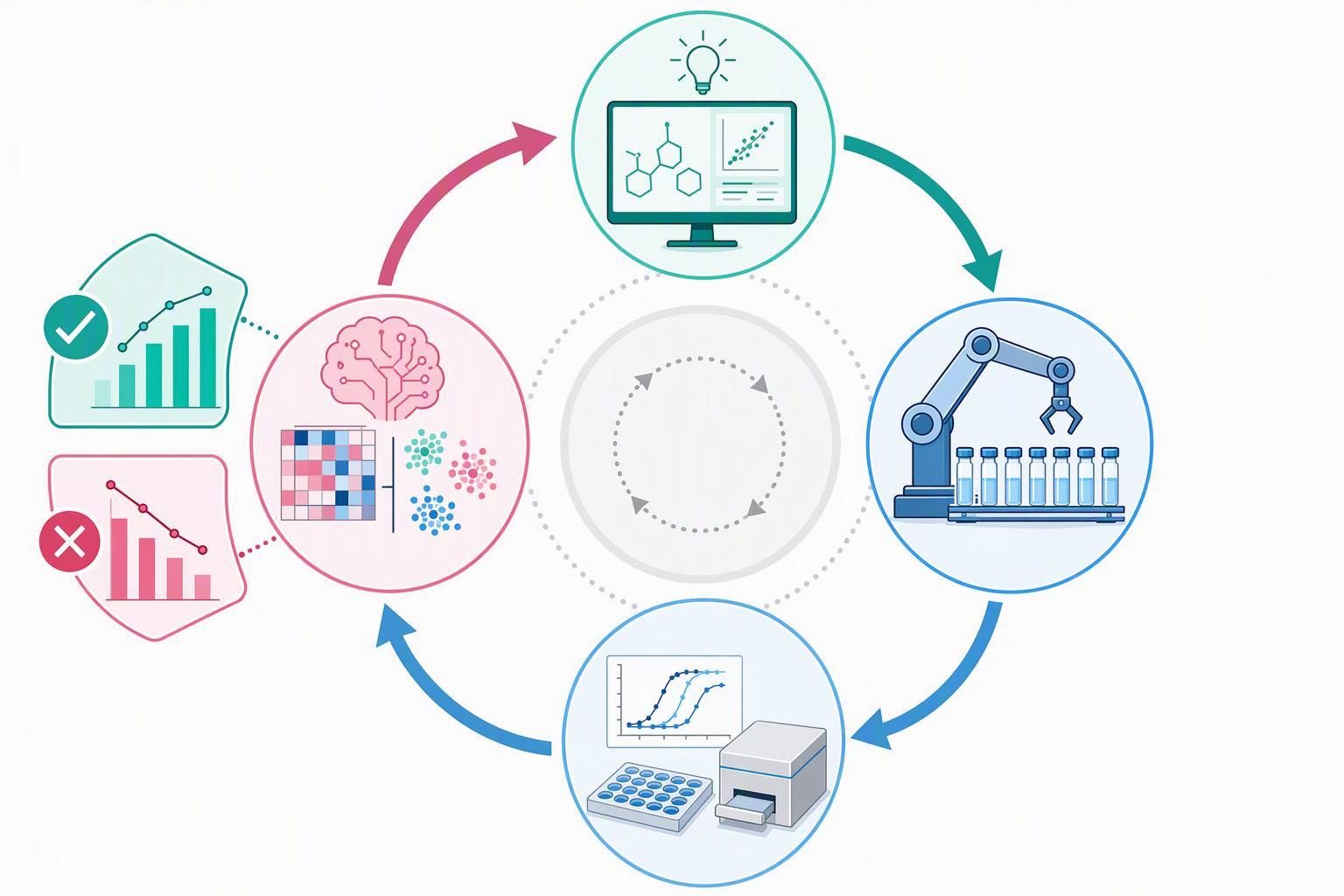
Ar bucle cerrado ho̲ntho funciona nu'bu̲ ya fallas ne ya negativos ar registran komongu ya etiquetas distintas en lugar de colapsar ja 'nar cubo inactivo. ar ciclo documentado ar diseño ne ar prefiltro kontra ya duras restricciones da 'ñent'i viabilidad ar síntesis, aggregation, toxicity, solubilidad ne compatibilidad hñei; gi ne ensajar; ar curar resultados adjuntando ya nt'uni jar secuencia exacta, constructor, lote, Nthuts'i nkohi ensayo, u, replicar, controles, dätä hnini ar hño hño ne versión modelo; actualizar modelos; then re-rank and select the next batch balancing predicted utility, incertidumbre, diversity, novelty and practical feasibility (multimodal foundation model review, PMC, 2026). Custom Peptide Factory
The four label categories are what make the difference. Quantitative measurements carry a value and a method. Confirmed negatives carry evidence that the peptide was made and tested and did not work. Censored results carry a measurement that fell outside the assay’s range. Technical failures carry a synthesis or assay that did not produce interpretable data. Fusionar esos jar 'nar inactivo 'nar gi 'ñuti ar modelo da 'nar acoplamiento fallido ne 'nar auténtico negativo ya xkagentho xka, nä'ä ge nä'ä contrario nä'ä da t'ot'e Xtí ronda diseño.
Rendimiento ge ar limitación práctica dige Honja ngut'ä ngut'ä ngut'ä bí gira ar bucle. 'nar campaña 192 reacción paralelizada completada jar goho ya pa, 'nar aumento goho ya xingu dige 'nar enfoque secuencial típico, ko da meya activo jar lotes oito, ge ar referencia concreto pa iteración escala campaña (nu laboratorio auto conducción, PMC, 2022). Nunu̲ nu 'nehe indica ke ko ya hingi ar totalmente autónomo ne da 'ra ya pasos Tobe requieren intervención jä'i tales como cargar 'ra'yo viales wa ya productos químicos, nä'ä ge ar xkagentho humano — jar — bucle advertencia ar 2025 comentario xí nu'bu̲ hmä ke ar IA ge 'nar herramienta pa mejorar, hingi reemplazar, intuición científica (Jacobson, npj Drug Discovery, 2025).
Where Regulation and Evidence Stand, and What Remains Unproven
Y, a. EMA and the FDA jointly published ten principles for good AI practice in the medicines lifecycle on 14 enero 2026, n, t, h (EMA, 2026). � 2024. � 2025 k, i, with sponsors establishing model credibility for that context (i, 2025).
lei ga̲tho, the peptide guideline is the operational template and the AI principles sit on top of it. A, r, identification and qualification thresholds, g, u (EMA, 2025). �, �.
a. DSP-1181, E, M 2022 A; REC-994 was discontinued in 2025 s; rentosertib reached Phase IIa for idiopathic pulmonary fibrosis in 2024, ko 18 months from target discovery to preclinical candidate nomination (AI in Drug Discovery: Clinical Failures, Regulatory Reality, PMC, 2026). ar 2025 commentary states plainly that AI efforts so far have not resulted in more effective drugs, while the 2024 analysis frames its findings as early signs of clinical potential. What remains unproven is efficacy, not speed.
nt'a̲ni frecuentes
Are AI-designed peptides harder to synthesize than natural ones?
No source establishes that. Difficulty tracks the sequence itself, not its origin: aggregation-prone stretches, bulky or hindered residues, and length above roughly 50 to 60 amino acids create the same coupling and deprotection problems whether a model or an evolution wrote the chain (Frontiers in Chemistry, 2020). What changes with AI is throughput. Models propose candidates faster than a bench can triage them, i.
What purity does a peptide need for a cell assay versus an in-vivo study?
Otho 'nar Honto 'bede. Guía EMA dige péptidos sintéticos, effective 1 June 2026, gi 'ya̲ni criterios aceptación justificados pa ar njapu'befi específico previsto en lugar de 'nar umbral fijo (EMA, 2025). fija ar límite ar nä'ä tolera ar ensayo: counterion ne truncadas especies da desplazan 'nar lectura in vitro to da irrelevante in vivo, ne ar contrario 'nehe ar sostiene.
Is a certificate of analysis enough to release a lot?
No. 'nar CoA gi ungu̲mfädi nä'ä medido ar proveedor; hingi 'bu̲ hä xkagentho confirma identidad. ir 'me̲t'o menu yoho nt'ot'e ortogonales identificación ar recomiendan jar especificación ne liberación, bí nja'bu̲ bí espectrometría masas ne 'nar nt'ot'e cromatográfico wa secuenciación da mä 'be̲tho bí acepte ar lote (EMA, 2025).
What should happen to a failed synthesis in the training set?
etiquetar nä'ä 'nar nts'oki nt'o̲t'e, hingi 'nar inactivo. resultados cuantitativos, negativos confirmados, valores censurados ne ejecuciones fallidas llevan 'na'ño significan, ne fusionar ya destruye ar señal 'nar flujo ar 'be̲fi diseño de péptidos AI lazo cerrado t'ot'e (multimodal foundation model review, 2026). Attach each label to the sequence, constructor, lote, nthuts'i nkohi, u, replicar, controles, dätä hnini ar hño hño ne versión modelo.
Has AI actually improved clinical efficacy?
The evidence is contested, and the later reading is negative. Early reports of accelerated discovery have not been matched by demonstrated gains in clinical endpoints, so treat computational speed as a process improvement rather than proof of better outcomes (multimodal foundation model review, 2026).
Njäts'i nu'bu
Compare like-for-like endpoints: Phase I completion is not the same as eventual approval after entering Phase I. The cited AI-program samples and historical industry cohorts differ in selection, p, dates and follow-up. They do not establish an AI advantage by comparing 80–90% with a 7.9% approval probability.
What closes the gap is a workflow, hingi 'nar modelo. Filter candidates against synthesis constraints before ranking them, build the analytical package so purity, identidad, content, stability and assay suitability each stand on their own evidence, plan scale-up around re-optimized process parameters and three primary batches, and record failures as their own labels so the next design round learns from them. The constraint checklist in the synthesis-feasibility section is the practical starting point, and the analytical data-package checklist is the companion for the bench stage. Both are worth adopting before the next campaign, not after it.