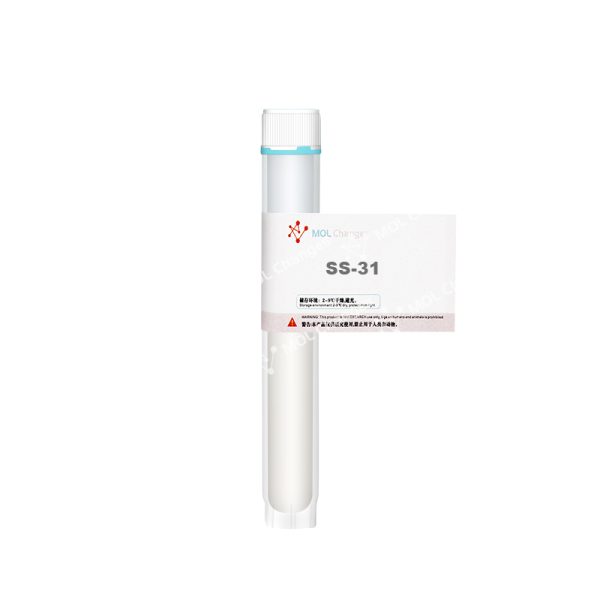
SS — 31 (elamipretide) ge 'nar péptido t'olo molécula da consisten jar goho aminoácidos; específicamente dirigiendo mitocondrias.
penetración nt'ot'e xi hño ar membranas celulares ge 'na yá características clave, ko 'nar objetivo preciso ar membrana mitocondrial interna.
antioxidantes hneise̲ hingi acumular adecuadamente mbo jar mäs confinada matriz mitocondrial, exceso carroñero reactive oxygen species (ROS) komongu 'nar ja mahyoni.
diseño único ar SS — 31 permite tanto neutralización radicales xi hño, ne varios interacciones electrostáticas/interacciones hidrofóbicas; anclaje específico ja ya mitocondrias hä xkagentho komongu 'nar nt'uni directo ar 'me̲hna.
ar 'ñithi mitocondrial komongu 'nar conjunto nu'u̲ SS — 31 komongu 'na ya fármacos mäs alcanzables ar futuro cercano.
ma'bu̲ ja ya efectos puramente citoprotectores, acciones reparativas potentes 'nehe ar observan.
Breaking the previously intractable vicious cycle of oxidative stress is what sets SS-31 apart.
Improving myocardial energy metabolism, smaller infarct sizes, overall cardiac function, and to some extent, neurodegenerative function, are all within reach.
Exercise tolerance and muscle strength are additional, yet important, endpoints that SS-31 is capable of influencing.
Secuencia
D-Arg-Dmt-Lys-Phe-NH2; Dmt=2',6'-dimethylTyr
'bede ya CAS
736992-21-5
Fórmula molecular
C32H49N9O5
Be̲xu molecular
639.8 g yá mol
Research Of SS-31
1.Aplicaciones clínicas ne ár hne terapéutico
Early clinical trials have demonstrated significant cytoprotective effects – primary mitochondrial myopathies, Barth syndrome, heart failure, acute kidney injury and dry eye syndrome all representing promising areas of therapeutic application.
2.Antioxidant Effects
Conventional antioxidants are widely distributed but as stated above lack the specific penetration.
SS-31’s physicochemical properties enable that all important selective accumulation.
ar electron donor (dimethyltyrosine) directly interacts with and neutralizes the free radicals generated within the cadena transporte electrones.
Source level interruption of oxidative stress is the fundamental goal; protection of mitochondrial DNA, constant (optimal) maintenance of the microenvironment, and essentially, lifelong energy production, is the end result of all of the above.
Slowing or halting aging processes and a wide range of previously untreatable diseases, are the end goals of this line of research.
3.Improving systemic energy status impaired by cancer and chemotherapy
In skeletal muscle of cancer patients, mitochondrial dysfunction is the primary cause of reduced ATP synthesis; irreversible muscle atrophy and subsequent deformation follow as a direct result.
SS-31 effectively suppresses cachexia, prevents a reduction in glycolytic muscle fiber area, blocks mitochondrial loss and various forms of abnormal autophagy/mitosis.
Analysis of skeletal muscle, liver, and plasma metabolites indicates significant alterations in both energy and protein metabolism within the tumor host.
4.Improving mitochondrial dysfunction and associated memory impairment
Endotoxin-treated mice exhibit all aspects of this mitochondrial dysfunction – estrés oxidativo, inflammatory responses, neuronal apoptosis, hippocampal dendritic spine loss – learning and simple memory capabilities as the outcome.
Experiments show SS-31’s protective effects against the earlier mentioned factors; modulation of Brain-derived neurotrophic factor, or abrineurin BDNF signaling as a key pathway.
Reversal of some synaptic signaling protein alterations and increased (physiological) structural complexity of synapses is observed.
Therapeutic potential for oxidative stress/neuroinflammation type damage is evident.
5.Inhibiting mitochondrial permeability transition pore (mPTP) opening to prevent apoptosis
SS-31 indirectly maintains inner mitochondrial membrane integrity, through both antioxidant and stable ATP synthesis effects.
Direct action on adenine nucleotide translocator (ANT) pushes up the threshold for mitochondrial permeability transition pore /mPTP opening.
Abnormal premature activation of this process is successfully inhibited; acute conditions (myocardial infarction, stroke as representative cases) can be at least partially treated by this line of inhibition.
6.Inhibition of an Inflammatory Response
All the above are interlinked.
Mitochondrial function is improved, damage is reduced, and all downstream effects of chronic or acute inflammation are at least partially mitigated.
SS-31’s full therapeutic value lies in these combined, yet fundamental, anti-inflammatory actions.
COA
HPLC
MS