Modificações de Peptídeos
Modificação N-terminal
O que é modificação N-terminal?
A acetilação N-terminal remove a carga do terminal amino de um peptídeo. Em geral, a modificação da acetilação é recomendada se o peptídeo quiser imitar sua estrutura natural na proteína. Além disso, a modificação da acetilação estabiliza a cadeia peptídica e a torna menos suscetível à degradação enzimática no final da cadeia peptídica.
Além da acilação, outras modificações do terminal N (por exemplo, ureia, carbamato, sulfonamida, alquilamina) pode ser realizado.
Os radioligantes são frequentemente ligados ao terminal N de um peptídeo se a farmacodinâmica do peptídeo permitir.. Por exemplo, DOTA, USAR, NODAGA, etc.. pode ser anexado.
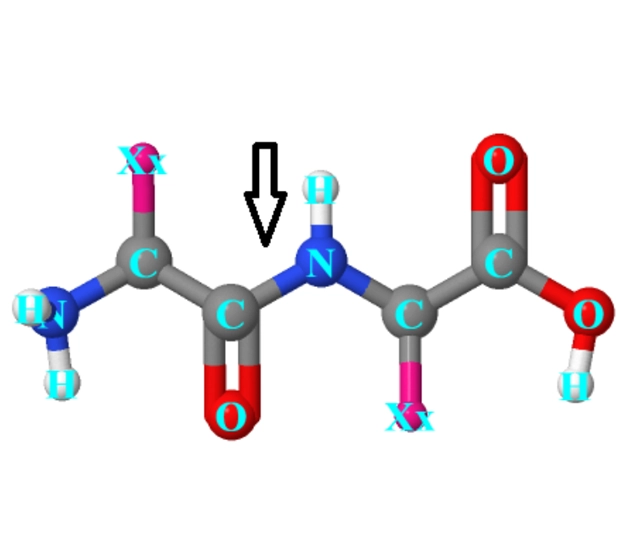
Técnica de modificação do terminal N
Tipo de modificação
A modificação N-terminal melhora a estabilidade dos peptídeos porque esta modificação gera uma estrutura semelhante à estrutura natural da proteína. Por isso, este método de modificação pode melhorar a atividade biológica do polipeptídeo e prevenir a degradação enzimática.
|
5-FAM
|
BSA (-NH2 do terminal N)
|
Ácido hexanóico
|
|---|---|---|
|
5-FAM-Ahx |
CBZ |
HÍNICO |
|
Abz |
Dansyl |
KLH (-NH2 do terminal N) |
|
Acetilação |
Dansyl-Ahx |
Ácido láurico |
|
Acrílico |
Ácido decanóico |
Ácido lipóico |
|
Alocar |
DTPA |
Pinturas |
|
Benzoíla |
Ácido Graxo |
MCA |
|
Biotina |
FITC |
Miristoil |
|
Biotina-Ahx |
FITC-Ahx |
Ácido octanóico |
|
COB |
FMOC |
ÓVULOS (-NH2 do terminal N) |
|
Br-Ac- |
Formilação |
Palmitoil |
Citações em destaque
Bibliotecas de peptídeos derivados de proteoma para perfil de especificidade profunda de reagentes de modificação N-terminal
Os terminais N de proteínas e peptídeos são alvos importantes para modificação seletiva com reagentes quimioproteômicos e ferramentas de bioconjugação. A α-amina N-terminal ocorre apenas uma vez em cada cadeia polipeptídica, tornando-o um alvo atraente para bioconjugação de proteínas. Nas células, novos terminais N podem ser gerados por clivagem proteolítica e capturados por reagentes de modificação do terminal N que permitem a identificação de substratos de protease em todo o proteoma com espectrometria de massa em tandem (LC-MS/MS). Uma compreensão da especificidade da sequência N-terminal dos reagentes de modificação é crítica para cada uma dessas aplicações. Bibliotecas de peptídeos derivados de proteoma em combinação com LC-MS/MS são ferramentas poderosas para traçar o perfil da especificidade de sequência de reagentes de modificação N-terminal. Essas bibliotecas são altamente diversas, e LC-MS/MS permite a análise das eficiências de modificação de dezenas de milhares de sequências em um único experimento. Bibliotecas de peptídeos derivados de proteoma são uma ferramenta poderosa para traçar o perfil das especificidades de sequência de reagentes de marcação de peptídeos enzimáticos e químicos. Subtiligase e 2-piridinocarboxaldeído (2PCA) são dois reagentes que foram desenvolvidos para modificação seletiva de peptídeos N-terminais e podem ser estudados usando bibliotecas de peptídeos derivados de proteoma. Este protocolo descreve as etapas para gerar bibliotecas de peptídeos derivados de proteoma diversos no terminal N e para aplicar essas bibliotecas para traçar o perfil da especificidade dos reagentes de modificação do terminal N. Detalhamos as etapas para traçar o perfil da especificidade do 2-piridinocarboxaldeído, um reagente de modificação química, e subtiligase, um reagente de modificação enzimática. Esses protocolos podem ser facilmente adaptados a fontes alternativas de proteoma e outros reagentes de marcação de peptídeos N-terminais.
Serviços relacionados de modificação de peptídeos
glicosilação peptídica
glicosilação peptídica
A glicosilação peptídica é uma modificação covalente que pode potencialmente melhorar as propriedades físico-químicas dos peptídeos
Leia maisFosforilação de peptídeos
Fosforilação de peptídeos
A fosforilação pode ocorrer na serina (S, Ser), Treonina (T, Thr) e tirosina (S, Tyr) cadeias laterais por formação de ligação fosfoéster
Leia maisPeptídeos Grampeados
Peptídeos Grampeados
Introdução de dois aminoácidos não naturais contendo α-metil, Grupos α-alquenil durante a síntese em fase sólida de cadeias peptídicas.
Leia maisPeptídeo Cíclico
Peptídeo Cíclico
A ciclização peptídica aumenta a estabilidade conformacional dos peptídeos (em relação aos seus análogos lineares) e é uma estratégia comum no desenvolvimento de peptídeos.
Leia maismodificação peptídica
Ampla experiência em modificação de peptídeos, fornecendo vários caminhos viáveis para pesquisa de peptídeos.
