Por que o $39.79 A previsão de bilhões é importante para as decisões de terceirização de peptídeos
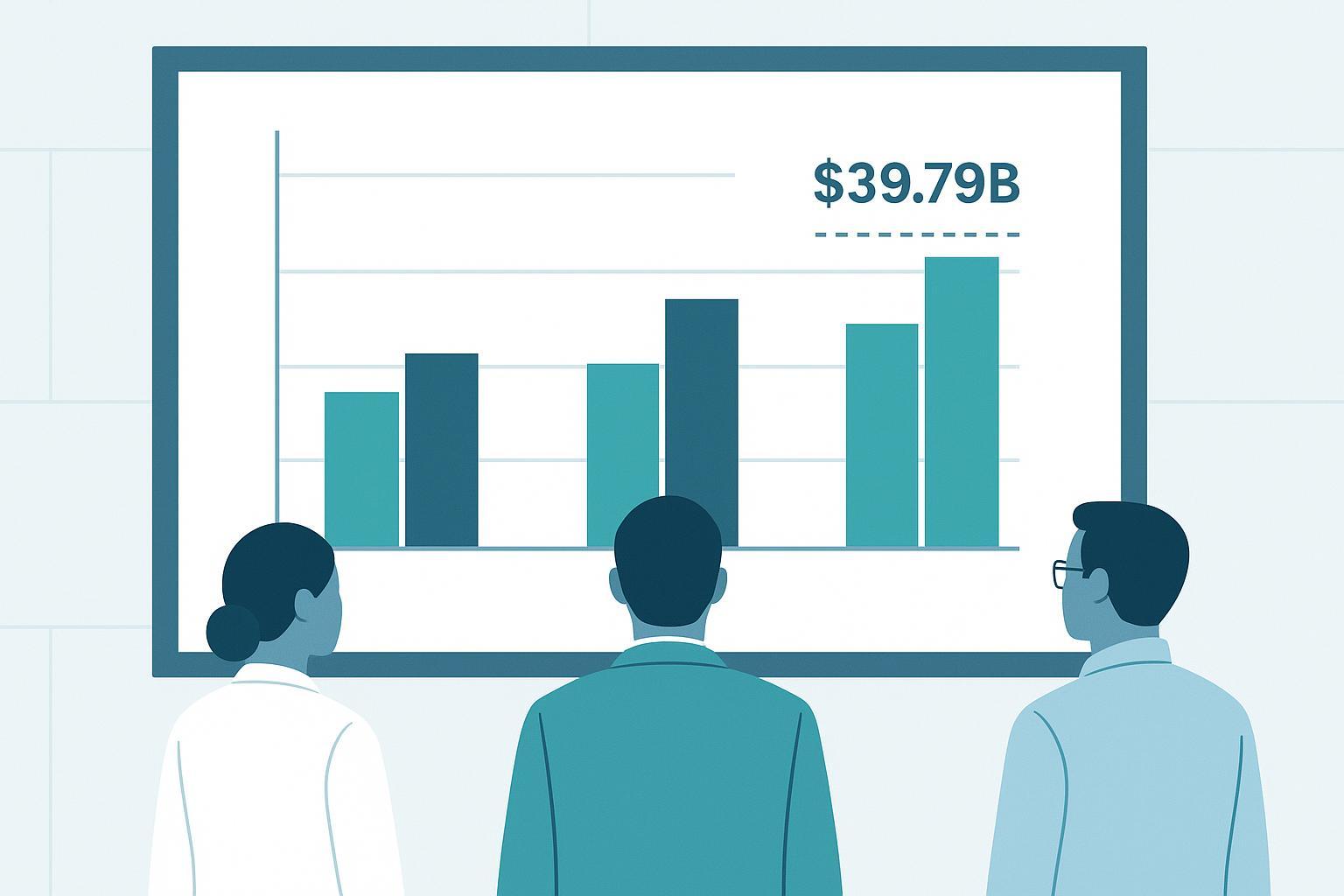
O mercado de serviços de descoberta de medicamentos é frequentemente citado como um único número, mas o número muda com a definição. Pesquisa e Mercados coloca o 2030 figura em $39.79 bilhão de $23.21 bilhão em 2026, um 14.4% CAGR, contando receitas de produtos farmacêuticos, DMPK, serviços de química biológica e medicinal (Pesquisa e Mercados, Relatório de mercado de serviços de descoberta de medicamentos 2026, acessado 2026). Essa cadeia é single-upstream: nenhum outro fornecedor nesta análise o reproduz.

Uma definição mais restrita voltada para CRO coloca o 2030 mercado em USD 27.23 bilhão, acima do USD 16.36 bilhão em 2025 em um 10.7% CAGR (Mercados e Mercados, Relatório de mercado de serviços de descoberta de medicamentos 2025-2030, ano base 2024). A lacuna remonta à definição CRO-to-pharma por trás do número menor, que exclui receitas de serviços contabilizadas fora desse relacionamento. Um terceiro fornecedor coloca o 2035 mercado acima do USD 89 bilhão em um 13.95% CAGR (Pesquisa de precedência, Tamanho do mercado de serviços de descoberta de medicamentos & Tendências Globais 2035, publicado 2026-08-19).
Principal vantagem: O $39.79 a previsão de bilhões depende de uma fonte upstream. Previsões desse tipo variam de acordo com o fornecedor porque medem escopos diferentes.
Se o tamanho do mercado depende de como o escopo é definido, a entrega de um parceiro peptídico precisa da mesma explicitação.

A Visão Convencional: Comprar Síntese, Monte o resto você mesmo
O conselho dominante é comprar cada etapa do fornecedor que executa melhor essa etapa. Obtenha a síntese de peptídeos personalizada do fornecedor qualificado de menor custo, então modificação do contrato, rotulagem, purificação e análise separadamente, na lógica de que os especialistas vencem os generalistas tanto em preço quanto em profundidade.
Essa lógica não é preguiçosa. A síntese em fase sólida amadureceu como uma síntese discreta, serviço citável, e os sistemas de aquisição foram construídos em torno de cotações por tarefa: uma sequência, um grau de pureza, um preço, um prazo de entrega. Guias de capacidade CDMO, as páginas de perguntas frequentes dos fornecedores e os resumos dos relatórios de mercado reforçam o modelo, e o mercado que atende é real. Mercados e Mercados avalia o próprio mercado de síntese de peptídeos em menos de um bilhão de dólares hoje, USD 0.98 bilhão em 2026, atingindo USD 1.54 bilhão por 2031 em um 9.5% CAGR. Pesquisa Grand View coloca o 2024 base em USD 961.5 milhões crescendo para USD 1,840.6 milhão por 2033, e identifica o segmento de uso final de CDMO e CRO como a parte de crescimento mais rápido da síntese de peptídeos.
Por um breve, simples, sequência bem comportada, o fornecimento por tarefa realmente vence. A crítica que se segue deve ser específica sobre onde deixa de vencer.
Onde a terceirização de peptídeos fragmentados falha
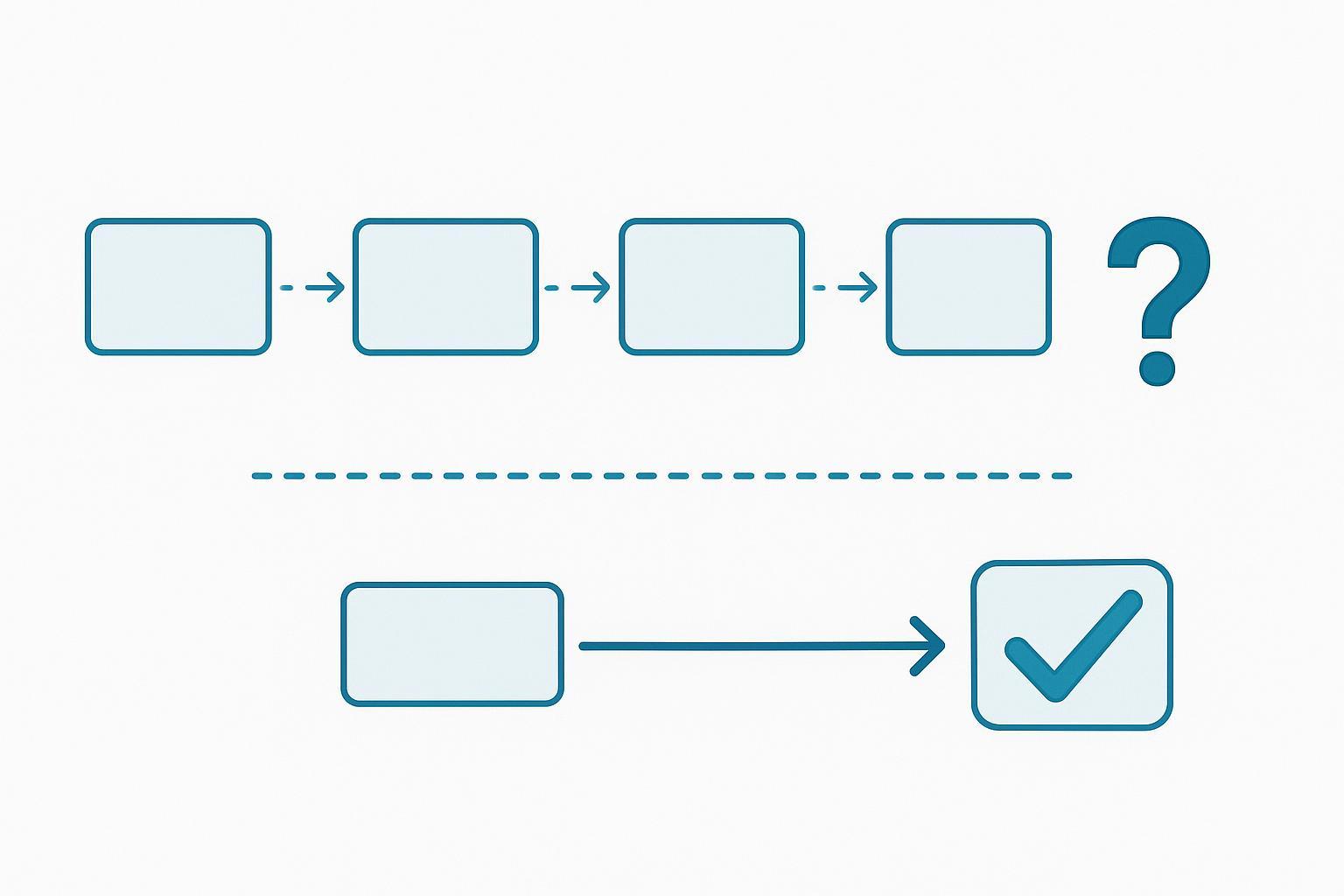
A terceirização de peptídeos fragmentados não elimina o trabalho de integração; transfere esse trabalho para sua equipe e quebra a cadeia de rastreabilidade no processo.
A primeira quebra é a cadeia de dados. O certificado de análise de cada fornecedor faz referência ao seu próprio ID de lote, versão do método e critérios de aceitação, portanto, reconstruir a história de um lote entre cinco fornecedores torna-se uma arqueologia manual em vez de uma consulta.
Sequências difíceis falham nas costuras. Hidrofóbico, sequências modificadas propensas à agregação e em vários locais perdem rendimento a cada transferência, e acima 95% pureza em escala de quilograma geralmente requer HPLC preparativa de várias etapas, o que significa que o custo de recuperação recai sobre quem possui a etapa final. Recuperação, não síntese, é onde a maior parte do material peptídico é perdida: 50–80% de rendimento bruto, então 20–50% após a purificação.
Os cronogramas compõem em vez de adicionar. Adesis estima que cada transferência adicional de fornecedor pode adicionar meses de tempo de transferência de tecnologia, com fluxos de trabalho multi-CDMO que se estendem por 24 a 36 meses. Essa é uma estimativa do fornecedor, não é uma referência.
⚠️ Aviso: Across vendors, delay and cost multiply. Six months per handoff does not stay six months when four handoffs queue behind each other.
The conventional model optimizes each task and suboptimizes the peptide outsourcing program.
O que os dados realmente mostram: Integração é a variável que move

The forecasts everyone quotes measure spend, not outcomes. Grand View Research’s peptide therapeutics market report puts the peptide therapeutics market at USD 140.9 bilhão em 2025, rising to USD 294.6 bilhão por 2033 em um 8.7% CAGR, and that demand pressure lands upstream of synthesis, on teams that must move more sequences through modification, rotulagem, purification and testing than their internal capacity allows.
Síntese de Peptídeos That is why vendor count is the wrong variable. For each program, ask whether the deliverable is a material or a decision. If it is a decision, require one accountable party across sequence design support, síntese, modificação, rotulagem, purification and analytical testing, which is what integrated peptide services actually means in practice.
Para dica: Ask whether the deliverable is a material or a decision. Materials can be sourced per task; decisions need one owner.
A batch-specific release package shows the difference concretely: the synthesis lot, the modification step and the analytical results carry one batch identifier and one method-version register, so a reviewer can trace a purity value back to the run that produced it.
The honest limit: no retrieved source quantifies integrated versus fragmented adoption as a percentage, so this argument rests on mechanism and documented artifacts, not on an adoption statistic.
O que um pacote de dados rastreáveis deve conter

A traceable data package is a lot-specific record that ties every result to a batch, a method version and a release decision. A certificate of analysis should tie every result to one lot, and if it does not, the number on the page is not evidence of anything.
Compiled vendor guidance, not a published standard, converges on the same minimum content. The table below consolidates it.
|
Required element |
What it must be tied to |
Modo de falha quando ausente |
|---|---|---|
|
Batch/lot identifier |
The physical lot the sample came from |
Results cannot be traced to shipped material |
|
Identity and counterion or salt form |
The specified salt form for that lot |
TFA and acetate lots look interchangeable on paper |
|
Analytical method identifiers and versions |
The exact method revision used |
A method change silently invalidates comparability |
|
Acceptance criteria |
Stated before results, não depois |
Specifications get written to fit the result |
|
Purity result with integrated chromatogram and peak-area table |
The integration, not a summary percentage |
A single number hides co-eluting impurities |
|
Raw RP-HPLC chromatograms |
The run that produced the purity figure |
No way to re-integrate or audit the baseline |
|
LC-MS spectrum with observed versus theoretical mass and charge states |
The same lot and method version |
Identity is asserted rather than demonstrated |
|
Perfil de impurezas, specified, unspecified and total |
The reporting threshold applied |
Unspecified impurities go uncounted |
|
Peptide mapping, where used |
The digest and column conditions |
Sequence confirmation cannot be reproduced |
|
Counterion confirmation |
The lot’s declared salt form |
Stoichiometry and assay drift |
|
Endotoxin by LAL, sterility or bioburden, onde necessário |
The release specification for the intended use |
A research-grade lot is treated as clinical-grade |
|
Desvio, OOS and OOT records with QA disposition |
The batch record and the disposition decision |
Failures disappear between testing and release |
|
Serviços Testing lab and approver |
Named laboratory and named approver |
Accountability is unattributable |
|
Final released or withheld decision |
The lot, datado |
Material ships without a documented release |
Two named references frame the analytical side. Eu Q2(R2), em vigor em junho 2024, requires validation of analytical procedures for their intended use, so a method identifier without a validation status is an incomplete record. USP <71> e USP <85> are the relevant compendial references for sterility and bacterial endotoxins; their clause wording is not reproduced here. ALCOA data-integrity expectations apply to the raw data, the integrations and the audit trail, not only to the reported summary.
Purity specifications move with program stage, and these bands are vendor-sourced rather than harmonized. Research-grade material is commonly 70%, com 80, 90, 95 e 98% options selected by assay use. Preclinical work generally runs 90 para 98%, with at least 95% recommended for early screening and IND-enabling studies. Clinical material is generally at least 98%, with single impurities held below 0.5%.
The practical test is simple: ask for the package before you ask for the price. A vendor who cannot produce the integration behind the purity figure has told you what the rest of the record will look like.
Sinais de alerta e itens essenciais nos critérios de seleção de peptídeo CRO
Red flags cluster around documentation that cannot be traced. A certificate of analysis that reports a purity percentage with no integrated chromatogram or peak-area table is a red flag. So is a result that is not tied to a method version, an acceptance criterion that appears only after the results are in, and a batch that underperforms without a deviation or out-of-specification record. A single accountable contact who cannot produce raw data on request belongs on the same list, as does a partner who quotes custom peptide synthesis alone and leaves modification, rotulagem, purification and analytics as your coordination problem.
Must-haves are the mirror image, and each one is checkable. Ask for one batch identifier spanning every stage, a method-version register, and orthogonal characterization at minimum by RP-HPLC plus LC-MS rather than a single method. Ask for the documented counterion and salt form, the named approver and testing lab, and a written release decision. Then attach a scenario: when a 40-mer hydrophobic sequence needs on-resin aggregation control and the purification step sits with a different vendor, what happens to the batch record? If nobody can answer, the traceable data package is a promise rather than a process.
One caution on specifications. Vendor pages commonly publish a purity ladder, with research-grade material around 70% e 80/90/95/98% options, preclinical work roughly 90-98% and often ≥95% recommended for early screening and IND-enabling studies, and clinical material generally ≥98% with single impurities below 0.5%. Those figures come from vendor specification pages, not from a regulator, so treat them as a starting point: purity grade is a specification, not a marketing label, and your program’s regulatory pathway should set the acceptance criteria you actually write into the contract.
Como aplicar os critérios a uma decisão

Pull the last three CoAs from your current partner and check one thing: is every result tied to a batch ID and a method version? If not, you have found your starting point.
-
Write your acceptance criteria and required data-package contents before contacting any vendor. Under a day, and it is the highest-leverage step in the sequence.
-
Map which stages your current model outsources separately, and mark every Comprar handoff where the batch identifier changes. One to two weeks.
-
Send the checklist to two or three candidate partners and score responses on artifact completeness, not on price or claimed capability. Peptídeos Sintéticos When you compare integrated peptide services, ask which batch ID follows the material across synthesis, modification and analytics. Two to three weeks.
-
Require a written release decision and a named approver in the contract. Longer-term, but it is what converts a promise into a process.
-
Re-audit the first delivered lot against the checklist from step 1.
The deliverable you are scoring looks like this: a batch-specific release package where the synthesis lot, the modification step and the analytical results share one batch identifier and one method-version register, with raw chromatograms supplied alongside the summary result. That is the artifact, not a claim about it.
Track two numbers as you go: hours your team spends reconstructing lot history per program, and batches requiring re-analysis. Those are the costs fragmentation hides. Expect the first fully traceable package on your next program cycle, not the current one.
Próxima etapa: Request a feasibility assessment and ask MOL Changes to show you what a batch-specific release package looks like for a sequence like yours.
Advertências: Onde o modelo convencional ainda vence
The strongest objection to this argument is that integration is not always worth paying for. For a single, well-characterized, unmodified sequence at small scale, per-task sourcing can be cheaper and faster, and consolidation adds coordination overhead that a one-off order does not need.
Context matters in a second way. A team with an established internal analytical function may already own the traceability chain, so it gains less from buying that chain as a service.
The weakest part of the case is evidential. No retrieved source quantifies the cost of fragmentation or the adoption rate of integrated models, so the argument rests on mechanism, documented artifacts and vendor estimates rather than a controlled comparison.
The bounded position: integration earns its premium when the program’s deliverable is a decision and the sequence is difficult, modified or labeled. When the deliverable is simply a material, it is optional.
But doesn’t per-task sourcing give better depth and price?
Often, sim, for a single unmodified sequence. If your program needs one 20-mer synthesized to 95% purity and nothing else, a specialist shop that does only that will usually beat an integrated provider on both unit price and depth of expertise, because you are buying exactly one capability and paying for exactly one capability.
The calculus flips once the sequence needs modification, labeling or orthogonal characterization. At that point the work splits across vendors, and the buyer absorbs the integration labor: reconciling batch IDs, chasing method versions, and re-running characterization because one supplier’s certificate does not answer the next supplier’s question. That labor rarely appears in the per-task quote, which is why the cheaper line items can still produce the more expensive program. Sobre
E se já tivermos construído uma cadeia de fornecimento de peptídeos com vários fornecedores?
You do not have to replace every vendor to fix this. The first move is a documentation change, not a re-sourcing decision: impose one batch identifier across all existing suppliers, so that a lot from one vendor and a lot from another can be referred to by the same internal name.
Then request, retroactively, the method versions and raw data behind the current lot. Most suppliers will release this when asked directly, and what they cannot produce tells you where the risk sits. Apply the full checklist at the next program cycle rather than mid-program, and consolidate vendor by vendor as contracts come up for renewal. That way the traceable data package grows around work already underway instead of restarting it.
Como você responde aos relatórios de mercado que mostram que a terceirização cresce de forma constante?
Steady growth in peptide outsourcing is real, and it is consistent with this argument rather than against it, because those reports measure spend, not traceability. MarketsandMarkets puts the peptide synthesis market itself under a billion dollars today, at USD 0.98 bilhão em 2026 rising to USD 1.54 bilhão por 2031 em um 9.5% CAGR from a 2025 ano base. Grand View Research reaches a similar order of magnitude from a different base, USD 961.5 million in 2024 to USD 1,840.6 milhão por 2033 no 7.71%, and finds the CDMO and CRO end-use segment is the fastest-growing part of peptide synthesis. Figures vary by provider and by what each report counts: reagentes, consumables, and custom peptide synthesis across liquid-phase and solid-phase routes.
The two estimates do not agree, and that disagreement is the point. MarketsandMarkets frames drug discovery services through a narrower CRO-facing definition, early-phase work performed by contract research organizations, while services-revenue estimates count a broader set of activities. A growing number therefore tells you demand is rising. It does not tell you what a given partner will hand back with your lot. Produção de Peptídeos
Para dica: Ask a prospective partner which market definition they benchmark against. A CRO-scope number and a services-revenue number are not comparable, and neither one tells you what your lot record will contain.
Próximas etapas para equipes de peptídeos avaliando serviços integrados
The forecast is a reason to define the deliverable, not a reason to buy more tasks. Start your peptide outsourcing review by writing the acceptance criteria and the required data-package contents before you contact any vendor: a checklist written after the quote is a negotiation, não é uma especificação.
-
Draft your release-package requirements today (under an hour). Ask for a lot-specific release package that ties every result to one batch, and name the analytical procedures you expect to see validated under ICH Q2(R2), em vigor em junho 2024.
-
Map your current program against the criteria in this article and mark every gap.
-
Request one accountable party across sequence design support, síntese, modificação, rotulagem, purification and analytical testing, so integrated peptide services replace handoffs between vendors.
-
Ask each candidate for a sample traceable data package, including raw chromatograms and method versions alongside the summary result. MOL Changes is one example of a partner that supplies this artifact; the deliverable, not the vendor name, is what you score.
Measure progress by whether the next program cycle produces a package you can audit without emailing the lab. Expect the first fully traceable release on that cycle, not this one.
Principal vantagem: Write the acceptance criteria and the required data-package contents before you contact any vendor, a checklist written after the quote is a negotiation, não é uma especificação.
Pressure-test your next peptide program before you commit. Send us your sequence and target specification; we will return a feasibility assessment and a sample analytical package so you can score the deliverable against your own checklist. Request a feasibility assessment.
Divulgação: MOL Changes has a commercial interest in peptide quality standards. This article covers research-use materials and program decisions only; consult a qualified professional before making medical or regulatory decisions.