Como usar esta lista de verificação de continuidade do fornecedor de peptídeos
Esta lista de verificação de continuidade do fornecedor de peptídeos é binária, faseado, e sequenciado em relação ao cronograma de fechamento. Cada item é uma pergunta Sim/Não, para que você possa marcá-lo em um documento em vez de formar uma opinião sobre um fornecedor. Os itens são agrupados por fase da transação, não por tópico, porque sua alavancagem muda conforme o negócio avança: O desinvestimento da JPT Peptide Technologies pela BioNTech está sujeito a condições de fechamento e deverá ser concluído em 2026, o que significa que o período antes do fechamento é quando você ainda pode negociar os termos.
As três fases funcionam em ordem. Antes do fechamento abrange notificação e divulgação de mudança de controle, então propriedade de método e especificação. Na transferência, abrange a lista de solicitações de registros de transferência de tecnologia e a qualificação do local após uma mudança de propriedade. Após a transferência, cobre a fabricação de backup e a proteção de programas de longa duração.

Uma lógica percorre todos os três: qualificar um primário e um backup em paralelo, e sequenciar essa segunda fonte em relação ao cronograma de fechamento em vez de iniciá-lo após o anúncio. Uma declaração de continuidade não é um compromisso contratual, então trate as garantias públicas como contexto, não como evidência.
Principal vantagem: A lista de verificação é binária, agrupados por fase, e ordenado contra o cronograma de fechamento, porque sua alavancagem é maior antes do fechamento.
Nota de escopo: esta é uma orientação de continuidade de fornecimento e documentação, não é aconselhamento jurídico ou regulatório. Confirme suas próprias obrigações com seu controle de qualidade e funções jurídicas.
Antes de fechar: notificação e divulgação de mudança de controle
Os direitos de notificação só funcionam se forem contratuais e cronometrados de acordo com o seu próprio cronograma de requalificação. Use estas seis perguntas para testar o que o acordo realmente obriga o fornecedor a divulgar, e quando.
|
# |
Item da lista de verificação |
Por que isso importa |
|---|---|---|
|
1 |
O gatilho de mudança de controle foi identificado, e cobre esta transação? |
Os gatilhos normalmente nomeiam a aquisição, fusão, transferência de controle de voto, venda do negócio, e eventos de pessoal-chave ou realocação de capacidade; uma transação que não se ajusta a nenhum deles não desencadeia nada. |
|
2 |
A janela de notificação por escrito está vinculada à sua janela de requalificação, não “aviso razoável”? |
Requalificação demora meses; aviso medido na conveniência do calendário não deixa tempo para agir. |
|
3 |
O fornecedor divulgou a entidade legal pós-fechamento e a propriedade do sistema de qualidade?? |
O novo proprietário herda as obrigações GMP, então você precisa saber quem agora os detém. |
|
4 |
Divulgou a retenção de pessoal-chave e quem detém o contrato após o fechamento? |
A continuidade das pessoas e da contraparte é o que torna o resto executável. |
|
5 |
É necessário aviso prévio para o site, Site de controle de qualidade, matéria-prima, purificação, mudanças de embalagem e rotulagem? |
As mudanças na fabricação de materiais são as mais frequentemente vinculadas a “antes da implementação”. |
|
6 |
A cláusula é baseada na cura, ou carrega objeção, direitos de rescisão ou requalificação? |
Resina de síntese de peptídeos Muitos são considerados incuráveis, com direitos de rescisão, o que muda totalmente a sua alavancagem. |
Para a anatomia da cláusula subjacente, Análise da IntuitionLabs dos acordos de qualidade patrocinador-CDO define como os eventos desencadeadores, janelas de aviso e direitos de requalificação são geralmente elaborados. Do lado regulatório, Análise da ECA de uma carta de advertência da FDA sobre mudança de propriedade traz o ponto prático: FDA trata mudança de propriedade como relevante para GMP, e o novo proprietário herda as obrigações. Sua vantagem é o acordo, não a mudança de propriedade em si.
Antes de fechar: propriedade de método e especificação
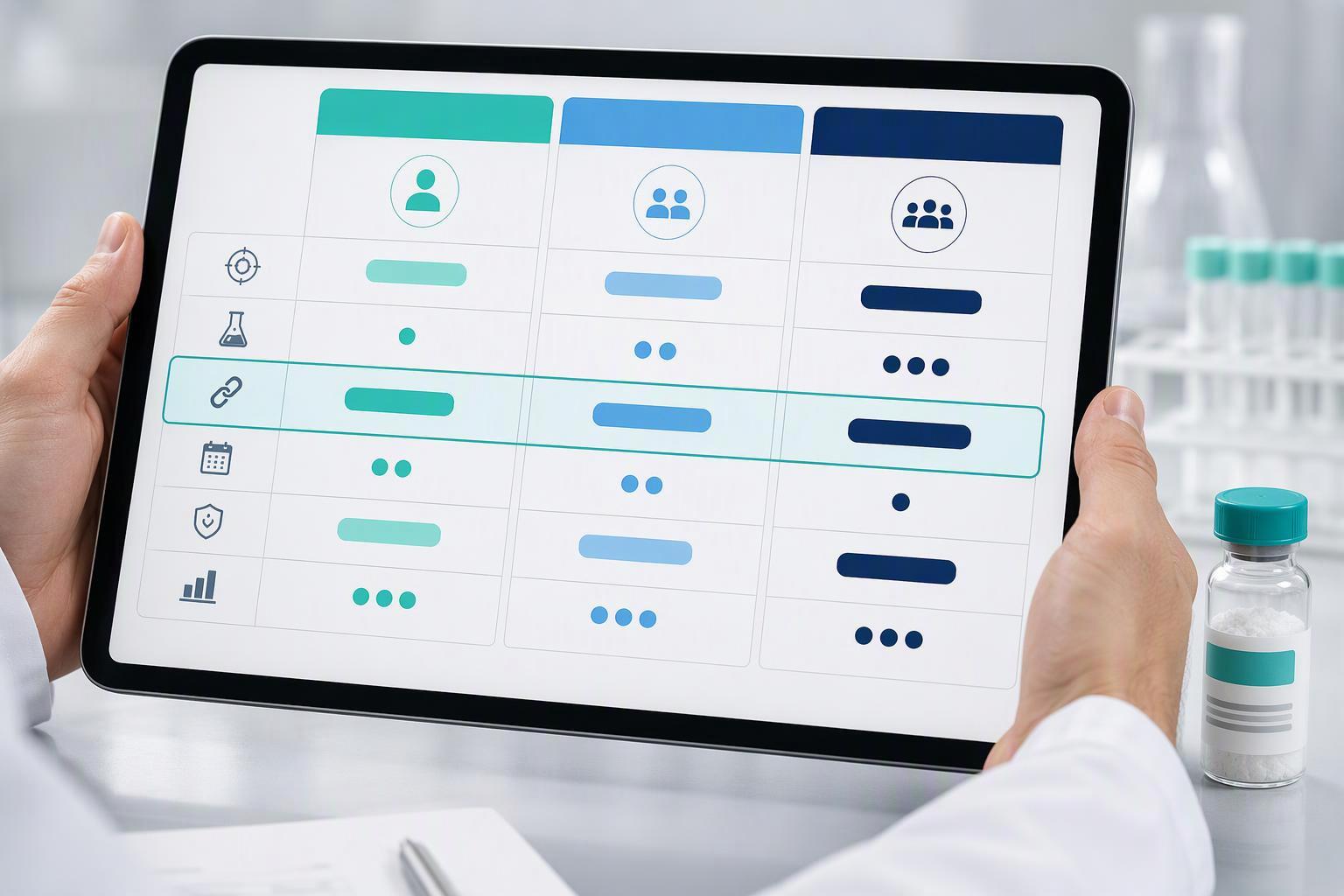
Method ownership decides whether you can switch at all. Three allocations exist, and the agreement has to name which one you are in: buyer-owned methods, where the buyer controls revisions, validation strategy and use rights; vendor-developed methods, where the buyer still needs contractual rights to use, transfer and keep using the method; and jointly developed methods, where the agreement must expressly allocate ownership of the method, the data, the validation package and the transfer rights (Pharma Quality Agreements, 2026-01-08).
The protective form is a perpetual, irrevogável, royalty-free, transferable and sublicensable licence covering use at the supplier or any third-party lab, transfer to a successor supplier, routine GMP-driven modifications, and survival of assignment or acquisition. Without the survival clause, an acquisition can extinguish your rights.
|
Alocação |
Who controls revisions |
Who holds the validation package |
What the buyer needs |
|---|---|---|---|
|
Buyer-owned |
Buyer |
Buyer |
Nothing further |
|
Vendor-developed |
Peptídeo 3 Fornecedor |
Fornecedor |
Licence to use, transferir Merrifield Peptide Synthesis and keep using |
|
Jointly developed |
Compartilhado |
Named party |
Express allocation of method, data and transfer rights |
A certificate of analysis does not substitute for this. Raw-data access means the reviewer can see the chromatograms, espectros, calculations and audit trails behind a summary, and the normal model is retention on site with availability for review rather than bulk export (Pharma Quality Agreements, 2026-01-08). Ask for the peptide tech transfer records that let someone reconstruct what was done.
On specifications, vendor-stated practice norms put individual impurities at ≤0.1%, with ≥95% purity at kg scale usually needing multi-step preparative HPLC plus controlled lyophilisation, and batch records showing >98% purity with a full impurity profile (Mudanças no MOL, 2026-09-22). These are practice norms, not regulatory thresholds.
Na transferência: a lista de solicitações de registro de transferência de tecnologia
Ask for the transfer dossier by name, in writing, and list its contents item by item. A certificate of analysis answers a different question than peptide tech transfer records do.
The request list below follows the dossier structure in WHO’s technology-transfer annex, the standing technical annex on transferring pharmaceutical manufacturing between sites. Each item is answerable yes or no.
-
Master and batch records, including master formulas. Proves the process is documented as run, not reconstructed afterwards.
-
Process description with route rationale, critical process parameters and in-process controls. Proves the receiving site can reproduce the route, not just the final sequence.
-
Analytical methods with validation or qualification reports, plus system-suitability and transfer evidence. Proves the methods travel with the product.
-
Impurity history, the known impurity list and the limits rationale. Proves limits were derived, not inherited.
-
Reference standards with source, qualification and retention. Proves the measurement baseline is traceable.
-
Stability data with conclusions and retest or shelf-life recommendations. Dipeptide Proves the assigned shelf life has a basis.
Three closing items tie the package together: change-control history, deviations and investigations with disposition rationale, and a comparability or transfer summary report linking acceptance criteria to results.
Para dica: Paste this list verbatim into your request and ask for the comparability summary by name. It is the one document that shows whether the criteria were met, rather than restating them.
Expect a summary rather than raw data. The difference between an auditable summary and raw data matters here: a dossier should let a qualified reviewer reconstruct what was done and why, which is a higher bar than a signed certificate. A complete transfer package, of the kind MOL Changes assembles, contains these documents as a set.
Na transferência: qualificação do site após uma mudança de propriedade
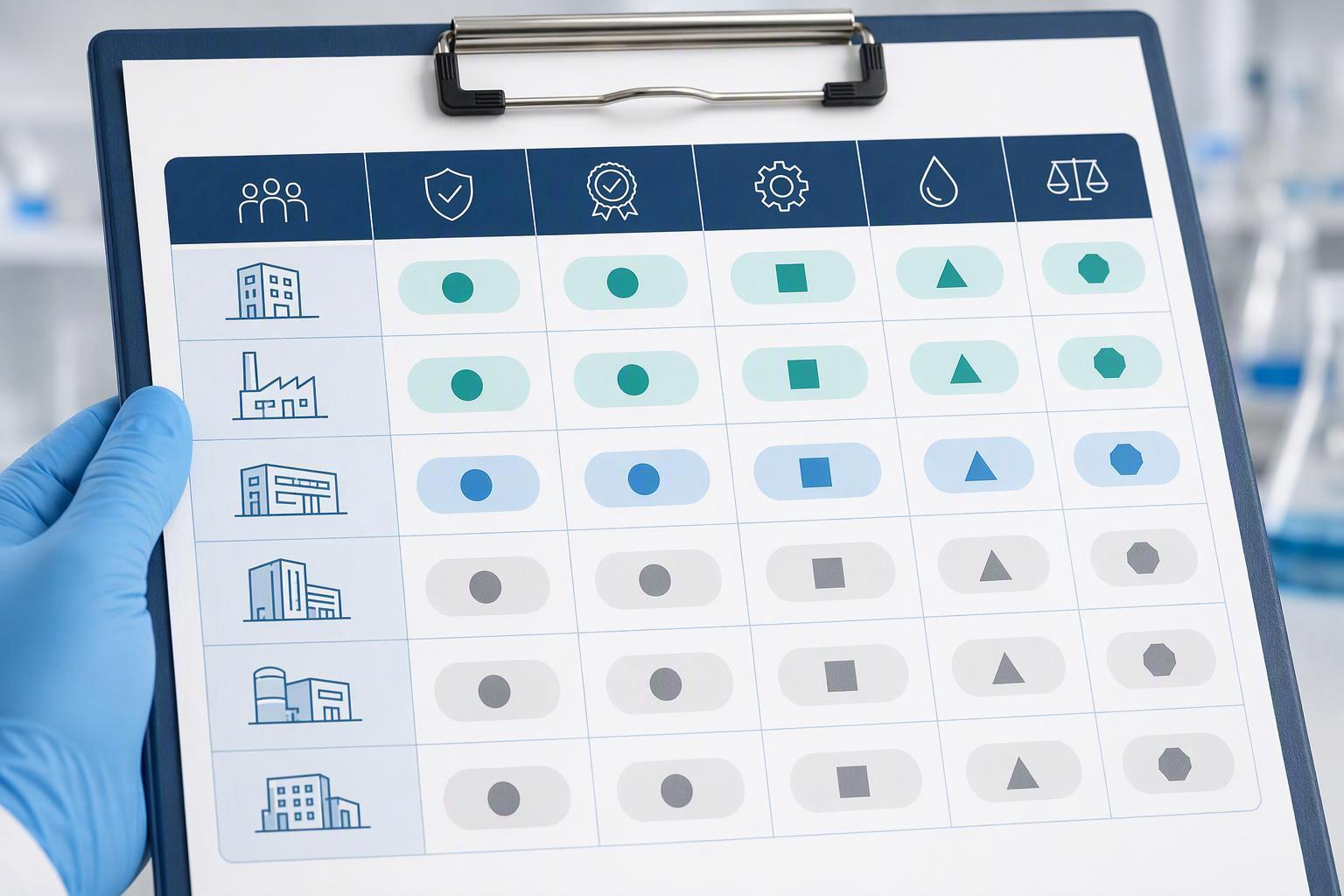
A change of legal entity is a new qualification event, not an administrative update, and peptide site qualification after ownership change should be treated as a fresh evidence request rather than a records amendment.
The FDA has cited recent ownership changes as a risk-based inspection criterion, and in the warning letter ECA analysed, the agency addressed both the previous and the current owner and concluded that oversight was inadequate where deficiencies persisted across the change. The practical reading: the new owner may run the same equipment and still present a different quality system, so the buyer’s evidence has to be rebuilt against the entity that now holds the licence.
Five binary items cover the handover:
|
Item |
Confirmado |
Pending |
Não fornecido |
|---|---|---|---|
|
Post-closing legal entity and its quality-system status confirmed |
|||
|
GMP status current and documented for the site as it will operate after close |
|||
|
Equipment equivalency assessed against the equipment your data was generated on |
|||
|
Utilities and environmental controls documented and comparable Acetil Hexapeptídeo 1 |
|||
|
Comparability data available where site or ownership changed |
For the last item, the comparability summary in WHO’s technology-transfer annex sets the pattern: acceptance criteria stated first, results reported against them, not a narrative of what was done.
The transaction itself is modest in headcount terms. The acquirer’s LEO III Fund announcement states that roughly 130 employees transfer with the sale and that the Berlin site will run as a stand-alone company. Small transfers do not shrink the qualification question; they simply make it easier to answer quickly if the documents exist.
Após a entrega: fabricação de backup e proteção de programas de longa duração
A backup source protects a program only if it is qualified before a constraint appears. Second-source qualification for a peptide or API typically runs 6 para 18 months including process transfer and validation, and the same source advises starting around 18 months out and at least 12 months before the need arises (PeptideStaff’s dual-sourcing planning ranges, recuperado 2026-06-21).
Six questions, each answerable yes or no:
-
Has at least one alternate CDMO or internal site been qualified before a constraint appears?
-
Is backup qualification sequenced against the closing timeline rather than started at the first supply problem?
-
Has comparability bridging been planned between primary and backup material?
-
Does the backup fit the program’s capacity and sterility requirements?
-
Is the backup’s documentation package ready to accept a transfer?
-
Does the program have a named continuity owner, defined requalification triggers, retained inventory and reference standards, change-control linkage to filings, and a review cadence?
Sequencing a second source against a closing timeline means risk assessment and shortlisting at announcement, screening and a quality agreement during the divestment window, then pilot and comparability batches before or immediately after close, with periodic bridge lots keeping the backup warm (MOL Changes’ resilient supply chain playbook, recuperado 2026-08-11). The component timelines in the same source break that into risk assessment at 2 para 4 semanas, CDMO identification at 4 para 8 semanas, technology transfer at 12 para 24 semanas, comparability studies at 8 para 16 weeks and filing support at 6 para 12 semanas (PeptídeoStaff, recuperado 2026-06-21). Budget $200K to $500K for setup plus $50K to $100K a year for requalification, and note that peptide API rates at non-Chinese facilities rose 5 para 10% year over year in Q2 2026 against flat-to-declining pricing in 2018 para 2023 (the same planning ranges and PeptideStaff's 2026 capacity analysis, recuperado 2026-09-22). Capacity pressure is expected to shape supply security for 24 para 36 meses, with the next 12 para 24 months constrained and announced expansions arriving from late 2027 into 2028 (the same capacity analysis).
⚠️ Aviso: The timeline and cost figures above are industry-reported from a vendor-adjacent cluster with no independent corroboration. They are planning inputs, not audited benchmarks.
Operational guidance on buffer stock and warm backup capacity suggests a rolling 8 para 12 week safety stock of Fmoc-amino acids and coupling reagents, 8 week consignment stock for standard building blocks, e um 6 month buffer for stable isotope labels (Mudanças no MOL, recuperado 2026-08-11). The same operational playbook reports that a warm second source cut emergency transitions from 12 months to under 3 semanas, with boutique method transfer at 2 para 4 semanas; that figure describes the publisher’s own capability, not an independent benchmark.
Perguntas frequentes
Quanto tempo leva a qualificação de segunda fonte?
Longer than most program timelines allow. PeptideStaff’s dual-sourcing planning ranges put the work in months rather than weeks, and the spread is driven by how much of the release specification is vendor-owned, whether analytical methods transfer cleanly, and how much stability data the new site must generate before it can release. Treat any single figure as vendor-adjacent planning guidance rather than a benchmark.
Um site de backup pode ser qualificado em semanas?
Não. The operational playbook’s own capability figure of under three weeks describes one publisher’s rapid onboarding of a site it already controls, not a qualification timeline a buyer can expect from an unrelated supplier. Site qualification after an ownership change involves method transfer, documentation review and release testing, which do not compress to that window.
E se o fornecedor recusar o acesso aos dados brutos?
Negotiate review rights instead of export. What raw-data access actually means in a quality agreement is usually retention on site with availability for inspection, so the realistic ask is a documented right to review records at the facility, not a copy of the dataset.
Uma mudança de propriedade desencadeia um registro regulatório?
Not automatically, and it does not settle the question either. ECA’s analysis of an FDA warning letter on ownership change shows the new owner inherits the existing obligations, so confirm your own filing position with your QA and legal functions rather than relying on the transfer notice.
O comprador pode opor-se à transferência ou rescindir?
It depends on the clause. A practical breakdown of sponsor-CDO quality agreements distinguishes cure-based notification clauses, which give you a window to raise concerns, from clauses carrying termination rights, which give you an exit. Read which one you signed before the closing date, não depois.
Conclusão
The leverage in this situation is not spread evenly across the deal. It is concentrated before close, and it shrinks the moment the transaction completes. BioNTech’s own framing of the expected 2026 close as a divestment of a non-core site tells you the seller wants a clean, dated exit; a buyer who arrives at the table with questions already written is negotiating inside that window rather than after it. The three phases above follow the same logic: before closing you ask, at handover you verify, after handover you protect what you have already qualified.
Every item is answerable Yes or No, which is the point. A completed peptide supplier continuity checklist is what turns the continuity wording in BioNTech’s statement into a documented position you can defend to your own QA function, your investors, and your regulators, rather than a comfort statement you accepted on trust.
If you would rather not run the review alone, request a transfer-readiness review and we will work through the checklist with you, item by item, before your close date.
The author has a commercial interest in peptide manufacturing services. This article is supply-continuity and documentation guidance, não é aconselhamento jurídico ou regulatório; confirm your own obligations with your QA and legal functions.