ISO 9001:2026 Revisión del sistema de calidad de péptidos: Qué cambió y qué comprobar primero
ISO 9001:2026 movido al escenario 60.60 en 16 Septiembre 2026, y no se ha publicado ninguna fecha límite de transición. El ISO 9001:2026 rastreador de transición confirma que la sexta edición ya está disponible, mientras el documento de transición aún no está numerado, citado como “IAF MD XX” en el Heads Up de ANAB 553 boletín de 16 Abril 2026. Los organismos de certificación están diciendo a los clientes que planifiquen un período de tres años que finaliza alrededor de septiembre. 2029, pero SGS enmarca esto como una expectativa, no es un requisito publicado. La misma situación ya existe para ISO. 14001:2026, y un organismo de certificación afirma claramente que su cifra de transición proviene de un borrador.

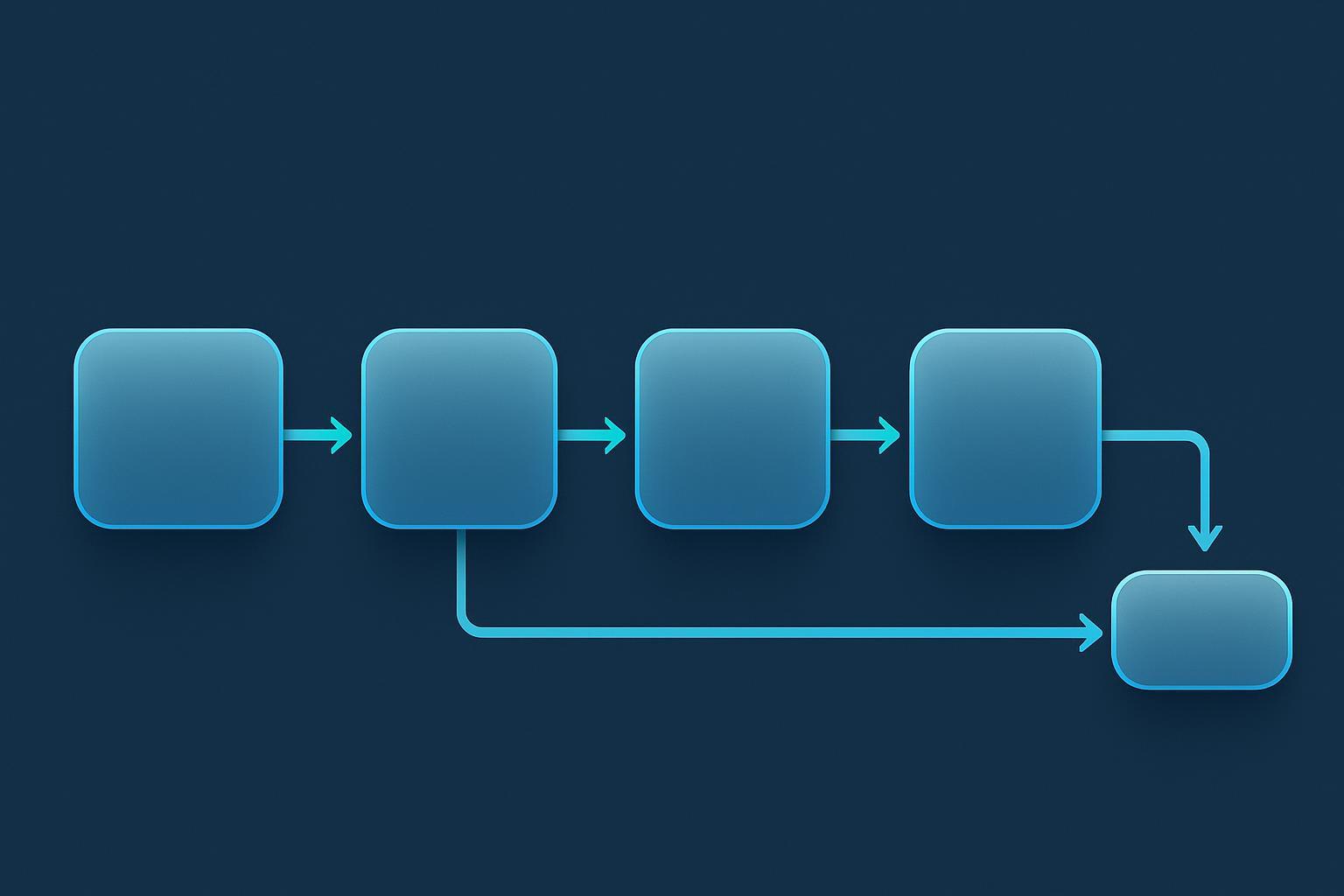
Porque no existe un plazo que esperar, la orden de revisión importa más que la fecha de revisión. El control de cambios es lo primero porque todas las demás áreas dependen de él.. Calificación del proveedor, Se siguen registros de trazabilidad y análisis., luego manejo de desviaciones, y la interfaz cliente-QMS es la última porque consume las salidas de las otras cinco. La cláusula de revisión divide 6.1 en requisitos separados de riesgos y oportunidades, y cláusula 5.1.1 ahora se requiere que la alta dirección promueva una cultura de calidad, así que espere que la numeración de las cláusulas esté finalizada en algunos lugares. Trate esto como un marco de revisión., no es una interpretación cláusula por cláusula, y verificar con la norma publicada y su organismo de certificación.
Antes de comenzar: Alcance, Evidencia y tiempo
Tenlos listos antes de abrir el estándar.: la ISO publicada 9001:2026 texto, su manual de calidad actual, Los modelos de acuerdos de calidad que emite a los proveedores., el último informe de auditoría interna, la lista de proveedores con niveles de riesgo asignados, y acceso de lectura a la pista de auditoría del sistema de datos de cromatografía. Ya deberías sentirte cómodo con ISO 9001 estructura de cláusulas y con lectura de registros de lotes de péptidos; si alguno es nuevo, revisa eso primero, porque los pasos suponen que puedes seguir un registro desde la solicitud hasta el cierre.
Presupuesta aproximadamente un día laboral por área de revisión para un equipo pequeño. Los registros en papel tardan más, a menudo dos días por área, porque el taladro en el paso 3 depende de recuperar muchos archivos rápidamente.

Una regla gobierna todo lo siguiente: un artículo cuenta como hecho sólo cuando se puede producir un registro a pedido, no cuando un procedimiento lo describe. Un historial de cambios defendible, Por ejemplo, tiene que nombrar al aprobador y las acciones que surgen de la revisión, no sólo el cambio en sí (David Barker Consultoría, 2026). La misma lógica se aplica a los materiales entrantes.: Un análisis completo debe incluir todas las pruebas especificadas para la materia prima., por lo que un certificado de análisis por sí solo no es el registro (Q7 Q&Un grupo de trabajo de implementación).
Conclusión clave: La revisión produce hallazgos., no conclusiones. Cualquier cosa que no puedas evidenciar se convierte en una acción abierta., no es un pase.
Paso 1: Revisar el control de cambios frente al nuevo énfasis

El control del cambio de péptidos es la primera área a revisar porque una brecha aquí invalida las otras cinco. Un registro defendible debe nombrar al aprobador y las acciones que surgen de la revisión., no solo la solicitud que lo desencadenó. Yo Q7 Requiere un sistema formal de control de cambios que cubra las materias primas., presupuesto, métodos analíticos, instalaciones, sistemas de apoyo, equipo, Pasos del proceso y hardware de la computadora., y espera que los cambios propuestos sean revisados y aprobados por las unidades organizativas responsables.. Bajo PCI Q7 §7.14, Cambiar el origen de una materia prima crítica es en sí mismo un evento de control de cambios.. La propia guía de auditoría de ISO trata la gestión del cambio como una práctica que debe ser auditada, entonces la prueba es el récord, no el procedimiento.
El escenario específico del péptido que el registro debe reconstruir: un cambio de lote de resina que desplaza el perfil de impurezas por encima del límite de especificación.
Marque cada elemento si o no:
-
Tiene todos los cambios en los últimos 12 meses de evaluación de riesgos antes de la aprobación?
-
Síntesis de péptidos ¿La fecha de vigencia se registra por separado de la fecha de aprobación??
-
¿Se evidencia capacitación sobre el cambio??
-
¿Se verificó la eficacia después de la implementación??
Paso 2: Revisar la calificación del proveedor por nivel de riesgo, No por certificado
La calificación del proveedor de péptidos falla con mayor frecuencia porque un certificado de análisis se trata como la calificación misma.. Un certificado indica lo que contenía un lote. It does not tell you whether the supplier was ever assessed against the risk it carries to your process.
The practical alternative is risk tiering. Industry models commonly use three to five tiers, and the widely referenced four-tier model in USP <1043> assigns tier by product contact, impacto en los atributos críticos de calidad, in-process failure detectability, source complexity and lot-to-lot variability. Requalification cadence follows the tier: critical suppliers every one to two years, high and moderate every two to three years, low every three to five years (Cambios de MOL, vendor-published guidance, recuperado 2026-09-10).
|
Nivel |
Typical peptide inputs |
Recalificación de cadencia |
|---|---|---|
|
Crítico |
Resinas, aminoácidos protegidos, estándares de referencia |
Every 1–2 years |
|
Alto |
Solvents and reagents with CQA impact |
Every 2–3 years |
|
Moderado |
Ancillary materials, packaging contact |
Every 2–3 years |
|
Bajo |
Non-contact consumables |
Every 3–5 years |
Then work the binary items:
-
Is every supplier assigned a tier?
-
Is the tier justified in writing against the five assignment factors?
-
Is the requalification date current, or has it lapsed quietly?
-
Where several materials come from one vendor, is there a confirmatory-testing backstop? Testing each material at least once every five years is described as a reasonable minimum in the same source.
-
Is outsourced analytical testing qualified on the same basis as a material supplier, including a full analysis covering all tests specified for the raw material?
One honest limitation: tier models are guidance, not a single mandated scheme. Your certification body may accept a different structure, provided the reasoning is documented and the cadence is defensible.
Paso 3: Ejecute un simulacro de trazabilidad cronometrado en un lote activo
Peptide traceability is verified by running it, not by reading the procedure. A mock trace exercise is run as a timed drill on a live lot: trace backward to the customer request and specification, incoming materials, the synthesis batch record and the purification records, then forward through analytical release, embalaje, shipment and destinations. Reconcile quantities so every unit is accounted for as received, consumed, scrapped, held or shipped, and log any missing lot number, unclear handoff or quantity mismatch as a corrective action rather than explaining it away (Certiva, recuperado 2026-08-12).
The split-lot case is where drills usually fail. When one synthesis batch is divided across two purification runs, both directions of the trace must still resolve to the same parent batch, and a reconciliation that closes on paper can hide a purification record that never names which half it processed.
Close the drill with four binary answers: was it completed inside the target time, did every handoff have a named owner, did the quantity reconciliation land within tolerance, and was every discrepancy logged as a corrective action?
Paso 4: Auditar registros analíticos hasta los datos sin procesar
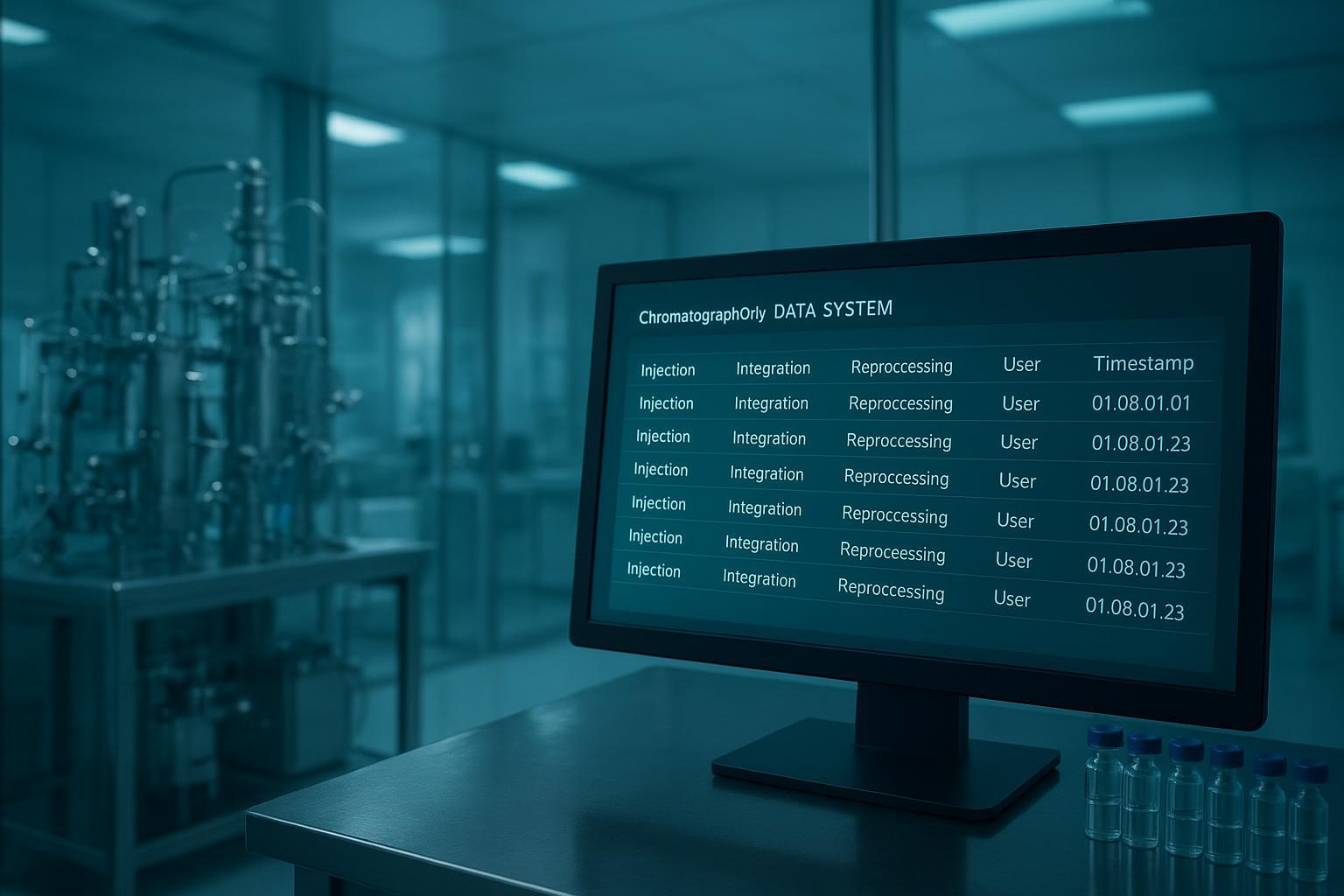
For a peptide lot, the controlled record is the electronic one, not the printed report. Analytical records have to retain the acquired chromatogram or spectrum, the full injection sequence including injections that never reached the final report, the instrument and integration methods, the audit trail with create, modify and delete events carrying user and timestamp, and the lineage linking Sintético Comercio Péptidos sample, versión del método, instrumento, analyst and sequence. Manual integration must be exceptional, justified and attributed, and reprocessing must not overwrite the original result (CloudTheapp, recuperado 2026-08-25).
Chromatography data system audit trails are an explicit inspection target, and reprocessing has to stay visible next to the original result rather than replacing it (CASRAI, recuperado 2026-08-28).
Work through these as binary checks:
-
Can the audit trail be produced for a named lot on demand?
-
Is every manual integration justified in the record itself?
-
Is the method version recorded alongside the result?
-
Are system suitability results retained with the sample results?
-
Does the CoA trace back to the underlying data?
Where a supplier runs orthogonal HPLC or high-resolution MS verification, the record linkage between the analytical result and the released lot is the part that gets tested. MOL Changes states this as a capability of its analytical verification workflow, not as a certification.
Paso 5: Revisar el manejo de desviaciones y el cierre OOS/OOT
A deviation system is judged by closure quality, not by count. En la fabricación de péptidos, four events must route through it: an out-of-specification impurity result, an out-of-trend purity drift across consecutive lots, a failed system suitability check, and any reprocessing step that changes the reported result.
Work the binary items. Is every deviation classified by impact? Is the root cause recorded rather than the symptom? Is the CAPA linked to the deviation it closes? Is effectiveness verified at a defined interval? Is the client notified where the deviation affects a released specification?
This area attracts scrutiny, though the numbers need care. Data integrity featured in about 15% of the drug warning letters reviewed for FY2025 (IntuitionLabs, 2026), and the apparent fall from the 2016 peak is partly a definitional shift: 81% of FY2016 letters went to firms outside the US, contra 60% by FY2018 (IntuitionLabs, 2026). Of the FY2025 letters reviewed, 59% went to US facilities (Pharmaceutical Online, 2026). Acerca de
Nota: The FY2025 and FY2016–FY2018 figures use different denominators and must not be plotted as a single declining line.
Paso 6: Asigne la síntesis personalizada a la interfaz cliente-QMS
Most peptide quality failures at the client boundary are ownership failures, not technical ones. The interface has to say in writing who approves the specification, who owns change notification, who owns deviation communication, who owns release criteria, and where escalation goes.
A quality agreement plus a technical agreement pairing is what operationalises the ICH Q10 elements, covering change management, deviation and CAPA ownership, knowledge management, management-review interfaces and escalation paths, with validated 21 Parte CFR 11 compliance treated as a contractual baseline (Cambios de MOL, 2026-09-10). That page also records industry change-notification windows of 30, 60 o 90 días, longer for site, proceso, raw-material and analytical-method changes, and up to six months for comparable-materials supply.
Work through the binary items:
-
Is a named quality contact identified on both sides?
-
Is the notification window defined per change type?
-
Is the specification approval path documented?
-
Is the release-criteria owner unambiguous?
-
Is a joint review cadence scheduled?
One stated approach among several is the six-pillar supplier-governance model, which groups raw-material qualification, documentación, sterilization strategy, testing capacity, change control and contingency planning into a single governance view for custom synthesis programmes (Cambios de MOL, 2026-09-10).
Next step: Request the quality documentation package to see how these interface controls are documented before your next client audit.
[INTERNAL-LINK: none]
Errores comunes a evitar en una ISO 9001:2026 Revisar
The most common failure in an ISO 9001:2026 peptide quality system review is reviewing documents instead of records, which produces a clean gap analysis and an unclean audit. Four mistakes account for most of that gap.
Treating the absent deadline as permission to wait. Because no transition deadline has been published, some teams park the review until one appears. The fix is to schedule the review against your own surveillance cycle, not against a date that does not exist yet.
Reviewing clause by clause instead of process by process. A clause walkthrough confirms that a procedure exists; it does not show whether the procedure held on a live lot. Review the six process areas in the order they generate risk, and let the clauses fall where they belong.
Accepting supplier certificates as qualification evidence. A certificate states that a supplier was audited once. It says nothing about the lot in front of you, so pair it with the confirmatory testing and requalification cadence your risk tier requires.
Treating the printed CoA as the analytical record. When a discrepancy is found, the controlled record is the electronic one, not the printed report, and a mock trace exercise is run as a timed drill to prove the electronic trail closes.
Cómo se ve una revisión completa
If the review went correctly, you are holding a dated findings register, not a set of notes. Every checklist group has a named reviewer. Every item that could not be evidenced has an owner and a due date against it, and every item that passed is listed too, because the passes are what you will show an auditor first.
The traceability drill is the clearest success signal: a mock trace exercise run as a timed drill should end with a reconciled quantity, meaning the mass balance you reconstruct from batch records matches what the lot actually consumed and released. If the numbers do not reconcile, the drill found a real gap, which is the point of running it. Producción de péptidos
The stretch goal is to run this same framework against one critical supplier’s system and place the two findings registers side by side. Comparing them is the fastest way to surface interface gaps, the places where your change control assumes a notification the supplier never agreed to send, before an auditor finds them for you.
Preguntas frecuentes
¿Existe una fecha límite de transición publicada para ISO? 9001:2026?
No. The transition document is still unnumbered, published by the Global Accreditation Cooperation as “IAF MD XX”, so no official deadline exists yet. Certification bodies are telling clients to plan for a three-year window, but that figure rests on the 2015 cycle, which gave organisations three years between publication and withdrawal of the previous edition. La misma situación ya existe para ISO. 14001:2026, where the transition period is likewise unsettled. One certification body states plainly that its transition figure comes from a draft, so check your own certification body’s written notice rather than a summary page.
¿Nuestra ISO existente 9001:2015 el certificado sigue siendo válido?
Sí, for now. The sixth edition of ISO 9001 fue publicado en 16 Septiembre 2026 and supersedes the 2015 edición, but certificate validity follows accreditation and certification-body transition arrangements that are not yet published. Keep your current certificate and start the review now rather than waiting for a deadline that does not exist.
¿Por dónde debería empezar un equipo pequeño si solo puede revisar un área este trimestre??
Start with change control. Calificación del proveedor, traceability and deviation handling all generate records that change control governs, so a gap there is the one most likely to invalidate work done elsewhere. One focused review of change control will surface more downstream problems than any other single area.
¿Podemos utilizar este marco para revisar un proveedor en lugar de nuestro propio sistema??
Sí. Two adjustments make it work: the traceability drill becomes a request for the supplier’s own drill record rather than a live exercise you run, and the interface section becomes the quality agreement itself, which is where your requirements and the supplier’s obligations meet. Everything else transfers unchanged.
Conclusión
You now have a six-area review order, a binary checklist for each area, and the two facts that set the clock: ISO 9001:2026 fue publicado en 16 Septiembre 2026, y no se ha publicado ninguna fecha límite de transición. That second fact is the reason to run this ISO 9001:2026 peptide quality system review now rather than later. Findings from a review of this kind take longer to close than a transition deadline takes to arrive, so the teams that start with change control and work the sequence are the ones who will not be compressing remediation into a single quarter.
The findings register you built along the way is the deliverable. It tells you which of the six areas needs a CAPA, which needs a documentation update, and which is already defensible as written.
If you would rather not build the evidence pack alone, MOL Changes can share a quality documentation package covering supplier governance, change-notification windows and the client-QMS interface, or connect you with a specialist who works on peptide quality systems daily. MOL Changes tiene interés comercial en estándares de calidad de péptidos, so weigh that as you read.
Verify every item against the published standard and your certification body before you treat any of it as closed.