Qué significa la cadena de custodia de péptidos en una cadena de suministro regulada
Peptide chain of custody is the unbroken, auditable record that links a physical peptide lot to its documented history, from the qualification of starting materials through synthesis, modificación, prueba de lanzamiento, etiquetado, and shipment. It is a record set, not a document.
The GMP framing for that record set comes from Yo Q7, the GMP guide for active pharmaceutical ingredients, adoptado en el Trámite 5 with a legal effective date of 1 Noviembre 2000. Q7 covers API manufacturing under an appropriate quality management system, and it also aims to help ensure APIs meet requirements for quality and purity. Its applicability boundary sits at the API starting material, por lo que las expectativas de documentación aguas arriba de ese punto difieren de aquellas aguas abajo. Cuando los registros son electrónicos, el requisito de validación en 21 CFR 11.10(a) aplica: Los sistemas deben validarse para garantizar la precisión., fiabilidad, rendimiento previsto consistente, y la capacidad de discernir registros inválidos o alterados.
Conclusión clave: La cadena de custodia es un conjunto de registros vinculados, ni un solo certificado. Cada enlace tiene que ser reconstruible por sí solo..
Los seis dominios de registro que componen una cadena de custodia
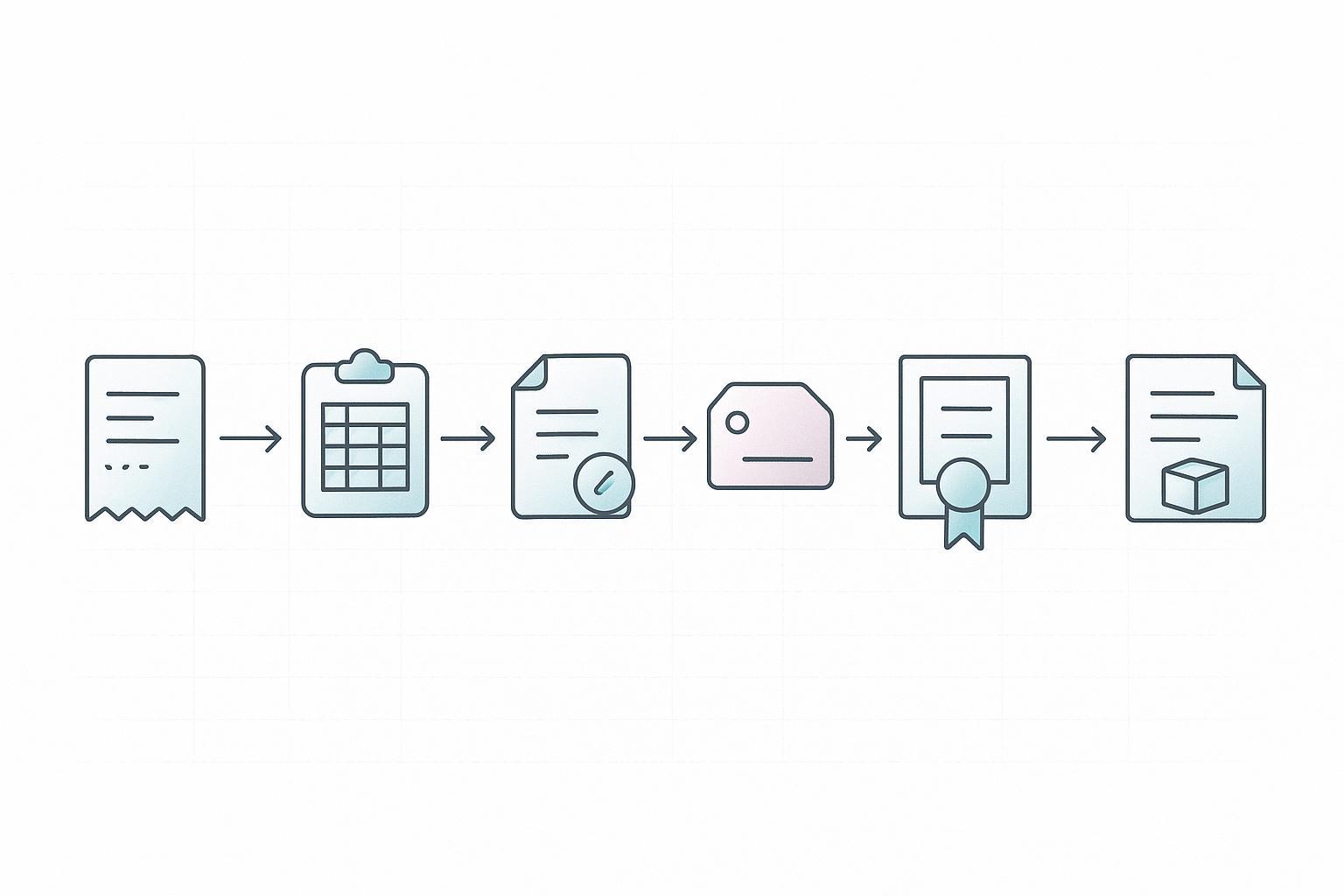
Seis dominios llevan la cadena: registros de materia prima, registros de lotes de síntesis, registros de modificación, registros de etiquetado y reenvasado, registros de liberación analíticos, y registros de envío. Trate cada uno como un criterio de evaluación en lugar de un elemento de la lista de verificación.. La siguiente tabla proporciona los campos mínimos por dominio., para que pueda decidir qué barra de documentación se aplica a su programa antes de comprometerse con un proveedor.
|
Dominio |
Campos mínimos a buscar |
|---|---|
|
Registros de materia prima |
Identidad del proveedor, estado de calificación, lote entrante, CoA, fecha de recepción |
|
Registros de lotes de síntesis |
Registro de lotes, identificador de lote, pasos del proceso, producir, desviaciones |
|
Registros de modificación |
Lote principal, lote derivado, método de modificación, registro de vinculación |
|
Servicios Etiquetado y reenvasado |
Contenido de la etiqueta, control de etiquetas, Conciliación de unidades de entrada y salida. |
|
Lanzamiento analítico |
CoA, datos sin procesar, método, calibración, idoneidad del sistema |
|
Envío |
Identidad del remitente, datos de temperatura, registro de recepción |
¿Qué cadena de custodia no es?
Un certificado de análisis no es custodia.. Informa los resultados de una muestra.; no muestra de dónde vino el material, quien lo manejó, o lo que cambió en el camino. Un número de lote tampoco es rastreable. Es una clave que sólo funciona cuando los registros detrás de ella existen y se concilian..
Parte 11 También es más estrecho de lo que a menudo se describe.. FDA 2003 Parte 11 guía de alcance establece que la FDA interpretará de manera estricta el alcance de la Parte 11 y no tiene intención de tomar medidas coercitivas sobre su validación, pista de auditoría, retención de registros, y requisitos de copia de registros como se explica en esa guía. Los registros aún deben mantenerse o enviarse según las reglas subyacentes, incluidos los requisitos para documentar la fecha, tiempo, o secuenciación de eventos y para garantizar que los cambios no oscurezcan las entradas anteriores.
Por qué la cadena de custodia de péptidos está recibiendo más atención ahora
Dos señales explican el cambio: un mercado cada vez más grande, y las inspecciones se vuelven más específicas. Grand View Research sitúa el mercado mundial de terapias peptídicas en USD 140.9 mil millones en 2025, subiendo a un estimado de USD 164.0 mil millones en 2026 y un USD proyectado 294.6 mil millones por 2033 en un 8.7% CAGR. Se trata de un modelo publicado por un único proveedor con un año base declarado de 2025 y alcance global; no se obtuvo ninguna verificación cruzada independiente, so treat the trajectory, not the decimals, as the signal. Scrutiny has moved in the same direction. A GMP Platform re-analysis of FOIA-obtained FDA Forms 483 covering 2018 a 2024 found data-integrity issues in 81 del 138 A NOSOTROS. domestic drug and API inspections that produced findings. That dataset is U.S. domestic only and ends in 2024. Neither figure is load-bearing for the practices that follow; together they explain why peptide chain of custody has moved from a quality-assurance footnote to an evaluation criterion buyers now apply before they place an order.
Donde la documentación falla en la práctica
Chains rarely fail at the analytical bench. They fail earlier and less visibly: at goods-in, where a shipment is accepted against a packing slip rather than a specification; at internal transfers between rooms or sites that never get logged; at repackaging and relabeling, where one lot identifier becomes two without a reconciliation; and in legacy paper records that cannot be reconstructed into a defensible sequence. Research-use-only vendor pages describe these same break points, and they are useful as illustration of where practitioners report friction. They are not authority. For every claim in this guide, the authority is the primary document: the regulation, the pharmacopeial chapter, or the guidance itself.
La columna vertebral de los estándares
The rest of this guide anchors to a fixed reference set. For active pharmaceutical ingredients, ICH Q7 sets the GMP expectations that supplier qualification and batch records are measured against. 21 CFR 11.10 governs electronic records controls, including the audit-trail requirement in 11.10(mi) that changes “shall not obscure previously recorded information.” EU GMP Annex 11 covers computerised systems, y un 2025 draft revision is in public consultation; el 2011 text remains in force in the interim. The draft’s date and substantive changes are not verified here, so no change list is stated. Analytical and microbiological release expectations come from ICH Q2(R2), USP <85> Endotoxinas bacterianas, y USP <71>. MHRA’s GXP data-integrity guidance supplies the ALCOA principles that the record domains below are built on.
Registros de Materia Prima: Lo que demuestra un punto de partida
A receipt record is the first link in a peptide chain of custody, and it has to stand on its own before material moves anywhere. Como mínimo, it should carry these fields:
|
Field |
What it must show |
|---|---|
|
Identidad del proveedor |
Legal name and site of the shipping entity, not just a distributor |
|
Material name and grade |
Exact designation, including research-use or GMP grade |
|
Lot number |
Supplier’s own lot identifier, recorded as printed |
|
Quantity received |
Amount and unit of measure as weighed or counted at receipt |
|
Date and time of receipt |
When the material crossed into your control |
|
Package condition |
Intact, compromised, or opened in transit, with a note |
|
Quarantine status |
Whether the material is held pending disposition |
|
QA disposition |
Who released, rejected, or returned it, y cuando |
Evidencia de calificación del proveedor
Behind the receipt record sits the qualification file: an approved-supplier record, a material specification, and a supplier certificate of analysis that lists the methods used and the results obtained. A pass/fail stamp alone does not qualify. The reviewer needs to see which test produced which number, so the receipt can be tied to a defined expectation rather than an assertion.
Modo de falla: El punto de partida incondicional
The failure looks quiet. Material arrives, gets logged in, and is released into production with no approved-supplier record behind it and no retained sample set aside. Nothing breaks that day. The break appears later, when a downstream question requires proving where the material came from, and there is no record to consult. That is the point at which traceability for everything made from that lot becomes unrecoverable.
Registros de lotes de síntesis: El registro de lotes como ancla de custodia
The executed batch record is the anchor artifact of the entire custody chain. Everything upstream proves where the material came from; the batch record proves what was done to it, by whom, cuando, and with what result. If a reviewer can only pull one document, this is the one that tells them whether the lot is what the label says it is.
For peptide batch record documentation, a reviewer works down a fixed set of fields. A record missing any of them is incomplete regardless of how well the synthesis performed.
|
Required field |
lo que establece |
|---|---|
|
Lot identifier |
Ties the record to the physical material and to every downstream document |
|
Escala |
Batch size and the basis for yield and reconciliation |
|
Reagents and charges |
Identidad, grade, lote de proveedor, and weighed or measured quantity of each charge |
|
Process parameters |
Resin, solvent systems, coupling and cleavage conditions, temperatura, and time |
|
In-process checks |
Prueba, especificación, resultado, and the point in the process where it was taken |
|
Yield |
Actual against theoretical, Comercio with the calculation shown |
|
Deviations |
What departed from the master record, por qué, and what was done about it |
|
Operator and reviewer signatures |
Two dated signatures: the person who executed and the person who verified |
The signatures carry the weight. An unsigned or undated record is an assertion, no evidencia.
Registros de lotes en papel versus registros de lotes electrónicos
Both formats can satisfy a custody requirement. They differ on four dimensions that matter to a reviewer.
Attributable signatures. On paper, attribution rests on a signature and a printed name. In an electronic system, it rests on a unique credential tied to a named individual, which is harder to share and easier to audit.
Contemporaneous entry. Paper allows a record to be written up at the end of a shift. Electronic systems typically timestamp each entry as it is made, which is the difference between a record of what happened and a record of what someone remembered.
Correction mechanics. A paper correction is a single line struck through, the correct value written beside it, and initials and a date. An electronic correction preserves the original entry and the reason for the change. 21 CFR 11.10(mi) requires audit trails that are secure, generado por computadora, and time-stamped, and that record changes without obscuring previously recorded information.
Síntesis de péptidos Retention. Paper retention depends on physical storage and a retrieval process. Electronic retention depends on system validation and a migration path when the platform is replaced.
The expectation underneath both is ALCOA+: atribuible, legible, contemporáneo, original, preciso, más completo, coherente, duradero, y disponible. No format choice removes that expectation.
Modo de falla: El registro de lote reconstruido

The failure pattern is a record written up after the fact, often at the end of a campaign, from memory and a set of instrument printouts. The synthesis may have gone perfectly. The record still fails.
The specific defect is the late entry with no audit trail. A contemporaneous record shows what was known at the time. A reconstruction shows what someone concluded later, and there is no way to tell the two apart from the document alone. That is precisely what data-integrity findings target: not the error, but the inability to demonstrate when the entry was made and whether the original value was ever different. A correction that overwrites the prior value, on paper or in a system without audit-trail controls, produces the same problem.
The practical test is simple. If the record had to be reconstructed, the reconstruction itself belongs in the deviation log, with the reason and the scope of what was rebuilt.
Registros de modificación: Mantener conectados los lotes para padres e hijos
Any modification step creates a new lot. Conjugación, pegylation, counterion exchange such as TFA-to-acetate, and purification rework all change the material enough that the original analytical results no longer describe what is in the vial. The new lot needs its own identifier and its own release testing. It also needs a documented link back to the parent lot, because the analytical history of the starting material is the only evidence that the modification began from a known input. That link is what keeps peptide lot traceability intact across a derivative.
Qué debe contener el vínculo entre padres e hijos
A parent-child link is a record, no es una nota al pie. At minimum it should carry the parent lot identifier, the child lot identifier, the modification type, the process parameters applied, the date, the operator, and the analytical evidence showing the modification was performed as intended.
|
Field |
lo que establece |
|---|---|
|
Parent lot identifier |
The starting material and its analytical history |
|
Child lot identifier |
The new lot created by the modification |
|
Tipo de modificación |
Which transformation was performed |
|
Process parameters |
The conditions the modification ran under |
|
Date and operator |
Who performed it and when |
|
Analytical evidence |
That the modification produced the intended product |
Modo de falla: El derivado huérfano
The orphaned derivative is the failure this record prevents. A modified lot is assigned a fresh identifier, probado, and released, but nothing in the record points back to the lot it came from. The finished material looks complete on its own. The problem surfaces later, when a question about the starting material cannot be answered from the finished lot’s file. The parent’s analytical history is unreachable, and the chain stops at the modification step.
Registros de etiquetado y reenvasado: El punto de ruptura más común
Repackaging is where a peptide chain of custody most often breaks, because the container changes and the label is regenerated. The parent lot still exists in the record, but the material now sits in new containers under new labels, and nothing in the paperwork automatically ties the two together. A reviewer expects the repack record to close that gap with arithmetic: quantity in, quantity out, quantity destroyed or retained, and an explanation for any variance. If those four numbers do not reconcile, the chain has a hole.
|
Required field |
What it records |
|---|---|
|
Quantity in |
Material drawn from the parent lot |
|
Quantity out |
Sum of the child containers |
|
Quantity destroyed or retained |
Samples, losses, holdback |
|
Variance |
Difference between in and out |
|
Variance explanation |
Written reason for any difference |
|
Operador |
Who performed the repack |
|
Fecha |
When the repack occurred |
Contenido de etiquetas y control de etiquetas
The label itself carries custody information, not just an identifier. At minimum it should show the lot identifier, material name, quantity, repackaging date, and the identity of the person who performed the repack. Label issuance needs its own control: labels should be issued against the repack record, with obsolete or unused labels accounted for and destroyed, so a superseded label cannot re-enter circulation on a container it no longer describes.
Modo de falla: El reempaque no reconciliado
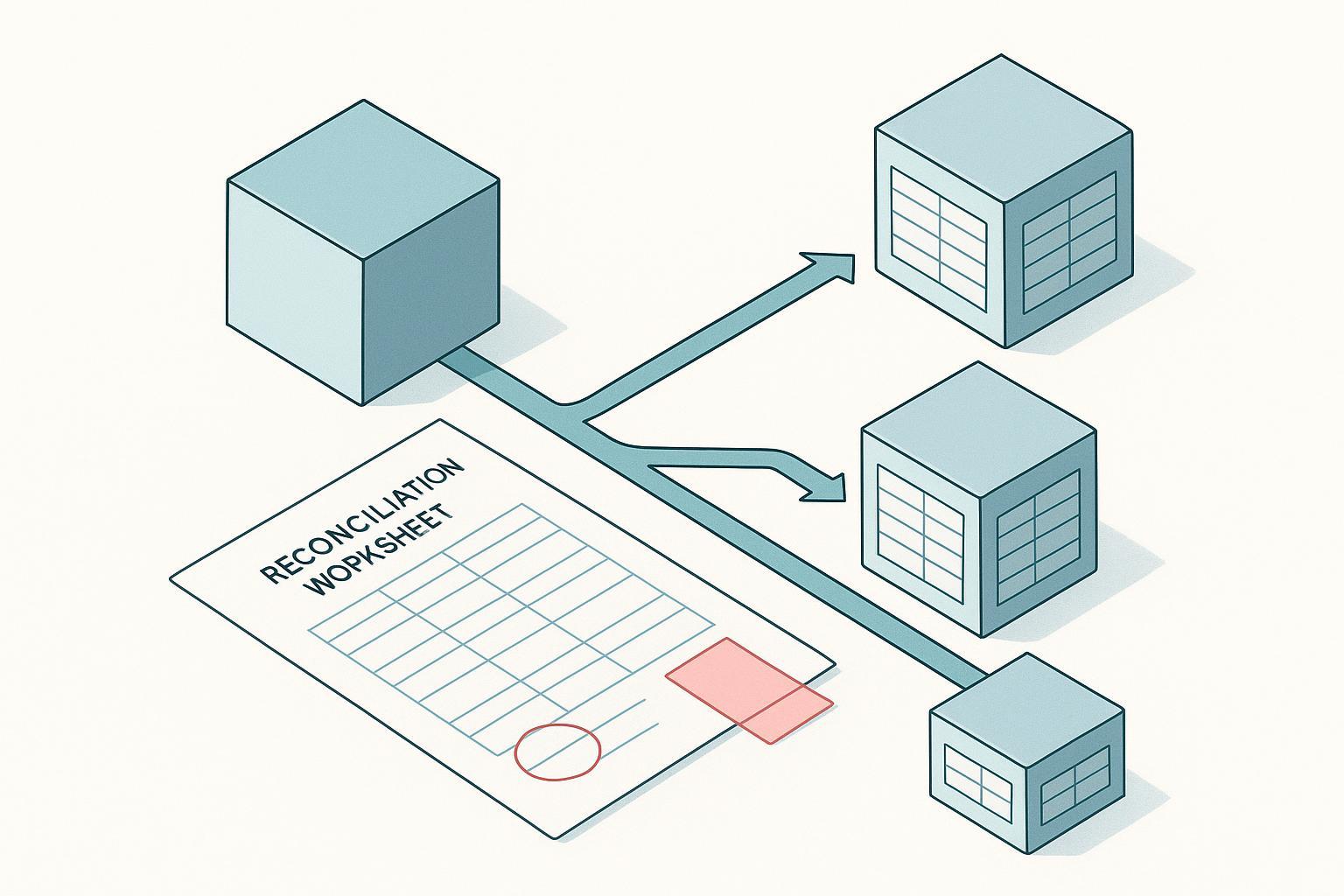
The failure is a repack with no reconciliation record at all. One parent lot is split into three child containers, the child quantities are recorded, and the difference between the parent quantity and the sum of the children is never explained. Material is missing from the account and no one can say whether it was sampled, spilled, retained, or shipped elsewhere. During an audit or an investigation, that gap cannot be reconstructed after the fact, because the operator, the date, and the reason were never written down.
Registros de lanzamiento analíticos: Datos sin procesar, No sólo el CoA
Analytical release documentation is a raw-data retention obligation, not a certificate attachment. Peptide analytical release testing generates a set of artifacts that a reviewer expects to retrieve together: the chromatograms, the integration tables that record how each peak was measured, the spectra supporting identity, the calibration records behind every instrument used, the system suitability results that qualified the run, and the audit trail showing who changed what and when. A certificate of analysis is a summary of those artifacts. It is not a substitute for them.
Lo que debe llevar el CoA
A reviewer checking peptide CoA documentation looks for a defined set of fields: the lot identifier, the test methods named, the specification limits, the reported results, the acceptance criteria each result is judged against, the release date, and the identity of the releasing analyst and the approver. Method detail is the field most often missing, and it is the one that matters most. A CoA that reports a purity figure without naming the method and its parameters cannot be traced back to the chromatogram that produced it, which leaves the number standing on its own.
Calibración de instrumentos e idoneidad del sistema
A result is only as defensible as the calibration record behind the instrument that produced it. Calibration files should be retained alongside the analytical data they support, for the same retention period, so that a reviewer can confirm the instrument was in a qualified state on the day of the run. System suitability results belong in the same package: they show the method performed within its defined criteria at the time of analysis, not merely that it was validated at some earlier point.
Modo de falla: El CoA sin datos brutos detrás
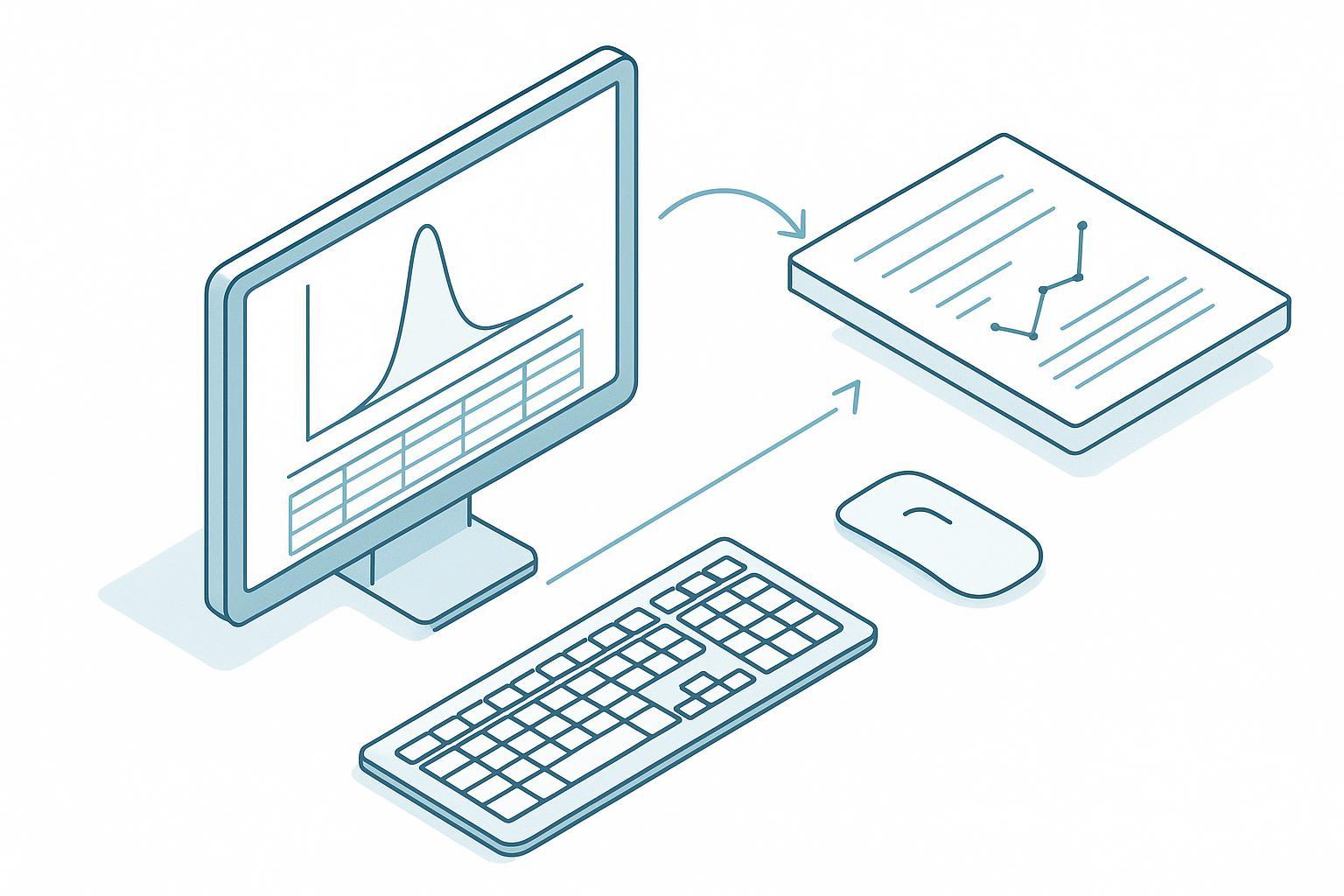
The failure is straightforward. A certificate exists, the purity number looks acceptable, and then the chromatogram, integration table, or calibration record cannot be produced on request. Under the audit-trail controls in 21 CFR 11.10(mi), record changes must not obscure previously recorded information, and audit trail documentation must be retained at least as long as the subject records. A manual reintegration that overwrites the original peak table, with no audit-trail entry recording it, is exactly the condition that clause addresses.
Registros de envío: Cerrar la cadena después del muelle
Custody does not end at release. A peptide chain of custody stays open until the receiving party confirms what arrived, in what quantity, and under what conditions, which makes the shipment record the last custody handoff rather than a logistics formality.
A defensible shipment record carries the same lot identifiers that appear in the batch and analytical records, so the receiving site can join the shipment back to the release documentation without guesswork. The fields below are the minimum set that closes the chain.
|
Required field |
What it must contain |
|---|---|
|
Lot identifiers shipped |
Every lot number in the consignment, matching the batch record and CoA |
|
Quantities |
Amount per lot, and the unit of measure |
|
Desti Péptidos sintéticos nation |
Receiving site and named receiving contact |
|
Carrier |
Carrier identity and tracking reference |
|
Shipment date |
Date of dispatch |
|
Temperature-control method |
Dry ice, gel packs, validated shipper, or ambient, as applicable |
|
Receiving confirmation |
Fecha, condición a la llegada, and the receiving party’s signature or e-signature |
Documentación de envío con temperatura controlada
For temperature-controlled consignments, the shipment record should identify the data logger by serial number, state the logging interval, define what counts as an excursion for that product, and record the disposition decision if one occurs. The disposition is the part most often missing: a logger trace showing a deviation is only useful if the record also says whether the material was released, quarantined, or rejected, and who decided.
No excursion-rate statistic is cited here. The only figure retrieved for cold chain deviations carried no methodology, sample, geography, or time window, so it cannot support a claim about how often this happens.
Modo de falla: El envío sin registro de recepción
The chain terminates at dispatch. The last custody handoff is undocumented, and because no one recorded the arrival condition or the storage the material entered, the receiving party’s conditions cannot be reconstructed later. If a stability or sterility question surfaces months afterward, the investigation has no starting point on the receiving end, and the release documentation that looked complete at the sending site now covers only half the journey.
Un ejemplo resuelto: Siguiendo un identificador de lote de extremo a extremo
Take a hypothetical lot, P-2409-A, and follow it through the six domains in order. Each handoff produces one record, and each record names the lot identifier it received.
-
Raw material: the amino acid and resin receiving log records the supplier, the supplier lot, and the date the material entered inventory.
-
Síntesis: the batch record carries P-2409-A as the assigned lot and lists the raw material lots consumed.
-
Modificación: the modification record states the parent lot, P-2409-A, and assigns the child identifier.
-
Etiquetado y reenvasado: the reconciliation sheet ties the parent quantity to the labeled units and prints the parent reference on the child label.
-
Lanzamiento analítico: the CoA cites the child lot, and the chromatograms, tablas de integración, and calibration records sit behind it.
-
Envío: the temperature log and the receiving record close the chain at the destination.
The point is that the identifier, not the folder, is what connects them. A documentation package can be used to assemble these records under one lot identifier so a reviewer can follow the sequence without requesting files from four departments.
Para propina: Print the parent lot reference on the child label itself. If the link lives only in a spreadsheet, a relabeled vial becomes untraceable the moment it leaves the bench.
That is what peptide lot traceability looks like when it works: one identifier, six records, no gaps a reviewer has to fill in by asking.
Cómo elegir qué barra de documentación se aplica a su programa
The bar that applies to your program is set by the use of the material, not by the supplier’s marketing language. Research-use programs typically need supplier identity, a lot number, and a CoA; GMP-adjacent programs need the full custody record for every domain, with raw data retained behind each release decision. Most programs sit somewhere between the two, and the honest answer is that the required fields scale with what you intend to do with the material and what a reviewer, auditor, or downstream partner will ask you to produce.
|
Record domain |
Research-grade expectation Producción de péptidos |
GMP-adjacent expectation |
|---|---|---|
|
Raw material |
Supplier name and lot number |
Qualified supplier file, incoming inspection, approved-vendor status |
|
Synthesis lot |
Lot number on the CoA |
Executed batch record, desviaciones, yield and in-process data |
|
Modificación |
Parent lot noted, if at all |
Documented parent-child link with reaction and purification records |
|
Labeling and repack |
Label matches CoA |
Label control, issue log, Conciliación de unidades de entrada y salida. |
|
Lanzamiento analítico |
CoA only |
CoA plus chromatograms, espectros, tablas de integración, calibration records |
|
Envío |
Tracking number |
Temperature records, packaging qualification, registro de recepción |
Uso de investigación versus programas adyacentes a GMP
The practical difference is not the number of documents but which fields become mandatory and how long they must survive. Research-grade documentation is usually built to answer “what is in this vial,” while GMP-adjacent documentation is built to answer “who touched this material, cuando, and under what authority.” Retention expectations follow the same logic: research-use records are commonly kept for the life of the material, whereas GMP-adjacent records are held for the product’s defined retention period and must remain retrievable in a readable form.
Electronic records do not change that calculus by themselves. La FDA 2003 guidance on the scope of 21 Parte CFR 11 makes the point that Part 11 applies where predicate rules already require the record, so the electronic-record expectations in either program trace back to the underlying requirement, not to the software (FDA, Parte 11 Scope and Application, 2003). A research-use program with no predicate rule has no Part 11 obligation to inherit; a GMP-adjacent program inherits it wherever the predicate rule applies.
Preguntas para hacerle a un proveedor o CDMO
Send these four questions before you place an order. The answers tell you more about custody discipline than any quality statement on a website.
-
For a modified lot, can you produce the parent-lot reference and the record that connects the two?
-
For a repack or relabel, can you produce the reconciliation record showing units in and units out?
-
For a CoA, can you produce the raw data behind the reported values, including the chromatograms and integration tables?
-
For a corrected entry, can you produce the audit trail showing what changed, cuando, and who authorized it?
A supplier who answers all four with a document has a chain of custody. A supplier who answers with a policy statement does not.
Hacia dónde se dirige esto: Registros estructurados y los límites de los libros mayores
Two shifts are worth watching. The first is regulatory: a 2025 draft revision of EU GMP Annex 11 signals tightening expectations for computerised systems, and the audit-trail pattern it is described as carrying, who changed what, cuando, por qué, with the prior value preserved, is the same mechanism 21 CFR 11.10(mi) already requires (SimplerQMS). The second is technological, and it deserves more skepticism than it usually gets. Peer-reviewed critiques of blockchain for pharmaceutical traceability argue a ledger cannot verify that the physical product matches the digital record, and that it depends on correct data entry at origin; the same evaluations favor conventional lot control, barcode or RFID identifiers, standardized audit trails, and third-party custodial controls over a decentralized ledger (PMC, 2022; PMC, 2022). For peptide chain of custody, structured records and disciplined lot control remain the load-bearing work.
Próximos pasos
Pick the documentation bar that matches your program, then test it against one real lot before you need it. Ask your supplier or CDMO for a complete documentation package for a single lot identifier and walk it end to end: registros de materia prima, batch record, modification linkage, repack reconciliation, analytical raw data, y registros de envío. If any domain comes back incomplete, you have found the gap while it is still cheap to fix.
Request the documentation package to see how a full custody chain is assembled for a peptide lot, or talk to a technical expert about which records your program needs.
Divulgación: this article is published by MOL Changes, a peptide synthesis and modification provider. Product references are neutral and carry no performance claim.
Nota de alcance: This article covers documentation practice for research-use and GMP-adjacent peptide supply. It is not regulatory or legal advice. Confirm the specific requirements that apply to your program with your quality unit and the relevant authority before relying on any record structure described here.
Preguntas frecuentes
¿Qué es la cadena de custodia de péptidos??
Peptide chain of custody is the unbroken, auditable record that links a physical peptide lot to its documented history, from starting materials through synthesis, modificación, etiquetado, liberar, and shipment. It is not a single document but a linked set of records across six domains: raw material, synthesis lot, modificación, labeling and repackaging, liberación analítica, and shipment. Each domain contributes the evidence that the next one depends on, so a gap in any domain breaks the chain for every lot downstream of it. Acerca de
¿Un certificado de análisis prueba la cadena de custodia??
No. A certificate of analysis (CoA) documents test results against a specification for a stated lot, and it is only one artifact inside the analytical release domain. It carries no receipt record, no synthesis batch record, no modification linkage, no labeling or repack reconciliation, and no shipment history. A CoA tells you what a lot tested as; it does not tell you where the material came from or what happened to it along the way. For peptide CoA documentation to support traceability, it has to sit inside the wider record set rather than stand in for it.
¿Cuánto tiempo se deben conservar los registros de la cadena de custodia de péptidos??
At least as long as the subject records they support. Under the audit-trail controls in 21 CFR 11.10(mi), electronic audit trails must be retained for at least as long as the subject electronic records require, and the applicable predicate rule sets that underlying period. Retention periods therefore vary by program and jurisdiction, and research-use documentation is often held to a different bar than GMP-adjacent work. Confirm the specific period against the predicate rule that governs your program before setting a records-retention policy.
¿Es un número de lote suficiente para rastrear un lote de péptidos??
No. A lot number is an identifier, not the traceability itself. It only functions as a traceability key when every domain record carries that same identifier and the parent-child links between lots are intact. If a repack record, a modification record, or a shipment record omits the lot number, or if a derivative lot does not name its parent, the identifier leads nowhere. Peptide lot traceability depends on the linked record set behind the number, not on the number alone.
Can paper records satisfy chain-of-custody requirements?
Sí, paper can be acceptable where the predicate rules are met. FDA 2003 Parte 11 scope guidance frames Part 11 as applying to records required by predicate rules, and it does not make electronic media mandatory in every case. What matters is that entries are attributable, contemporáneo, and legible, and that corrections preserve the original entry rather than overwrite it. The medium is rarely the defect; the missing audit trail is.
What happens if a repack reconciliation does not balance?
Document the variance and investigate it before the material moves. The child lots should be quarantined until the discrepancy is explained, whether it traces to a weighing error, a labeling mistake, or an unrecorded transfer. The investigation and its disposition belong in the batch record, and the child lots should not be released until the reconciliation closes. An unexplained variance that gets written off as rounding is exactly the kind of gap that surfaces later as an untraceable lot.
How do you document a modified peptide lot’s link to its parent?
Record the linkage on the child lot record itself, as a required field rather than a note in a separate file. The child record should name the parent lot identifier, the modification type and its parameters, and the analytical evidence that characterizes the derivative. Con 300+ modification functional groups in play, a derivative that does not carry its parent reference becomes an orphaned lot: physically real, analytically characterized, and impossible to trace back to its starting material.
Conclusión
Peptide chain of custody is not a single document but a linked record set spanning six domains, and the weakest domain sets the defensibility of the whole chain. A supplier qualification file, a batch record, a modification link, a label reconciliation, an analytical raw data package and a shipment record only carry weight when each one connects to the next.
The recap is short by design. Raw material records prove the starting point. Synthesis lot records anchor the batch. Modification records keep parent and child lots joined. Labeling and repackaging records are where chains most often break. Analytical release records live or die on the raw data behind the CoA. Shipment records close the loop after the dock.
Expectations for computerised systems are tightening, and structured, audit-trailed records are becoming the default expectation rather than an upgrade. The documentation bar itself remains a choice your program makes, and it should be a deliberate one.
⚠️ Advertencia: A chain is only as strong as its weakest domain. One unreconciled repack or one CoA with no raw data behind it breaks the whole chain, no matter how strong the other five domains look.
The next step is to pick one lot identifier from your own inventory and try to walk it end to end. Where the trail stops is the domain to fix first.