Mekanis selilè anvan yo
Sans moun aje se senesans selilè, selil senesan pou tout tan soti nan sik selilè a, men yo p ap retire dirèkteman tankou selil apoptotik yo, selil senesan jeneralman gen yon gwo kantite ADN domaje, ki ka rezon ki fè yo pa retire yo, Se konsa, selil yo senesan yo pral yon gwo kantite kenbe, epi kontinye ap depoze kidonk pwovoke aje kò a ak ensidan an nan maladi ki gen rapò. (Anvan selil senesan touye ou, ou ta dwe frape an premye)
Jèn p53 la gen fonksyon pou pwovoke apoptoz, ak mekanis li yo se ke pwoteyin p53 ki kode pa jèn p53 la fonksyone kòm yon pòs nan faz G1 nan sik selilè a epi li responsab pou tcheke si gen nenpòt domaj nan ADN kwomozomik la.; yon fwa yo jwenn ADN ki defektye a, li stimul ekspresyon CIP, ki anpeche selil yo antre nan sik selilè a epi inisye mekanis reparasyon ADN; si reparasyon an echwe, p53 la kòmanse mekanis apoptoz la.
Nan selil senesan, Ekspresyon FOXO4 leve epi afekte pwosesis senesans selilè ak apoptoz atravè entèraksyon ak pwoteyin tankou p53.. Paske li tache ak p53, li ka anpeche lanmò selil senesan.
Diferans ant FOXO4 ak FOXO4-Dri
FOXO4 peptide kout se L-kalite asid amine.
FOXO4-Dri peptide kout se D-kalite asid amine.
Poukisa FOXO4-Dri parèt
FOXO4 se yon polipeptid chèn dwat ki konpoze de 46 asid amine, vas majorite nan sekans lan se D-kalite asid amine, paske li te konbine avèk jèn p53 la, anpeche ekspresyon jèn p53 la, konsa ki mennen ale nan enkapasite a retire selil senesan.
Nan lide orijinal la, syantis yo te vle sèvi ak koreksyon jèn yo retire jèn foxo4 la, men sa a te twòp travay ak tendans domaj ADN. Se poutèt sa, syantis yo te envante yon altènatif lè yo ranplase tout asid amine L-kalite yo nan peptide kout FOXO4 ak asid amine D-kalite., ki ranvèse konfòmasyon FOXO4-Dri ak konpetitivman mare nan p53, pandan y ap anpeche FOX04 lye ak p53.
P53 aktive pwoteyin apoptotik ak lakòz lanmò selil. Lè w retire ansyen selil yo nan tisi a, rejenerasyon tisi plis dramatik ka reyalize.
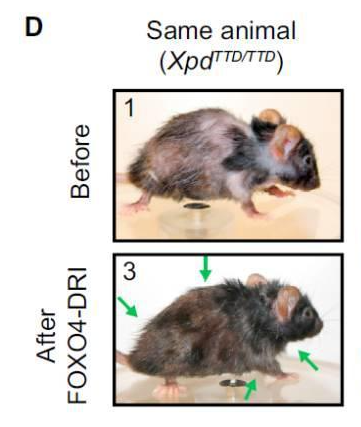
Atachman: sourit senesan sou fòm piki ak FOX04-dir te montre amelyorasyon siyifikatif nan fonksyon ren ak cheve yo te kòmanse repare tèt li..

Bingyan Gao
Profile: Bingyan Gao se "gadyen ultim" nan pite peptide ak bon jan kalite. Li se konpetan nan itilizasyon divès kalite enstriman analyse wo-fen epi li espesyalize nan devlope metòd separasyon kwomatografik Customized pou peptides modifye trè konplèks.. Li te etabli yon sistèm Des enpurte solid ki pa sèlman asire pite pwodwi nan 99% oswa pi wo, men tou jisteman idantifye ak elimine enpurte tras ki ta ka lakòz iminojenisite. Avèk yon konpreyansyon pwofon sou FDA ak EMA kondisyon regilasyon pou dwòg peptide, li asire ke chak pakèt lage nan etablisman an akonpaye pa yon Sètifika analiz konplè ak otorite. (COA).
- siRNA Manufacturing Model for Peptide Production 2026年10月14日
- Terapetik Peptide Dekouvèt: Catestatin ak Orexin 2026年10月13日
- Metal ki dirije kristal peptide 2D: Design & Prèv 2026年10月12日
- Mekanis Peptid Diferansye: Novo-Kallyope Ras 2026年10月11日
- Seleksyon CMO Peptide: Yon 6-Dimansyon Supply-Chain Scorecard 2026年10月11日
Pwosesis pou tcheke reyalite nou an
Nou bay priyorite presizyon ak entegrite nan kontni nou an. Men ki jan nou kenbe estanda ki wo:
- Revizyon Ekspè: Tout atik yo revize pa ekspè nan matyè yo.
- Validasyon Sous: Enfòmasyon yo apiye pa kredib, sous ajou.
- Transparans: Nou site referans aklè epi divilge konfli potansyèl yo.
Komisyon Konsèy nou an
Kontni nou an ak anpil atansyon revize pa pwofesyonèl ki gen eksperyans asire presizyon ak enpòtans.
- Ekspè ki kalifye: Chak atik evalye pa espesyalis ki gen konesans espesifik nan domèn.
- Aktyalizasyon Insights: Nou enkòpore dènye rechèch la, tandans, ak estanda.
- Angajman pou Kalite: Evalyatè yo asire klè, korèkte, ak konplè.
Chèche etikèt ekspè revize pou li kontni ou ka fè konfyans.