Meccanismi cellulari antecedenti
L’essenza dell’invecchiamento umano è la senescenza cellulare, cellule senescenti per sempre fuori dal ciclo cellulare, ma non verranno rimosse direttamente come le cellule apoptotiche, le cellule senescenti generalmente hanno un gran numero di DNA danneggiato, questo potrebbe essere il motivo per cui non vengono rimossi, quindi le cellule senescenti saranno conservate in gran numero, e continuano a depositarsi inducendo l’invecchiamento dell’organismo e l’insorgenza di malattie correlate. (Prima che le cellule senescenti ti uccidano, dovresti colpire prima)
Il gene p53 ha la funzione di indurre l'apoptosi, e il suo meccanismo è che la proteina p53 codificata dal gene p53 funziona come un punto di controllo nella fase G1 del ciclo cellulare ed è responsabile di verificare se vi sono danni al DNA cromosomico; una volta trovato il DNA difettoso, stimola l'espressione del CIP, che impedisce alle cellule di entrare nel ciclo cellulare e avvia il meccanismo di riparazione del DNA; se la riparazione fallisce, il p53 avvia il meccanismo dell'apoptosi.
Nelle cellule senescenti, L'espressione di FOXO4 aumenta e influenza il processo di senescenza cellulare e apoptosi attraverso l'interazione con proteine come p53. Perché si collega a p53, può prevenire la morte delle cellule senescenti.
Differenza tra FOXO4 e FOXO4-Dri
Il peptide corto FOXO4 è un amminoacido di tipo L.
Il peptide corto FOXO4-Dri è un amminoacido di tipo D.
Perché appare FOXO4-Dri
FOXO4 è un polipeptide a catena lineare composto da 46 amminoacidi, la stragrande maggioranza della sequenza è costituita da aminoacidi di tipo D, perché si è combinato con il gene p53, impedendo l'espressione del gene p53, portando così all'incapacità di rimuovere le cellule senescenti.
Nell'idea originale, gli scienziati volevano utilizzare l'editing genetico per eliminare il gene foxo4, ma questo era troppo lavoro e soggetto a danni al DNA. Perciò, gli scienziati hanno ideato un'alternativa sostituendo tutti gli aminoacidi di tipo L nel peptide corto FOXO4 con aminoacidi di tipo D, che inverte la conformazione di FOXO4-Dri e si lega competitivamente a p53, impedendo al contempo a FOX04 di legarsi a p53.
P53 attiva le proteine apoptotiche e provoca la morte cellulare. Rimuovendo le vecchie cellule dal tessuto, è possibile ottenere una rigenerazione dei tessuti più drammatica.
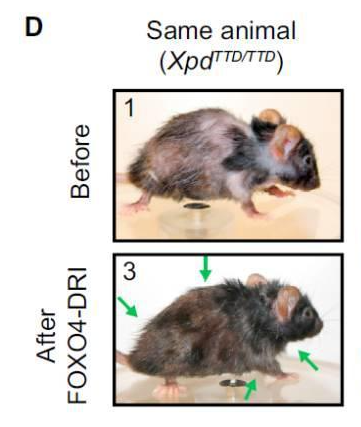
Allegato: topi senescenti a cui è stato iniettato FOX04-dir hanno mostrato un miglioramento significativo della funzionalità renale e i capelli hanno iniziato a ripararsi.

Bingyan Gao
Profilo: Bingyan Gao è il “custode finale” della purezza e della qualità dei peptidi. È esperto nell'uso di vari strumenti analitici di fascia alta ed è specializzato nello sviluppo di metodi di separazione cromatografica personalizzati per peptidi modificati altamente complessi. Ha stabilito un rigoroso sistema di profilazione delle impurità che non solo garantisce la purezza del prodotto 99% o superiore ma identifica ed elimina anche con precisione le tracce di impurità che potrebbero causare immunogenicità. Con una profonda conoscenza dei requisiti normativi FDA ed EMA per i farmaci peptidici, si assicura che ogni lotto rilasciato dalla struttura sia accompagnato da un certificato di analisi completo e autorevole (COA).
- Modello di produzione di siRNA per la produzione di peptidi 2026年10月14日
- Scoperta terapeutica dei peptidi: Catestina e Orexina 2026年10月13日
- Cristalli peptidici 2D diretti al metallo: Progetto & Prova 2026年10月12日
- Meccanismi peptidici differenziati: Gara Novo-Kallyope 2026年10月11日
- Selezione del CMO peptidico: Una scorecard della catena di fornitura a 6 dimensioni 2026年10月11日
Il nostro processo di verifica dei fatti
Diamo priorità all'accuratezza e all'integrità dei nostri contenuti. Ecco come manteniamo standard elevati:
- Recensione di esperti: Tutti gli articoli sono revisionati da esperti in materia.
- Convalida della fonte: Le informazioni sono supportate da credibilità, fonti aggiornate.
- Trasparenza: Citiamo chiaramente i riferimenti e riveliamo potenziali conflitti.
Il nostro comitato di revisione
I nostri contenuti vengono esaminati attentamente da professionisti esperti per garantire accuratezza e pertinenza.
- Esperti qualificati: Ogni articolo viene valutato da specialisti con conoscenze specifiche del settore.
- Approfondimenti aggiornati: Incorporiamo le ricerche più recenti, tendenze, e standard.
- Impegno per la qualità: I revisori garantiscono chiarezza, correttezza, e completezza.
Cerca l'etichetta revisionata da esperti per leggere contenuti di cui ti puoi fidare.