Mecanismos celulares antecedentes
La esencia del envejecimiento humano es la senescencia celular, células senescentes fuera para siempre del ciclo celular, pero no se eliminarán tan directamente como las células apoptóticas, Las células senescentes generalmente tienen una gran cantidad de ADN dañado., cual puede ser la razón por la que no se eliminan, por lo que las células senescentes serán retenidas en gran cantidad, y continúan depositándose, lo que induce el envejecimiento del cuerpo y la aparición de enfermedades relacionadas.. (Antes de que las células senescentes te maten, deberías atacar primero)
El gen p53 tiene la función de inducir la apoptosis., y su mecanismo es que la proteína p53 codificada por el gen p53 funciona como un punto de control en la fase G1 del ciclo celular y se encarga de comprobar si existe algún daño en el ADN cromosómico.; una vez que se encuentra el ADN defectuoso, estimula la expresión de CIP, que impide que las células entren en el ciclo celular e inicia el mecanismo de reparación del ADN.; si la reparación falla, el p53 inicia el mecanismo de apoptosis.
En células senescentes, La expresión de FOXO4 aumenta y afecta el proceso de senescencia celular y apoptosis mediante la interacción con proteínas como p53.. Porque se adhiere a p53, Puede prevenir la muerte de las células senescentes..
Diferencia entre FOXO4 y FOXO4-Dri
El péptido corto FOXO4 es un aminoácido tipo L.
El péptido corto FOXO4-Dri es un aminoácido de tipo D.
Por qué aparece FOXO4-Dri
FOXO4 es un polipéptido de cadena lineal compuesto por 46 aminoácidos, la gran mayoría de la secuencia son aminoácidos de tipo D, porque se combinó con el gen p53, prevenir la expresión del gen p53, lo que conduce a la incapacidad de eliminar las células senescentes..
en la idea original, Los científicos querían utilizar la edición genética para eliminar el gen foxo4., pero esto fue demasiado trabajo y propenso a dañar el ADN.. Por lo tanto, Los científicos idearon una alternativa reemplazando todos los aminoácidos de tipo L en el péptido corto FOXO4 con aminoácidos de tipo D., que invierte la conformación de FOXO4-Dri y se une competitivamente a p53, mientras evita que FOX04 se una a p53.
P53 activa proteínas apoptóticas y provoca la muerte celular.. Eliminando células viejas del tejido., Se puede lograr una regeneración tisular más espectacular..
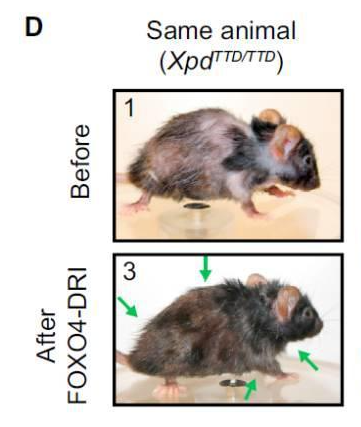
Adjunto: Los ratones senescentes inyectados con FOX04-dir mostraron una mejora significativa en la función renal y el cabello comenzó a repararse a sí mismo..

Bingyan Gao
Perfil: Bingyan Gao es el “guardián supremo” de la pureza y calidad de los péptidos. Es competente en el uso de diversos instrumentos analíticos de alta gama y se especializa en el desarrollo de métodos de separación cromatográfica personalizados para péptidos modificados altamente complejos.. Ha establecido un riguroso sistema de perfiles de impurezas que no solo garantiza la pureza del producto 99% o superior, pero también identifica y elimina con precisión trazas de impurezas que podrían causar inmunogenicidad. Con un profundo conocimiento de los requisitos reglamentarios de la FDA y la EMA para medicamentos peptídicos., Se asegura de que cada lote liberado de las instalaciones vaya acompañado de un Certificado de análisis completo y autorizado. (COA).
- siRNA Manufacturing Model for Peptide Production 2026年10月14日
- Descubrimiento de péptidos terapéuticos: Catestatina y orexina 2026年10月13日
- Cristales peptídicos 2D dirigidos por metal: Diseño & Evidencia 2026年10月12日
- Mecanismos peptídicos diferenciados: Carrera Novo-Kallyope 2026年10月11日
- Selección de péptidos CMO: Un cuadro de mando de la cadena de suministro de seis dimensiones 2026年10月11日
Nuestro proceso de verificación de hechos
Priorizamos la precisión y la integridad en nuestro contenido.. Así es como mantenemos altos estándares:
- Revisión de expertos: Todos los artículos son revisados por expertos en la materia..
- Validación de fuente: La información está respaldada por información creíble., fuentes actualizadas.
- Transparencia: Citamos claramente referencias y revelamos posibles conflictos..
Nuestra junta de revisión
Nuestro contenido es revisado cuidadosamente por profesionales experimentados para garantizar la precisión y relevancia..
- Expertos calificados: Cada artículo es evaluado por especialistas con conocimientos específicos del campo..
- Información actualizada: Incorporamos las últimas investigaciones, tendencias, y estándares.
- Compromiso con la Calidad: Los revisores garantizan la claridad, exactitud, y plenitud.
Busque la etiqueta revisada por expertos para leer contenido en el que pueda confiar.