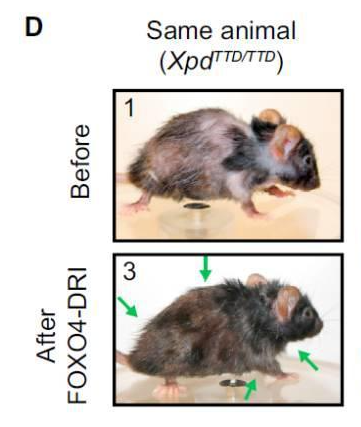
先行細胞のメカニズム 人間の老化の本質は細胞の老化です, 老化細胞は細胞周期から永遠に外れる, ただし、アポトーシス細胞ほど直接的には除去されません。, 老化細胞は一般に多数の損傷した DNA を持っています, それが削除されない理由かもしれません, そのため、老化細胞は大量に保持されることになります。, 蓄積され続けることで体の老化や関連疾患の発症を誘発します。. (老化細胞に殺される前に, あなたが最初に攻撃すべきです)p53遺伝子はアポトーシスを誘導する機能がある, そのメカニズムは、p53遺伝子によってコードされるp53タンパク質が細胞周期のG1期のチェックポイントとして機能し、染色体DNAに損傷があるかどうかをチェックする責任があるというものです。; 欠陥のあるDNAが見つかったら, CIPの発現を刺激します, 細胞が細胞周期に入るのを防ぎ、DNA修復のメカニズムを開始します。; 修理が失敗した場合, p53はアポトーシス機構を開始します.老化細胞では, FOXO4 発現が上昇し、p53 などのタンパク質との相互作用を通じて細胞老化とアポトーシスのプロセスに影響を与える. p53に付いているので, 老化細胞死を防ぐことができます. FOXO4とFOXO4-Driの違い FOXO4ショートペプチドはL型アミノ酸です.FOXO4-DriショートペプチドはD型アミノ酸です. FOXO4-Driが登場する理由 FOXO4 は、以下から構成される直鎖ポリペプチドです。 46 アミノ酸, 配列の大部分はD型アミノ酸です, p53遺伝子と結合したため, p53遺伝子の発現を阻害する, したがって、老化細胞を除去できなくなります。.当初のアイデアでは, 科学者たちは遺伝子編集を使用してfoxo4遺伝子を取り除きたいと考えていました, しかし、これは大変な作業であり、DNA が損傷する可能性がありました. したがって, 科学者たちは、FOXO4の短いペプチドのL型アミノ酸をすべてD型アミノ酸に置き換える代替案を考案しました。, FOXO4-Dri の立体構造を反転させ、p53 に競合的に結合します。, FOX04 が p53 に結合するのを防ぎながら.P53はアポトーシスタンパク質を活性化し、細胞死を引き起こす. 組織から古い細胞を除去することで, より劇的な組織再生を達成できる. アタッチメント: FOX04-dirを注射した老化マウスは腎機能の大幅な改善を示し、毛髪は自己修復し始めた. ガオ・ビンヤン 品質分析技術者 コアの専門知識: 微量不純物の分離と同定, HPLC/MS メソッドの開発, キラル純度分析, 国際薬局方への準拠. 著者について 最新の投稿 プロフィール: Bingyan Gao はペプチドの純度と品質の「究極の門番」です. 彼はさまざまなハイエンド分析機器の使用に熟練しており、非常に複雑な修飾ペプチド用にカスタマイズされたクロマトグラフィー分離法の開発を専門としています。. 彼は、製品の純度を保証するだけでなく、厳格な不純物プロファイリングシステムを確立しました。 99% 以上ですが、免疫原性を引き起こす可能性のある微量不純物を正確に特定して除去します. ペプチド医薬品に対する FDA および EMA の規制要件を深く理解している, 彼は、施設からリリースされるすべてのバッチに、包括的で権威のある分析証明書が添付されていることを保証します。 (COA). siRNA Manufacturing Model for Peptide Production 2026年10月14日 治療用ペプチドの発見: カテスタチンとオレキシン 2026年10月13日 金属指向性 2D ペプチド結晶: デザイン & 証拠 2026年10月12日 分化したペプチドのメカニズム: ノボ・カリオペ・レース 2026年10月11日 ペプチドCMOの選択: 6 次元のサプライチェーン スコアカード 2026年10月11日 事実確認済み & 編集ガイドライン 当社の事実確認プロセス 私たちはコンテンツの正確性と完全性を優先します. 高い基準を維持する方法は次のとおりです: 専門家のレビュー: すべての記事は対象分野の専門家によってレビューされます. ソースの検証: 情報には信頼性の裏付けがある, 最新のソース. 透明性: 私たちは参考文献を明確に引用し、潜在的な矛盾を開示します。. レビュー者: 対象分野の専門家 私たちの審査委員会 当社のコンテンツは、正確性と関連性を確保するために、経験豊富な専門家によって慎重にレビューされています. 資格のある専門家: 各記事は、分野固有の知識を持つ専門家によって評価されます. 最新の洞察: 最新の研究を取り入れています, トレンド, と規格. 品質へのこだわり: 査読者は明確さを保証します, 正しさ, そして完全性. 信頼できるコンテンツを読むには、専門家がレビューしたラベルを探してください.