Why Peptide Quality Governance Is Now an Evaluation Problem, Not a Sourcing Problem

Peptide quality governance has shifted from a sourcing question to an evaluation one. The peptide therapeutics market is growing at about 11% a year, from $49.21B in 2025 to $54.62B in 2026 according to The Business Research Company’s Global Peptide Therapeutics Market Report 2026, and enforcement has scaled with it: eleven peptide firms received FDA warning letters in a single year, across two 2026 cohorts tracked by the Peptifact FDA warning-letter tracker.
The operative question is no longer whether a supplier exists. It is whether you can defend the acceptance criteria behind your supplier choice. FDA’s March 2026 warning letter to Gram Peptides ir FDA’s August 2026 letter to Peptide Partners LLC both turn on FDA’s intended-use test, not on a purity figure. The FDA warning letter index is date-filterable, so the record is checkable.

Raktų išsinešimas: The governance question has moved from finding a supplier to defending an acceptance criterion.
Four pillars organize the rest of this piece: specifications, traceable documentation, fit-for-purpose testing, and responsible communication.

The Conventional View: Buy on Purity Percentage and a Certificate of Analysis
The mainstream position is straightforward: a vendor-supplied certificate of analysis showing a high reverse-phase HPLC purity figure is sufficient evidence of quality, and price plus stated purity are the rational selection criteria. That norm did not come from nowhere. It comes from the vendor QC-report genre itself, and how a vendor QC report is typically presented is the archetype: a synthesis purity number, a mass confirmation, and a short methods line, packaged as a single-page proof of quality.
It became dominant for three defensible reasons. It is simple, it is comparable across quotes, and it worked when peptide buyers were mostly internal research groups purchasing from a known synthesis partner under an existing quality agreement. The commercial logic reinforced it. With the peptide therapeutics market growing at about 11% a year, procurement teams needed a screening field, and purity percentage was the only one every quote already carried.
Synthesis vendors advocate it because they can produce it. Procurement templates built around them encode it. And the number itself looks reassuring: a 6,285-report submitted-sample analysis found a median purity of 99.80%, with an interquartile range of 99.50% į 99.90%. When almost every report lands in the same narrow band, the field stops discriminating. That is the first sign that peptide certificate of analysis traceability, not the headline figure, is where the real evaluation work sits.
Three Ways the Purity-Percentage Shortcut Fails

A purity number measures one attribute, under one method, on one sample, and it says nothing about identity, counterion, residual solvent, endotoksinas, or sterility. Treating it as a general quality signal is where most evaluation goes wrong.
The first failure is predictive. A 6,285-report submitted-sample analysis found a median purity of 99.80%, yet those samples were self-submitted by sellers, not bought blind (Mendias & Awan / Finnrick Analytics, April 2026). A ten-peptide purchase audit across four vendor tiers, run on product bought at random and tested by MZ Biolabs, found the FDA-registered 503B tier at 98.7%, 99.1%, ir 98.3% grynumas, the direct-manufacturer tier at 89.1%, 91.3%, ir 85.4%, and the budget tier at 71.3% ir 78.9%, with one sample unresolvable (The Peptide List, January 2026). The two datasets point in opposite directions, which is the point: a quoted figure from one supplier tells you nothing predictive about a different supplier’s lot.
The second failure is categorical. The same submitted-sample dataset recorded a 2.4% identity-failure rate, with the named peptide simply absent in 156 iš 6,487 screened reports. In the purchase audit, one product that was the wrong compound entirely measured 2,847 Da against 4,113 Da expected for semaglutide. No purity percentage can express that result, because the instrument was measuring the wrong molecule correctly.
The third failure is regulatory, and it is the most consequential. An RUO label does not insulate a seller whose own website establishes intended human use, as FDA’s March 2026 warning letter to Gram Peptides makes explicit, because intended use is defined at 21 CFR 201.128 by the seller’s own claims rather than by the label text. A buyer who treats the label as a compliance signal is reading the wrong artifact.
Peptide quality governance fails at the shortcut because the shortcut collapses four independent control questions into one number.
What the Data Actually Shows: Two Competing Methodologies, One Honest Reading
The widely quoted failure percentages, 41.6% against a lenient benchmark and 71.1% against a stricter one, come from a single upstream laboratory’s analysis of 6,285 reports, and that figure has been repeated far more often than it has been independently reproduced (Finnrick-derived audit summary, 2026). It is one dataset, not a consensus.
The two most cited sources pull in opposite directions. A 6,285-report submitted-sample analysis draws from samples vendors chose to send, so its selection bias runs toward good material, and its 2.4% identity-failure rate should be read in that light. A ten-peptide purchase audit across four vendor tiers buys anonymously and therefore skews the other way. Neither is the definitive failure rate.
The one independent purchase-based upstream is the 2024 peer-reviewed market surveillance study, in which products labelled 99% purity measured 7.7% į 14.37% actual purity and endotoxin appeared in every sample at 2.16 į 8.95 EU/mg (Ashraf et al., JMIR 2024). That is 2024 data and historical context, not a current rate.
So peptide quality governance should evaluate the control system behind a number rather than the number itself.
Pillar 1: Clear Specifications Before Any Testing Decision
A specification is the document that decides, in advance, which tests are necessary and which are wasted effort. Write it before a supplier is selected, not after a lot arrives.
Without a numeric acceptance criterion there is no release decision, only an opinion. Define identity; purity with the analytical method and detection wavelength named; counterion and salt form; residual solvents; water content; the endotoxin limit derived from the USP 〈85〉 endotoxin limit formula, where K = 5 USP-EU/kg for routes other than intrathecal and 0.2 EU/kg for intrathecal; and sterility testing per USP 〈71〉 where the material must be sterile. When USP 〈71〉 and USP 〈85〉 actually apply depends on the finished-product route, not on how the material is ordered.
The EMA guideline on the development and manufacture of synthetic peptides, effective 2026-06-01, covers specifications and analytical control for synthetic peptides, so specification writing is now a regulatory expectation rather than an internal preference.
The failure mode is a lot released against a summary CoA with no chromatogram and no stated method, where nobody can reconstruct why it passed. That is where peptide certificate of analysis traceability breaks down, and it breaks down before testing ever starts.
⚠️ Warning: Do not attribute the circulating 0.1%/0.5%/1.0% impurity thresholds to the EMA guideline. What the EMA guideline page does and does not state is narrower than the trade coverage suggests: the landing page carries no numeric reporting, identification, or qualification thresholds.
Pillar 2: Traceable Documentation That Survives an Audit
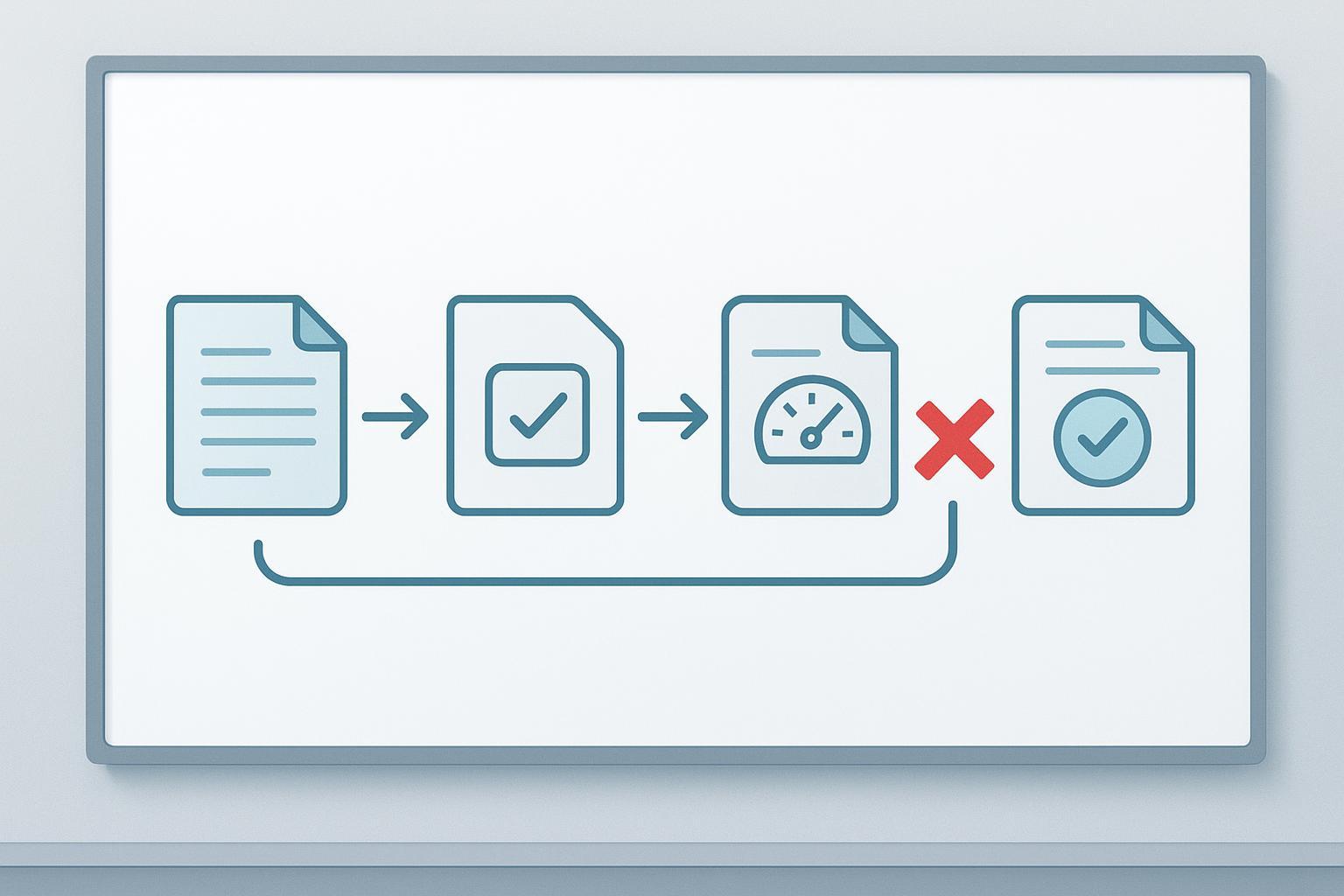
Traceability means an auditor can reconstruct the batch from the raw data forward without asking the supplier a single question. That standard matters more than it used to, because the FDA’s intended-use test is applied to what a seller’s own materials say, which makes documentation a compliance surface rather than a quality record filed away after release (FDA’s March 2026 warning letter to Gram Peptides). The MHRA GxP data integrity guidance sets the expectation: records must be attributable, legible, contemporaneous, original and accurate, and additionally complete, consistent, enduring and available across the full data lifecycle, with any correction preserving the original entry and the reason for change.
For research-use-only peptide documentation, that translates into four concrete asks. Require the original chromatogram and mass spectrum, not a summary table. Require the method reference behind each figure. Require instrument qualification records consistent with the USP 〈1058〉 analytical instrument qualification 4Qs model, last revised in 2017. And require that corrections preserve both the original entry and the reason for change.
Pro Tip: run the data-chain test on one historical lot before adding any new supplier questionnaire.
The failure mode is quiet. A supplier produces a CoA, the purity figure looks acceptable, and the buyer files it. Months later a reviewer asks how that figure was generated, and the supplier cannot produce the underlying data file. The chain from raw data to released certificate is broken, and the buyer has no way to repair it after the fact.
Pillar 3: Validated or Fit-for-Purpose Testing, Chosen Deliberately
The choice between a fully validated method and a fit-for-purpose method is a decision about what the data will be used for, and it has to be made explicitly rather than inherited from whatever routine the supplier happens to run. ICH Q2(R2) validation of analytical procedures requires a procedure to be validated as fit for its intended purpose through a risk- and use-based strategy, with a predefined protocol, justified acceptance criteria and a validation report. Typical minimum designs include nine determinations across the range or six at 100% of test concentration.
One clarification matters before you write a specification around it: what ICH Q2(R2) does not say is that there is a formal “fit-for-purpose method” category sitting alongside “fully validated method”. The guideline uses fit for intended purpose as the overarching requirement, which is why early-stage work is supported by phase-appropriate or partial validation with scientific justification for what has not yet been tested.
That leaves the practical question the guideline does not answer for you: which tier does this decision actually need? A practical validated-versus-fit-for-purpose decision rule circulating in consultancy and vendor commentary maps use case to validation expectation, and it is worth adopting with the caveat that it is commentary, not a primary standard.
|
Use case |
Validation expectation |
Peptidų sintezė Typical technique |
|---|---|---|
|
Discovery, screening, internal ranking |
Fit-for-purpose or qualified |
RP-HPLC with stated conditions; ESI-TOF or Orbitrap HRMS for identity; MALDI-TOF as an orthogonal check |
|
IND-enabling data in a regulatory package |
Qualified or partially Sintetiniai peptidai validated |
The above, plus method documentation and justification for untested parameters |
|
Pivotal, submission-critical or lot-release decisions |
Fully validated |
Validated RP-HPLC or HRMS; endotoxin by the USP 〈85〉 LAL technique classes, gel-clot, turbidimetric or chromogenic, with limits set by the USP 〈85〉 endotoxin limit formula |
The failure mode runs in both directions. A lot-release decision resting on a screening-grade method produces a number nobody can defend, and a discovery-stage decision blocked by a validation burden the use case never required burns weeks for no regulatory gain. Fit-for-purpose analytical testing peptides is a deliberate match between method and decision, not a default.
Pillar 4: Responsible Communication as a Governance Control
How a supplier describes its products is an auditable control, not a marketing afterthought. The FDA reads intended use from the seller’s own words, and FDA’s intended-use test treats research-use-only labeling as insufficient when the website itself evidences intended human use. That is exactly what FDA’s March 2026 warning letter to Gram Peptides found: intended-use evidence drawn from the seller’s own product pages, including appetite suppression, weight reduction, glucose handling, and lipid metabolism claims.
The pattern repeats. FDA’s August 2026 letter to Peptide Partners LLC charged named peptides plus BAC reconstitution solution as unapproved new drugs, citing human-disease and human-tissue claims. Across two 2026 cohorts, eleven peptide firms received FDA warning letters in a single year, which makes unsupported therapeutic claims peptides a documentation risk rather than a copywriting preference.
⚠️ Warning: A technically excellent supplier whose product pages describe appetite suppression or glucose handling converts a documentation strength into an enforcement exposure for everyone downstream.
Treat claim language as a reviewed artifact with its own approval gate. Keep a research-use-only framing with a research-scope disclaimer, and require that any efficacy-adjacent statement trace to a peer-reviewed source or be removed. The language discipline this implies is narrow: “may help,” “has been associated with,” never “cure” or “guaranteed.” Peptidų gamyba
How to Apply This Without Rebuilding Your Supplier Base

Start with the specification, because it is the one pillar that requires no cooperation from the supplier to begin. Everything else follows from it.
-
Write or revise the specification. Set numeric acceptance criteria and name the method for each one. This is a quick win measured in days, and it is time-sensitive: the EMA guideline on the development and manufacture of synthetic peptides applies from 2026-06-01, so specifications drafted against older assumptions will need revisiting anyway.
-
Request the underlying data package for one current lot. Then test whether the chain is reconstructible: raw data, instrument qualification records, and the review trail behind the release decision. The MHRA GxP data integrity guidance and its ALCOA+ expectations are the practical test. Budget one to two weeks.
-
Classify each existing use case against a practical validated-versus-fit-for-purpose decision rule, and flag any lot-release decision that currently rests on a screening method. This takes one to two months because it touches historical decisions.
-
Add a claim-review gate to any outward-facing product description, and keep it running.
Measure two things: the share of lots where the full data chain was produced on request without escalation, and the count of release decisions traceable to a fully validated method. The first two steps change supplier conversations within a quarter; the classification work takes longer.
If you want to see what a complete package looks like before you ask a supplier for one, MOL Changes can send a documentation package covering specification, method, and release records, or connect you with a technical expert to walk through the classification step.
Caveats: Where the Conventional View Still Holds
The strongest limitation of this framework is that it assumes you have leverage over your supplier, and early-stage academic groups buying single vials often do not. A ten-peptide purchase audit across four vendor tiers is a small sample, and it supports an argument about matching control intensity to consequence, not a claim about the wider market. Where a failed lot costs a week of screening rather than a batch, a summary CoA and a fit-for-purpose method are proportionate, and demanding a full validated package would be waste. The pillar ordering is also an editorial judgment: if your binding constraint is sterility or endotoxin, inverting it is reasonable. The point is calibration, not maximum rigor everywhere.
But Doesn’t a High Purity Number Still Tell Me Something?
Yes, and it is worth being precise about what. A purity figure describes the sample that was tested, under the method the supplier chose, on the day it was run. It says nothing about the next lot, the next synthesis batch, or the same product six months later.
That is how two apparently contradictory results coexist. A 6,285-report submitted-sample analysis reported a median purity of 99.80% (Finnrick, retrieved 2026-05-19), while a ten-peptide purchase audit across four vendor tiers found budget-tier lots releasing at 71.3% ir 78.9% (Peptide List, retrieved 2026-05-19). Both can be true: one measures what suppliers chose to send, the other measures what buyers actually received.
So the useful question is not “what is your purity?” but “what is your release specification, which method defines it, and what does a lot record show for a batch you did not select?” Ask for the chromatogram, not the number.
What If We Have Already Qualified Suppliers on the Old Criteria?
Requalification is additive, not a restart. You do not need to reopen every supplier file or issue a new questionnaire. Run the data-chain test on one historical lot per supplier: pull the certificate of analysis, the underlying chromatogram, the mass spectrometry data, and the instrument qualification records for the run, then ask whether the numbers on the summary sheet can be traced back to raw data that a reviewer could reconstruct. Suppliers whose documentation survives that test keep their qualified status and move to a lighter periodic check. Suppliers whose documentation does not survive it move to a full review, and the test result, not a questionnaire score, decides which is which. The same expectation applies to your own records: the MHRA GxP data integrity guidance sets out the attributable, legible, contemporaneous, original, and accurate standard that both sides of the chain are measured against, and USP 〈1058〉 analytical instrument qualification covers the instrument records that make a reported result reconstructable.
How Do You Respond to the Argument That This Level of Control Is Impractical?
The control intensity is meant to be proportional, not uniform, and the framework says so explicitly. A practical validated-versus-fit-for-purpose decision rule permits fit-for-purpose methods at early stages, where the question is whether a material is worth pursuing at all, and reserves validated methods for the stages where a result will carry regulatory or contractual weight. That is also what ICH Q2(R2) supports: phase-appropriate validation with scientific justification, not maximum validation everywhere. What ICH Q2(R2) does not say is that any method is acceptable because the work is early.
The cost asymmetry is what settles the objection. Requesting the documentation package costs a supplier conversation and some review time. Discovering at scale-up that the release data cannot be reconstructed costs the batch, the timeline, and the audit finding.
The Shift That Has to Happen
Governance capacity has to scale with demand, and it scales through specifications, traceability, deliberate method selection and disciplined claims, not through a stricter purity threshold. The industry norm of treating a certificate of analysis as the terminal quality artifact has to give way to treating the data chain behind it as the artifact, and buyers should ask for that chain before enforcement asks on their behalf. Eleven peptide firms received FDA warning letters in a single year, so the shift is already underway (U.S. Food and Drug Administration, retrieved 2026-06-11). A market where a documentation package is a standard part of a quote, rather than a special request, is the realistic near-term outcome. Take the four pillars into your next supplier conversation and note where the chain breaks. That is where peptide quality governance earns its keep.
Disclosure: MOL Changes supplies research-use-only peptides and documentation packages, so we have a commercial interest in buyers demanding more complete records. The framework above is drawn from public regulatory and pharmacopoeial sources and applies to any supplier, including us.
Reviewed for research-use scope and documentation accuracy by the MOL Changes technical team. This article discusses research-use-only materials and analytical documentation practices; it is not medical advice, and nothing here should be read as guidance on human use. Consult a qualified professional before making decisions about any research material.